Mass Balance Verification Mechanics in Cross-Border Organic Cotton Consignments
Mass balance verification in cross-border organic cotton requires reconciling raw lint transaction certificates, spinning waste loss, and customs origin proofs.


Bale

Physical Lint Identification and Credit Attribution
Cross-border procurement of organic cotton operates across two distinct chain-of-custody models: physical segregation and administrative mass balance. Under ISO 22095, mass balance permits the mixing of certified organic lint with conventional fiber inside the ginning or spinning facility, provided that the physical volume of finished yarn discharged matches the certified volume entering the production line after subtracting standard processing losses. The transaction certificate, issued by an accredited certification body, records the raw seed cotton mass, ginning turnout percentage, and net lint output.
When containers arrive at importing terminals, customs authorities inspect the batch identifier stamped on individual bale wrappers against the transaction certificate schedule.
Discrepancies arise when ginners allocate mass balance credits across distinct physical lots. A ginner processing five hundred metric tons of organic seed cotton alongside two thousand metric tons of conventional crop generates a certified lint credit pool based on an average ginning turnout of thirty-five percent. If the ginner assigns those organic credits to lower-grade upland bales while shipping the physical organic long-staple fiber under conventional invoices, the administrative chain of custody remains mathematically balanced while the physical custody chain dissolves.
Ginning facilities operating mass balance accounting assign certified transaction volumes across physical press marks without preserving farm-level lot segregation.
Auditors examining gin intake logs verify seed cotton weighbridge slips against farm scope certificates. The scope certificate validates farm acreage, production estimates, and harvest windows. An auditor matches the delivery dates on scale tickets with the certified picking dates on the farm schedule.
When delivery records indicate incoming volumes exceeding the certified agricultural yield per hectare by more than eight percent, the certifying body suspends credit issuance. The buyer tracks the physical press mark numbers on the bale ties to establish whether the gin applied certified transaction numbers to specific physical presses or drew down from a generic credit ledger.

Administrative Credit Windows and Mill Intake
Spinning mills purchasing mass balance credits receive certified volume allocations through electronic registry transfers. The mill enters the transaction certificate number, gross weight, tare weight, and commercial moisture regain into its internal enterprise ledger. A standard credit banking window allows mills to hold organic volume credits for up to twelve months before allocating them to outgoing yarn invoices.
Mill management frequently explains that production schedule volatility prevents real-time physical lot allocation, forcing the spinning floor to blend raw inventory while reconciling paperwork months after spinning.


Reconciliation

Bookkeeping Ratios and Input Conversion
Volumetric accounting across textile manufacturing demands strict input-output reconciliation at every conversion stage. When converting raw fiber into carded sliver, combed sliver, and ring-spun yarn, raw material volume decreases through mechanical dropouts, while yarn count specifications determine fiber consumption rates per meter. Transaction verification depends on applying precise conversion factors to verify that a mill did not produce more organic yarn than its raw lint credits support.
| Processing Stage | Input Material | Output Material | Standard Loss Range (%) | Maximum Mass Balance Yield (%) |
|---|---|---|---|---|
| Saw Ginning | Seed Cotton | Ginned Lint Bales | 62.0 to 67.0 | 38.0 |
| Blowroom and Carding | Bale Lint | Carded Sliver | 4.5 to 7.0 | 95.5 |
| Combing (Ring Spinning) | Carded Sliver | Combed Sliver | 12.0 to 18.0 | 88.0 |
| Rotor Spinning (Carded) | Carded Sliver | Open-End Yarn | 1.5 to 3.0 | 98.5 |
| Winding and Twisting | Single Yarn | Plied Ring Yarn | 0.8 to 1.5 | 99.2 |
Mass balance systems track these conversion coefficients through mass balance ledgers. An auditor tests the ledger by recalculating the theoretical lint consumption required for each yarn shipment. If a spinning mill inputs one hundred metric tons of organic lint and outputs ninety-five metric tons of combed ring-spun 30s Ne yarn, the reconciliation fails immediately.
Combing mechanically extracts short fibers, generating comber noil losses between twelve and eighteen percent. A ninety-five percent yield on combed yarn indicates that the facility blended conventional cotton into the sliver without debiting the conventional volume or inflated its organic output through false conversion assumptions.

Can Mass Balance Surpass Segregation Limits?
Chain of custody rules dictate whether a brand may label garments with content claims. Blended content claims require physical fiber verification, whereas corporate-level sourcing claims permit administrative mass balance reconciliation. The table below compares the operational criteria governing these assurance models.
| Assurance Parameter | Mass Balance (Credit Model) | Physical Segregation (Batch Model) |
|---|---|---|
| Physical Lot Separation | Not maintained on factory floor | Maintained through separate silos and lines |
| Product-Level Labelling | Corporate sourcing claims only | Hangtag percentage claims permitted |
| Allowed Fiber Mixing | Conventional and organic blended freely | Zero unauthorized fiber contamination |
| Registry Verification | Book-and-claim volume ledger | Batch-specific transaction certificate |
| Analytical Test Utility | Isotope testing cannot verify content | Chemical and isotope testing validates lot |
Auditing procedures examine the credit drawdown logs against yarn packing lists. The verifier flags irregularities using explicit forensic steps:
- Date Sequence Reconciliation ensures the raw material transaction certificate date precedes the yarn dispatch date.
- Commercial Moisture Adjustment recalculates commercial billing weight back to dry weight using standard regain allowances of eight and a half percent.
- Byproduct Credit Subtraction confirms the facility deducted comber noil and card waste from the active organic credit ledger rather than re-crediting the volume as organic sliver.
A mass balance ledger balanced purely on paper fails the audit when conversion factors ignore physical comber waste.
Physical fiber volume entering a mill sets the absolute mathematical ceiling for certified product claims exiting the loading dock.


Wastage
Mechanical Dropouts and Byproduct Redirection
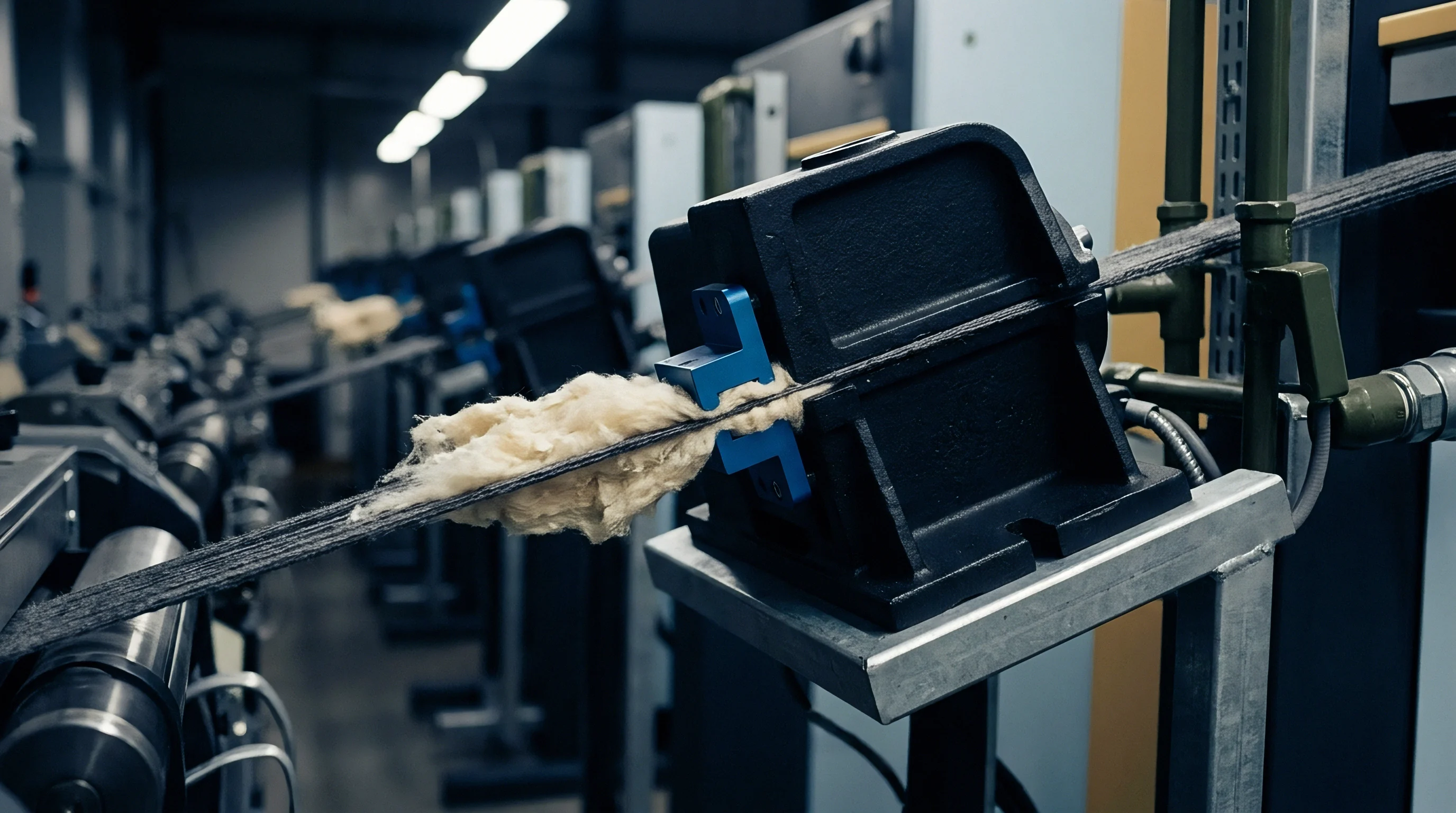
Mechanical cleaning throughout yarn processing extracts non-lint matter, trash, seed fragments, and short fibers. These extraction points generate distinct waste streams: blowroom droppings, carding flat strips, comber noils, and roving waste. Blowroom droppings contain high proportions of vegetable matter and non-spinnable trash, representing an absolute loss of two to four percent.
Carding strips and comber noils consist of clean, short-staple cotton fibers that cannot meet ring spinning tensile requirements for fine yarn counts.
Mills frequently sell comber noil to open-end spinning plants or non-woven medical textile manufacturers. In a compliant mass balance ledger, comber noil derived from organic cotton lint loses its organic yarn status unless sold with a dedicated byproduct transaction certificate. Fraudulent accounting occurs when a facility sells the physical organic comber noil to a third party with a transaction certificate while simultaneously using the gross lint input weight to claim certified ring-spun yarn credits on its main export invoices.
Double-counting of byproduct credits inflates the certified volume pool by up to twenty percent.
ASTM D2495 oven-drying tests establish whether weight variance between commercial invoices stems from moisture gain or unevidenced fiber mass.
Moisture control presents an additional avenue for volumetric distortion. Raw cotton bales contain between six and eight percent moisture under standard ambient conditions. Commercial trading rules establish an official commercial moisture regain rate of 8.5 percent.
Facilities operating in high-humidity climates receive dry lint, store bales in conditioned warehouses where moisture content reaches ten percent, and process the heavier fiber. The resulting mass increase disguises physical lint loss during spinning. Verifiers inspect dry-weight mass balances calculated using oven-dried samples tested under standard laboratory conditions.

Forensic Ledger Verification on the Spinning Floor
A comprehensive mill-floor audit evaluates physical machinery operational logs against electronic mass balance entries. The inspector records the specific blowroom line configurations, carding speeds, and combing settings active during the production run.
- Carding Speed Calibration reveals whether machine throughput rates aligned with the low-speed settings required for delicate extra-long staple fiber processing.
- Waste Collection Weighbridge Tickets document the exact tonnage of pneumafil and flat strips removed from the carding bays during the shift.
- Reworked Sliver Ratios establish whether the mill reintroduced pneumafil waste into virgin sliver beyond the five percent threshold allowed by quality standards.
- Opening Room Lot Allocation Charts prove whether the mill fed conventional and certified bales into the automatic plucker simultaneously.
When an auditor identifies an unrecorded five percent moisture addition combined with an uncredited twelve percent comber noil sale, the certified yarn volume on the transaction certificate exceeds physical reality by seventeen percent. Customs officials reviewing the consignment confiscate the shipment, levy statutory mislabeling penalties, and cancel the importer of record privileges for subsequent textile entries.


Customs

Border Compliance and Regulatory Scrutiny
Cross-border enforcement agencies inspect organic cotton consignments for false country of origin declarations, fraudulent tariff classification, and unsubstantiated supply chain traceability. Mass balance documentation presents significant regulatory friction at the port of entry because the physical goods inside the ocean container do not match the discrete farm origins listed on scope certificates. Under regulatory frameworks like the United States Uyghur Forced Labor Prevention Act, customs authorities enforce strict physical tracing standards down to the farm coordinates where the seed cotton was picked.
United States Customs and Border Protection generally rejects book-and-claim mass balance documentation as sufficient proof to satisfy detention notices requiring chain of custody proof. When customs issues a Notice of Detention, the importer must present an unbroken physical chain of custody from the farm harvest record, through ginning press marks, to spinning lot numbers and weaving warp records. A mass balance certificate stating that the mill purchased sufficient regional credits without proving that the specific yarn inside the container contains non-prohibited fiber results in an exclusion order.
Border enforcement directives require physical fiber segregation records rather than ledger credits to overcome forced labor detention notices.
European Union customs authorities increasingly audit organic cotton entries against Regulation 2018/848 on organic production and labelling. Consignments imported under preferential tariff rates or marketed with organic claims face administrative seizure if the accompanying transaction certificate fails electronic cross-matching against the global integrity database. Importers face extended demurrage fees while laboratories perform isotopic analysis and qualitative pesticide residue testing to detect synthetic agrochemicals on incoming goods.

Where Do Customs Audits Break Credit Ledgers?
Customs auditors target the handoff points where ownership transfers between intermediate converters. The examiner compares shipping containers, commercial invoices, bill of lading dates, and transaction certificate issuance timestamps.
| Document Type | Critical Field | Audit Verification Point | Border Failure Trigger |
|---|---|---|---|
| Transaction Certificate | Net Certified Weight | Cross-reference with Bill of Lading gross weight | Certified weight exceeds manifest weight |
| Bill of Lading | Container and Seal Number | Match against factory loading sheet | Unmatched seal indicates unverified transshipment |
| Mill Production Log | Lot Run Numbers | Compare date range with raw material intake | Yarn produced before raw lint delivered |
| Commercial Invoice | HS Code and Description | Match fiber content percentage with certificate | Invoice states 100% organic on mass balance trade |
| Scope Certificate | Approved Process Categories | Verify spinning facility authorization | Subcontracted dyehouse missing from facility scope |
When chemical testing detects synthetic pyrethroid residues or genetically modified cotton DNA markers in a container declared as certified organic under a mass balance certificate, customs laboratories flag the consignment for fraud. The core question remains whether administrative mass balance accounting can survive evolving border traceability statutes that demand physical, atom-level verification of commodity origins.


Liability

Commercial Allocation of Chain of Custody Failures
The financial fallout from a rejected cross-border consignment extends across demurrage charges, port storage fees, third-party testing costs, and brand product recalls. A container detained at a deep-water port incurs demurrage fees ranging from one hundred to three hundred dollars per day after the standard free time expires. If detention extends to sixty days during an administrative appeal, demurrage and terminal charges quickly exceed the landed value of the greige goods.
The commercial contract fixes which party absorbs these liabilities when documentation fails customs verification.
Standard procurement agreements require sellers to provide complete transaction certificates prior to customs entry. Buyers insert explicit warranty clauses stipulating that all organic claims satisfy both voluntary certification standards and importing border agency evidentiary thresholds. If a transaction certificate is invalidated due to a mill-level mass balance ledger shortfall, the buyer executes a full commercial chargeback covering the contract value, freight fees, customs broker disbursements, and consequential damages resulting from retail supply disruptions.
Section 14 of the Standard International Cotton Purchase Contract governs document non-conformity, establishing that any batch failing verified certification rules grants the buyer the immediate right to cancel the contract and demand complete refund of letters of credit.