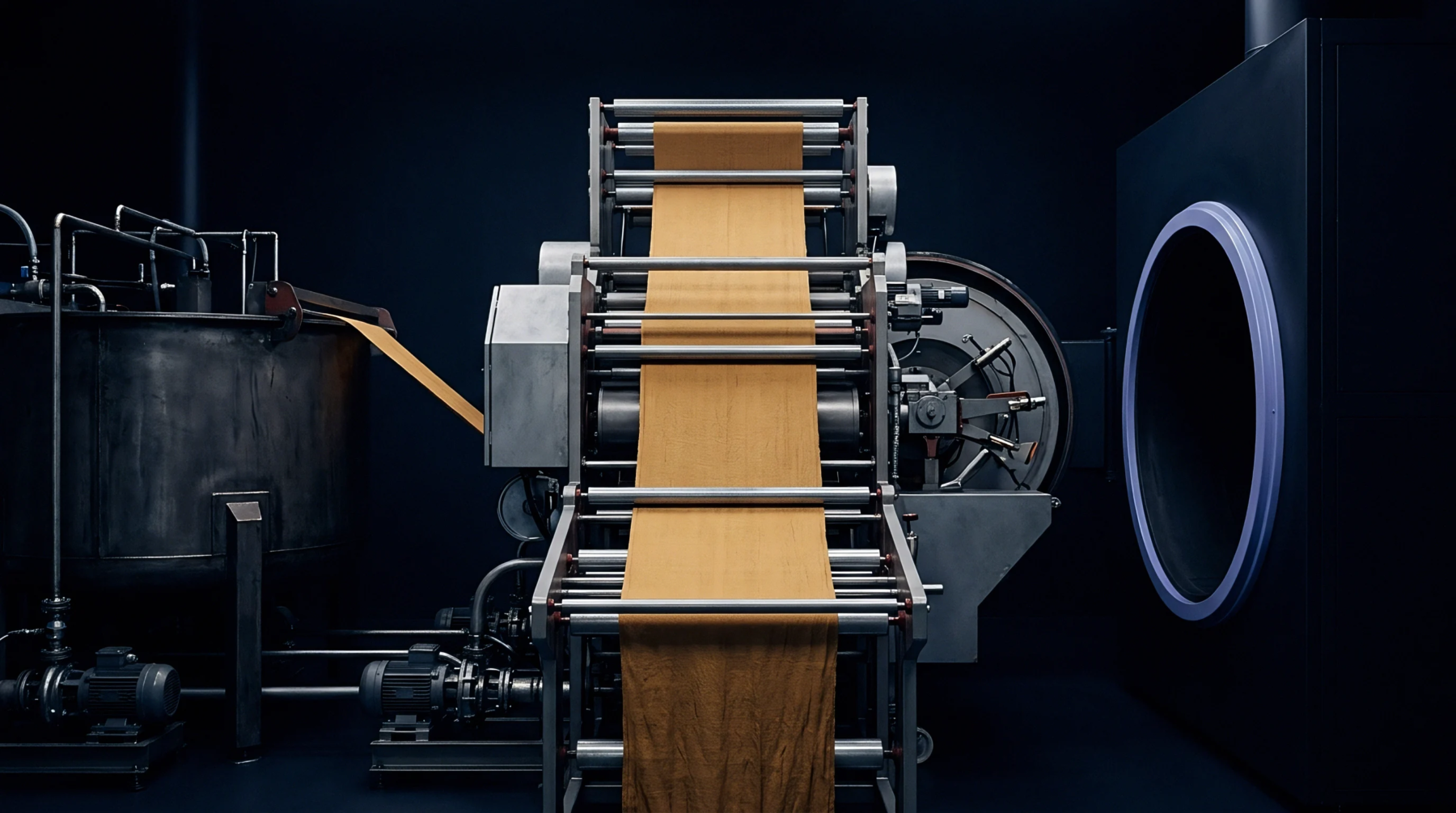
Liquid Transport
Aqueous treatment deployed across unconstrained widths represents a specialized finishing phase where tensioned knitted goods pass through multiple bath chambers without rope creasing. Open width washing minimizes permanent crease marks on sensitive elastane blends by holding the fabric flat against driven rollers. Scouring liquor removes residual spinning oils and unfixed reactive dyes from the open fabric face.
Tension controllers maintain precise elongation limits during continuous processing through heavy squeeze nip assemblies.
Temperature Gradient
Thermal energy management dictates the efficiency of contaminant removal within each successive wash zone. Counter current flow directs fresh rinse water toward the cleanest fabric exit while heavily soiled goods meet concentrated surfactant solutions at the entry point. Heat exchangers recover thermal units from discharge streams to preheat incoming water supplies.
Enclosed housing prevents steam loss and maintains consistent bath temperatures across every processing chamber.
Mechanical Action
Hydraulic force applied through submerged spray nozzles dislodges loosened impurities from dense fabric constructions. Roller speed differentials create micro shear forces that accelerate dye desorption without abrading delicate filament yarns. Squeeze rolls extract moisture down to specific pick up percentages before the material enters drying cylinders.
Residual chemical concentrations drop below detectable thresholds when mechanical extraction operates at optimal pressure.
Chemical Boundary
Surfactant selection determines compatibility with subsequent resin application steps in the finishing range. Non ionic wetting agents prevent foam accumulation within high turbulence spray zones. Laboratory technicians verify residual alkalinity through titration of extracted water samples before approving bulk shipments for dispatch.
Neutral pH verification prevents yellowing during subsequent heat setting operations.