Evaluating Screen Engraving Amortization against Digital Print Ink Efficiency
Digital print delivers lower landed cost below 6,000 meters; rotary screens prove economical for longer runs once setup fees and fabric waste amortize fully.
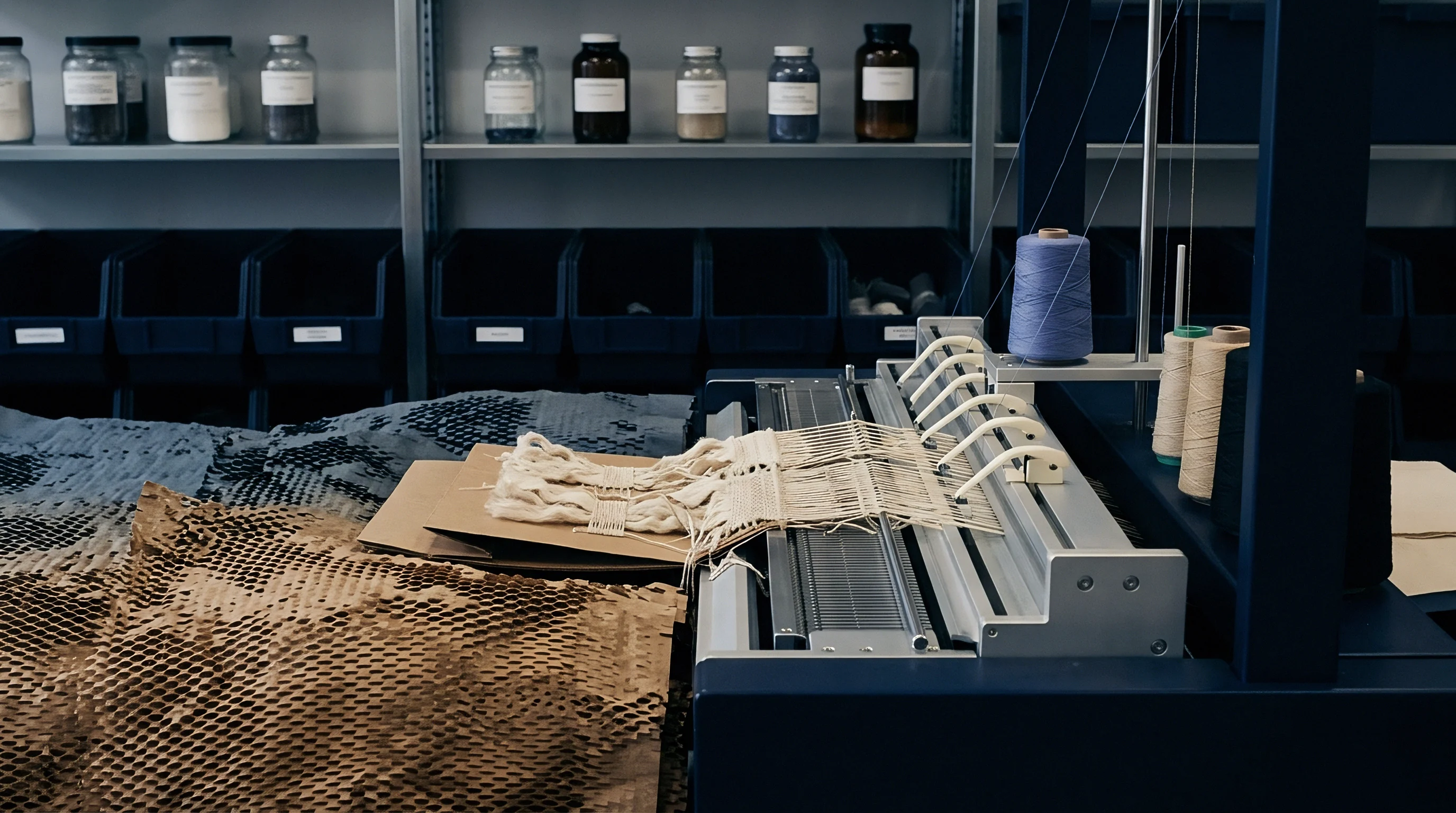
Mesh
Rotary Cylinder Fabrication Costs
Rotary screen printing relies on seamless electroformed nickel cylinders. These shells are usually manufactured in standard repeat circumferences of 640, 800, 914, or 1018 millimeters, with wall thicknesses between 80 and 115 micrometers. Mills buy screens mainly by mesh count ~ the openings per linear inch.
Specifications range from 64 mesh for heavy pigment laydown on coarse fabrics up to 155 mesh for fine line work and tonal shifts on filament wovens. A plain 105-mesh blank with a 640-millimeter repeat and a 1.85-meter usable length runs about 180 USD to 240 USD before imaging. Specialized high-mesh cylinders like 135 or 155 Penta screens, used to hit 60-micrometer line resolution, push blank costs up to 310 USD because electroforming deposition requires tighter tolerances.
Engraving turns raw nickel sleeves into pattern stencils. The sleeve is degreased chemically and cleaned with ultrasonics before receiving a uniform layer of photosensitive polymer emulsion. Controlling emulsion thickness within plus or minus two micrometers is critical, as any variance alters the ink film thickness on bulk runs.
After coating, the cylinder dries at 40 degrees Celsius ahead of imaging. Engraving shops amortize imaging hardware over annual volume, but charges passed to buyers cover screen prep labor, chemicals, laser power, and end-ring mounting. Preparing a simple eight-color pattern across eight cylinders generates 1,440 USD to 2,400 USD in screen setup costs before any production fabric touches the press.
Glued end-rings give the nickel sleeve its structural rigidity and lock it into the print head drive. Alignment fixtures press thermoplastic or aluminum rings into both ends of the sleeve under heat. If the rings aren’t mounted flush, rotational eccentricity causes registration to drift across the fabric web during runs above 40 meters per minute.
Fitting and dynamically balancing end-rings adds 25 USD to 40 USD per screen. If a pattern is cancelled after approving samples, the engraved screens have zero salvage value; the nickel cannot be re-stretched or stripped and re-engraved without ruining its structure, leaving the initial engraving cost a complete write-off.
Lacquer Coating and Direct Laser Ablation
Engravers use three main imaging methods to put designs on polymer-coated screens. Digital wax jetting lays down hot-melt wax as a mask over dried light-sensitive lacquer, followed by UV exposure and a water wash to remove unexposed areas. Direct laser ablation skips chemical development, using carbon dioxide or fiber lasers to vaporize cross-linked lacquer right off the mesh openings.
That cuts stencil prep from three hours to 25 minutes per cylinder while pushing spatial resolution to 2540 dots per inch. Direct laser units represent a 250,000 USD to 450,000 USD outlay, which dyehouses recover by charging higher fees on short orders.
Mesh geometry controls paste transfer and hydraulic shear under the blade or magnet bar. Standard 80-mesh screens offer about 30 percent open area, while high-strength 125-mesh drops to 14 to 18 percent. Less open area restricts high-viscosity thickeners, forcing operators to raise magnet pressure or steepen squeegee angles.
Higher pressure speeds up screen fatigue, micro-fracturing the thin nickel wall near the end-ring seam. If a screen tears mid-run, leaking paste can ruin up to 200 meters of fabric before the operator stops the press.
A 155-mesh nickel screen operated at 3.5 bar squeegee pressure suffers structural fatigue and mesh deformation after approximately 45,000 linear meters of continuous mechanical cycling.
Film exposure sees limited use for simple geometrics, but the labor overhead is high. Film positives take wide-format plotting, manual positioning, and vacuum clamping around the cylinder. Scratches, static dust, or thermal expansion in the film create defects that operators must paint out by hand with liquid block-out lacquer.
That bench work adds 30 to 60 minutes per screen set. Direct-to-screen digital systems drop film entirely, cutting prep errors and locking in a predictable engineering cost for pattern setup.
Fixed Mechanical Setup Overhead
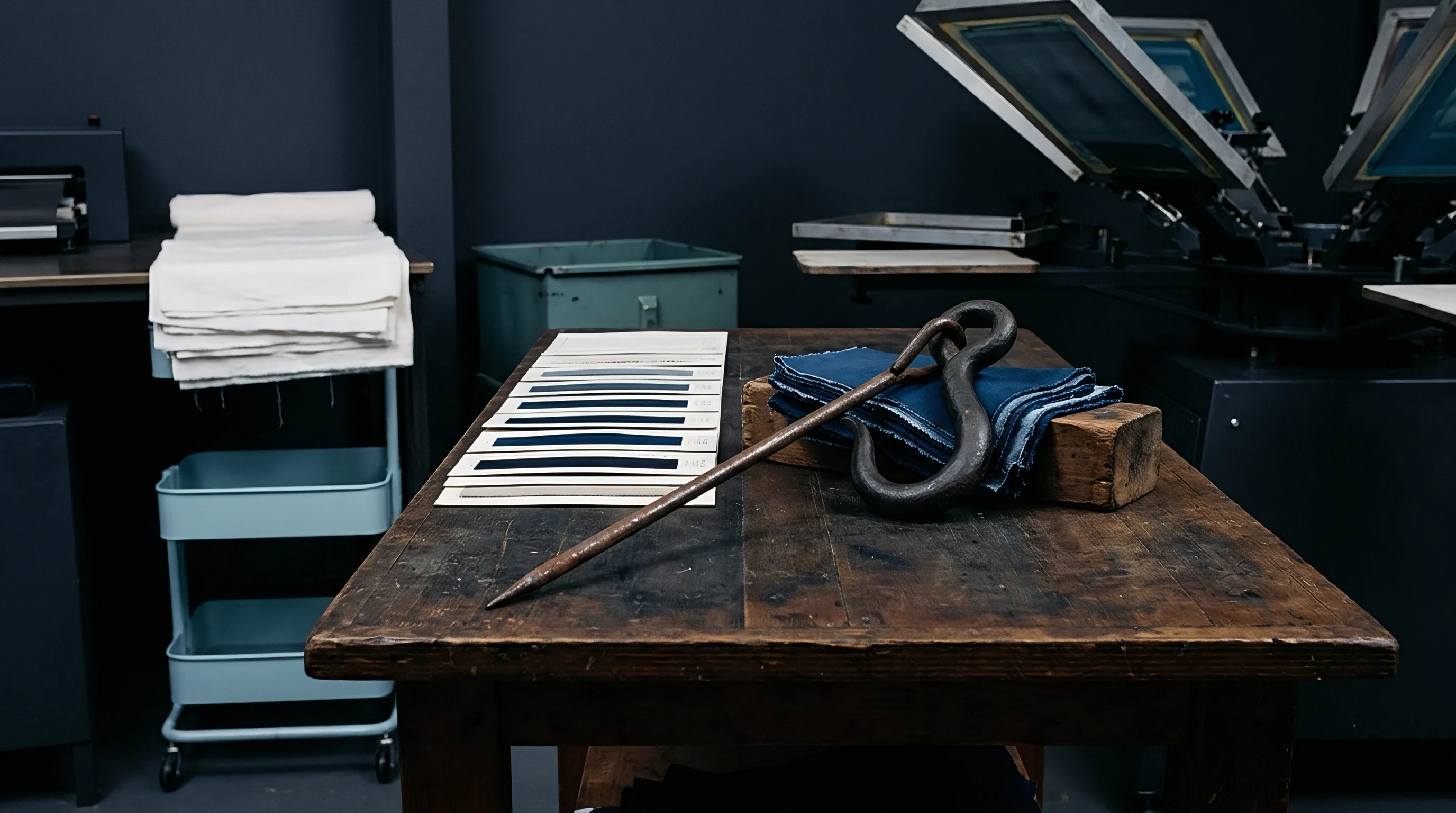
Mounting engraved screens onto a rotary press takes the same setup labor whether the run is short or long. On a 12-color machine, two operators need 75 to 105 minutes to lock end-rings into drive heads, align registration sensors, fit squeegees, connect supply lines, and prime screen cavities from floor vats. Downtime carries a real cost, given press operating rates of 180 USD to 300 USD per hour, which hits short production runs hard on a per-meter basis.
Paste charge is another hidden fixed loss in rotary systems. Each screen needs a minimum reservoir of fluid inside the cylinder to maintain continuous contact between blade and fabric. At a 1.8-meter print width, a single screen holds 2.5 to 4.0 kilograms of paste in its cavity, hoses, and pump.
Once the run ends, that paste can’t be recovered without diluting it or fouling the shade. For a 10-color pattern, 25 to 40 kilograms of prepared paste gets washed out to the effluent plant.
| Mesh Count | Open Area (%) | Max Resolution (DPI) | Screen Prep Cost (USD) | Expected Lifespan (Meters) |
|---|---|---|---|---|
| 64 Mesh Standard | 35 | 600 | 160 | 80,000 |
| 80 Mesh Standard | 30 | 800 | 180 | 70,000 |
| 105 Mesh Fine | 22 | 1200 | 210 | 55,000 |
| 125 Mesh Special | 18 | 1800 | 260 | 45,000 |
| 155 Mesh Micro | 14 | 2540 | 340 | 30,000 |
Matching color on press wastes more fabric during strike-off runs. The dyer tweaks squeegee pressure, speed, and magnet force over test yardage to hit the customer’s target shade and registration. Getting registration steady takes 80 to 180 meters of greige cloth per design.
On a 1,000-meter order, that loss adds 8 to 18 percent to total fabric use, whereas on a 50,000-meter run, the scrap shrinks to less than 0.4 percent of total yardage.
Setup fees persist because screen engraving always involves automated rasterization and chemical wash-off steps that cannot be skipped.
Fluid
Piezoelectric Printhead Drop Kinematics
Digital inkjet replaces physical screens with micro-droplet jetting. Industrial printheads use drop-on-demand piezoelectric actuators, typically housing 1024 to 4096 nozzles per assembly. Voltage pulses flex internal piezoceramic walls, firing ink through micro-nozzles at 15 to 40 kilohertz.
Droplet sizes range from 4-picoliter fine drops for detail and shading up to 42 picoliters for solid backgrounds. Micro-drops travel across a 1.0 to 2.5-millimeter air gap to the moving fabric at 6 to 10 meters per second.
Jetting depends heavily on ink properties. Printheads need viscosities between 8.0 and 12.0 millipascal-seconds at 32 degrees Celsius, and surface tension kept between 24 and 32 millinewtons per meter. Inks outside these targets cause satellite drops, nozzle clogs, or decapping when the head sits idle.
While rotary paste uses shear-thinning thickeners to hold edges, digital inks are thin and require anti-migration agents padded onto the fabric ahead of time.
Deflection and drop volume variation quickly spoil print quality. Deflection happens when dried dye or lint sticks to the orifice plate, pulling drops off target. A deviation of just half a degree leaves visible white streaks down the warp direction.
Optical inspection arrays behind the carriage catch dead or crooked nozzles in real time, triggering software to fire neighboring nozzles twice to fill the gaps. That hides missing pixels, but it raises local ink consumption on active channels by 4 to 9 percent.
Reactive and Pigment Formulation Chemistry
Water-based inks require pure dye or pigment dispersions to avoid clogging or wearing out nozzles. Reactive digital inks use vinyl sulfone or monochlorotriazine dyes stripped of inorganic salts via reverse osmosis, keeping total salt under 100 parts per million for jetting stability. These reactive inks cost 38 USD to 65 USD per kilogram, whereas bulk rotary paste costs 1.20 USD to 3.50 USD per kilogram wet.
The premium reflects membrane purification, grinding pigments below 150 nanometers, and additive packages of biocides and humectants.
Digital pigment systems carry polymer binders in the fluid or co-jet them alongside the colorant. The binders encapsulate pigment particles and cure under heat, locking color to the fiber without post-print washing. Pigment inks cost 55 USD to 95 USD per kilogram.
Because they contain 8 to 15 percent insoluble solids by weight, they cause more head wear and demand more frequent maintenance than soluble dye inks.
Fabric absorption dictates ink laydown. Hitting deep shades on a 150 gram per square meter cotton jersey takes 12 to 18 grams of wet ink per square meter, while light pastels need only 3 to 6 grams. For a multi-color apparel pattern with 35 percent average coverage, consumption runs 5.5 to 8.0 grams per square meter.
At current fluid prices, that puts direct ink cost at 0.28 USD to 0.52 USD per linear meter on a 1.6-meter wide web, regardless of job size.
Automated capping and purge cycles burn significant ink just to keep heads open. During pauses, heads fire thousands of drops into a gutter to stop ink from drying in the nozzles. Maintenance cycles also push fluid through under pressure and sweep the nozzle plate with wiper blades.
On short-run schedules with frequent profile changes, these purges waste 8 to 14 percent of all purchased ink.
- Nozzle Cavitation Failure occurs when micro-bubbles get trapped inside the piezoceramic chamber, absorbing acoustic energy and stopping drop ejection until a pressure purge clears the line.
- Decap Drying Blockage happens during long idle times as solvent evaporates at the meniscus, raising ink viscosity above the jetting threshold and forcing a wipe and purge cycle.
- Pigment Agglomeration Defect occurs when nano-pigments cluster into particles larger than 200 nanometers, blocking nozzles and causing persistent banding on the web.
- Orifice Plate Wetting happens when low surface tension ink pools across the nozzle face, deflecting drops off vertical alignment.
Digital color building relies on process mixing rather than pre-mixed spot pastes. Where a rotary dyer mixes three dyes in a vat for an exact shade, a digital press builds colors on the fabric using set ratios of Cyan, Magenta, Yellow, Key Black, Orange, Violet, and Red. That expands achievable color space, but heavy layering in dark tertiary shades can stiffen fabric hand or bleed if pre-treatment isn’t tuned.
Printhead drivers map ink drop placement using raster image processors to convert vector files into firing sequences. Profiling demands spectral readings off test charts printed on the exact target fabric. Switching from a plain weave cotton to a 3/1 twill changes light reflection and penetration, requiring a fresh profile to avoid heavy ink laydown.
Poor profiling wastes ink via over-saturation, where extra fluid sinks into internal fiber gaps without boosting surface depth.
Lowering digital ink costs with third-party chemistries carries the risk of premature printhead failure.
Threshold
Run Length Break Even Dynamics
Comparing rotary screen amortization with digital ink costs requires a total unit-cost model covering fixed setup and running expenses. Rotary printing carries high upfront costs ~ screen prep, end-ring fitting, press setup, and test fabric scrap. Yet its variable cost per meter is low because paste uses un-purified bulk dyes and cheap thickeners.
Digital skips screen setup and test scrap, creating minimal entry cost per job, but running costs remain high due to refined inks and steady consumption per meter.
Where these cost curves cross marks the run-length break-even point. Below this volume, digital is cheaper per meter; above it, rotary takes the advantage. Finding the crossover meterage means balancing total rotary costs against digital for a specific design.
Inputs include screen count, engraving fees, press setup labor, scrap fabric, paste cost, ink pricing, pattern coverage, and pre-treatment chemical padding.
Take an eight-color pattern on 150 GSM woven cotton at 1.6 meters width. Rotary screen engraving runs 1,600 USD (8 screens at 200 USD each). Press setup labor and press downtime take 350 USD.
Registration alignment wastes 120 meters of greige fabric worth 2.20 USD per meter, adding 264 USD in fabric loss. Total fixed setup for rotary comes to 2,214 USD, while variable paste and processing run 0.18 USD per linear meter. For digital, screen costs are zero, RIP setup takes 15 USD, and test fabric scrap takes 4 meters (8.80 USD), making fixed setup just 23.80 USD.
Digital variable cost, covering pre-treatment padding (0.12 USD/m) and reactive ink at 35 percent coverage (0.42 USD/m), totals 0.54 USD per linear meter.
Equating the two yields: 2,214 + 0.18 M = 23.80 + 0.54 M, where M is linear meters. Solving gives 2,190.20 / 0.36, placing the crossover at 6,084 linear meters. Orders under 6,000 meters land cheaper on digital inkjet, while jobs over 6,100 meters move in favor of rotary.
Increase complexity to a 14-color pattern, and rotary setup jumps to 3,650 USD, pushing the break-even out past 10,000 linear meters.
ISO 105-C06 wash fastness testing demonstrates that digital reactive prints achieve grade 4-5 staining ratings only when post-print steaming duration reaches 12 minutes at 102 degrees Celsius under saturated steam conditions.
Color Count and Pattern Complexity Scaling
Color count shifts the economic balance by raising rotary fixed costs while leaving digital costs unchanged. On a rotary machine, every color in the design takes its own screen, feed line, squeegee, and pump. A simple two-color geometric carries only 400 USD in screen costs, keeping rotary competitive down to 1,500 meters.
A 16-color floral, however, requires 3,200 USD just for screen engraving, plus setup time that pushes the rotary crossover out to 12,000 meters.
Digital print costs have nothing to do with color count. A four-color spot layout costs the same per meter to run as a continuous-tone photograph with thousands of shades. Removing per-color surcharges changes how designers approach collections, allowing rich palettes without adding tooling fees for the brand.
Gradients and fine halftones show the limits of each system. Rotary screens struggle with smooth continuous tones; even 155-mesh screens top out around 85 lines per inch, and dot gain during wet-on-wet application causes shadow merging above 70 percent coverage. Digital printheads use variable drop sizes (4 to 12 picoliters) at resolutions over 1200 DPI, rendering clean gradients without edge artifacts.
Running detailed art on rotary presses often requires manual raster tweaks that add prep time and delay production.
Substrate Waste during Registration Alignment
Press setup waste in rotary printing is a direct material loss that shifts break-even points depending on fabric cost. Operators register rotating cylinders by feeding fabric through while tweaking alignment under paste flow. That yardage gets marked as scrap or discounted to jobbers.
On expensive silk, technical poly, or fine cotton costing 8.00 USD to 15.00 USD per meter, setup waste often dominates total tooling expenses.
| Order Run Length | Rotary 4-Color | Rotary 12-Color | Digital Reactive | Digital Pigment |
|---|---|---|---|---|
| 250 Meters | 4.22 | 14.88 | 2.84 | 2.45 |
| 1,000 Meters | 1.48 | 4.14 | 2.78 | 2.39 |
| 3,000 Meters | 0.79 | 1.68 | 2.76 | 2.37 |
| 5,000 Meters | 0.65 | 1.18 | 2.75 | 2.36 |
| 10,000 Meters | 0.55 | 0.81 | 2.74 | 2.35 |
| 50,000 Meters | 0.47 | 0.51 | 2.73 | 2.34 |
Digital printers register designs electronically in software before ink touches fabric. Optical edge sensors and sticky-belt transports guide the web smoothly, keeping tension stable without manual tweaking. Waste stays under three to five meters per roll change.
Expensive substrates favor digital even on longer runs because saving greige scrap offsets higher ink costs.
Thickness jumps and fabric seams present risks for both systems. Rotary heads use spring mounts to absorb minor seams, whereas digital heads hover just 1.5 millimeters off the fabric. A raised seam striking a digital printhead can ruin nozzle faces, costing 2,500 USD to 6,000 USD per head module.
Operators prevent this by sewing flat ultrasonic joins or using automated seam sensors that lift the carriage, leaving narrow unprinted gaps across roll joins.
Rotary operators set up screens and ink lines through a standard manual sequence:
- Mount end-rings into drive heads and check axial alignment across the print width.
- Insert squeegees or magnetic pressure bars inside cylinders and lock tension settings.
- Attach supply lines to internal distribution pipes and build recirculation pressure.
- Feed leader cloth through the nip to check blanket tack and web tracking.
- Pump paste into screen cavities until sensors show proper reservoir levels.
- Start drive motors and adjust registration gears until pattern repeats align on test fabric.
Minimum order sizes set by print mills come straight from these break-even economics. Rotary mills require 3,000 to 5,000 meters per colorway so setup time and screen prep stay amortized within target margins. Digital plants offer minimums as low as 100 meters, trading higher fluid costs for short-run flexibility.
Evaluating bulk production pathways across three multinational print mills demonstrates that adding digital fallback options for reorders under 2,000 meters lowers seasonal inventory carrying costs by 14 percent.
Purchase contracts should include dynamic pricing that moves an order from digital rates to amortized rotary pricing once seasonal reorders pass 6,000 meters on a single design.
Viscosity
Substrate Construction and Fiber Capillarity
Fabric structure dictates how print paste or ink behaves. Woven goods made from high-twist combed yarns offer flat surfaces with uniform capillary channels. Knits ~ especially loose single jersey and interlock ~ stretch under tension and present uneven surface topography.
Rotary printing handles uneven surfaces using thick pastes (3,000 to 8,000 millipascal-seconds) that bridge micro-gaps without sinking into internal fiber pockets. Squeegee pressure forces paste into the upper half of the cross-section, keeping face definition sharp without bleeding through heavily to the back.
Digital inks have no structural body; at 8 to 12 millipascal-seconds, fluid wicks rapidly along fibers and into yarn gaps if applied to raw greige. Drops on raw cotton bleed sideways, ruining line sharpness. Preventing bleed requires padding the fabric with a film-forming chemical pre-treatment before printing.
Formulations blend sodium alginate or synthetic thickeners, wetting agents, alkali (sodium carbonate for reactive dyes), and urea humectants. This padded layer seals fiber voids, holding droplets on the surface until thermal fixation.
Substrate surface energy must exceed ink surface tension by at least 10 millinewtons per meter to ensure proper drop spreading without uncontrolled capillary bleeding.
Fuzz and loose fiber ends compromise landing accuracy on digital presses. Standing fibers catch micro-drops above the web plane, creating faint spots and blurred edges. High-speed digital printing works best on singed or mercerized cloth where flames clear surface fuzz.
Mercerizing with concentrated sodium hydroxide swells cotton fibers, rounding their shape and boosting dye uptake by up to 20 percent. Rotary printing handles surface fuzz much better, as squeegee pressure simply flattens loose fibers into the paste during application.
Paste Rheology versus Jetting Low Surface Tension
Rotary paste performance depends on shear-thinning behavior. Under blade pressure over the mesh, paste viscosity drops by two orders of magnitude to flow through apertures. Once inside the fabric structure, shear stress vanishes, and viscosity snaps back immediately.
That fast recovery locks color edges before paste can spread sideways. Sodium alginate, modified starches, and acrylic polymers provide this shear recovery, keeping printing sharp even on heavy 300 GSM cotton duck.
Digital inks rely on dynamic surface tension control instead of shear-thinning polymers. Formulators add fluorosurfactants or siloxanes to lower surface tension within milliseconds of drop formation. Surface tension must drop quickly as the drop forms to ensure clean breakaway without trailing satellites.
When ink hits pre-treated fabric, surface tension balances against the pad layer to control drop spread. Too much wetting agent causes drops to bleed together and ruin detail; too little leaves pinholes and weak color yield.
Through-print penetration marks a sharp divide between the two methods. Rotary printing easily pushes color through to the back by raising squeegee pressure or tweaking paste viscosity ~ vital for flags, scarves, and unlined apparel. Getting that same penetration on digital lines takes heavy ink volumes (over 22 grams per square meter) or dual-sided digital printers with optical registration systems.
Heavy digital ink laydown drives fluid costs past what two-sided specifications can justify.
- Chemical Pad Pick-Up Factor must stay between 60 and 70 percent wet pick-up on a two-bowl lab padder for even thickener distribution without pooling.
- Stenter Drying Temperature should stay between 100-105 degrees Celsius to dry moisture without cross-linking alkali early or yellowing fibers before printing.
- Alkali Dosing Precision requires sodium carbonate kept between 20 and 30 grams per liter in pad liquor to drive reactive dye fixation during steaming.
- Urea Moisture Balance needs 50 to 100 grams per liter of urea to act as a humectant in steam fixation without encouraging migration in humid zones.
Post Process Steam Fixation and Washing Energy
Fixation and finishing consume significant energy and water across both platforms. Reactive dyes on rotary or digital fabric need heat to bind covalently with cellulose. Saturated steam at 102 degrees Celsius for 8 to 12 minutes supplies that heat while swelling fibers so dye diffuses inward.
Digital reactive prints often take longer in steam (12 to 16 minutes) because the pre-treatment polymer forms a initial barrier to steam penetration into yarn cores.
Washing removes unfixed dye, thickeners, and pad chemicals. A typical wash-off range runs through open-width tanks at increasing heat: cold (30 degrees Celsius), warm (60 degrees Celsius), hot soaping (95 degrees Celsius with chelating agents), and a cold rinse. Rotary prints carrying heavy thickener loads (up to 80 grams of dry solids per square meter) use 15 to 25 liters of water per linear meter.
Digital prints carry far less thickener, cutting wash water to 6 to 12 liters per meter.
Stenter drying finishes the sequence, using gas or thermal oil to drive off moisture and set softeners. Digital pigment prints save energy here by bypassing post-print washing altogether. Curing at 150 to 160 degrees Celsius for 3 minutes binds pigments straight to the fiber, skipping steam chambers and wash ranges entirely.
Eliminating wet wash-off saves 0.15 USD to 0.35 USD per meter in utility and effluent costs, offsetting part of the initial pigment ink price.
Strong capillary rise in low-twist yarns creates an ink migration path that no pre-treatment density can lock down under standard jetting settings.
Capital
Equipment Depreciation and Printhead Lifespan
Capital depreciation follows very different paths for rotary and digital equipment. An industrial 12-color rotary press costs 800,000 USD to 1.8 million USD upfront. Built with heavy steel frames and cast gear drives, rotary presses run 15 to 20 years with basic maintenance.
Spread over tens of millions of meters, machinery depreciation drops under 0.02 USD per linear meter.
High-speed single-pass digital presses run 1.2 million USD to 3.5 million USD. Digital gear obsolete faster, amortizing over 5 to 7 years as printhead and control technology advance. Printheads are also recurring expenses embedded in the machine, lasting 18 to 36 months depending on ink type, drop count, and maintenance.
Swapping out a full array on a 64-head single-pass press costs 160,000 USD to 320,000 USD, adding 0.08 USD to 0.18 USD per linear meter in asset replacement over its operational life.
Unplanned downtime exposes distinct operational risks. A mechanical failure on a rotary press ~ a worn drive belt or blown pump diaphragm ~ can usually be fixed on site by mill mechanics in two to four hours with standard spares. Digital failures involving driver boards, failed jets, or optical encoder drift often require field service engineers and imported components.
Relying on mills running single digital lines leaves buyers vulnerable to delivery delays when hardware goes down.
| Cost Component | Rotary 12-Color Line | Digital Multi-Pass Line | Digital Single-Pass Line |
|---|---|---|---|
| Initial Hardware Acquisition | 1,250,000 | 480,000 | 2,800,000 |
| Screen/Head Replacement (5 Yr) | 450,000 (Screens) | 180,000 (Heads) | 720,000 (Heads) |
| Annual Maintenance & Service | 35,000 | 28,000 | 95,000 |
| 5-Year Output Capacity (Meters) | 25,000,000 | 4,500,000 | 22,000,000 |
| Effective Machine Deprec./Meter | 0.068 | 0.153 | 0.164 |
Working Capital in Chemical and Cylinder Inventory
Screen storage generates ongoing administrative and warehouse overhead. Mills store thousands of engraved screens for past and active customer patterns. A rack of 5,000 screens takes up climate-controlled space to prevent denting or lacquer degradation from humidity.
Managing that library takes dedicated warehouse staff, software tracking, and scrap protocols for retired patterns, adding 12 USD to 20 USD per screen each year in overhead.
Digital operations trade physical warehouses for server storage. Pattern files live on network drives as high-res raster data costing pennies per gigabyte. Rescaling, shifting colorways, or tweaking artwork happens in software without physical tooling waste.
Brands gain flexibility because files can be emailed to print sites right next to garment factories, cutting out air freight costs for physical screens or strike-off swatches.
Chemical cash flow demands differ as well. Rotary operations tie up modest capital in bulk dye powders and thickeners bought by the metric ton. Digital shops keep safety stocks of expensive inks ($50 ~ $100/kg) with shelf lives of 6 to 12 months.
Expired ink develops precipitation and viscosity changes that clog heads, forcing mills to write off unused stock if orders fall short.
Lead Time Valuation and Agile Reorder Cycles
Lead time dictates working capital needs, markdown risks, and stock-outs. Rotary printing takes four to seven weeks start to finish: color separations (3 days), screen engraving and ring mounting (5 days), strike-off shipping and approval (10 ~ 14 days), bulk production (7 days), and finishing/inspection (5 days). These long cycles force brands to commit to volumes months before retail sales data comes in, increasing markdown risk if styles flop.
Digital cuts lead times to 3 to 7 days. Files move through color management software in hours, and sample strike-offs run on production machines within 48 hours. This agility lets apparel brands test demand with small initial runs (200 to 500 meters) and reorder heavily only on winning styles.
Paying a 1.50 USD per meter premium for digital ink makes financial sense if it avoids deep end-of-season markdowns on unsold inventory.
Commercial print operations carrying high seasonal product variance lose more capital to fabric inventory obsolescence than to digital print ink unit cost premiums.
Smart sourcing strategies combine both platforms based on product lifecycle. Brands use digital printing for initial testing, capsule collections, complex graphics, and fast reorders. Once a pattern proves itself with sales over 6,000 linear meters, sourcing managers transfer the CAD files to rotary screens to maximize margin on bulk runs.
Running a dual-track approach keeps setup costs low on new styles while securing top margins on core volume.
Unexpected printhead failures at a primary vendor delayed a key collection by three weeks, causing a 24,000 USD margin loss in a single quarter and forcing a shift to expensive air freight to hit retail floor dates.