Evaluating Fabric Printing Machine Setup Costs and Changeover Times
Digital printing eliminates prepress screen charges and startup scrap, beating rotary economics below 2,000 metres before paste cost parity shifts at 6,000.
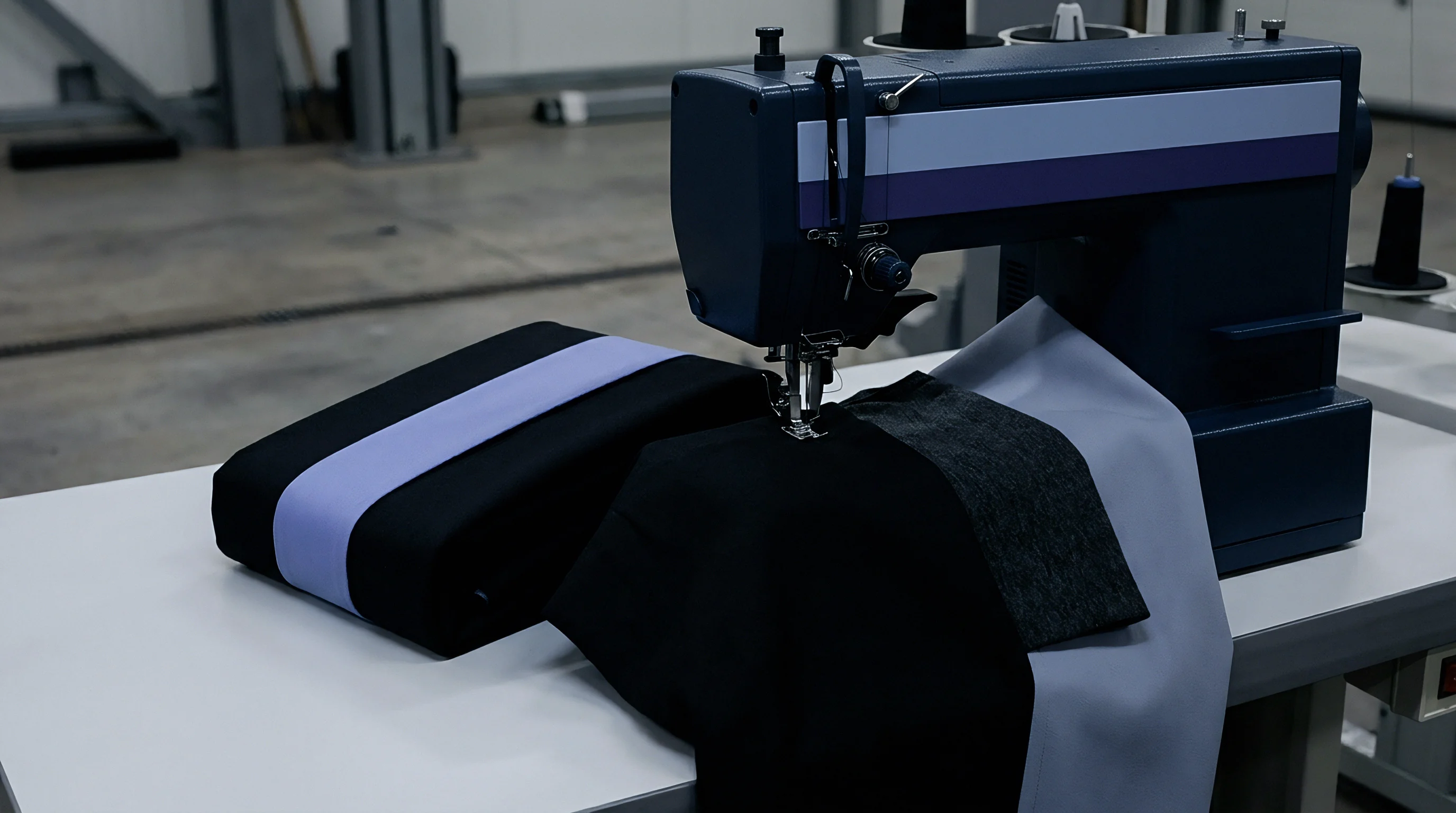
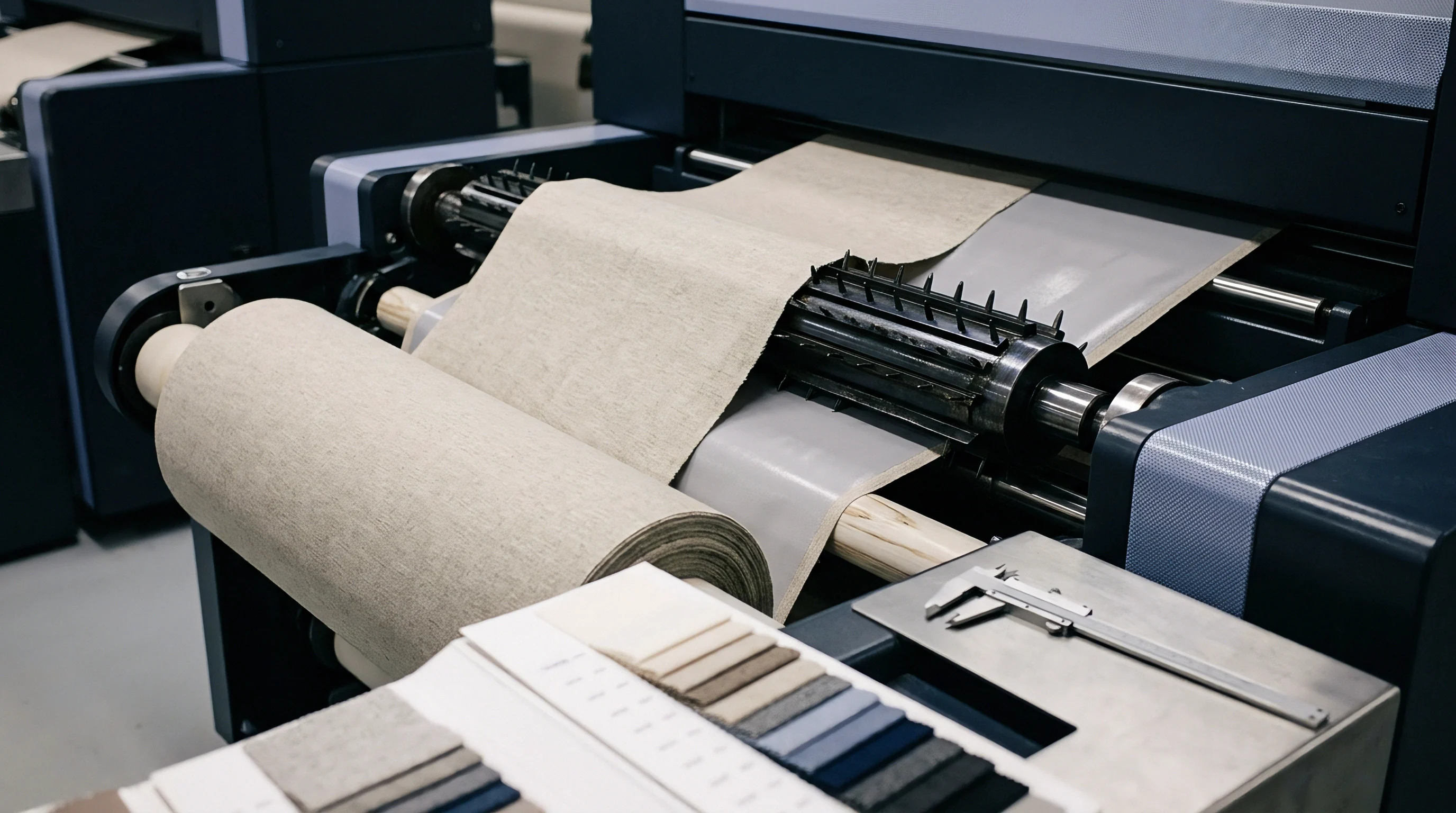
Screen
Prepress cylinder preparation fixes the initial capital commitment of mechanical pattern application long before dye paste meets greige cloth. Rotary cylinder electroforming generates perforated nickel sleeves spanning standard repeats of 640 millimetres, 820 millimetres, or 914 millimetres, where mesh counts range from 40 holes per linear inch for coarse pigment glitters to 195 holes per linear inch for fine reactive line work. A separate cylinder is necessary for every distinct colour separation in the artwork.
Laser engraving systems ablate light-sensitive emulsion coats directly on the lacquered cylinder circumference, whereas conventional exposure systems rely on graphic film separations wrapped around chemically sensitized sleeves. Rotary engraving costs remain unrecoverable.
Chemical lacquer selection dictates screen longevity and stripping feasibility. Polymerized photo-emulsions resist mechanical squeegee abrasion across fifty thousand metres of production run, yet they bond irreversibly to the nickel substrate. Strip-and-recoat procedures remain restricted to specialized water-soluble lacquer formulations that yield lower blade wear resistance.
When a print design demands twelve individual colour separations, the buyer assumes upfront engraving charges that aggregate rapidly before a single production metre clears the dryer. Flatbed screen frames introduce parallel tooling charges through polyester monofilament tensioning, pneumatic clamping, and direct-to-screen laser projection, albeit at lower baseline hardware replacement rates.
Nickel screen meshes tear when operators force viscous emulsion through under-cured lacquer.
Cylinder development expenses scale in direct proportion to pattern complexity, mesh specification, and the total separation count required by the graphic studio.
- Perforated nickel cylinders establish the mechanical carrier for colour transfer, pricing between three hundred and five hundred dollars per engraved roller depending on wall thickness and mesh gauge.
- Rotary lacquer emulsions provide chemical barrier resistance against acidic or alkaline print pastes, adding secondary coating and oven-curing overhead to each sleeve.
- Laser exposure tooling eliminates film separation consumables while imposing significant machine depreciation rates on the engraving department ledger.
- End ring assemblies secure the cylindrical sleeve into the machine drive heads, demanding precise thermoplastic adhesive bonding to prevent circumference distortion under squeegee torque.
Digital inkjet workflows eliminate physical cylinder preparation by translating raster image files directly into droplet ejection commands at the printhead raster image processor. High-resolution droplet deposition replaces physical screen engraving entirely, removing upfront separation expenses from the development invoice. A conversion from analog flatbed or rotary printing to piezoelectric drop-on-demand printing trades fixed prepress cylinder manufacturing costs for variable fluid consumables pricing.
The technician at the mill often remarks that screen charges cannot be credited back because the nickel cylinder permanently belongs to that specific graphic pattern once engraved.
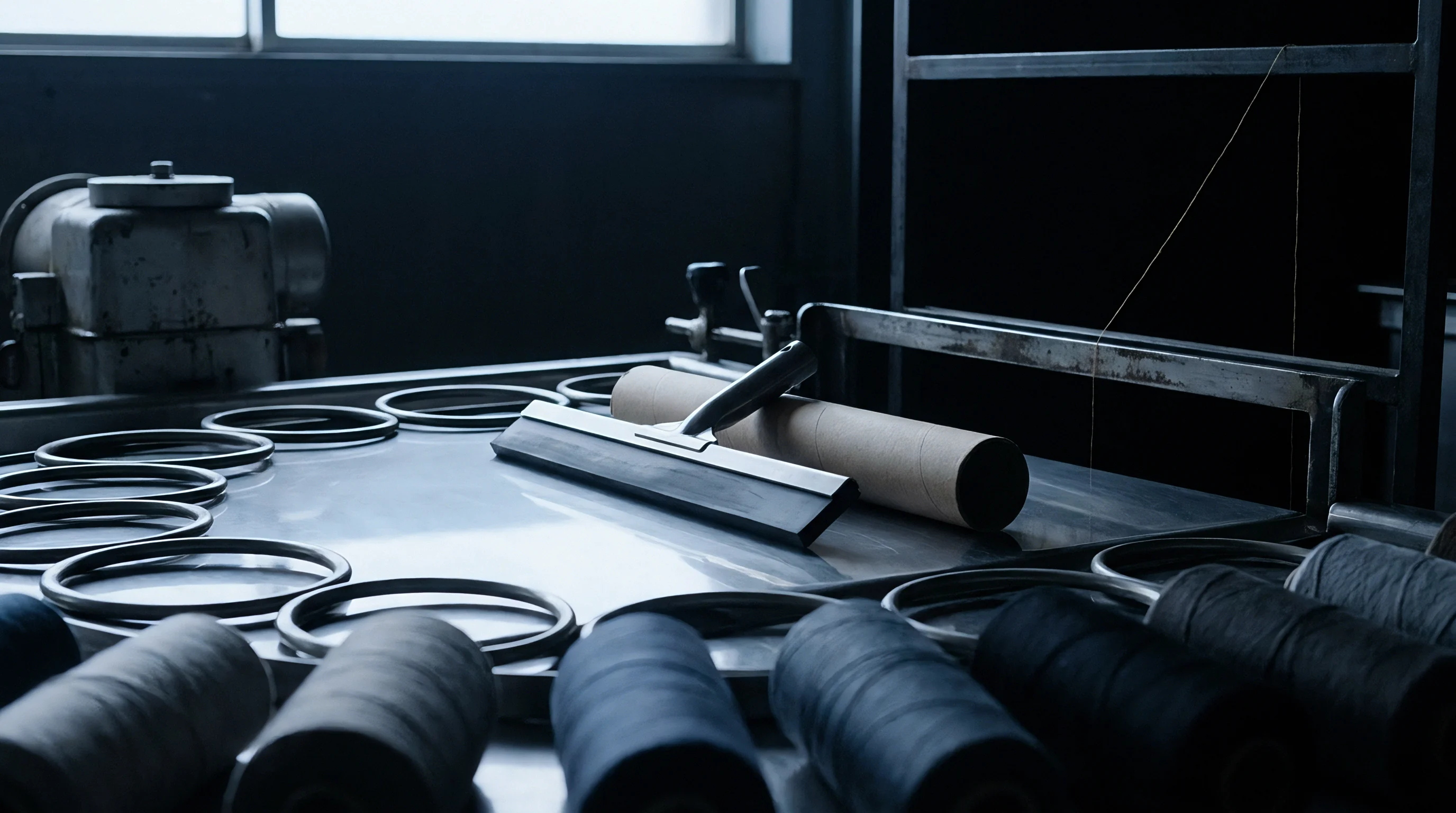
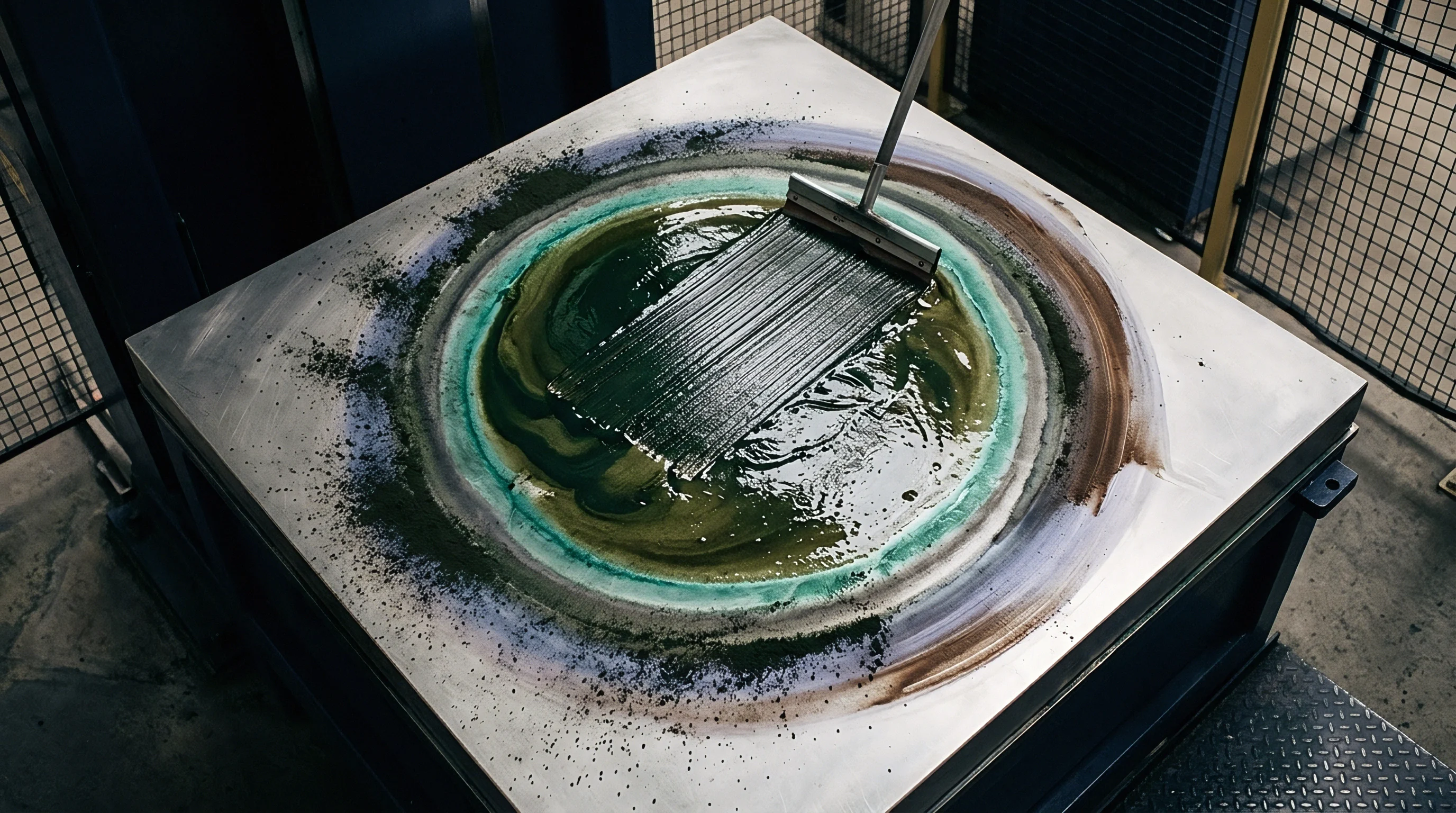
Downtime
Mechanical line clearance forces production equipment into non-productive intervals during every design or colourway transition. Rotary machines stop completely while operators detach colour supply hoses, pump residual paste back into storage drums, and extract squeegee blades from each print station. Strike-offs burn production hours.
Technicians must physically dismount the engraved nickel cylinders, wash lingering paste from the machine heads, and mount new rollers into drive chucks with precise axial registration. Each cylinder requires longitudinal, lateral, and diagonal alignment to bring the graphic repeats into phase across the machine web width before continuous printing resumes.
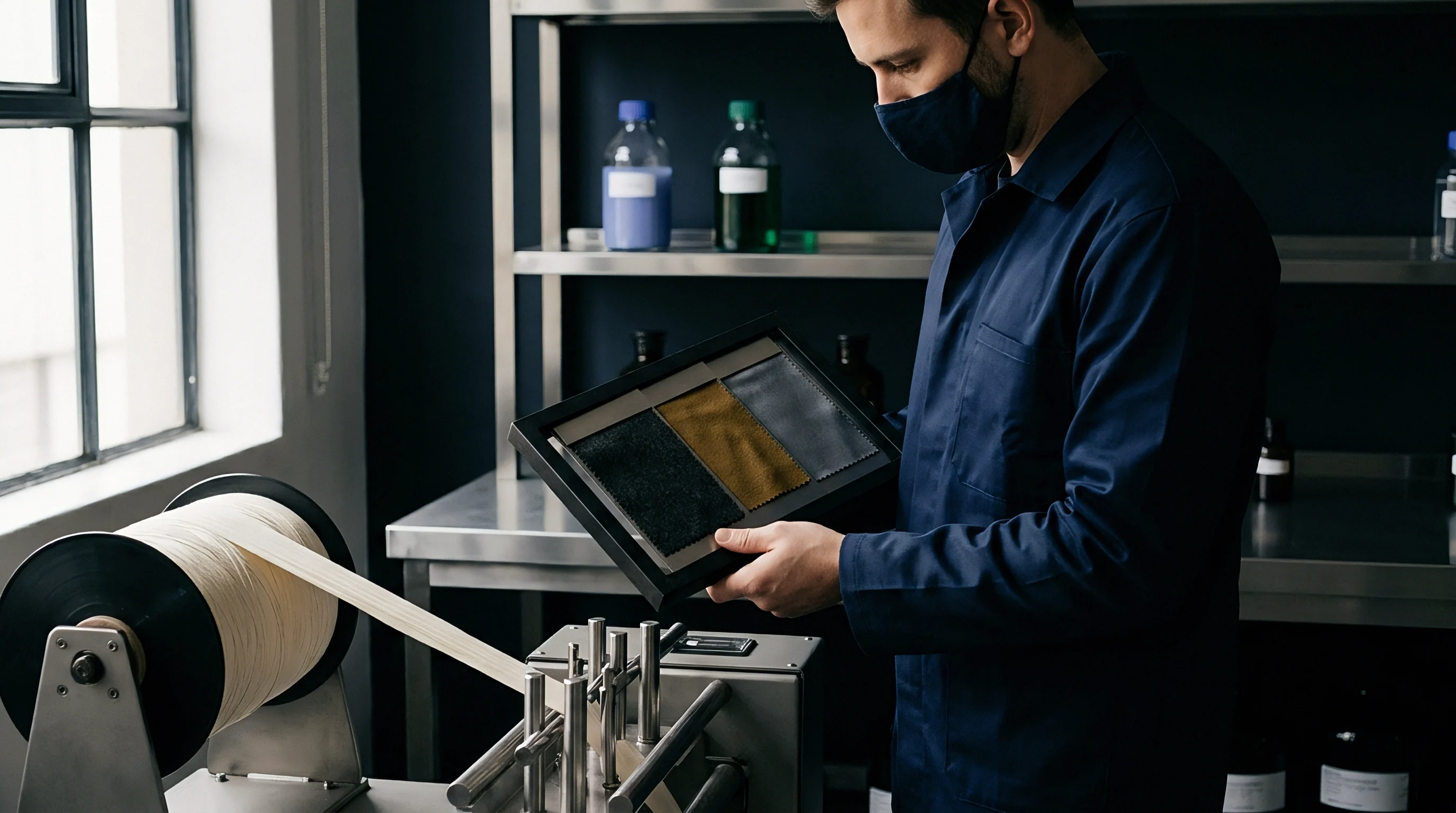
Why Do Screen Washdowns Outlast Digital Purging Cycles?
Paste evacuation and mechanical scrubbing dictate the duration of physical screen changeovers. Twelve-colour rotary configurations routinely consume between ninety and one hundred and fifty minutes of crew intervention to execute a complete colourway swap. Operators flush the distribution pipes with pressurized water, scrape the interior cylinder walls, clean the stainless steel squeegee blades, and adjust pneumatic pressure across every individual station.
Every paste squeegee requires scrubbing. In contrast, digital scanning and single-pass inkjet systems manage pattern transitions through software execution, requiring no physical cylinder changes or pipe washouts between graphic files.
Rotary changeovers consume operational capacity through paste recovery and squeegee alignment rather than cylinder positioning alone.
Digital changeover downtime concentrates instead on automated printhead maintenance routines. Between print jobs, piezoelectric printheads perform meniscus vacuum purges, wiper blade passes, and localized solvent flushes to dislodge micro-bubbles and dried ink crusts from nozzle orifices. Piezoelectric nozzles clog from dried dispersion.
When a digital system transitions between different dye classes, such as swapping reactive inks for disperse formulations, the purge cycle expands into an aggressive chemical washout that consumes hours of downtime and several litres of proprietary flushing solution.
The operational sequence for an analog rotary changeover follows a rigid physical trajectory on the print shop floor.
- Pumping systems reverse flow to vacuum excess dye paste from cylinder reservoirs back into transit drums.
- Operators disconnect feed lines and pull squeegee assemblies from the machine carriage.
- Cylinders uncouple from drive mandrels and transfer to dedicated washing units for high-pressure spray cleaning.
- Washbox mechanisms scrub residual paste from the continuous synthetic blanket belt.
- Fresh cylinders mount into registered drive chucks with gear teeth seated to repeat zero-marks.
- Supply hoses connect to newly formulated colour drums and pumps prime the cylinder interiors.
- Crew members run strike-off yardage through the stenter entrance to verify pattern fit under dynamic tension.
Mechanical setup durations vary drastically depending on the print technology selected and the physical dimensions of the machinery.
| Printing Method | Average Changeover Duration | Crew Size Required | Primary Mechanical Bottleneck | Downtime Labour Hours |
|---|---|---|---|---|
| Rotary Screen (8 Colours) | 75 to 110 minutes | 3 operators | Cylinder washing and squeegee alignment | 3.75 to 5.50 hours |
| Rotary Screen (16 Colours) | 140 to 210 minutes | 4 operators | Paste line clearing and multi-station registration | 9.30 to 14.00 hours |
| Flatbed Screen (Automatic) | 90 to 160 minutes | 2 operators | Frame clamping, stroke adjustment, squeegee angle | 3.00 to 5.30 hours |
| Scanning Digital Inkjet | 8 to 20 minutes | 1 operator | Nozzle plate wiping and automated purge cycle | 0.13 to 0.33 hours |
| Single-Pass Digital Inkjet | 15 to 35 minutes | 2 operators | Print bar spitting, roll splicing, camera alignment | 0.50 to 1.16 hours |
The unanswered challenge lies in whether automated cylinder washing units inside modern rotary lines can ever compress changeover windows enough to compete with digital software transitions on multi-colour short runs.
Waste
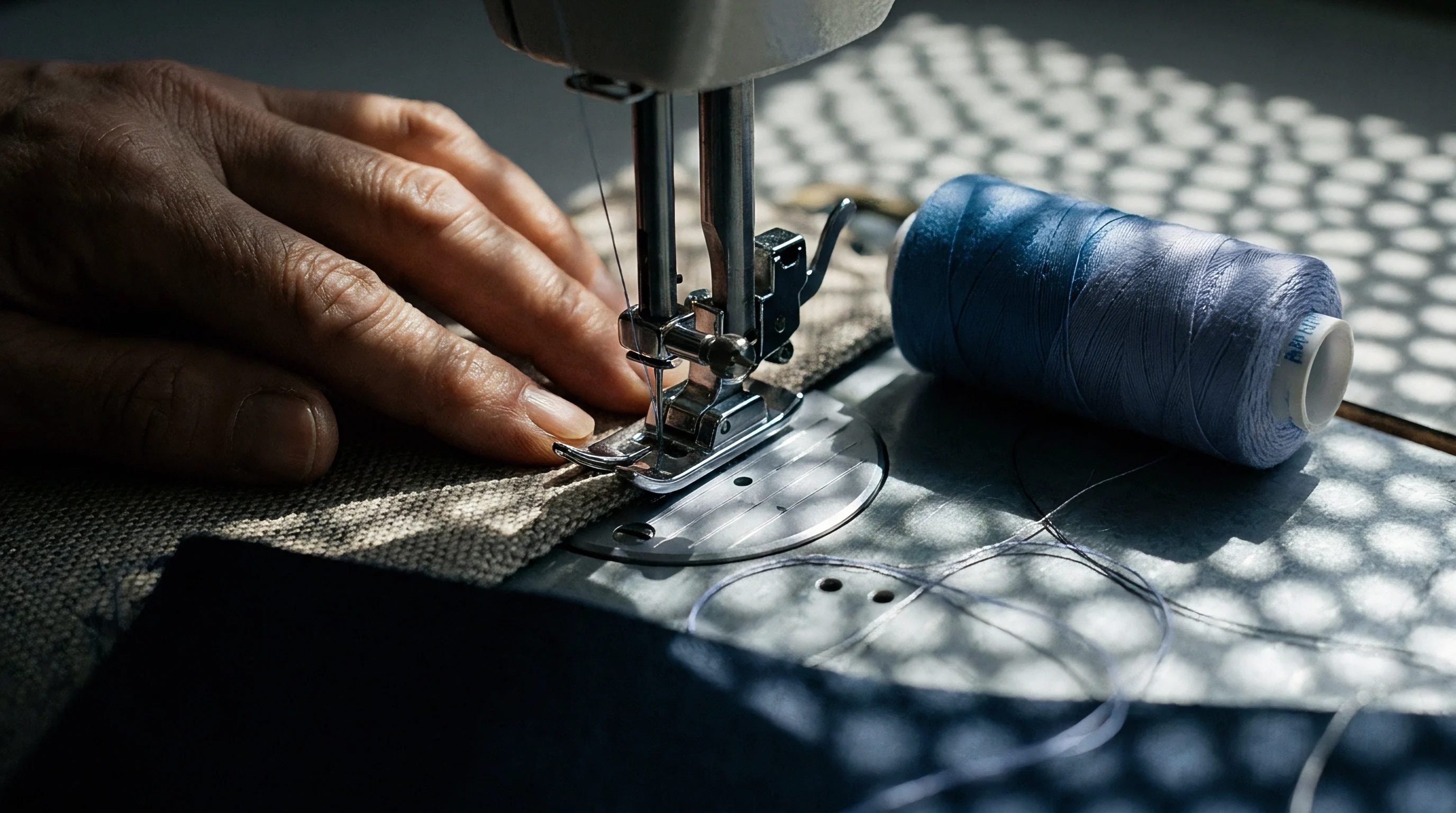
Initial yardage advancing through a restarted printing machine absorbs uneven tension, registration offsets, and unstable paste delivery until continuous equilibrium establishes itself across the web. Rotary cylinder printing generates heavy scrap yardage during repeat synchronization. Operators inch the machine forward while visually checking register pins through magnifying eyepieces, discarding misaligned yardage into catch carts.
Paste viscosity fluctuations and uneven squeegee pressure cause immediate colour shading across the width until the pump sustains steady hydraulic pressure inside the perforated sleeve. Waste rolls carry full overhead.
Residual chemistry evacuation represents a parallel material loss. Dye paste held within delivery tubes, pumps, and cylinder troughs cannot return entirely to raw supply containers without contamination. A twelve-colour rotary run abandons between two and four kilograms of formulated paste per printing station at line clearance.
When processing expensive vat dyes or specialty discharge chemistries, unrecoverable paste losses represent substantial financial drains that inflate overall job costs. Blanket adhesives lose tack rapidly. Water consumption during washdowns creates secondary effluent treatment surcharges, as high chemical oxygen demand loads from discarded print pastes enter plant wastewater treatment plants.
Blanket washdown cycles consume seventy litres of heated water per cylinder position during reactive paste changeovers on a standard twelve-colour rotary frame.
Substrate setup losses manifest in predictable mechanical failure categories during line initiation.
- Registration skew yardage occurs while gear drives synchronize repeat intervals, creating defective graphic overlays that fail visual inspection criteria.
- Paste strike-through waste develops when initial squeegee pressure forces excess paste through open greige pores before tension rollers balance fabric draft.
- Blanket transfer spotting emerges from residual water droplets left on the transport belt after automated wash cycles, diluting localized print areas.
- Dryer lead-in leader absorbs stenter heat without receiving print paste, sacrificing ten to twenty metres of raw woven or knitted substrate to pull goods through curing chambers.
Digital printing compresses substrate waste by eliminating the physical registration alignment sequence. Digital printheads demand deaerated chemistry. Inkjet systems deposit drops directly onto calibrated web paths without mechanical cylinder positioning, restricting startup substrate loss to standard roll-splicing yardage and brief drop-placement calibration targets.
Ink purge waste remains confined to millilitres of fluid drawn into maintenance caps rather than kilograms of thickener paste abandoned inside delivery pipes. Squeegee friction on rotary blankets will always abrade physical sleeves over sustained runs, but digital piezo heads avoid substrate contact entirely.

Crossover
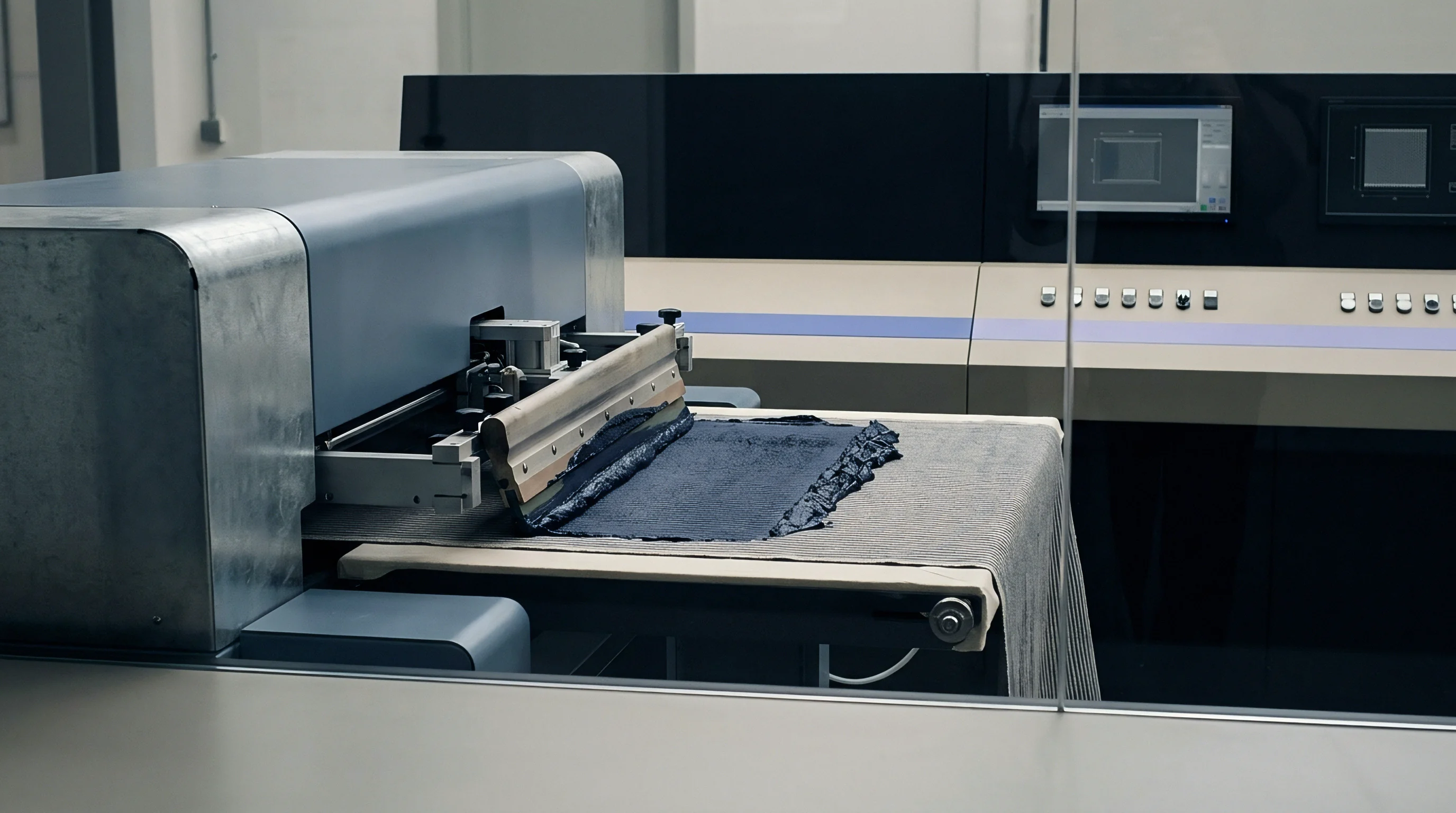
Production volume dictates whether prepress tooling amortisation outweighs high-performance digital ink consumption. Analog rotary printing demands heavy upfront screen investment and lengthy mechanical setup downtime, yet raw paste chemistry costs remain minimal. Reactive or pigment paste formulations cost between two and five dollars per kilogram of prepared paste.
Digital inkjet systems eliminate screen preparation charges and compress machine downtime, but proprietary ink formulations command thirty to eighty dollars per kilogram. This operational disparity establishes a mathematically definitive run-length threshold where total manufacturing expenses intersect.
Where Do Rotary Print Runs Reach Economic Parity?
Evaluating unit economics requires calculating total cost per finished metre across shifting order volumes. The total production expense encompasses prepress cylinder preparation, machine downtime labour, startup substrate waste, running machine time, and raw colourant chemistry consumed across the yardage. Rotary cylinders demand nickel sleeves.
Short run lengths absorb screen preparation costs across limited yardage, driving unit pricing to unsustainable levels. As batch sizes expand into thousands of continuous metres, initial tooling charges dilute toward zero, allowing low paste chemistry costs to dominate total expenditure.
Take a representative design utilizing eight colour separations executed on a 140 gram per square metre plain weave cotton fabric at a width of 150 centimetres. Assume screen engraving fees of 350 dollars per cylinder, mechanical changeover downtime of 90 minutes with a three-person crew at 25 dollars per labour hour, and 35 metres of registration setup waste valued at 2.50 dollars per greige metre. Paste consumption averages 25 grams per square metre with paste priced at 3.00 dollars per kilogram.
For scanning digital inkjet execution of the same graphic, assume zero screen preparation costs, 15 minutes of single-operator changeover downtime, 5 metres of calibration waste, digital ink consumption of 12 grams per square metre, and digital ink priced at 45.00 dollars per kilogram. Machine operational depreciation runs at 80 dollars per hour for rotary frames and 45 dollars per hour for digital printers.
| Production Run (Metres) | Rotary Fixed Tooling Cost | Rotary Setup & Waste Cost | Rotary Cost per Metre | Digital Setup & Waste Cost | Digital Cost per Metre |
|---|---|---|---|---|---|
| 100 | $2,800.00 | $155.00 | $30.82 | $23.75 | $1.88 |
| 300 | $2,800.00 | $155.00 | $11.14 | $23.75 | $1.81 |
| 500 | $2,800.00 | $155.00 | $7.20 | $23.75 | $1.79 |
| 1,000 | $2,800.00 | $155.00 | $4.25 | $23.75 | $1.78 |
| 1,800 | $2,800.00 | $155.00 | $2.93 | $23.75 | $1.77 |
| 2,500 | $2,800.00 | $155.00 | $2.47 | $23.75 | $1.76 |
| 3,500 | $2,800.00 | $155.00 | $2.12 | $23.75 | $1.75 |
| 5,000 | $2,800.00 | $155.00 | $1.85 | $23.75 | $1.74 |
| 7,000 | $2,800.00 | $155.00 | $1.66 | $23.75 | $1.73 |
| 10,000 | $2,800.00 | $155.00 | $1.51 | $23.75 | $1.72 |
The mathematical crossover point for this eight-colour specification emerges near 6,200 metres. Below 1,800 metres, digital printing delivers overwhelming cost advantages by eliminating the 2,800 dollar cylinder charge and compressing machine setup scrap. Between 2,000 and 5,000 metres, both technologies approach operational parity, where commercial margins hinge on line speed, delivery lead times, and client delivery urgency.
Beyond 7,000 metres, rotary screen technology commands superior unit economics, because bulk paste chemistry costs swamp digital ink expenses despite the initial tooling barrier.
Single-pass digital printers distort this parity curve by combining digital setup speeds with mechanical output velocities exceeding fifty linear metres per minute. Capital investment for single-pass installations exceeds three million dollars, creating heavy hourly equipment depreciation charges that must be offset through continuous multi-shift production schedules. Single-pass machines reduce ink costs slightly through bulk chemical sourcing contracts, moving the economic crossover against rotary printing outward to roughly 8,500 metres under standard operational conditions.
Chemical ink consumption rates vary based on substrate construction and surface porosity. A high-twist worsted wool suiting absorbs far less fluid than a loosely knitted French terry fleece with high loop surfaces. When printing heavy terry towels or dense upholstery velvets, digital drop volume limitations force multiple pass sweeps or heavy saturation profiles that multiply ink costs exponentially.
Rotary printing utilizes mechanical squeegee shearing to drive viscous paste deep into the yarn core, maintaining flat chemistry costs even on heavy areal weights. Substrate drag alters print tension. For lightweight cotton lawn, silk habotai, or filament polyester taffeta, digital fluid penetration remains manageable, preserving the cost benefits of low changeover times.
Colour separation depth directly manipulates the economic tipping line. A simple two-colour polka dot design requires only two rotary cylinders, depressing fixed prepress investment to 700 dollars and shortening washdown intervals to forty minutes. For that minimal design, rotary printing reaches economic parity against digital inkjet at merely 1,200 metres.
Conversely, a photographic landscape pattern requiring sixteen distinct tonal separations incurs 5,600 dollars in cylinder engraving alone, pushing the rotary crossover volume beyond 12,000 metres. The route engineer evaluates graphic structure alongside yardage before assigning production to print sheds.
Ledger
Commercial contracts formalize financial liability for machine changeover downtime and development tooling through explicit purchase order schedules. Mills insulate operating margins by writing minimum colourway quantities and screen development surcharges directly into raw fabric conversion quotes. When a buyer demands smaller production splits across multiple colour palettes, converters assess changeover penalties ranging from one hundred to three hundred dollars per shade change to offset lost line capacity and operator washdown hours.
Reactive pastes hydrolyze in storage. Pigment systems bypass steam aging. Ink viscosity governs drop formation.
Contracts stipulating ISO 105-B02 lightfastness qualification on initial strike-offs protect buyers from unauthorized pigment binder adjustments between sample and bulk execution.
Tooling amortisation agreements define whether engraved screens remain the exclusive property of the client or enter general mill inventory. A purchaser paying direct separation and engraving invoices retains design exclusivity, backed by contractual clauses requiring physical cylinder preservation or documented sleeve stripping after production termination. Dispute settlement provisions govern scrap allowances during startup.
Standard trade terms accept up to five percent startup waste on custom rotary print runs under two thousand metres, shrinking to two percent on bulk production exceeding ten thousand metres. Digital print agreements compress acceptable scrap thresholds to one percent across all volume bands.
Commercial master service agreements incorporate explicit clauses detailing setup scrap recovery: “All mechanical strike-off yardage and startup changeover waste up to a maximum threshold of three percent of total ordered linear yardage shall be invoiced at raw greige cost rather than finished print conversion rates, with any excess defective yardage credited against the final mill settlement invoice.”