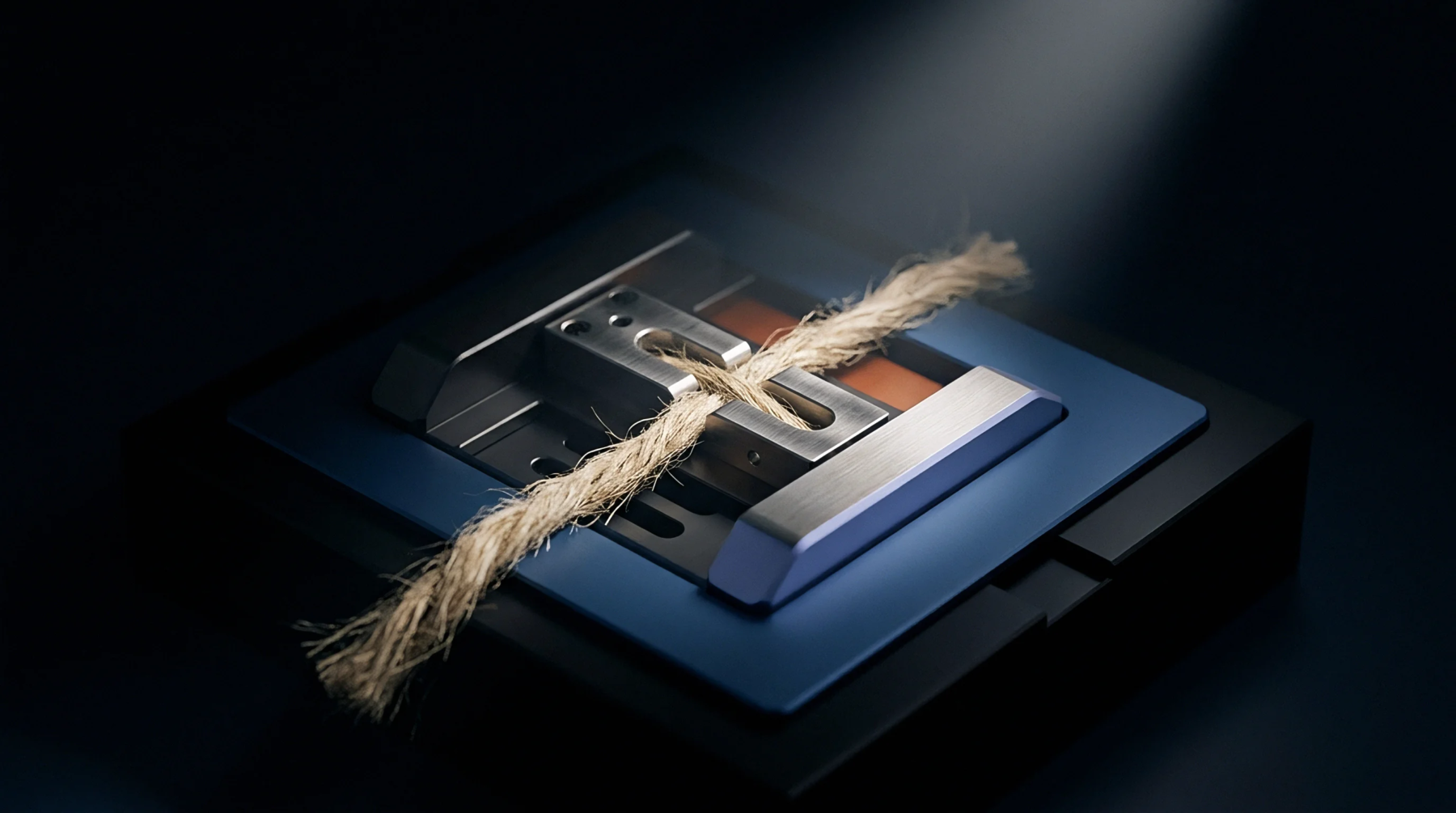
Dewatering Element
Stationary hydrodynamic drainage components control fluid extraction beneath moving porous belts in wet-laid nonwoven web production lines. Mounted beneath the forming wire, a hydro-foil creates localized vacuum pulses that pull water from saturated synthetic and cellulosic fibre mats. Blade profile geometry and mounting angle dictate the intensity of water drainage across the machine width.
Proper component selection prevents sheet disruption while maximizing water removal prior to mechanical bonding stages.
Hydrodynamic Action
As the porous forming wire travels across the angled leading edge of the blade, a low-pressure zone forms in the expanding gap behind the blade tip. This suction pulse draws free water downward through the wire and out of the wet fibre web. Tailoring the divergence angle determines both vacuum magnitude and pulse duration.
Steep blade angles yield high peak suction that collapses open web structures, whereas gentle angles provide controlled dewatering suitable for delicate staple fibre blends. Multi-blade hydro-foil assemblies generate sequential suction pulses that progressively increase sheet dry content without washing out fine fibres.
Structural Integration
Rigid ceramic or high-molecular-weight polyethylene construction prevents blade deflection across wide production spans. Even blade profiles ensure uniform vacuum distribution, preventing longitudinal streakiness and basis weight variation in finished nonwovens.
Performance Verification
Ultrasonic sensors and radiometric gauges measure web moisture content immediately downstream of drainage assemblies. Mill technicians adjust blade orientation to optimize water extraction rates against web stability standards. Precise blade positioning maintains consistent moisture profiles across high-speed technical nonwoven lines.