Coriolis Mass Flow Control Integration versus Mechanical Volumetric Dosing Calibration in High Speed Continuous Dyeing
Coriolis mass control eliminates shade tailing by measuring true chemical mass independent of liquor temperature, air entrainment, and pump wear.
Pulse
Continuous pad-dry-thermosol and pad-steam ranges operating above seventy metres per minute expose severe vulnerabilities in mechanical displacement pumps. In continuous dyeing, colorants and auxiliary chemicals pass from bulk feed tanks through dosing units into a low-volume pad trough. The rate of chemical delivery matches the rate of substrate passage and wet pick-up percentages.
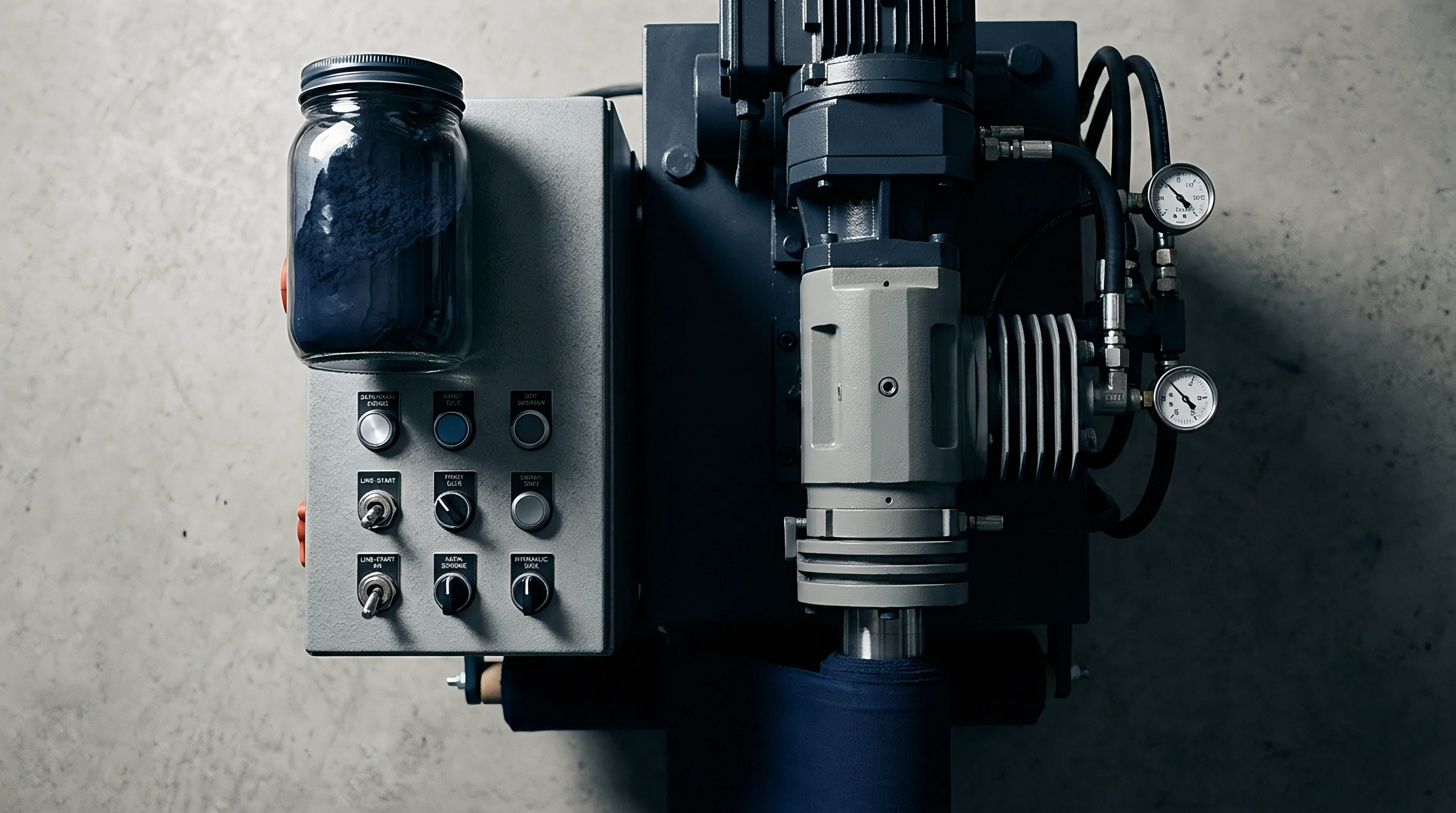
Mechanical volumetric dosing systems rely on positive displacement mechanics, utilizing reciprocating pistons, rotating lobes, or flexible diaphragms to deliver calculated liquid volumes per revolution or stroke. These mechanical assemblies generate recurring pressure spikes and flow pauses with every stroke cycle. When running pale or medium shades on high-speed continuous ranges, micro-pulsations in dyestuff delivery create subtle periodic variations in liquor concentration inside the trough.
As mechanical check valves opening and closing hundreds of times per hour undergo surface degradation, fluid slipping past the valve seats alters the delivered volume per stroke. The pump drive counter registers the expected displacement while actual chemical mass delivered to the trough drops. On continuous dyeing ranges processing 220 grams per square metre woven cotton twill at eighty metres per minute, a two percent drop in dyestuff liquor delivery shifts total color difference by over 0.8 Delta E CMC units within fifteen minutes of operation.
Volumetric calibration methods attempt to compensate for mechanical loss by running timed beaker draws at static motor speeds. Static pump calibration fails to replicate dynamic line conditions where back-pressure in feed lines fluctuates with filter loading, temperature, and liquor trough level adjustments.
| Parameter | Mechanical Volumetric Dosing | Coriolis Mass Flow Control |
|---|---|---|
| Primary Control Variable | Volumetric Displacement (L/h) | Direct Mass Flow (kg/h) |
| Pulsation Dampening Requirement | External Accumulator Chambers Required | Inherent Differential Flow Measurement |
| Response Time to Speed Variation | 3.0 to 8.0 Seconds (Mechanical Gear Adjustment) | 0.2 to 0.5 Seconds (Electronic Control Loop) |
| Sensitivity to Fluid Viscosity | High (Slip Rate Varies with Viscosity) | Immune to Viscosity Changes |
| Calibration Frequency | Shift-wise Manual Timed Beaker Draws | Continuous Automated Diagnostics |
Integrated mass flow systems using Coriolis technology separate fluid delivery from mechanical pump artifacts. Inside a Coriolis meter, oscillating flow tubes vibrate at structural resonance. As dye liquor moves through the vibrating tubes, inertial forces induce phase shifts and torsional twisting directly proportional to actual mass flow rate.
The physical measurement depends strictly on fluid mass, completely independent of volumetric shifts, mechanical pump wear, stroke frequency, or fluid compressibility. Integrating a Coriolis flow sensor downstream of a variable-speed dosing pump creates an active feedback loop: when mechanical check valves experience transient seating delays, the Coriolis transmitter detects the instantaneous reduction in mass throughput and signals the pump drive to adjust speed within milliseconds.
Pulsation dampening bladders and spring-loaded back-pressure valves suppress delivery fluctuations down to acceptable commercial limits, but wet processing records demonstrate that elastomeric bladders degrade when exposed to aggressive alkaline reactive dye mixtures and concentrated wetting agents. As bladder pre-charge pressure bleeds off over extended production runs, shock absorption capacity collapses, returning raw mechanical pulses directly into the dye trough feed manifold.


Rheology
Concentrated dye liquor formulations behave as complex non-Newtonian fluids whose physical resistance to flow varies continuously across production cycles. Liquid reactive dyes, disperse dye suspensions, anti-migrant polymers, wetting agents, and alkali dosing chemicals present shear-thinning or thixotropic properties. Under low shear conditions inside feed tanks, liquid dye concentrates display higher effective viscosities.
As the dosing pump draws liquor into the pump chamber and forces it through narrow pipe orifices into the pad trough, local shear rates spike dramatically, reducing fluid viscosity during transit. Mechanical volumetric pumps calibrated on water or static reference liquids fail to deliver accurate volumetric quantities when handling shear-sensitive chemical mixtures.
Shear Thinning Effects in Displacement Delivery
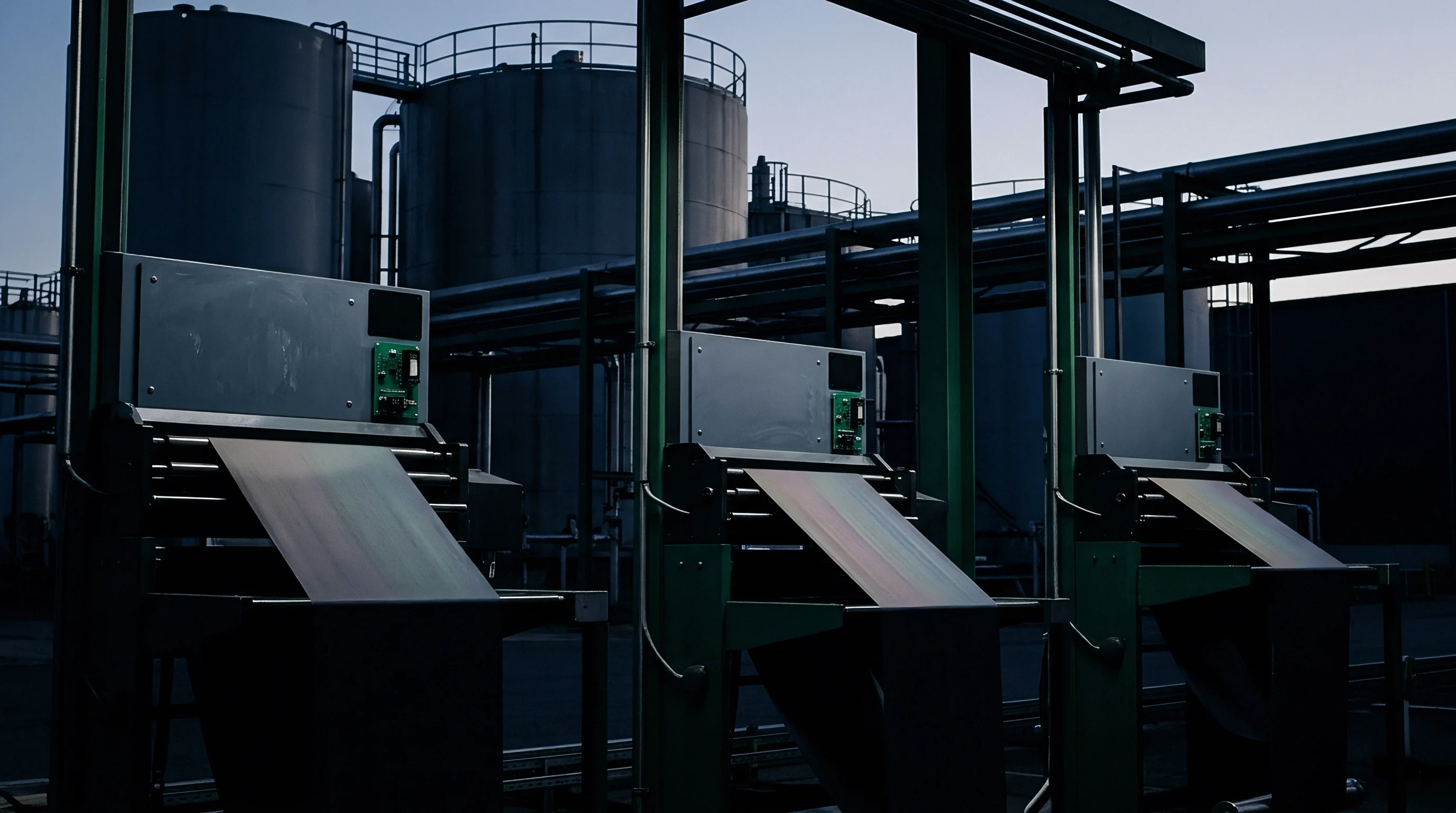
Volumetric pumps operate on the premise that displacement chamber volume translates directly to delivered fluid mass. Viscosity shifts break this basic premise. When processing heavy shade reactive dye recipes containing high concentrations of anti-migrant alginates or synthetic acrylic thickeners, the fluid slip coefficient through pump clearances fluctuates with line speed and shear rate.
High pump speeds reduce viscosity, increasing internal fluid bypass around piston rings or rotor lobes. Lower pump speeds allow fluid viscosity to increase, altering fill factors inside displacement cavities. The result is non-linear delivery across the operating speed envelope of the continuous pad-dry-thermosol line.
Viscosity alterations caused by ambient temperature drops shift volumetric pump stroke efficiency by over four percent during twelve-hour continuous runs.
Temperature swings inside the dye house compound fluid delivery errors. Dye concentrates stored in elevated bulk tanks experience ambient temperature shifts between night shifts and day shifts. A temperature drop of ten degrees Celsius increases the viscosity of concentrated disperse dye suspensions by up to fifteen percent.
Volumetric dosing units without real-time viscosity compensation alter their volumetric delivery profiles as temperature changes, leading to noticeable shade variation across long production lots.
- Fluid Shear Thinning alters internal slip through check valves and rotor clearances, causing speed-dependent volumetric dosing errors during speed acceleration and deceleration phases.
- Thixotropic Structure Breakdown inside delivery pipework changes flow profiles, creating unaccounted pressure drops across feed nozzles.
- Thermal Viscosity Drifts shift displacement chamber fill efficiency, altering delivered dyestuff mass without changing the physical pump speed counter reading.
- Particle Sedimentation in heavy disperse dye suspensions alters local fluid density and flow drag, causing uneven distribution across multi-feed pad troughs.
Viscosity shifts alter mechanical pump delivery, whereas mass control remains stable across fluid property changes.
Viscosity Independent Mass Measurement
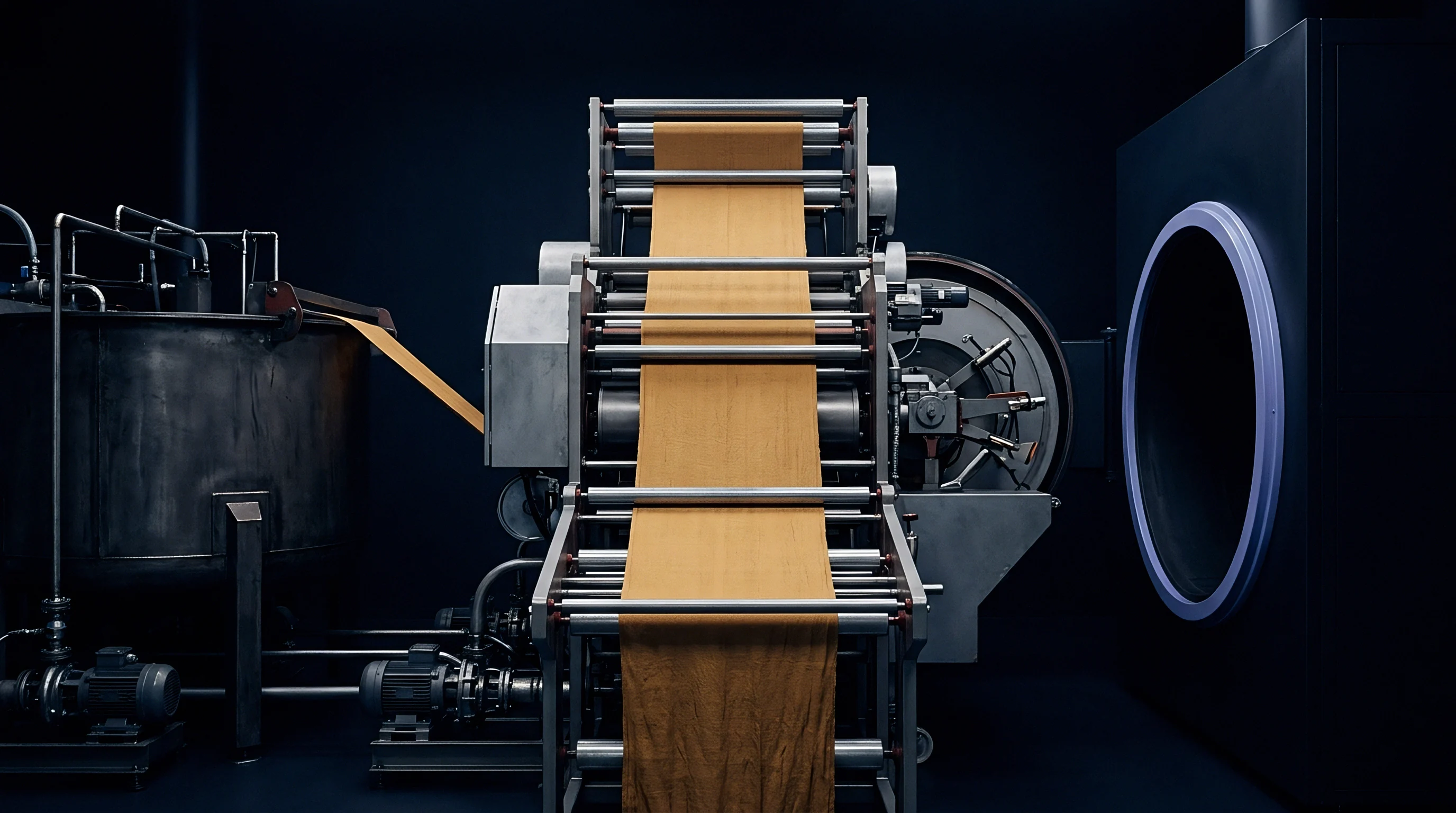
Coriolis meters bypass fluid rheology limitations entirely. The physical deflection of the vibrating sensor tubes results directly from the force exerted by moving fluid mass. Whether the dye liquor presents high viscosity at low shear or low viscosity at high shear, the mechanical mass passing through the measuring tube generates an identical Coriolis force.
The sensor measures true mass flow regardless of whether the fluid is a simple aqueous salt solution, a shear-thinning anti-migrant blend, or a thick disperse dye paste. By linking the Coriolis sensor signal directly to a frequency inverter driving a progressive cavity or diaphragm pump, liquor dosing accuracy stays constant across all chemical recipes without requiring manual recalibration for different dyestuff classes.


Density
Aqueous dye liquors change density dynamically during continuous operation due to thermal expansion, chemical batch variations, and micro-bubble entrainment. Volumetric dosing units deliver litres per minute, assuming that fluid density remains fixed at 1.00 gram per cubic centimetre. Dyeing processes depend strictly on mass ratios between substrate weight and pure dyestuff mass.
When liquor density drops due to thermal expansion or entrained air, volumetric dosing delivers reduced chemical mass to the substrate, causing pale shade deviations across continuous runs.

Thermal Expansion Coefficients and Gas Entrainment
Hot liquor preparation systems and continuous dissolution tanks cycle between forty and eighty degrees Celsius depending on dye solubility requirements. Water exhibits a thermal volumetric expansion coefficient that reduces bulk density as temperature rises. A dye bath prepared at sixty degrees Celsius contains less mass per litre than the same bath formulation prepared at twenty degrees Celsius.
When volumetric pumps supply high-speed pad troughs from feed tanks undergoing thermal cooling or heating, delivered dyestuff mass drifts constantly even if volumetric pump output remains perfectly flat.
Standard ISO 105-J03 color difference testing confirms that a three percent drop in applied reactive dyestuff mass exceeds acceptable commercial shade limits across light grey and beige shades.
Gas entrainment presents a more severe failure mode for volumetric calibration. High-shear mixing during dye dissolution, automatic tank refilling, and addition of low-foaming wetting agents introduce microscopic air bubbles into feed lines. Entrained air occupies physical volume inside displacement pump chambers without contributing dyestuff mass.
Volumetric dosing pumps meter these air pockets as liquid volume, leading to severe dyestuff under-dosing.
| Fluid State Variable | Physical Condition Shift | Volumetric Dosing Mass Error | Coriolis Mass Control Mass Error |
|---|---|---|---|
| Thermal Expansion | Temperature rise from 20°C to 65°C | -1.8% (Mass Deficit) | 0.0% (Zero Error) |
| Micro-Air Entrainment | 3.5% Volumetric Air Fraction | -3.5% (Mass Deficit) | 0.0% (Detected & Corrected) |
| Concentration Drift | +5.0% Salt / Dissolved Solids | +5.0% (Unintended Over-Dose) | 0.0% (True Mass Measured) |
| Combined Worst-Case | Hot Liquor + Air + Wear | -8.3% Total Mass Deviation | < 0.1% System Accuracy Limit |
Coriolis meters incorporate simultaneous density measurement capabilities alongside mass flow sensing. The resonant frequency of the Coriolis vibrating tubes changes in direct proportion to the density of the fluid contained within them. When micro-air bubbles enter the measuring tube, the system measures both reduced density and total mass rate simultaneously.
Modern Coriolis transmitters process tube oscillation frequency shifts to calculate fluid density in real time, alerting control operators instantly if severe aeration occurs while maintaining exact dyestuff mass feed rates through automated pump speed compensation.
Ignoring real-time fluid density shifts results in persistent off-shade production lots, excessive chemical additions during re-handling, and unpredictable shade strip rates on finished woven goods.


Drift
Mechanical wear introduces progressive calibration loss in displacement pumps across continuous operating schedules. Check valve seats erode under abrasive dyestuff slurries, piston seals suffer mechanical scoring, and diaphragm materials undergo elastic fatigue under continuous pressure cycling. This degradation creates a continuous downward drift in delivered volume per revolution.
In continuous dyeing plants operating round-the-clock schedules, mechanical pump calibration decay represents a primary cause of shade variation between initial production startup and lot completion.

Mechanical Wear Decay Profiles
Valves inside mechanical dosing units operate under demanding high-frequency conditions. Concentrated salt solutions and particulate dye suspensions cause abrasive wear on ceramic and stainless steel ball valves. As valve surfaces score, backflow during valve seating increases.
A pump calibrated at the start of a fifty-thousand-metre production run delivers progressively lower chemical volumes as operating hours accumulate. Manual shift-wise calibration checks using volumetric cylinders require stopping chemical feed lines, introducing process interruptions and scrap web at range entry.
- Disconnect the mechanical pump delivery line from the continuous pad trough manifold and divert flow to an isolated calibration vessel.
- Initialize the pump drive motor at a fixed frequency setpoint corresponding to target range production speed.
- Collect delivered dye liquor into a graduated glass cylinder while tracking elapsed time with an electronic digital timer for exactly sixty seconds.
- Record the collected fluid volume, calculate volumetric rate in litres per hour, and compare the result against target specification tables.
- Adjust mechanical stroke length dials or motor drive speed scaling factors manually to correct detected volumetric delivery deficits.
- Reconnect delivery lines to the pad trough manifold and record calibration adjustment details in the daily mill log.
Manual timed beaker draws measure static fluid volumes under zero back-pressure conditions without reflecting real-time dynamic resistance inside continuous pad manifolds.
Check valve erosion and piston seal friction combine to decrease mechanical volumetric pump accuracy by up to six percent over three hundred continuous operating hours.
Inline Coriolis mass flow control eliminates physical calibration procedures entirely. Continuous self-monitoring algorithms inside Coriolis transmitters measure drive gain, sensor tube symmetry, and signal damping rates. Drive gain measures the electrical energy required to keep sensor tubes vibrating at natural frequency.
If chemical scaling or abrasive erosion alters internal tube dimensions, sensor drive gain shifts, triggering diagnostic alerts before flow measurement accuracy degrades. This continuous structural monitoring maintains measurement integrity across years of continuous operation without requiring manual line stoppages or beaker draws.
Under ISO 9001 quality management standards for wet processing facilities, written equipment verification procedures must specify whether chemical application rates rely on unverified mechanical stroke counts or continuous direct sensor measurements with traceable error limits.


Feedback
Continuous dyeing ranges demand immediate chemical delivery adjustments during line speed acceleration and deceleration. When starting a continuous pad-dry-thermosol range, line velocity ramps smoothly from inching speed up to eighty or one hundred metres per minute to prevent web tension breaks and drying cylinder over-heating. Volumetric dosing systems attempt to match speed ramps using pre-programmed electronic gearing ratios linked to range tachometers.
Open-loop volumetric control cannot account for pump motor response lag, fluid inertia, or variable pipe expansion during speed transitions, resulting in off-shade fabric leads and tails.
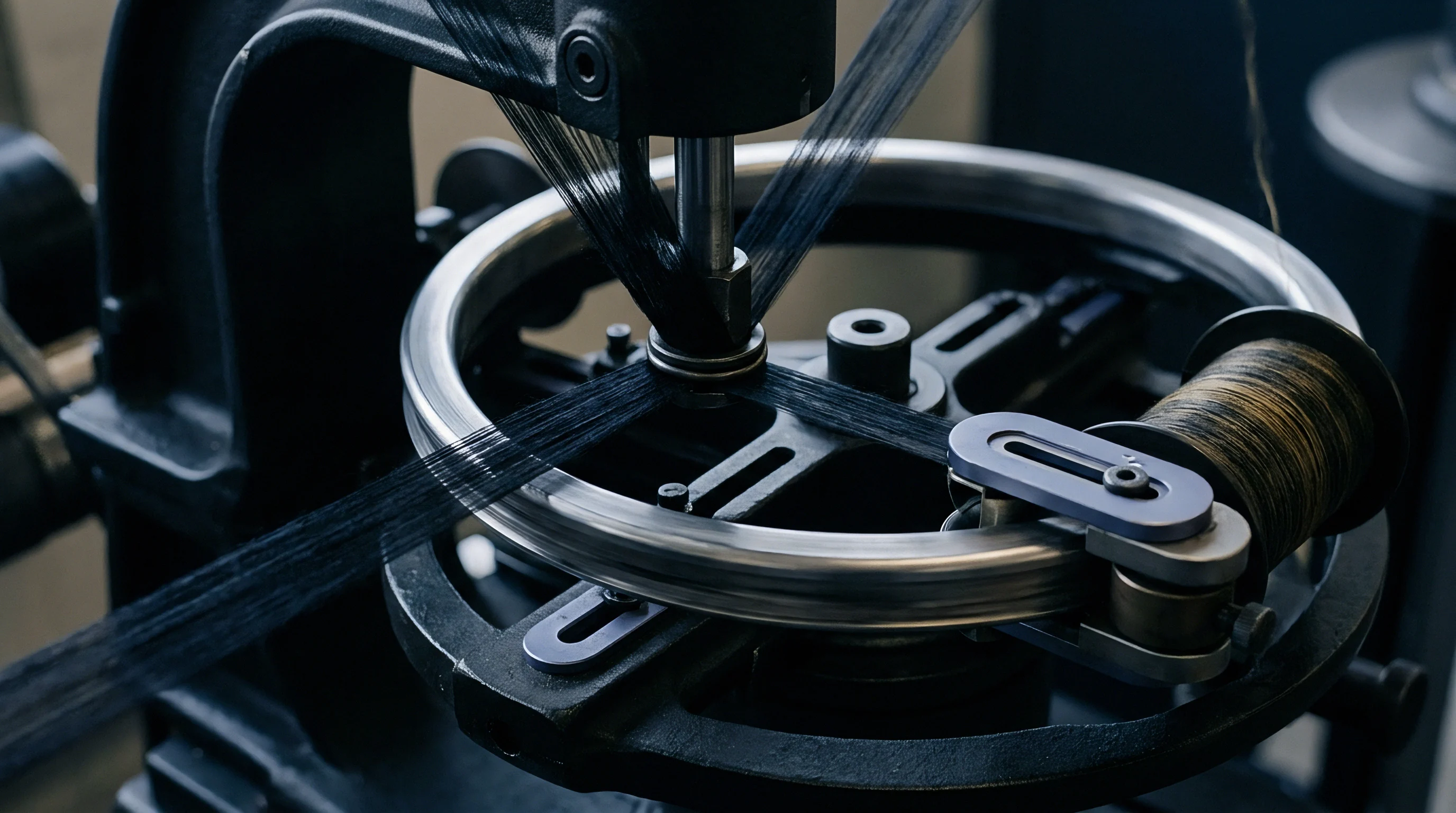
Does Online Coriolis Metering Eliminate Off-Shade Tailings?
Integrating Coriolis mass flow meters into continuous chemical dosing loops creates a dynamic closed-loop control system. The range master PLC continuously calculates required chemical mass flow rates based on real-time web speed sensors, measured substrate weight, and desired wet pickup percentage. The calculated setpoint passes to the Coriolis control loop as a high-speed digital mass flow target.
The Coriolis transmitter reads actual fluid mass passing into the pad trough every hundred milliseconds, executing PID control algorithm adjustments to the pump inverter drive instantly.
Dosing errors compound over long runs. Open-loop systems allow minor feed rate deviations to persist across thousands of metres, steadily shifting pad trough dyestuff concentration away from equilibrium. Closed-loop Coriolis integration eliminates concentration drift by maintaining strict mass balance between incoming substrate weight and added dye chemicals.
If wet pickup fluctuates due to variations in greige fabric absorbency or pad roll shore hardness, integrated mass feedback loops adjust dosing ratios dynamically to stabilize final color yield.
- Target Mass Calculation processes web tachometer data and substrate basis weight to determine real-time chemical mass requirements.
- High Speed Sensor Interrogation reads true fluid mass throughput via Coriolis resonance shift at ten-hertz update frequencies.
- Dynamic PID Adjustments correct drive motor frequencies instantly to eliminate mass delivery errors during speed changes.
- Pad Trough Level Synchronization balances total chemical addition against substrate consumption rates, preventing trough dilution or concentration build-up.
Dynamic control loops eliminate head-to-tail shade variance, securing consistent shade reproducibility from initial lot acceleration through final batch deceleration.
Unresolved operational questions remain regarding the optimal balance between high-frequency PID pump speed corrections and mechanical pump wear, specifically whether aggressive drive modulations shorten motor component lifespans during extreme range speed ramping.
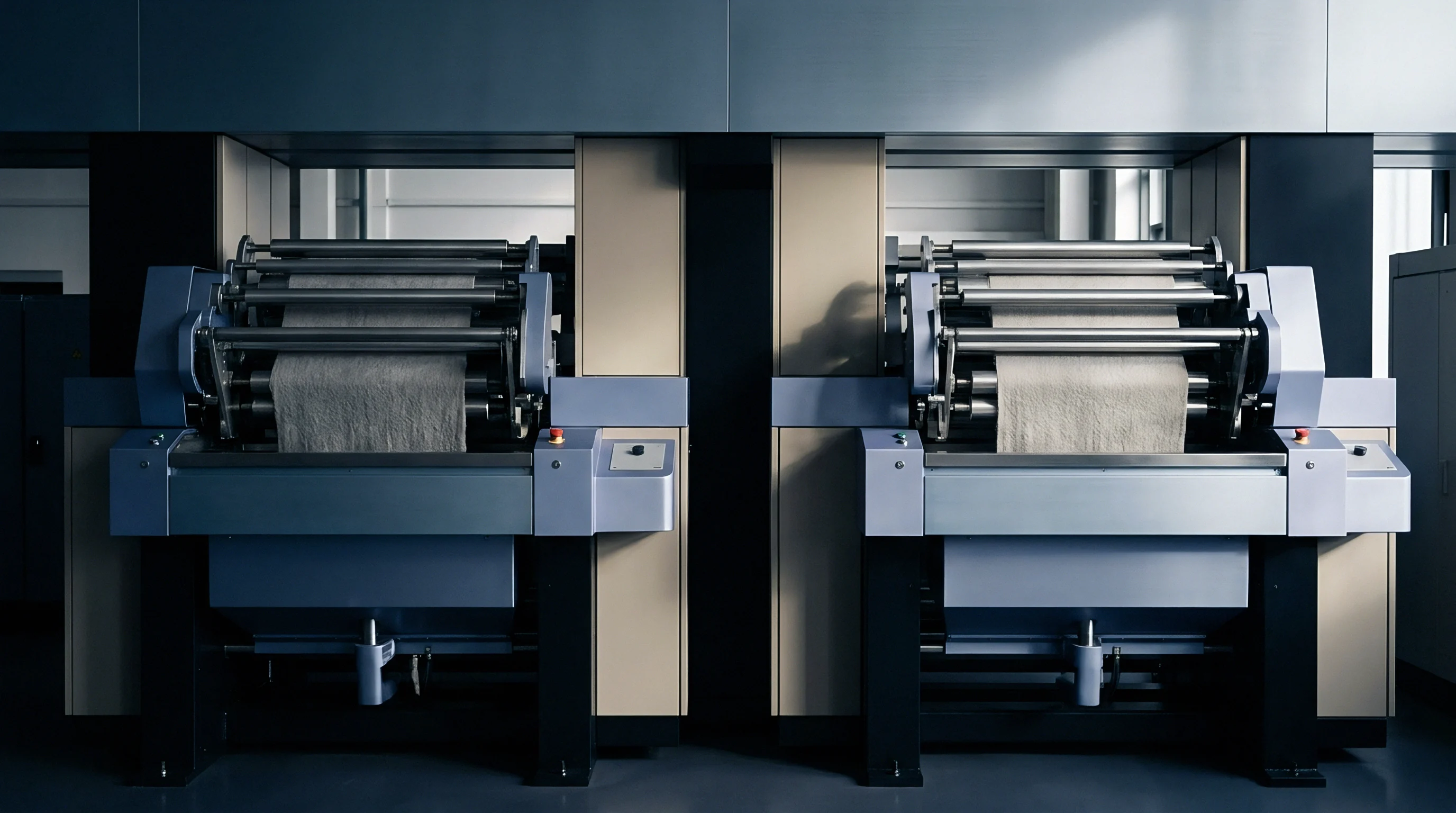

Ledger
Evaluating continuous dosing technology requires analyzing total manufacturing costs per finished metre, including raw dyestuff utilization, off-shade scrap rates, machine downtime, and labor overhead. Mechanical volumetric dosing systems carry lower initial capital equipment costs but expose continuous dyehouses to persistent operational yield losses. Coriolis mass flow control integration demands higher initial investment in precision instrumentation, specialized digital transmitters, and high-speed variable drive pumps, but delivers immediate material savings by tightening shade tolerances and eliminating re-handling work.
Worked Financial Comparison in Woven Cotton Processing
Consider a continuous dyeing operation running five million metres per year of 220 grams per square metre woven cotton twill using reactive dyestuffs. Assume a baseline chemical liquor cost of 0.42 USD per square metre at a nominal wet pickup rate of sixty-five percent. Under standard mechanical volumetric dosing calibration protocols, historical plant records show an average off-shade reject rate of 1.85 percent caused by head-to-tail shade tailing, thermal viscosity drift, and mechanical pump calibration decay.
Off-shade woven goods require chemical stripping and re-dyeing into dark navy or black shades, incurring an average re-handling penalty cost of 0.68 USD per metre in direct chemicals, energy, stenter time, and lost capacity margin.
Installing continuous closed-loop Coriolis mass flow metering across the pad dosing manifold reduces off-shade reject rates down to 0.22 percent by maintaining precise dyestuff mass feed rates regardless of fluid temperature, viscosity shifts, or mechanical pump wear. On an annual production volume of five million metres, this reduction in rejected goods saves 81,500 metres of fabric from chemical re-stripping and re-dyeing routes. At a re-handling cost penalty of 0.68 USD per metre, the direct annual savings in re-work cost equals 55,420 USD.
Chemical additions during lot starts drop significantly, saving an estimated 14,200 USD annually in direct reactive dyestuff waste.
| Cost Category | Mechanical Volumetric Dosing | Coriolis Mass Flow Control | Annual Net Variance |
|---|---|---|---|
| Initial Capital Expenditure (2 Lines) | $18,000 USD | $64,000 USD | -$46,000 USD (Initial Outlay) |
| Annual Off-Shade Scrap Rate | 1.85% (92,500 m) | 0.22% (11,000 m) | +81,500 m Reclaim |
| Annual Re-Handling Penalty Cost | $62,900 USD | $7,480 USD | +$55,420 USD Savings |
| Dyestuff Over-Dosing Scrap Value | $18,400 USD | $4,200 USD | +$14,200 USD Savings |
| Manual Calibration Labor Costs | $8,600 USD | $800 USD | +$7,800 USD Savings |
| Total Annual Net Financial Benefit | Baseline Operations | +$77,420 USD / Year | Simple Payback: 7.1 Months |
Chemical costs dominate finishing budgets. Calculating net return on capital equipment investment confirms that upgrading continuous pad dosing lines to Coriolis mass flow control achieves full payback within 7.1 months of continuous commercial operation. Beyond direct financial payback, converting to inline mass measurement strengthens environmental compliance metrics by reducing chemical effluent loads generated during batch dumping, trough flushing, and off-shade strip operations.
Substrate consistency, pad roll maintenance, and accurate liquor pickup management remain essential operational requirements. Precision mass control guarantees accurate dyestuff delivery to the pad trough, but ultimate color fastness and surface appearance still depend on uniform squeeze roll nip pressure, consistent drying stenter temperatures, and proper thermosol fixation conditions across the continuous dye range.