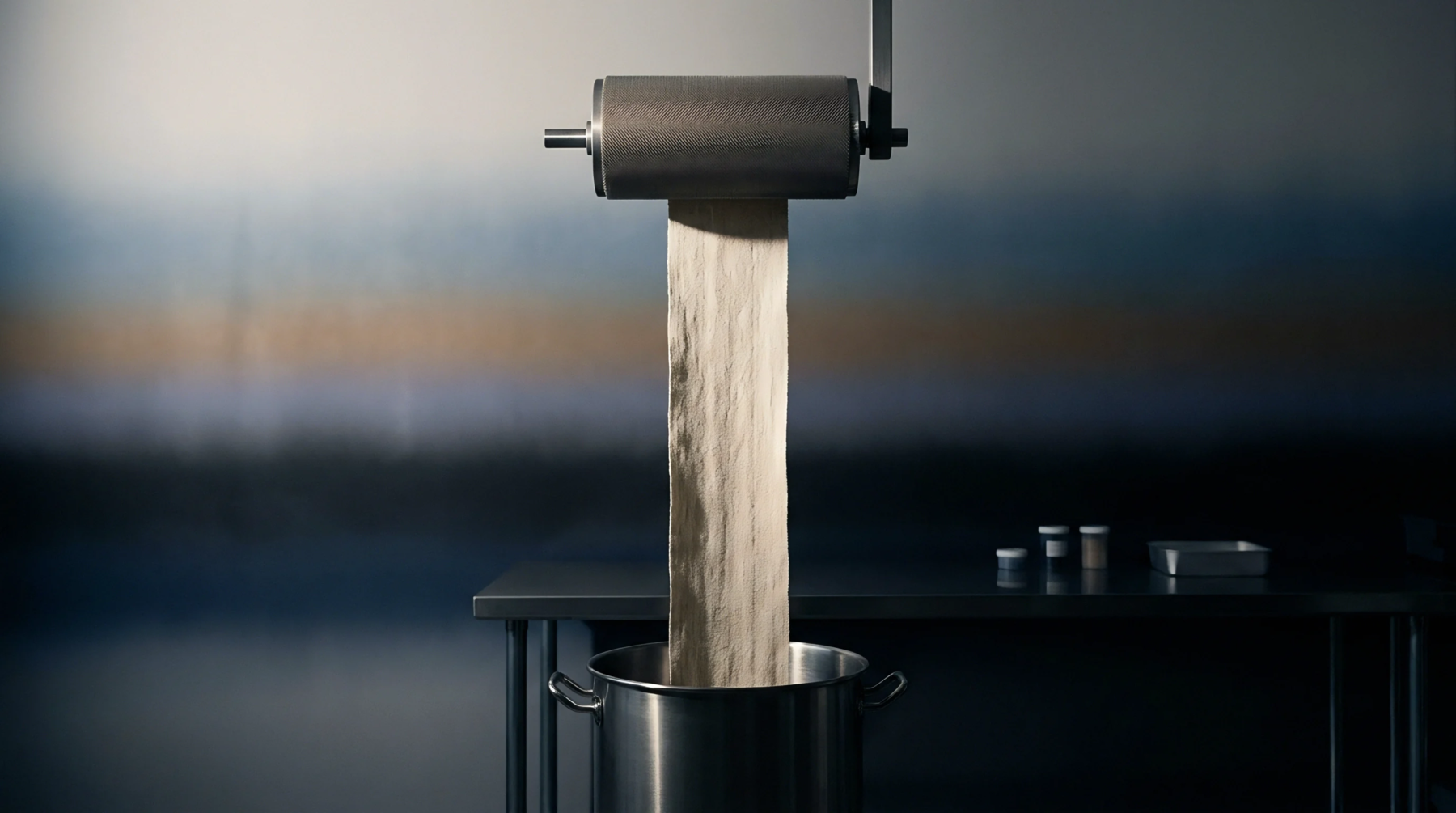
Dyeing Process
Continuous application methods for dyeing polyester and synthetic-blend fabrics utilize a padder to apply disperse dye followed by high-temperature dry heat fixation. The pad thermosol process involves fabric padding, infrared pre-drying, hot-air drying, and thermal fixation at temperatures around two hundred degrees Celsius. This method achieves high fixation rates and excellent wash fastness without requiring high-pressure steam.
It is the standard industrial method for polyester-cotton blends.
Process Stages
Fabric passes through the dye bath, is squeezed between rollers to a controlled pickup, and then enters the heating zones. In the pad thermosol sequence, the pre-drying stage must be managed carefully to prevent dye migration, which occurs if water evaporates too quickly from one side of the fabric. During the thermal fixation phase, the polyester fibers swell, allowing the disperse dye molecules to dissolve directly into the polymer matrix.
This results in deep, uniform coloration.
Industrial Checkpoints
Temperature and exposure time in the thermal fixation zone are the primary variables that must be controlled to ensure shade consistency. Technicians monitor the surface temperature of the fabric using non-contact infrared sensors during the pad thermosol run. If the temperature is too low, the dye does not fully penetrate the fibers, leading to a pale shade and poor fastness.
Excessive heat can weaken the fabric or cause yellowing of the cotton component.
Fabric Limits
This process is not suitable for fabrics containing heat-sensitive fibers such as elastane or wool. These fibers lose their strength or degrade at the high temperatures required for thermosol fixation.