Resolving Microstructure Crystallization Variations across High Speed Continuous Stenter Processing Lines
Resolving continuous stenter crystallization variations requires balancing nozzle impingement pressures within 0.5 m/s and limiting widthwise heat drift to 1 C.
Nozzle
Convective Heat Flux across High Speed Web Paths
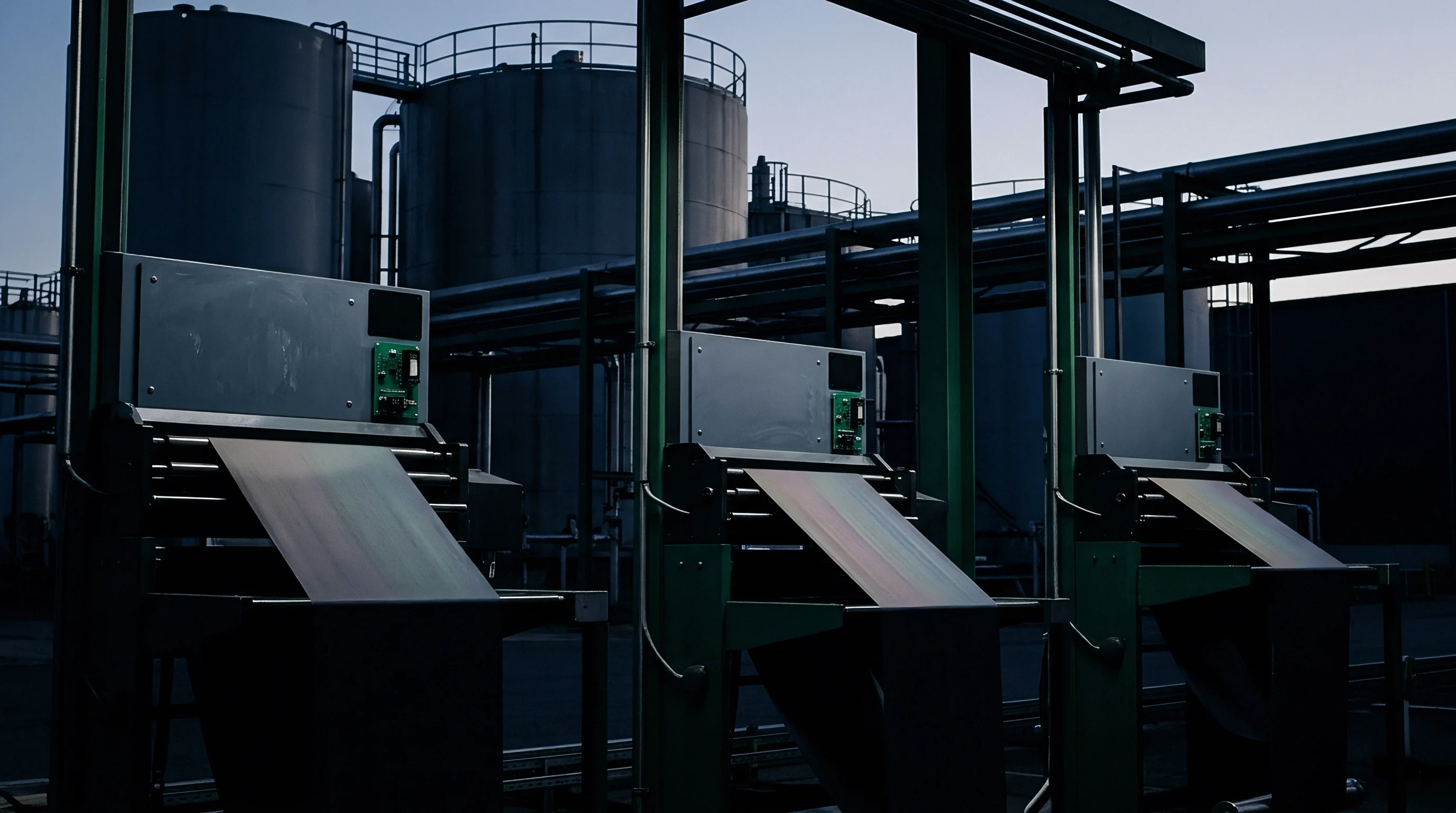
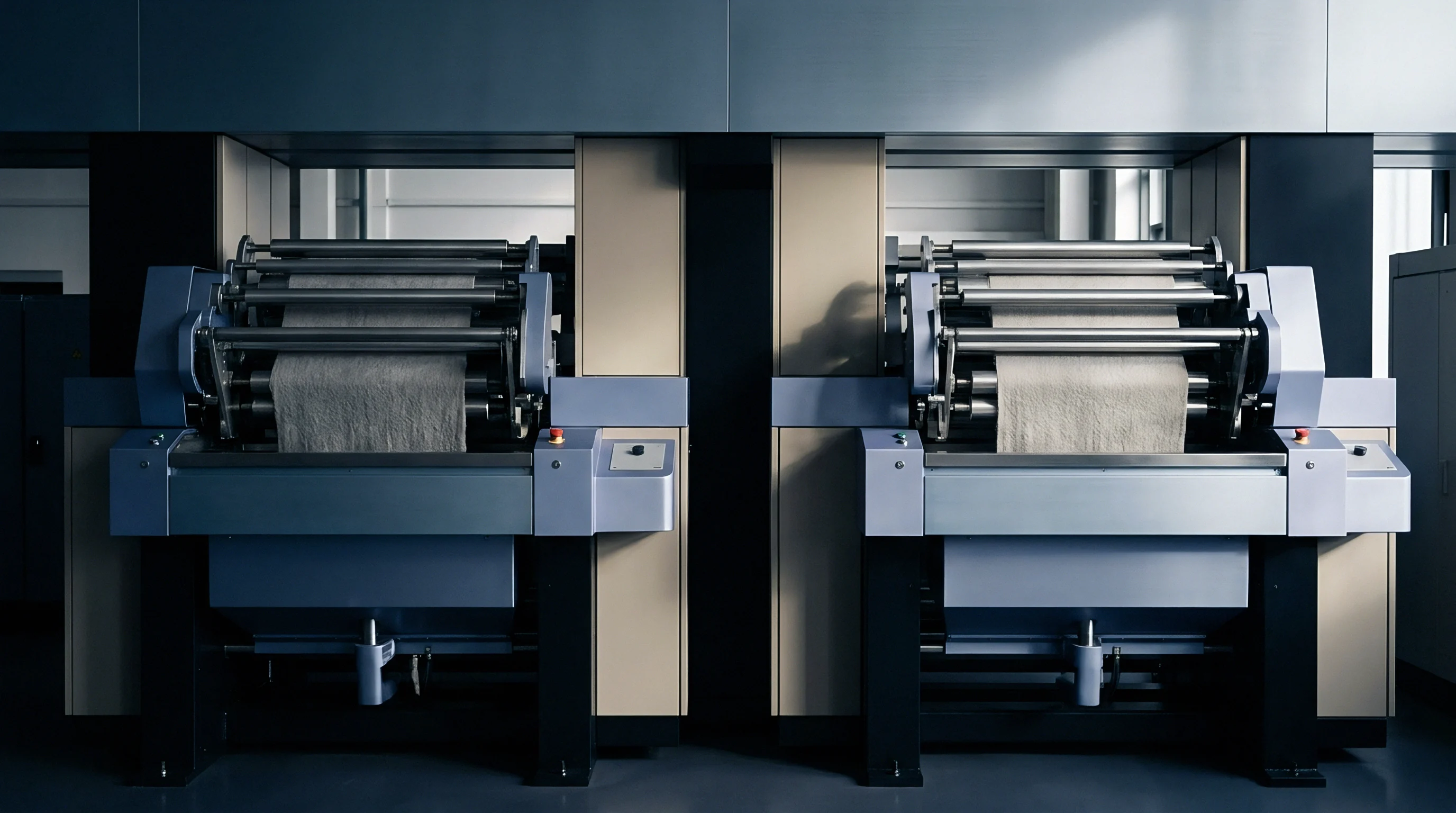
Thermal fixation in continuous stenter frames operates at line speeds exceeding 80 metres per minute on lightweight synthetic textiles. Heat transfer from impinging air jets governs the rate of polymer chain relaxation and subsequent crystallite growth. When high-velocity hot air exits slot or orifice arrays, the boundary layer thins rapidly.
Disparities in local convective heat transfer coefficients across the lateral fabric span create immediate thermal differentials. Edge zones near the mechanical chain rail experience turbulence and conduction from the metallic clips, while the center relies purely on convective air delivery.
Polyethylene terephthalate and polyamide 6,6 webs enter the heating field containing minor moisture remnants or spinning spin-finish oils. Evaporative cooling suppresses surface temperature until drying finishes. The onset of crystallization begins only after the web reaches its glass transition temperature and approaches the target heat-setting plateau, typically between 190 and 215 degrees Celsius for polyester.
If the impingement velocity drops by even three metres per second at the lateral center, the textile core achieves thermal equilibrium four seconds later than the selvedges.
A three-degree lateral thermal deviation at 200 degrees Celsius shifts the subsequent disperse dye exhaustion value by four percent.
Impingement air boxes require exact duct pressure balance. Uneven pressure plenums produce asymmetrical air volume discharge between top and bottom nozzle fingers. Top-to-bottom airflow imbalance lifts or depresses the floating textile path, altering nozzle-to-cloth working distances.
A fabric displaced five millimetres toward the upper nozzle bank absorbs heat faster on its face than on its technical back. This asymmetrical thermal profile produces dual-sided crystallization, yielding face-to-back shade variation during thermosol dye application.
Finishing plant managers frequently argue that line tension variations cause side-to-side shade shifts when exhaust air recirculates unevenly within the stenter cabinet.

Morphology
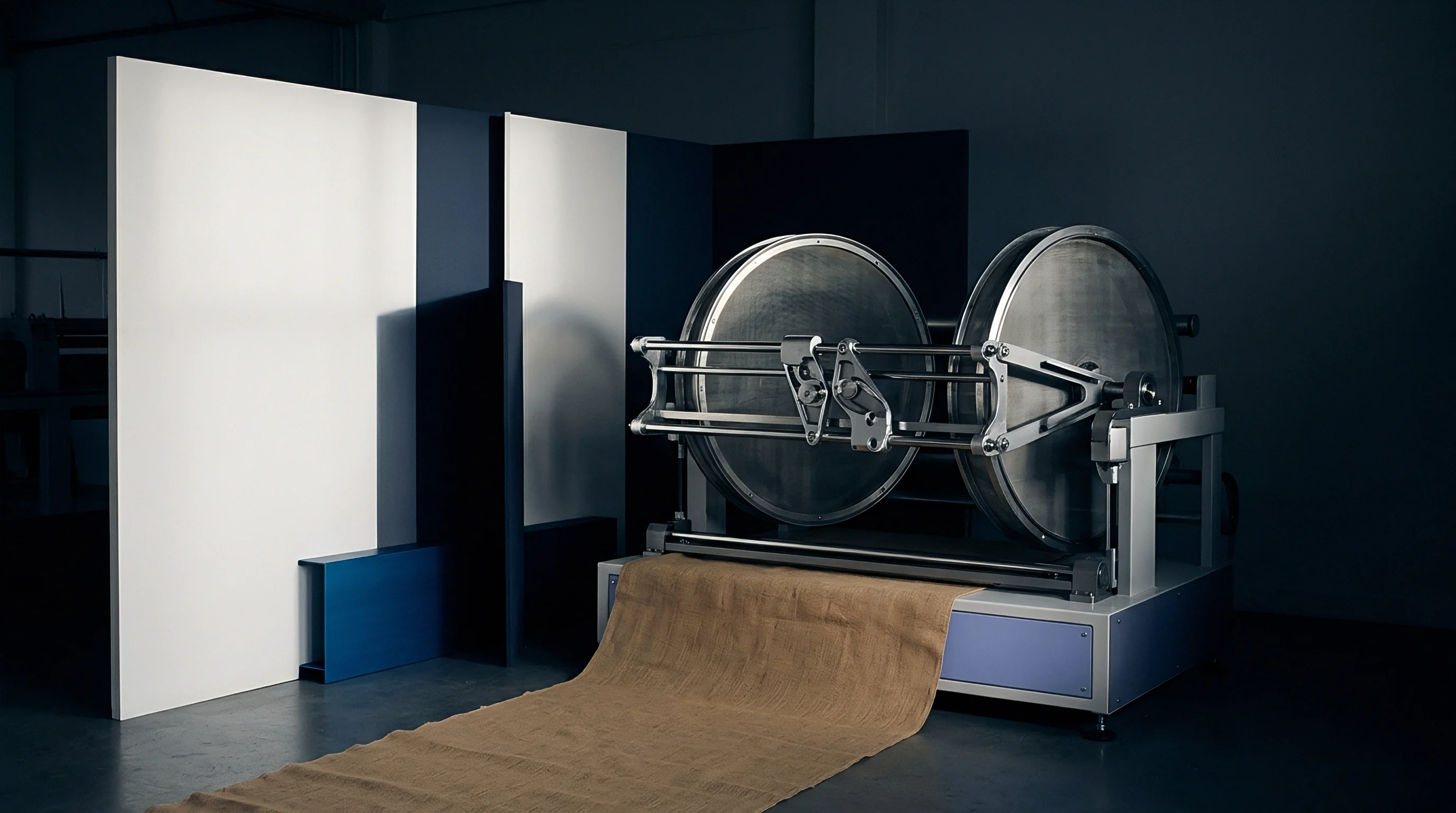
Lamellar Thickness and Crystalline Fraction Mechanics
Synthetic filaments depend on thermal history to establish their final supramolecular order. Heat setting inside stenter chambers causes disorientation of amorphous regions alongside the simultaneous growth and thickening of folded-chain lamellae. In semi-crystalline polyesters, the initial cold-drawn amorphous phase reorganizes into distinct monoclinic or triclinic unit cells.
The degree of crystallinity typically rises from an oriented greige baseline of 35 percent to a heat-set plateau between 48 and 54 percent. This reorganization reduces free volume within the amorphous matrix, directly restricting dye molecule diffusion paths.
Crystallite size distribution determines macroscopic dimensional stability. When stenter dwell times run too short under aggressive line velocities, crystal perfection remains incomplete. Secondary crystallization then proceeds during subsequent domestic laundering or hot-air tumble drying, resulting in unacceptable residual shrinkage.
Differential scanning calorimetry traces reveal dual melting endotherms in fabrics treated with unstable thermal profiles. The lower endotherm represents the stenter setting temperature history, while the higher endotherm reflects the ultimate thermodynamic melting point of the polymer crystallites.
| Setting Temperature (C) | Crystallinity by Density (Percent) | Mean Lamellar Spacing (nm) | Disperse Dye Yield (K/S Value) | Boiling Water Shrinkage (Percent) |
|---|---|---|---|---|
| 180 | 41.2 | 9.8 | 14.6 | 4.2 |
| 195 | 46.5 | 11.4 | 12.1 | 1.8 |
| 210 | 51.8 | 13.6 | 9.8 | 0.8 |
| 225 | 55.3 | 16.2 | 7.2 | 0.5 |
Variations across the width manifest as structural defects in subsequent processing steps. High crystallization suppresses dye uptake, generating pale streaks along paths exposed to elevated temperatures. Lower crystallization yields darker stripes that absorb dyestuff rapidly due to higher amorphous fraction availability.
- Differential thermal scanning confirms whether localized endothermic troughs drift across the transverse width of rejected bulk dyeings.
- Wide angle X-ray scattering records the equatorial reflection peaks to calculate crystallite dimensions and crystal orientation factors directly.
- Solvent retention testing isolates mobile amorphous chains from the rigid amorphous boundary layer surrounding crystalline lamellae.
- Boiling water shrinkage testing under ISO 5077 isolates lateral structural anomalies before goods move to commercial garment cutting.
ISO 5077 testing exposes latent transverse crystallization imbalance through localized dimensional distortion exceeding two percent across garment panels.
Uneven lamellar development across wide webs degrades downstream value by generating unusable peripheral yardage that fails retail shade and shrinkage tolerances.

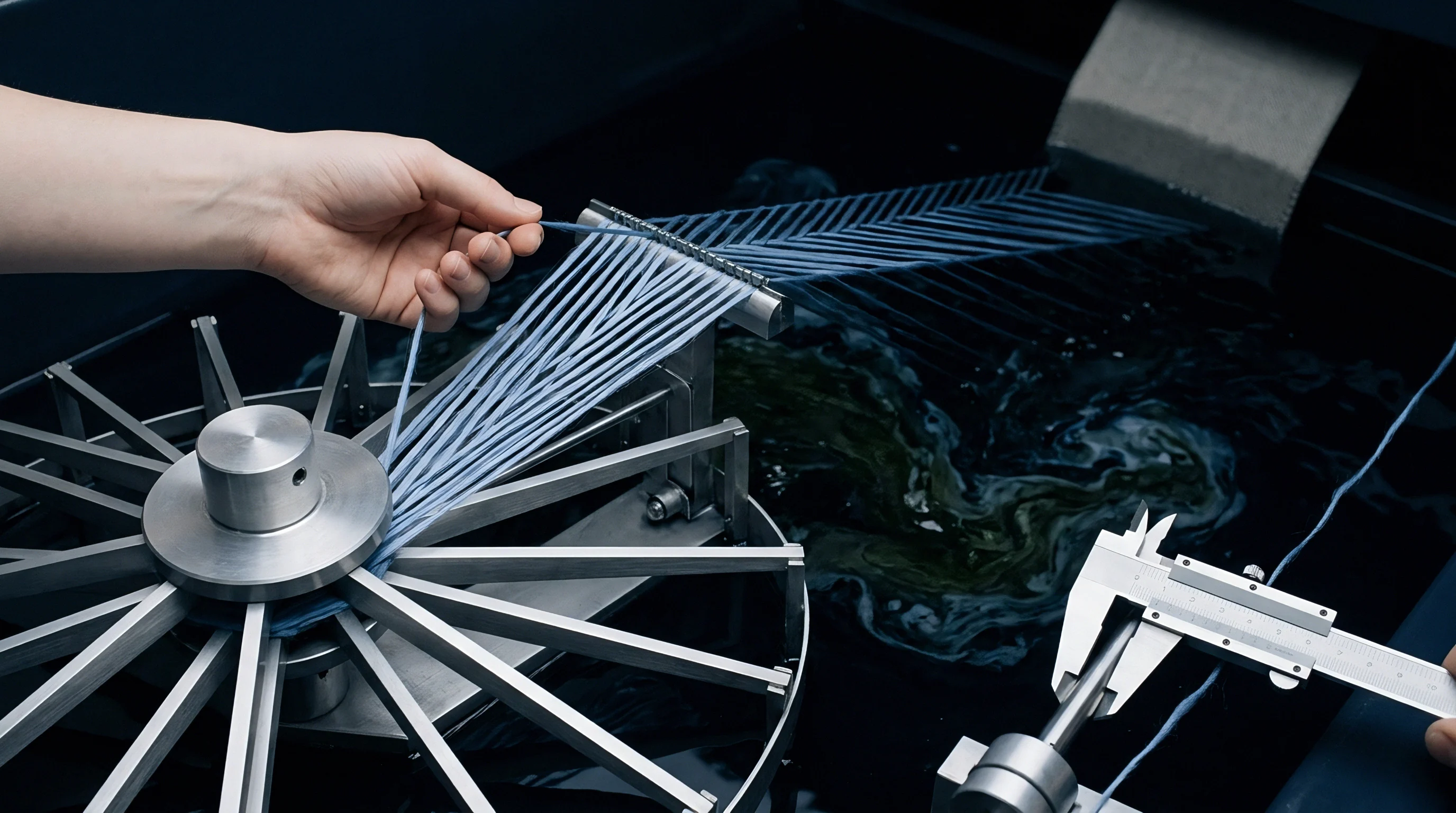
Clip

Mechanical Constraint and Transverse Chain Mechanics
Continuous stenter transport depends on mechanical gripping systems. Pins or clips grasp the fabric selvedges, applying transverse pull while the main conveyor drives longitudinal motion. High processing velocities intensify clip acceleration stresses at chamber entry transitions.
Edge zones held by heavy cast-iron clips experience substantial heat-sink effects. The clip body absorbs thermal energy from circulating air, lowering the effective fabric temperature within 75 millimetres of each edge. Conversely, preheated clip return tracks transfer residual heat into incoming cold greige selvedges, introducing temperature spikes before the web reaches the active drying zone.
Biaxial stress states alter crystalline nucleation kinetics. Applying high lateral stretch lowers the activation energy for strain-induced crystallization. In contrast, running high longitudinal overfeed between five and twenty percent permits polymer relaxation along warp yarn directions while keeping weft structures under tension.
When clip chain rails exhibit horizontal play or mechanical guide wear, lateral tension cycles intermittently. These oscillations alter the molecular orientation factor along the selvedges, producing variable birefringence patterns across the outer thirds of the continuous web.
- Thermal sinking from cold chain links retards local crystalline growth rates along the outer five percent of the usable fabric span.
- Chain rail vibration induces cyclic tension ripples that alter fiber orientation factors prior to thermal lock-in.
- Overfeed wheel slippage generates longitudinal tension surges, skewing the woven pick count and knit course density unevenly.
- Asymmetrical pin release distorts square yarn geometries at chamber exits while the hot polymer remains pliable.
Tension variations alter dye penetration mechanics. Tightly gripped yarns possess compacted filament bundles that resist chemical penetration. Relaxed structures allow liquor ingress between open filament spaces.
Balancing rail spreaders requires exact alignment relative to the machine centerline.
Hot synthetic chains hold set yarn configurations once fabric surface temperatures drop below glass transition thresholds.
Clip track lubrication demands careful scheduling to avoid chain drag and thermal transfer irregularities. Lubricant breakdown increases frictional resistance, elevating chain track operating temperatures. Conduction through the rail mechanism directly changes edge heating rates.
Keep clip mechanical mass consistent across all running segments to stabilize thermal absorption along the fabric boundaries.
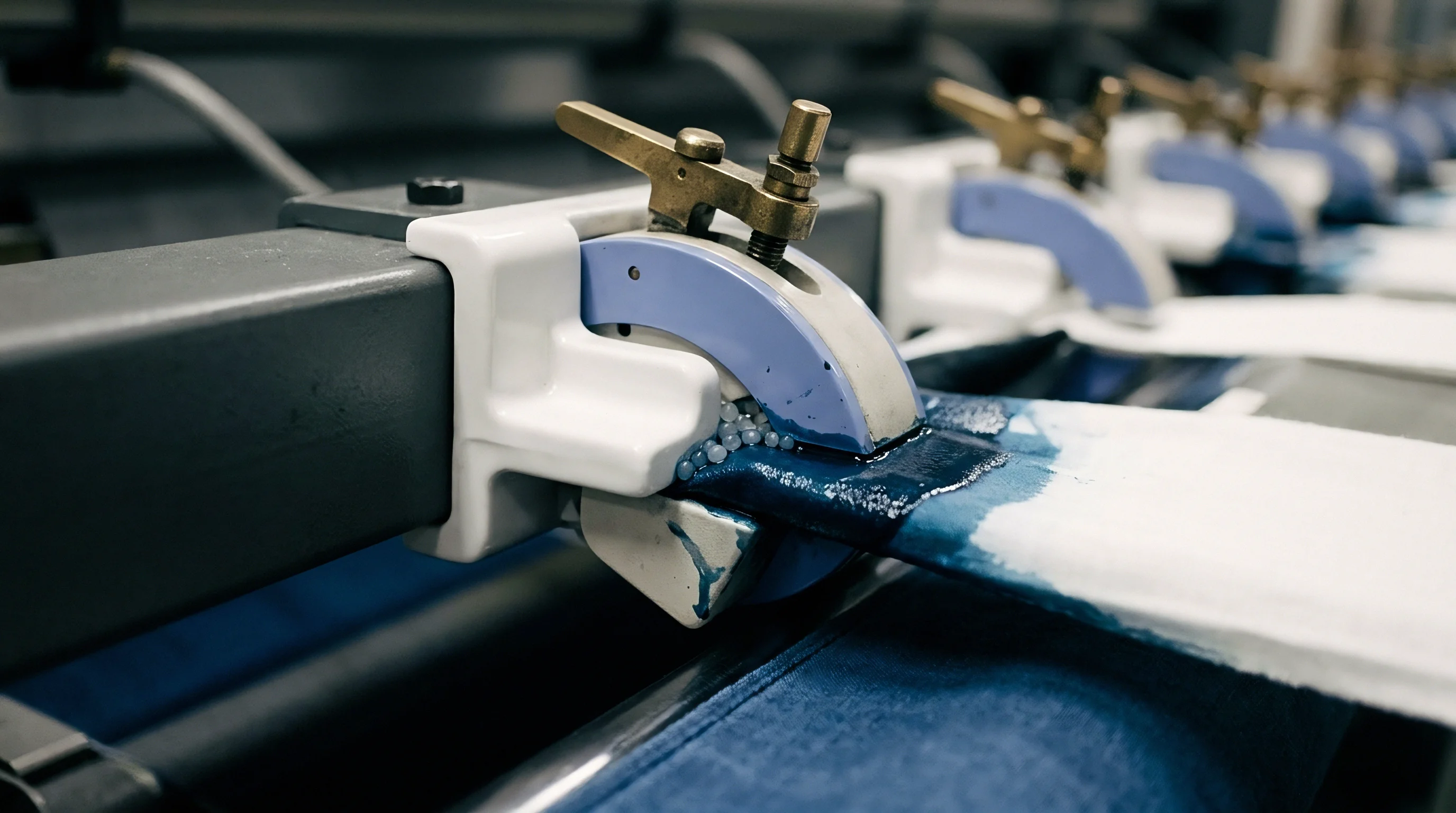
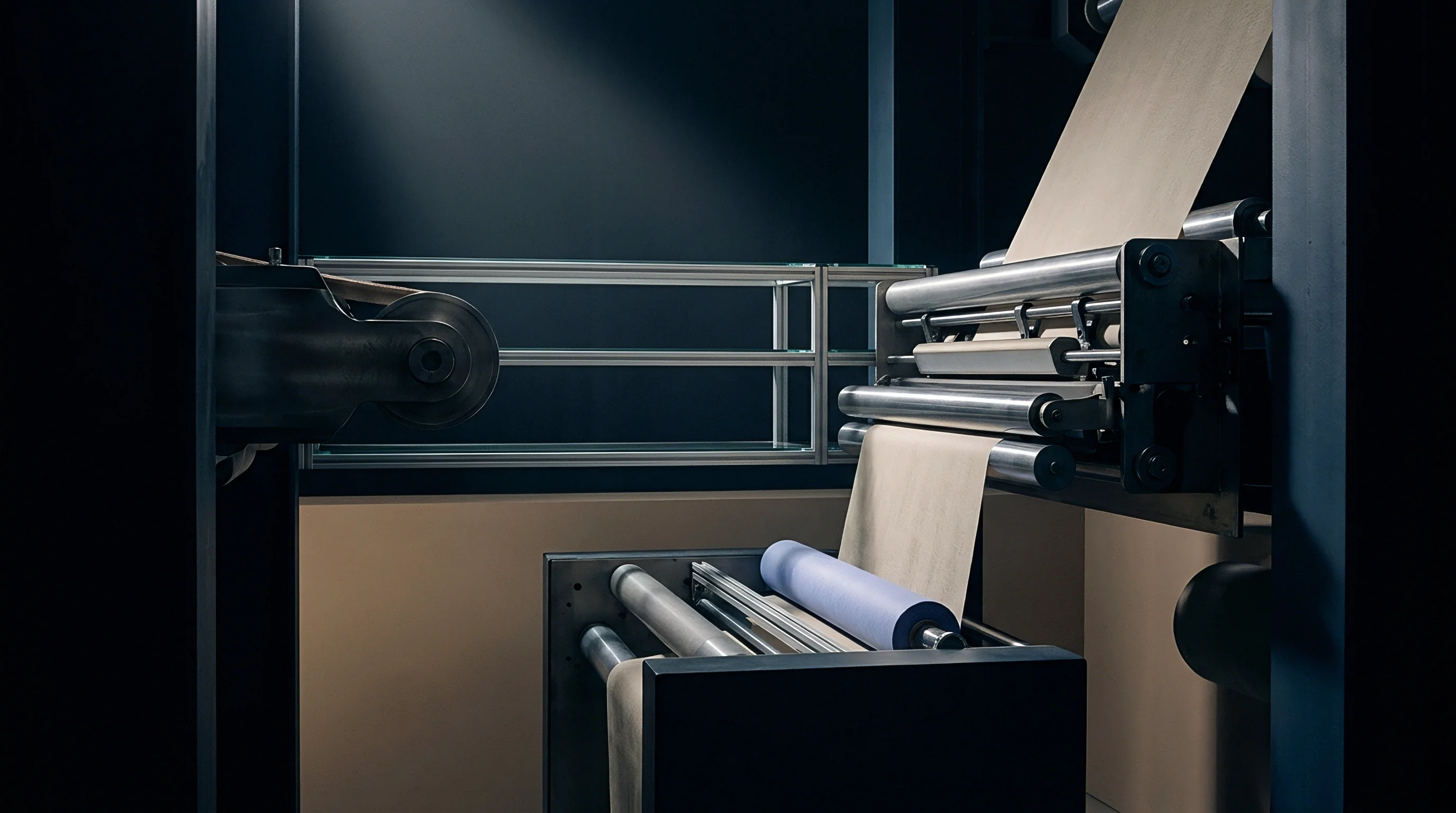
Pyrometry
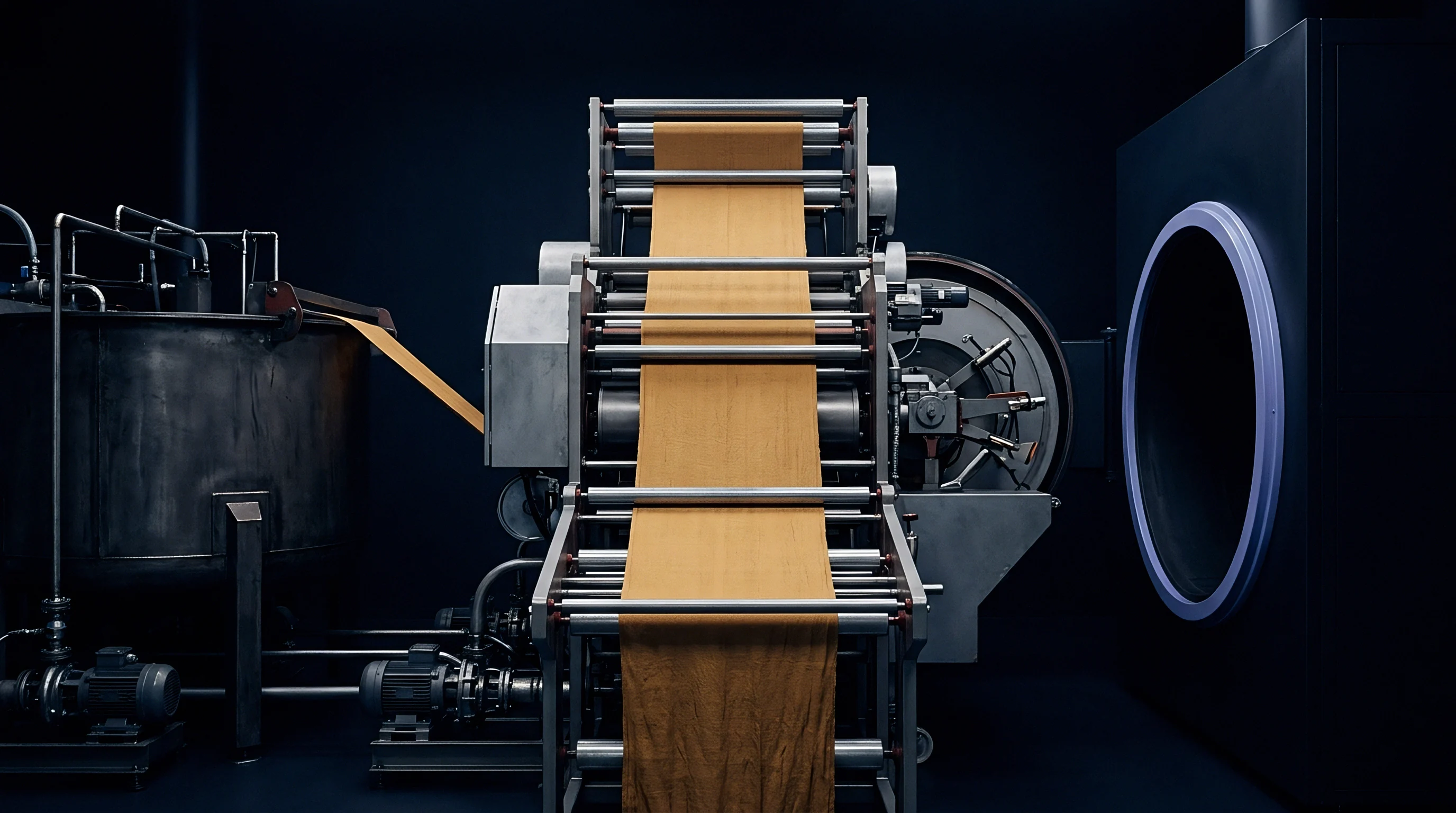
Surface Temperature Mapping and Process Synchronization
Circulating air temperature sensors do not indicate true textile web heat. Air temperatures inside stenter zones often register ten degrees higher than the running substrate during drying phases. Once water evaporates, fabric temperatures rise abruptly toward ambient air temperatures.
Pyrometer arrays positioned above the web line measure real-time infrared emission across center, intermediate, and selvedge bands. Measuring multi-point surface temperature ensures accurate detection of the heat-setting completion line within the final stenter compartments.
Modern lines incorporate non-contact infrared pyrometers operating between 8 and 14 micrometres spectral wavelength. This optical band avoids absorption interference from water vapor and hydrocarbon combustion gases inside direct gas-fired stenters. Fast response speeds enable continuous sampling at line speeds up to 120 metres per minute.
Automated control systems translate pyrometric data into closed-loop adjustments, altering individual zone fan inverter frequencies or modulating proportional burner valves.
| Sensor Position | Target Temperature (C) | Allowable Variance (C) | Response Time (ms) | Air Velocity Control (m/s) |
|---|---|---|---|---|
| Drive Side Edge | 205.0 | ± 1.0 | 50 | 24.5 ± 0.5 |
| Quarter Span East | 205.0 | ± 1.0 | 50 | 25.0 ± 0.5 |
| Centerline Web | 205.0 | ± 1.0 | 50 | 25.0 ± 0.5 |
| Quarter Span West | 205.0 | ± 1.0 | 50 | 25.0 ± 0.5 |
| Operator Side Edge | 205.0 | ± 1.0 | 50 | 24.5 ± 0.5 |
| Tolerances calibrated for 130 g/m² woven polyester taffeta running at 90 m/min dwell rate. | ||||
Nozzle bank dampers permit physical airflow throttling. When center pyrometers record lagging crystallization onset, bypass dampers boost central orifice pressures. This adjustment levels the thermal profile across wide textile spans.
Rapid chilling rolls at the stenter exit quench the web instantly, fixing the newly generated crystal structure. Delayed quenching permits spontaneous crystal coarsening, which degrades fabric tear strength and alters hand feel.
The extent to which extreme mechanical air turbulence modifies amorphous chain orientation independent of pyrometrically recorded surface temperatures remains open to technical debate.

Arbitration
Commercial Specifications and Microstructural Dispute Resolution
Disputes over shading defects often end in commercial gridlock. Converters blame greige yarn texturing variations, while yarn suppliers attribute shade bands to finishing plant stenter temperature gradients. Resolving these conflicting claims requires analytical separation of thermal history from chemical variations.
Laboratory solvent-induced swelling tests using critical dissolution time techniques determine whether dye variances stem from heat history or yarn drawing inconsistencies. A rapid dissolution time identifies under-set polyester zones created by low thermal exposure.
Purchase orders must specify structural tolerances alongside simple tensile or colour fastness parameters. Specifying maximum allowable thermal band variation protects buyers from latent garment distortions. When goods exhibit center-to-edge shading exceeding Delta E 0.8 under illuminant D65, the lot fails premium cutting room standards.
Mill contracts that lack explicit heat-setting temperature uniformity guarantees leave buyers without commercial recourse.
Standard commercial terms assign financial liability for Barré defects to the finishing mill whenever differential scanning calorimetry endotherms vary by more than two degrees Celsius across the bolt width.
Enforcing rigorous technical parameters changes commercial dynamics. Standard master purchase agreements incorporating testing under ASTM D3882 for bow and skew, combined with DIN 53814 for thermal fixation index verification, permit buyers to issue immediate rejections on unlevel broadcloth lots prior to garment assembly.