Resolving Unbalanced Thermal Migration in Stenter Drying to Prevent Localized Restricted Substance Failures
Balancing stenter air velocity and ramping drying temperatures prevents localized chemical migration and restricted substance test failures.


Draft

Evaporation Dynamics and Boundary Layer Transport
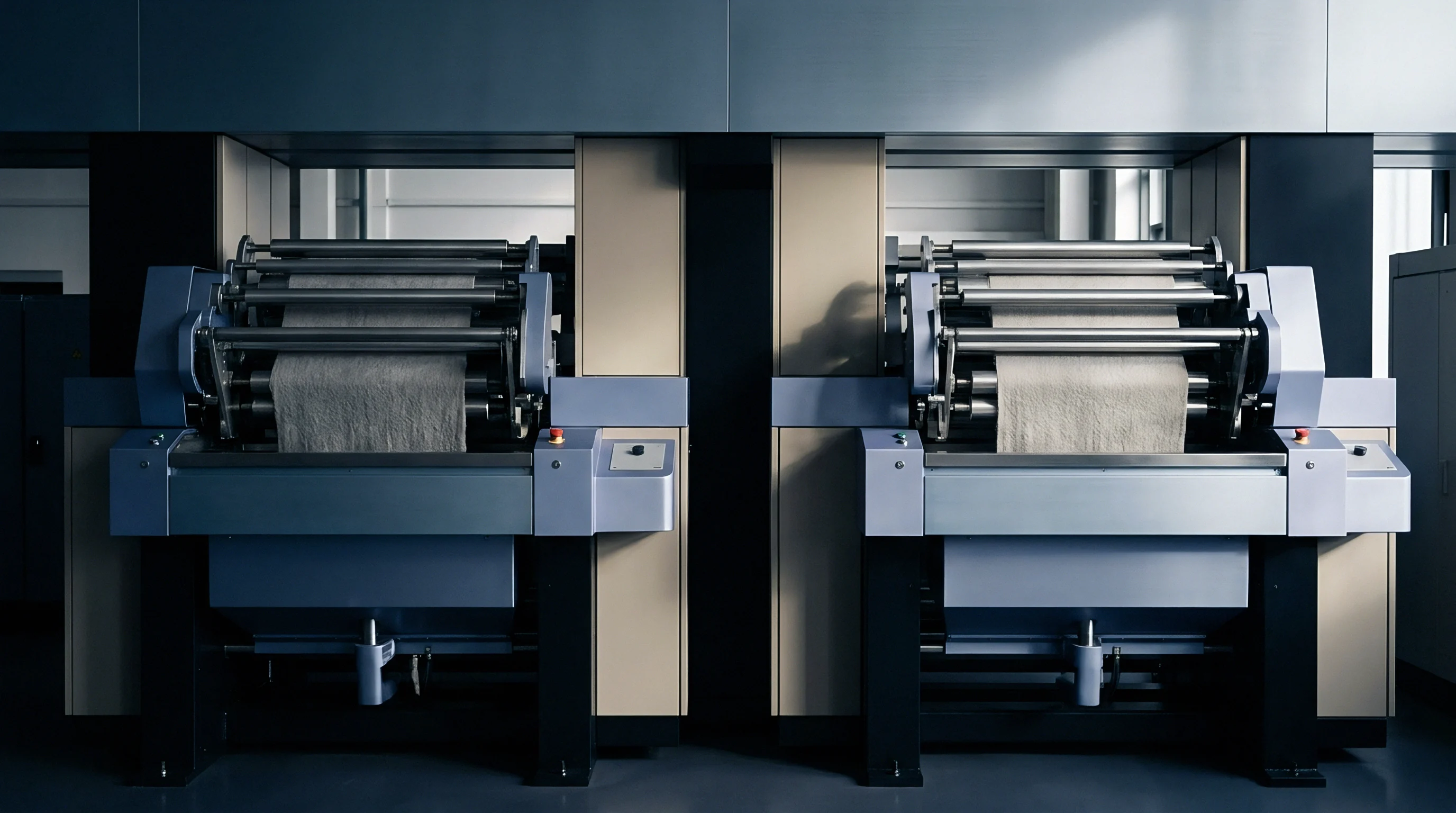
Convective heat transfer inside a multi-chamber stenter frame establishes rapid moisture evaporation gradients across woven and knitted textile substrates. When wet fabric saturated with finishing liquor enters the drying zone, water moves from the inner core toward the outer surfaces through capillary action. Heat drives solvent movement.
Dissolved chemical compounds and suspended bath auxiliaries travel alongside the liquid water flux. As thermal energy vaporizes water at the fabric face, non-volatile chemical constituents remain behind, forming concentrated deposits at the outer boundary layer.
Symmetrical drying requires identical thermal energy delivery and airflow velocity across both faces of the textile web. Top-to-bottom airflow imbalance alters this capillary flow equilibrium. Higher air velocity from top nozzle headers elevates the evaporation rate on the upper fabric face.
Water flows faster toward the higher thermal gradient, drawing water-soluble chemicals, emulsifiers, and unbound dyes to the upper surface fibers. Capillary action carries solute. Lower face nozzles operating at reduced pressure fail to counteract this upward liquid migration, leaving the lower fabric face deficient in finishing chemicals while the upper face accumulates chemical concentrations far above application targets.
Water vaporizes from the fabric face while leaving non-volatile chemical compounds concentrated at the dry boundary layer.
Cross-web thermal variation compounds face-to-back migration issues. Stenter frames frequently experience edge-to-center temperature differentials caused by ducting heat losses, improper exhaust damper positioning, or cold air infiltration at housing seals. Dyes migrate toward heat.
Fabric edges traveling near housing walls often experience elevated heating rates compared to the center web. Solute-laden liquid shifts laterally toward the selvedges, generating a localized chemical concentration gradient across the width of the roll. Standard composited swatch testing masks these localized peaks by averaging chemical content across wide swatches.
Drying rate controls solute placement. The critical migration phase occurs during the initial drying period while fabric moisture content remains above thirty percent wet pick-up. Once moisture drops below this threshold, capillary channels break down, immobilizing dissolved solutes within the fiber matrix.
Finishing mills that apply aggressive heating profiles in the first stenter chamber accelerate liquid phase transport before structural moisture loss occurs, locking localized chemical hot spots into the fabric geometry.
Maintaining equal moisture loss across both fabric faces prevents soluble auxiliaries from concentrating on either surface.


Substrates
Solvent Mobility and Auxiliary Accumulation Profiles
Chemical additives applied during padding operations exhibit varying degrees of thermal mobility depending on molecular weight, water solubility, and ionic charge. Surface concentration creates hot spots. Non-ionic surfactants, disperse dye carriers, phthalate-based print softeners, and resin crosslinkers possess low molecular weights that render them susceptible to hydro-thermal transportation during rapid evaporation stages.
Alkylphenol ethoxylates, including nonylphenol ethoxylates and octylphenol ethoxylates, serve as emulsifiers in scouring agents and dye bath levelling formulations. These non-ionic surfactants display high solubility in warm aqueous media. When stenter drying profiles induce unbalanced surface evaporation, nonylphenol ethoxylates migrate along the water vapor stream toward the fabric face or selvedges.
A fabric lot prepared with an acceptable average background surfactant concentration of forty milligrams per kilogram can develop localized edge concentrations exceeding five hundred milligrams per kilogram following severe thermal migration. Surfactants concentrate at fabric edges.
- Nonylphenol Ethoxylates migrate rapidly during initial water phase evaporation, concentrating at high-heat boundary layers and causing localized breaches of ecological limits.
- Phthalate Plasticizers present in low-quality polymer finishes dissolve into migrating solvent streams, forming high-density surface bands that fail spot extraction audits.
- Organotin Catalysts utilized in polyurethane coatings shift toward fabric edges when air velocity imbalances drive liquid moisture laterally toward stenter pin chains.
- Free Formaldehyde Donors originating from glyoxal-based durable press resins accumulate unevenly, creating localized spots that release free formaldehyde under steam extraction.
Phthalate esters such as bis(2-ethylhexyl) phthalate, dibutyl phthalate, and benzyl butyl phthalate enter processing baths as contaminants in synthetic latex binders or crosslinking agents. Temperature gradients move chemistry. Although phthalates exhibit low solubility in cold water, hot stenter drying cycles solubilize these compounds within carrier emulsions.
Unbalanced air nozzle pressure forces these emulsions to migrate toward the upper fabric surface. Upon water vaporization, the plasticizer phase deposits as a dense surface residue, triggering localized failure during direct solvent extraction testing under European regulatory frameworks.
| Chemical Substance Family | Primary Application Source | Migration Propensity Factor | OEKO-TEX Standard 100 Limit | REACH Annex XVII Restrictive Threshold |
|---|---|---|---|---|
| Nonylphenol Ethoxylates (NPEO) | Scouring agents, emulsifiers | High (Aqueous solute drift) | 100 mg/kg aggregate | 100 mg/kg (0.01% by weight) |
| Bis(2-ethylhexyl) Phthalate (DEHP) | Softener additives, print binders | Moderate (Emulsified phase transport) | 500 mg/kg aggregate | 1000 mg/kg aggregate |
| Dibutyltin (DBT) Compounds | Polyurethane coating catalysts | Moderate (Solvent matrix drift) | 1.0 mg/kg (Class I) | 1000 mg/kg tin equivalent |
| DMDHEU Resin Residues | Durable press wrinkle recovery | High (Capillary condensation drift) | 16 mg/kg (Free formaldehyde) | 75 mg/kg (Direct skin contact) |
REACH Annex XVII Entry 46a restricts nonylphenol ethoxylates to 100 milligrams per kilogram, turning localized surface accumulation into a compliance breach.
Organotin catalysts present similar regulatory risks under targeted sampling protocols. Dibutyltin and dioctyltin compounds migrate when hydrophobic polyurethane dispersions undergo phase separation during asymmetrical thermal processing. When lower drying nozzles operate at higher temperatures than upper nozzles, organotins move toward the bottom face of the fabric, accumulating in dense micro-zones that exceed environmental standard thresholds despite low average dosage across the total fabric mass.
Chemical suppliers routinely claim that elevated surfactant levels stem entirely from upstream yarn spinning lubricants rather than thermal migration within the stenter frame.


Diagnostics
Multi-Point Web Sampling and Analytical Quantification
Analytical detection of localized restricted substance failures demands testing strategies that move beyond standard composite fabric blending. Border inspections detect localized accumulation. Standard compliance testing protocols involve cutting a single swatch from an arbitrary roll location or blending center swatches from multiple rolls into one composite sample.
Composite extraction dilutes high-concentration zones with clean core material, allowing severe migration defects to pass laboratory verification prior to shipment.
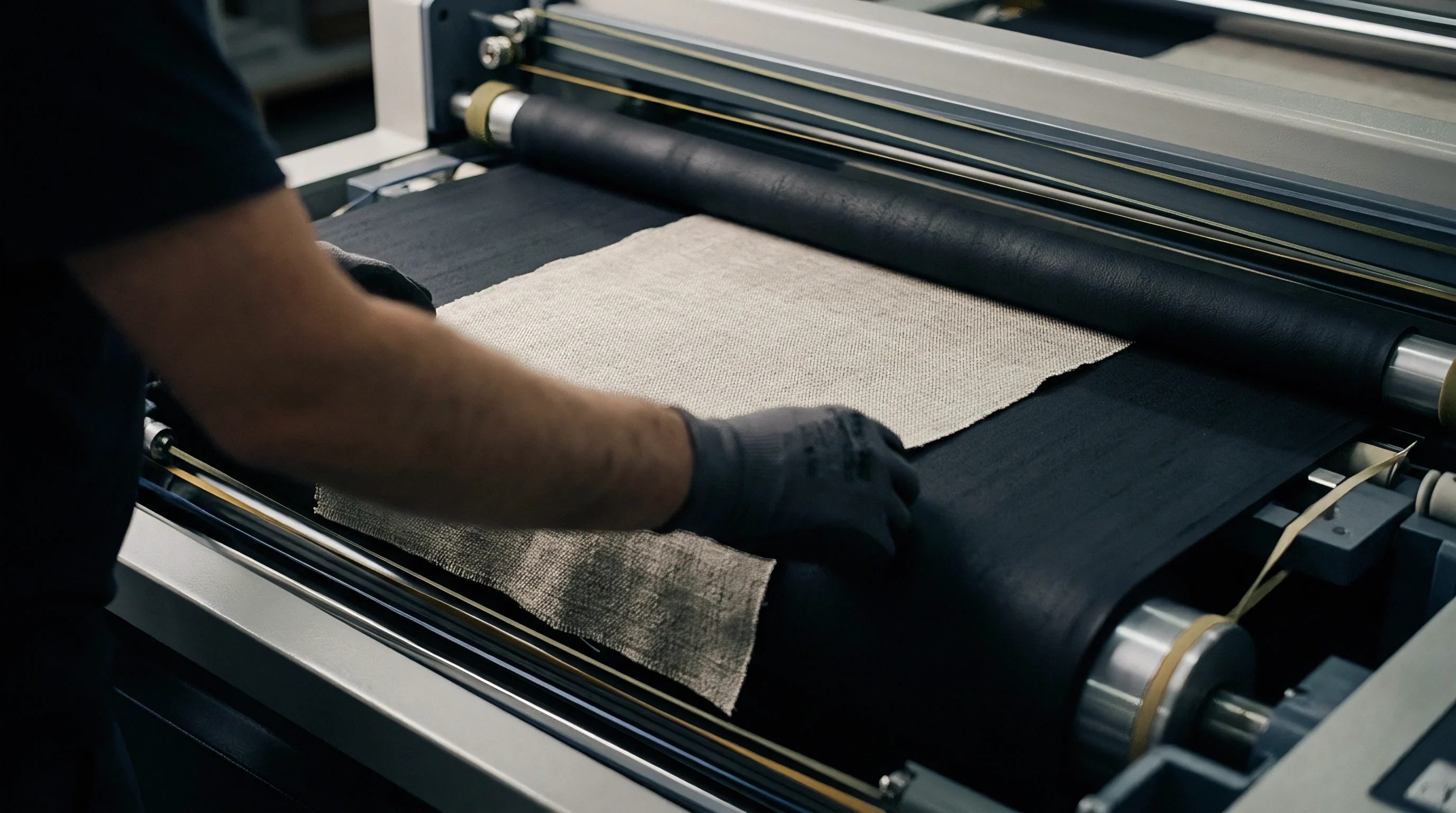
Resolving hidden non-compliance requires multi-point cross-web strip extraction. Technicians cut continuous full-width fabric strips, sectioning them into distinct lateral testing zones across the warp direction. Separate chemical extractions on drive-side selvedges, drive-quarter zones, center zones, tender-quarter zones, and tender-side selvedges reveal the true spatial distribution of restricted substances.
Surface-versus-back slice testing, using microtome or precision split-layer sectioning, quantifies face-to-back migration ratios.
Edge swatches reveal thermal imbalance. Gas chromatography mass spectrometry and liquid chromatography tandem mass spectrometry serve as the definitive analytical quantification instruments for isolated extract fractions. Analytical standards such as EN ISO 18218-1 for ethoxylated alkylphenols and ISO 14184-1 for free formaldehyde require strict adherence to solvent-to-substrate ratios to prevent extraction saturation when evaluating high-density localized spots.

Does Cross Web Sampling Reveal Thermal Edge Migration?
- Cut a full-width swatch measuring thirty centimeters along the warp direction immediately after the cooling zone.
- Divide the web width into five equal zone strips labeled Drive Edge, Drive Quarter, Center, Tender Quarter, and Tender Edge.
- Extract each zone strip individually in accordance with EN ISO 18218-1 using solvent extraction without pooling the samples.
- Quantify chemical concentration profiles across the web using gas chromatography mass spectrometry to establish migration gradients.
A fabric web exhibiting a 15 degree Celsius temperature differential between drive side and tender side shows a fourfold increase in localized surfactant concentration.
Standard composite testing misses localized spikes. Infrared thermal imaging cameras installed at the stenter exit delivery frame provide real-time diagnostic mapping of surface temperature profiles across the web width. Cold spots along fabric edges signal delayed water vaporization caused by uneven exhaust extraction or non-uniform liquor application at the padder.
Identifying these thermal anomalies on the line allows operators to pinpoint migration drivers before finished goods enter warehouse inventory.
The industry continues to debate whether standardized compliance testing should mandate edge-to-edge multi-point composite extraction or retain single-swatch composite sampling.

Calibration

Mechanical Balancing and Process Thermal Profiling
Mechanical adjustments to drying equipment eliminate evaporation deltas across both web axes before chemical fixation occurs. Air velocity determines evaporation rates. Achieving thermal equilibrium requires precision tuning of supply fan inverter frequencies, nozzle burner output ratios, and exhaust damper positioning throughout every drying chamber.
Upper and lower air nozzle velocity balance controls face-to-back moisture transport. Differential pressure transducers installed across nozzle headers measure dynamic air delivery. Equalizing air pressure between upper and lower jet boxes prevents directional liquid displacement.
For heavy woven fabrics susceptible to top-face migration, operators lower top nozzle pressure by ten to fifteen percent during the first drying phase, counteracting upward buoyancy forces driven by bottom-up heat transfer.
- Nozzle Velocity Differential tuning balances upper and lower static air pressure within two percent, stopping directional face-to-back capillary movement.
- Chamber Temperature Gradient management establishes stepped heating profiles that keep early drying zones below critical migration threshold temperatures.
- Pick-Up Uniformity verification requires daily pneumatic pressure calibration across padder rolls to eliminate lateral liquor application variance.
- Exhaust Air Balance adjustment aligns drive-side and tender-side extraction dampers to maintain uniform cross-web humidity removal.
Step-down thermal profiling in multi-chamber stenter systems protects chemically sensitive goods. Moisture content dictates migration timing. Chambers one and two must operate at moderate temperatures, typically between one hundred and one hundred twenty degrees Celsius, to gently reduce fabric moisture content below forty percent wet pick-up without boiling the aqueous phase.
Rapid boiling in early chambers creates high-velocity vapor paths that carry dissolved chemistry directly to the fabric surfaces. Once moisture drops below the critical migration limit, subsequent chambers elevate temperatures to one hundred seventy degrees Celsius for crosslinking and fixation.
| Machine Component Zone | Operational Control Variable | Target Calibration Range | Engineering Tolerance Limit |
|---|---|---|---|
| Entry Chambers 1-2 | Dry bulb air temperature | 105°C – 120°C | ± 2.0°C lateral variance |
| Fixation Chambers 3-5 | Dry bulb air temperature | 160°C – 175°C | ± 1.5°C lateral variance |
| Air Delivery Headers | Upper/Lower pressure ratio | 1.00 : 1.00 (Equilibrium) | Max 3% pressure differential |
| Exhaust Extraction Ducts | Cross-web static exhaust draft | 35 – 40 m³/min per bay | ± 1.5 m³/min side-to-side balance |
Chemical anti-migration additives provide structural stabilization during drying. Sodium alginates, polyacrylates, and modified galactomannans increase padding bath viscosity under high thermal shear. These rheology modifiers restrict solute mobility without impairing fabric hand feel.
Adding two to five grams per liter of an acrylic-based anti-migration agent to the finishing liquor locks dissolved auxiliaries into position around fiber intersections, neutralizing residual thermal migration forces caused by unavoidable mechanical airflow variations.
Unbalanced airflow ratios force chemical constituents to surface layers, generating localized non-compliance that invalidates entire production lots during brand surveillance audits.


Exposure

Regulatory Risk and Contractual Liability Architecture
Financial risk in textile supply chains escalates when localized chemical non-compliance triggers regulatory customs seizures or brand audit rejections. Container detentions stop cash flow. Retesting costs escalate rapidly.
A single roll failing localized restricted substance testing invalidates the compliance status of an entire commercial shipment under international market entry rules.
Regulatory authorities in importing jurisdictions, such as European market surveillance agencies operating under REACH Annex XVII enforcement protocols, perform targeted sampling on imported apparel. Enforcement inspectors intentionally select fabric selvedges, seams, and printed surfaces for laboratory extraction. A shipment verified via average center-swatch certificates will fail border inspection if regulatory laboratories extract nonylphenol ethoxylates exceeding one hundred milligrams per kilogram from an edge sample.
| Regulatory Framework | Target Chemical Family | Mandated Test Protocol | Threshold Limit Value | Enforcement Sampling Method |
|---|---|---|---|---|
| REACH Annex XVII Entry 46a | Nonylphenol Ethoxylates | EN ISO 18218-1 (LC-MS) | 100 mg/kg (0.01% w/w) | Targeted edge and trim swatching |
| OEKO-TEX Standard 100 Class I | Free Formaldehyde | ISO 14184-1 (Water extraction) | 16 mg/kg (Baby wear limit) | Direct face fabric sampling |
| CPSIA Section 108 | Phthalate Esters (DEHP, DBP) | CPSC-CH-C1001-09.4 (GC-MS) | 1000 mg/kg aggregate | Localized plasticizer coating cut out |
| EU POP Regulation 2019/1021 | Perfluorooctanoic Acid (PFOA) | CEN/TS 15968 (LC-MS/MS) | 0.025 mg/kg (25 ppb) | High-density surface finish isolation |
Customs authorities perform random cross-section swatching rather than average web sampling during border surveillance inspections.
Commercial fallout from localized RSL failures extends beyond direct laboratory retesting fees. When a brand surveillance audit detects a localized failure, the buyer halts warehouse distribution and issues a corrective action directive against the supplier. Take a forty-thousand-meter finished fabric lot valued at four US dollars per meter.
Retesting costs across multiple rolls run between two thousand and five thousand dollars. If border authorities reject the container, demurrage fees, return freight charges, and late delivery penalties rapidly exceed the original commercial value of the goods, destroying margin profitability for the converting mill.
Purchasing agreements must incorporate explicit language covering thermal migration verification and localized restricted substance risks. Standard purchase orders that demand compliance with general restricted substance lists fail to protect buyers against localized hot spots generated during finishing operations. Importers secure financial recourse by embedding technical parameters directly into mill manufacturing specifications.
Purchase order addendums specifying mandatory edge-and-center RSL testing under EN ISO 14362-1 shift the financial burden of retesting and container detention directly to the finishing mill.