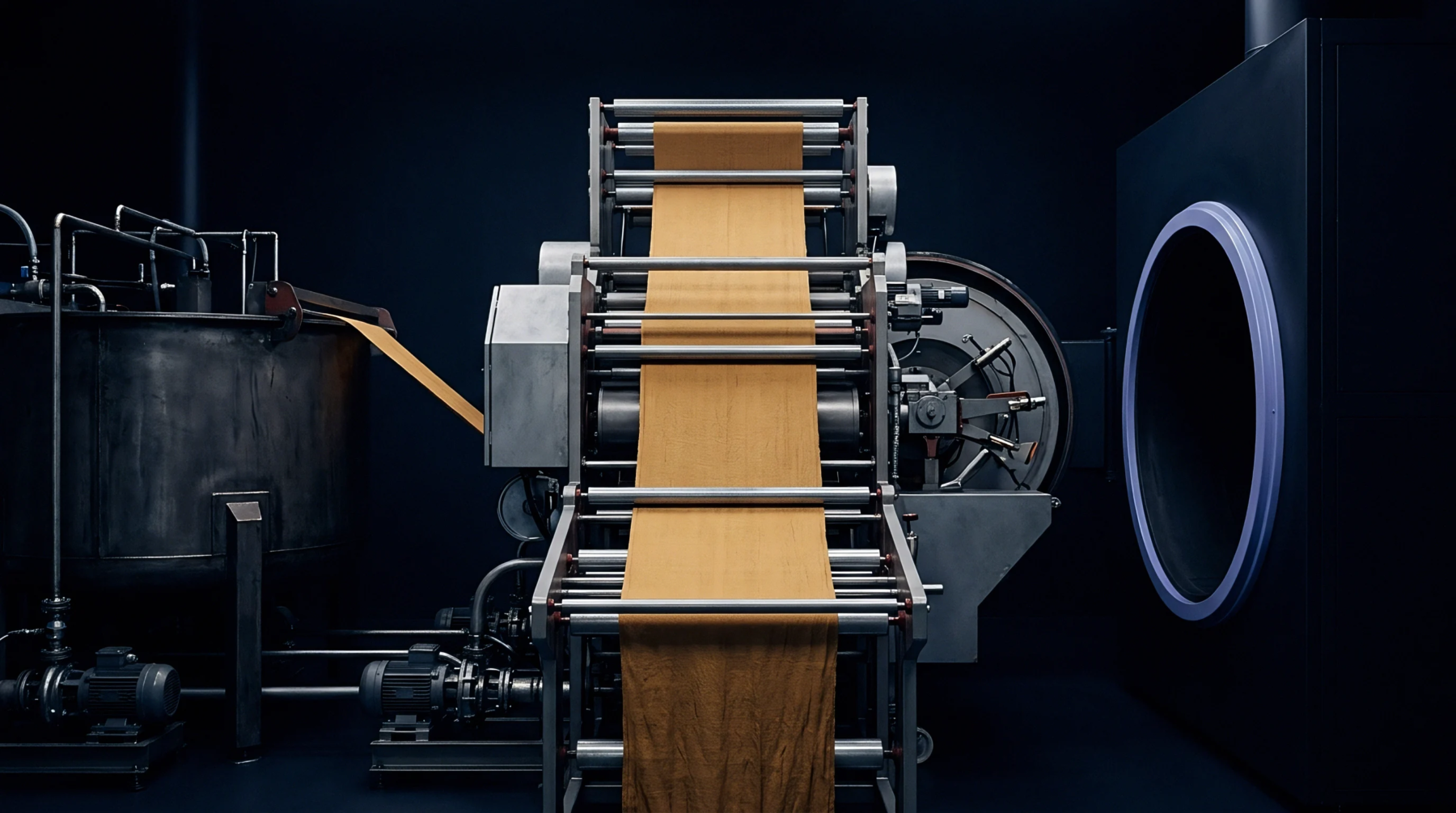
Airflow Velocity
Speed at which heated air exits the dryer distribution duct determines the mechanical force and thermal energy delivered to the moving fabric surface. In convective textile dryers, nozzle air velocity governs the convective heat transfer coefficient and the rate of moisture evaporation from the web. This variable is managed by modulating the rotational speed of the circulating fan motors.
Fluid Dynamics
Turbulence intensity at the point of impact rises in direct proportion to the speed of the air jet. To optimize drying efficiency, nozzle air velocity must be high enough to penetrate the thin boundary layer of humid air that blankets the fabric. This movement of air forces the moisture out of the fabric weave.
Production Impact
High speeds reduce the dwell time needed in each oven zone, which allows for faster line speeds and higher factory productivity. In the processing of heavy wool blends, maintaining a high nozzle air velocity ensures deep thermal penetration into the thick pile of the fabric. This uniform heating prevents damp cores and promotes consistent relaxation of the yarn stresses, resulting in a fabric that meets strict dimensional stability standards.
Calibration Limit
Extremely high air velocities can cause fabric deformation, stretching or dislocation on the pins of the conveyor. Adjusting this flow rate requires careful balancing to match the weight and stability of the textile substrate. This threshold limits the air volume that can be safely applied.