Drying Limit
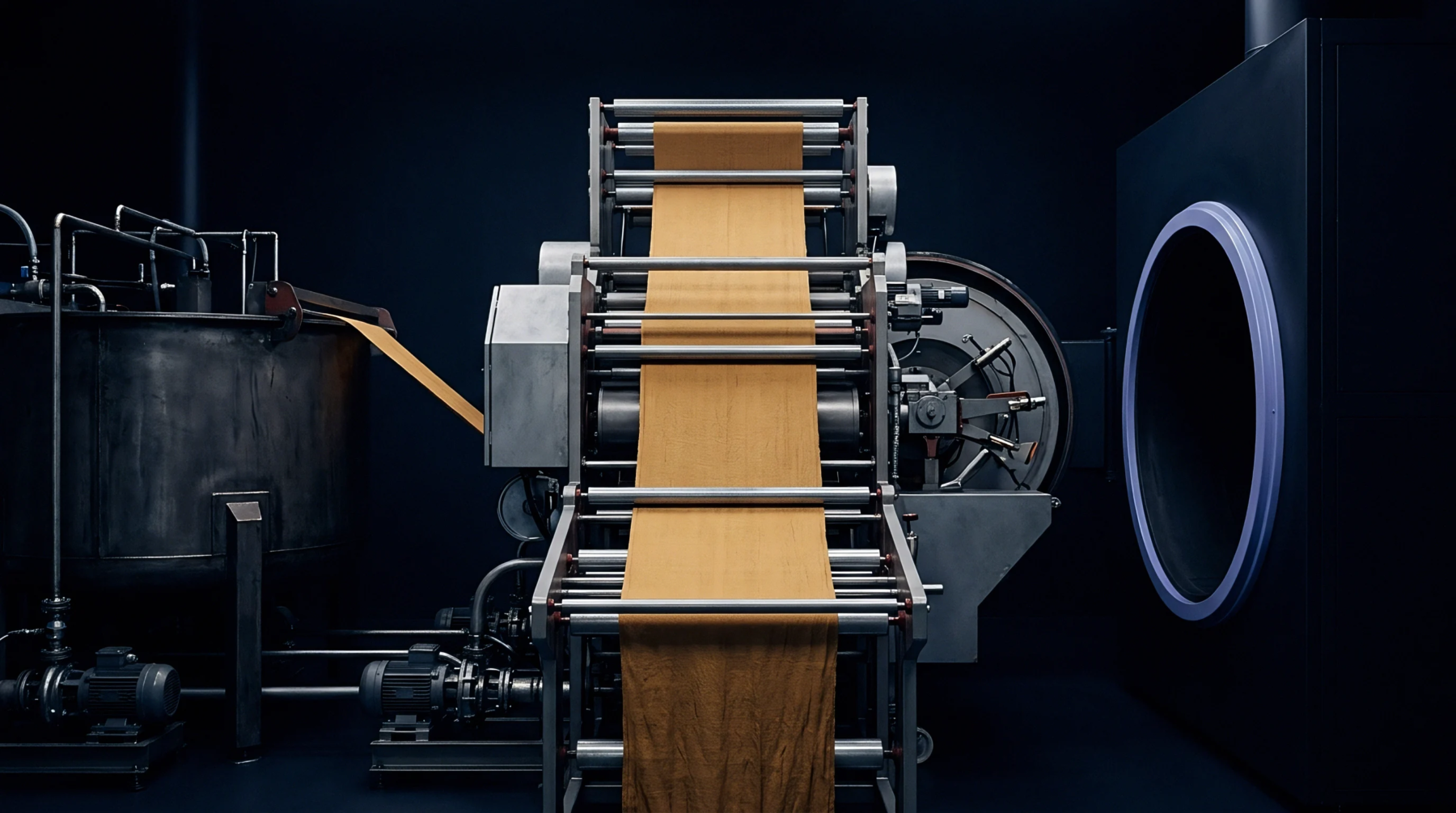
The point where water removal shifts from surface evaporation to internal diffusion defines a specific state in textile finishing. Below the critical moisture threshold, the evaporation rate drops because the liquid water no longer forms a continuous film on the fibre surface. This transition determines the energy efficiency of stenter operations and dictates the speed of the drying range.
Drying Rate
Thermal energy transfer remains constant while free water exists on the exterior of the yarn or fabric. Once the material reaches the critical moisture threshold, the remaining moisture trapped within the fibre structure requires a much higher volume of thermal energy to liberate. This internal liquid must migrate to the surface as vapor, which takes much more time and power.
Failure to account for this change results in either scorched surface fibres or excessive residual dampness in the center of the roll.
Migration Risk
Soluble chemicals such as dyes or resins move toward the surface during the constant rate drying period. If the critical moisture threshold is reached too slowly, these substances accumulate on the face of the cloth, leading to uneven shading or stiff handles. High velocity air nozzles help manage this risk by ensuring rapid evaporation before internal capillary action dominates.
Process Control
Sensors monitoring exhaust air humidity provide the data needed to identify this phase change in real time. Processing speeds are often adjusted to ensure the critical moisture threshold occurs within the first two thirds of the oven length.