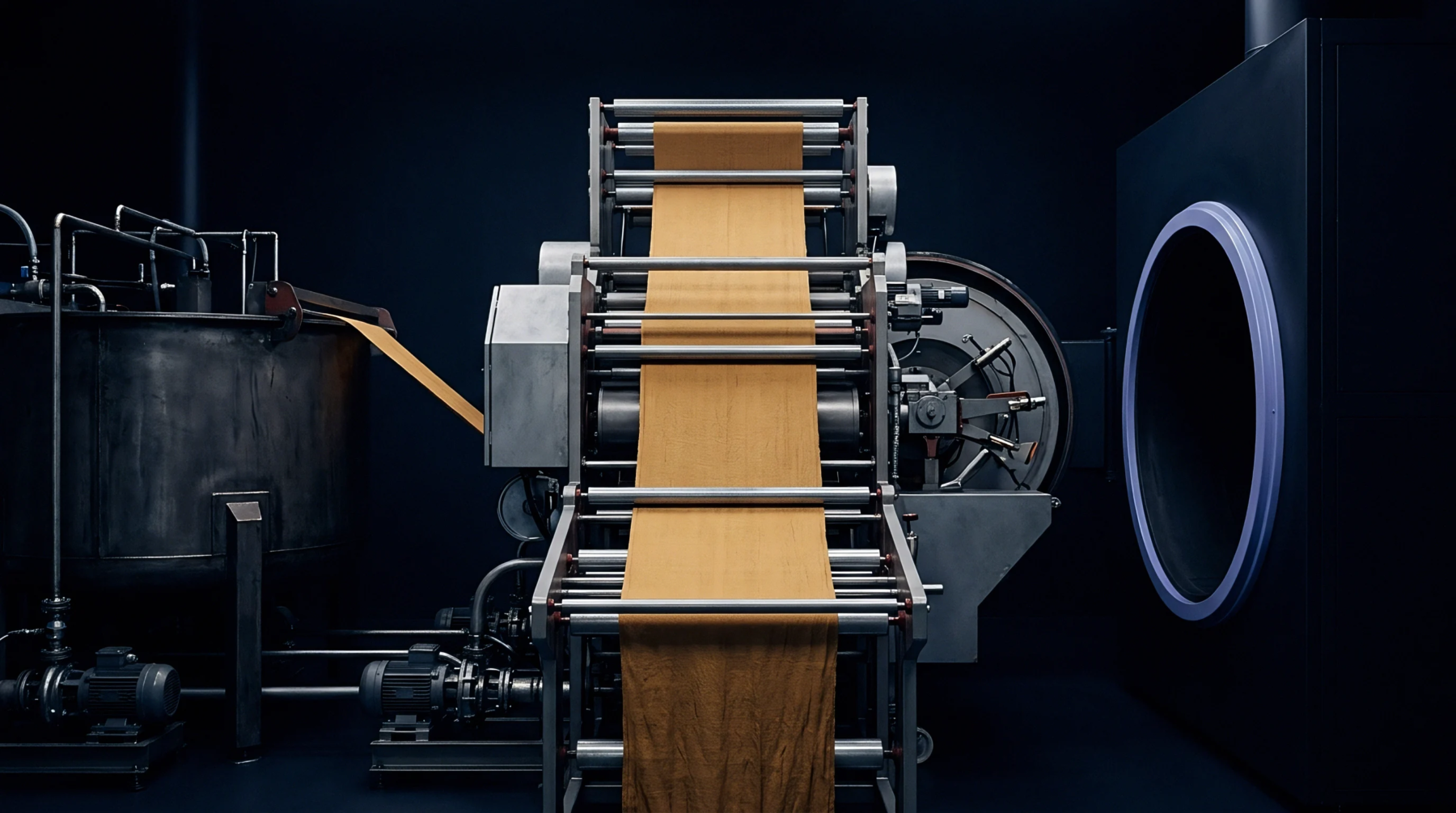
Transport Kinetics
The quantity of solute moving from the bulk solution to the boundary surface of a solid substrate per unit of time depends on the concentration gradient and the fluid dynamics of the system. In textile dyeing, the mass transfer rate of dye molecules controls the speed at which the dye accumulates on the fiber surface before diffusion and fixation occur. This kinetic property is determined by both the molecular weight of the dye and the agitation of the dye bath.
Physical Process
In an aqueous dye bath, the dye molecules must first migrate from the bulk liquor through the stagnant boundary layer of water surrounding each fiber. This movement is driven by convection in the bulk liquor and by diffusion through the boundary layer. Once the dye molecules reach the fibre surface, they are adsorbed into the polymer matrix.
The mass transfer rate dictates whether the dyeing process is limited by the rate of fluid flow or by the speed of diffusion within the fiber.
Process Control
Dyehouse operators adjust the rate of chemical transport by controlling the pump speed, the flow direction, and the bath temperature. Increasing the flow rate of the liquor enhances the mass transfer rate, which is essential for achieving a uniform shade in dense packages of yarn. Elevating the temperature also increases the kinetic energy of the dye molecules, further accelerating their movement.
System Boundary
When the rate of mass transfer is excessively high, the dye may accumulate too quickly on the outer surfaces of the fabric or yarn package, leading to uneven dye distribution. This superficial fixation prevents the dye from penetrating deeply into the textile, reducing the wet fastness of the finished product.