Calculating Commercial Moisture Regain in Cotton Synthetic Yarns
Commercial moisture regain converts oven-dry yarn weight into invoiced mass using standardized moisture percentages and finish allowances under ISO 6741.

Mass
Yarn shipments sold on a commercial weight basis depend on precise laboratory determination of moisture levels. Raw physical weight fluctuates with atmospheric humidity during storage and ocean transit. Sellers and buyers manage this financial risk by agreeing on standardized regain values that convert raw package weight into invoiced commercial mass.

Distinguishing Regain from Internal Moisture Content
Physical weight in textile fibers fluctuates continuously as ambient relative humidity and temperature change throughout storage and transit. A bale or yarn package absorbs or desorbs water vapor until reaching dynamic equilibrium with surrounding air. Moisture regain defines the mass of water present in a fiber sample expressed as a percentage of that sample’s absolute oven-dry mass.
Moisture content expresses water mass as a percentage of the total wet or original sample mass. This distinction governs trade calculations.
Dry weight anchors every trade. Calculating moisture regain uses the oven-dry weight as the static denominator. The mathematical relationship between moisture regain percentage and moisture content percentage follows two direct conversions:
Regain = (Moisture Content / (100 – Moisture Content)) 100
Moisture Content = (Regain / (100 + Regain)) 100
Cellulose holds bound water tight. When raw cotton yarn exhibits a moisture content of 7.83 percent, its calculated moisture regain equals exactly 8.50 percent. Confusing content with regain when auditing bulk yarn invoices artificially understates the payable commercial weight and alters calculated landed unit costs.

Standard Moisture Regain Values across Common Textile Fibres
International standardization bodies publish agreed equilibrium percentages to eliminate climate-induced commercial price disputes. ISO 6741-1 and ASTM D1909 establish standard commercial moisture regain values for raw and spun textile materials. Natural cellulosic fibers possess porous molecular structures containing hydroxyl groups that attract water molecules.
Synthetic polymers exhibit hydrophobic structures that absorb minimal atmospheric moisture.
A sample taken from the outer layer of a yarn package reflects ambient humidity rather than the average moisture state of the package core.
Synthetics carry minimal regain. Pure polyester staple fiber holds a standardized commercial regain of 0.40 percent under standard trading conditions. Viscose rayon absorbs water readily due to regenerated cellulose architecture, carrying an agreed standard regain of 11.00 percent or 13.00 percent depending on regional standard agreements.
Standard moisture values represent contractual conventions rather than real-time equilibrium states inside a spinning mill.
| Fiber Type | Commercial Moisture Regain (%) | Equivalent Moisture Content (%) | Dominant Governing Standard |
|---|---|---|---|
| Cotton (Raw or Spun) | 8.50 | 7.83 | ISO 6741-1 / ASTM D1909 |
| Polyester (PET Staple) | 0.40 | 0.40 | ISO 6741-1 / BISFA |
| Viscose (Regenerated Cellulose) | 11.00 | 9.91 | ISO 6741-1 / BISFA |
| Acrylic (Staple) | 2.00 | 1.96 | ASTM D1909 |
| Nylon 6 / Nylon 66 | 6.25 | 5.88 | ISO 6741-1 / ASTM D1909 |
Laboratory testing identifies non-standard moisture levels during receiving audits. Sampling procedures demand taking core yarn specimens from sealed containers immediately upon package unwrapping. Moisture alters invoiced weight.
Outer package layers lose or gain water within hours of exposure to unconditioned warehouse ambient air. Core layers inside high-density yarn cones remain at spinning-floor equilibrium for weeks.
Sampling errors alter commercial weight calculations significantly:
- Core Skewing occurs when test samples are pulled exclusively from package surfaces exposed to dry ambient air, understating true lot moisture.
- Unsealed Transit allows draw samples to lose water vapor to air during shipment to independent testing laboratories.
- Tare Oversights happen when standard carton and cone tare weights are subtracted without verifying individual plastic cone mass variations.
- Thermal Exposure during rapid weighing causes local convection currents on analytical balances, distorting sample weight readings.
Failing to convert raw package weight into commercial mass creates unrecoverable raw material losses that directly erode spinning mill gross margins.


Blend
Combining natural and synthetic fibers creates complex moisture absorption characteristics in spun yarns. Binary and ternary spun blends combine hydrophilic components like cotton or viscose with hydrophobic components like polyester or acrylic. Calculating the contractual regain of a blended yarn requires blending the respective standard regains in exact proportion to the dry mass contribution of each fiber constituent.

Mathematical Calculation of Commercial Regain for Binary Blends
Determining the standard regain rate of a mixed fiber yarn uses a weighted average derived from dry constituent percentages. Nominal blend ratios declared by spinners represent target production weights rather than exact dry fiber proportions. Quantitative chemical analysis according to ISO 1833 or AATCC 20A establishes actual dry proportions after removing spin finishes, waxes, and sizing agents.
The standard commercial moisture regain of a binary blend (R_blend) uses the following formula:
R_blend = ((P_A R_A) + (P_B R_B)) / 100
Where P_A and P_B represent the dry mass percentages of fiber A and fiber B, while R_A and R_B represent their respective standardized commercial moisture regains. Testing isolates pure dry fiber.
Calculating blend regain from gross yarn weight without isolating oven-dry fiber proportions shifts the landed cost of synthetic blends toward natural fiber pricing.
Consider a nominal 60 percent cotton and 40 percent polyester ring-spun yarn. Standard commercial regain for cotton equals 8.50 percent. Standard regain for polyester equals 0.40 percent.
Assuming laboratory analysis confirms exact 60/40 dry proportions, the calculation proceeds:
R_blend = ((60 8.50) + (40 0.40)) / 100
R_blend = (5.10 + 0.16) / 100 = 5.26 %
The combined commercial regain for this binary blend equals 5.26 percent. Applying an unadjusted cotton regain rate of 8.50 percent to this blend overcharges the buyer by 3.24 percent on total invoiced yarn mass.
| Declared Blend Ratio | Fiber A (Regain %) | Fiber B (Regain %) | Weighted Blend Regain (%) |
|---|---|---|---|
| 65/35 Polyester / Cotton | Polyester (0.40) | Cotton (8.50) | 3.235 |
| 50/50 Cotton / Viscose | Cotton (8.50) | Viscose (11.00) | 9.750 |
| 80/20 Cotton / Nylon 66 | Cotton (8.50) | Nylon 66 (6.25) | 8.050 |
| 70/30 Acrylic / Cotton | Acrylic (2.00) | Cotton (8.50) | 3.950 |

Impact of Fiber Composition Shifts on Invoiced Weight
Manufacturing variations during sliver drafting frequently alter the true proportion of cotton to synthetic fiber within a yarn lot. A yarn order specified at 50 percent cotton and 50 percent polyester may vary between 48/52 and 52/48 across different production spinning frames. Composition shifts alter both the technical performance of finished cloth and the payable commercial weight of bulk deliveries.
Cotton absorbs ambient water rapidly. Polyester resists moisture absorption. When sliver blend proportions drift higher in cotton content, the actual regain potential of the yarn lot rises.
Customs classification guidelines categorize yarns according to chief fiber weight. Small composition shifts across a 50 percent threshold change trade tariff lines while simultaneously altering commercial mass calculations.
Establishing component ratios from clean oven-dry samples protects yarn purchasers against paying natural fiber price premiums on synthetic fiber content.


Desiccation
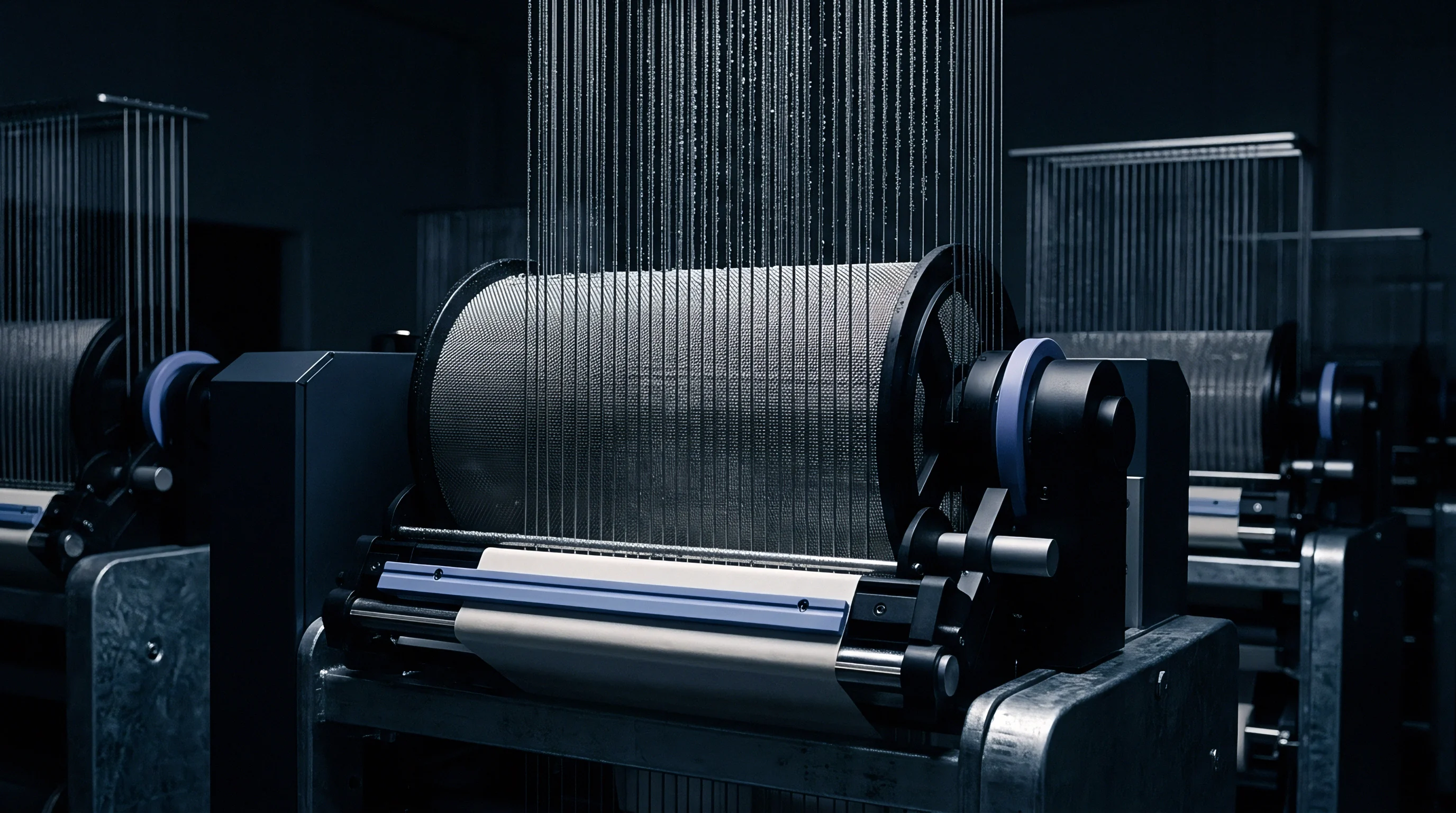
Accurate determination of absolute dry mass requires complete removal of free and bound moisture in a controlled laboratory setting. Industrial drying ovens utilize forced-air convection and precise temperature controllers to evaporate water from fiber samples without inducing chemical decomposition. Standard procedure ISO 6741-2 details testing protocol for determining dry yarn mass using oven desiccation.
Oven Drying Protocols and Moisture Equilibrium Verification
Testing laboratories employ ventilated drying ovens operating at standardized temperatures until continuous mass balance is achieved. The standard test method specifies drying specimens at 105 degrees Celsius plus or minus 2 degrees Celsius. Specialized forced-draft ovens circulate dried air through yarn packages or skeins to expedite moisture evaporation.
Laboratory scales record dry mass. Achieving absolute desiccation requires systematic monitoring of weight loss over time. The testing sequence follows strict operational rules:
- Draw representative yarn skeins from randomly selected packages inside sealed container lots according to ISO 6741 sampling tables.
- Record original wet mass (W_w) immediately on an analytical balance reading to 0.001 gram precision.
- Place test skeins inside ventilated drying oven containers maintained at 105 degrees Celsius.
- Execute initial drying cycle for a minimum duration of 60 minutes for open skeins or 180 minutes for intact packages.
- Weigh specimens inside the oven chamber or transfer inside hermetically sealed weighing bottles to prevent moisture re-absorption.
- Re-heat specimens for successive 15-minute intervals until consecutive weighings show mass changes below 0.05 percent.
- Record final dry mass (W_d) upon reaching true mass balance equilibrium.
Oven drying cotton yarn at temperatures exceeding 110 degrees Celsius causes thermal degradation of cellulosic polymers and artificially inflates measured weight loss.
Continuous mass balance confirms complete removal of unbound atmospheric water. Weighing samples outside an oven without sealed desiccator bottles causes rapid moisture regain from surrounding laboratory air within 15 seconds, invalidating test readings.

Why Do Temperature Variations Distort Dry Mass Readings?
Cellulosic polymers undergo chemical breakdown when exposed to excess thermal energy for prolonged periods. Cotton contains non-cellulosic natural impurities including waxes, pectins, and organic salts. Subjecting cotton yarn to temperatures above 110 degrees Celsius volatilizes light organic components and drives off molecularly bound structural water.
Laboratory thermal degradation artificially elevates calculated weight loss, leading technicians to report incorrect baseline dry masses.
Polyester fibers resist high thermal exposure up to 150 degrees Celsius before softening, but spin finishes applied to synthetic fibers vaporize at standard drying temperatures. Spin finishes evaporate during prolonged oven desiccation, causing weight losses unrelated to water evaporation. Laboratory protocols correct for finish volatilization by performing solvent extraction before oven drying.
Spinners frequently claim that ambient humidity absorption during ocean transit justifies weight additions recorded at the destination port.


Invoice
Commercial mass forms the legal settlement quantity written on international yarn sales contracts. The invoice total reflects calculated commercial mass rather than physical scale weight recorded at the shipping dock. Applying standardized formulas converts raw scale mass into commercial mass, ensuring equitable financial transactions across varying atmospheric environments.

Commercial Mass Formula Applied to Bulk Yarn Shipments
Converting raw container weights into payable commercial weight relies on an exact mathematical equation. The calculation combines absolute dry mass, weighted standard moisture regain, and contractual commercial allowances for lubricants or finishes.
The standard commercial weight formula (C_w) reads:
C_w = W_d (1 + ((R_blend + A) / 100))
Where W_d equals total oven-dry mass of yarn in the lot, R_blend represents calculated standard moisture regain percentage for the specific blend ratio, and A represents contractual commercial allowance percentage for spin finishes, lubricants, or wax. Contracts govern weight disputes.
Calculating commercial mass from raw scale mass (W_r) and sampled moisture content (M_s) uses the direct operational conversion:
C_w = W_r ((100 – M_s) / 100) (1 + ((R_blend + A) / 100))
Executing an invoice audit requires verifying every variable in this equation against accredited third-party laboratory test certificates.
Contracts specifying commercial weight under ISO 6741 bind both trading partners to invoice adjustments whenever certified lab moisture tests deviate from nominal package weights.

Worked Financial Impact on a Forty Tonne Cotton Polyester Order
Evaluating a commercial shipment of 40,000 kilograms nominal scale weight demonstrates the substantial money at stake in moisture calculations. Take a 40,000 kg lot of 60/40 ring-spun cotton/polyester yarn priced at 3.50 USD per kilogram landed. Standard regain for this blend equals 5.26 percent.
Contractual finish allowance equals 0.40 percent. Total allowable addition equals 5.66 percent.
Assume lab testing reveals actual lot moisture content at 8.20 percent upon arrival at destination. Oven desiccation confirms total dry mass (W_d):
W_d = 40,000 ((100 – 8.20) / 100) = 36,720 kg
Calculating official commercial weight (C_w):
C_w = 36,720 (1 + (5.66 / 100)) = 36,720 1.0566 = 38,798.35 kg
Invoiced financial settlement:
Payable Amount = 38,798.35 kg 3.50 USD/kg = 135,794.23 USD
If the buyer paid raw scale weight without moisture adjustment:
Unadjusted Amount = 40,000 kg 3.50 USD/kg = 140,000.00 USD
The financial correction yields a direct credit adjustment of 4,205.77 USD in favor of the yarn buyer on a single 40-tonne order.
| Actual Lot Moisture Content (%) | Calculated Dry Mass (kg) | Contractual Commercial Mass (kg) | Invoiced Total Value (USD) | Variance From Nominal Scale Weight (USD) |
|---|---|---|---|---|
| 4.00 (Extremely Dry) | 38,400.00 | 40,573.44 | 142,007.04 | +2,007.04 (Debited) |
| 5.36 (Moisture Balance) | 37,856.00 | 39,998.65 | 139,995.28 | -4.72 (Parity) |
| 7.00 (Standard Mill Air) | 37,200.00 | 39,305.52 | 137,569.32 | -2,430.68 (Credited) |
| 8.20 (High Transit Humidity) | 36,720.00 | 38,798.35 | 135,794.23 | -4,205.77 (Credited) |
| 10.00 (Excess Moisture) | 36,000.00 | 38,037.60 | 133,131.60 | -6,868.40 (Credited) |
Auditing yarn commercial invoices systematically prevents overpayment on trapped water weight across high-volume sourcing programs. Strategic buyers insert verification routines directly into commercial purchasing workflows:
- Sampling Protocol Enforcement requires drawing core samples within four hours of container unsealing at the receiving facility.
- Independent Laboratory Designation names an ISO 17025 accredited laboratory as sole binding referee for moisture arbitration.
- Tare Weight Calibration specifies weighing 50 empty cones per lot to establish true packaging tare rather than nominal supplier estimates.
- Solvent Extraction Verification mandates testing spin finish percentages quarterly to prevent double-counting finish allowances.
Incorporating ISO 6741 clause six directly into yarn purchase agreements forces settlement payments whenever tested commercial weight falls below invoiced mass.


Allowance
Yarn manufacturing introduces non-fibrous additives during carding, combing, and spinning. Coning waxes, antistatic agents, synthetic spinning lubricants, and residual knitting oils add mass to raw yarn packages. Commercial regain calculations include specific allowances to account for these functional additives without forcing buyers to pay pure fiber prices for processing lubricants.

Commercial Allowance Adjustments for Spinning Oils and Finishes
Synthetic processing aids like wax emulsions and antistatic lubricants contribute measurable mass to finished yarn packages. Standard commercial regain rates cover pure, clean, dry fiber mass. Commercial allowance percentages represent agreed non-fibrous additions included in invoiced mass calculations.
Spinning oils add extra mass. Standard commercial allowances vary by fiber type, yarn application, and finish specification:
- Raw Cotton Ring-Spun Yarns carry a default commercial allowance of 0.00 percent unless lubricated for high-speed knitting.
- Paraffin-Waxed Knitting Yarns carry an agreed allowance ranging between 0.50 percent and 1.50 percent to reflect applied surface wax.
- Continuous Filament Synthetics carry finish allowances up to 2.00 percent to account for spin-draw antistatic oils.
- Woolen Spun Yarns carry commercial allowances up to 4.00 percent due to residual batching oil required during carding.
Solvent extraction using Soxhlet apparatus with petroleum ether isolates non-fibrous mass from yarn samples. Subtracting extracted finish mass before establishing dry fiber weight ensures high accuracy during commercial weight determinations.
Contractual Mechanisms for Discrepancy Settlement
Standardized yarn contracts specify exact protocols for draw sampling and independent laboratory arbitration. Sourcing contracts outline tolerance thresholds before financial adjustments trigger. Trade contracts set a standard weight tolerance of plus or minus 0.50 percent between invoiced commercial mass and certified receiving commercial weight.
When third-party lab testing shows commercial mass shortages exceeding contractual tolerance limits, automatic credit notes issue. The settlement calculation adjusts final invoice amounts to match tested commercial mass. The party whose position proves incorrect pays all accredited laboratory testing and sampling fees.
Systematic auditing of commercial mass claims across multiple yarn shipments establishes predictable financial protection against variable ambient moisture during international transit.