Commercial Mass Adjustment Protocols and Oven Dry Yield Determination in Cross Border Raw Cotton Settlements
Commercial mass adjustments correct raw cotton delivery weights to an 8.5% standard regain baseline using oven dry core testing to prevent water billing errors.


Tare

Invoice Mass versus Conditioning Yield
Cross-border raw cotton trading evaluates containerized freight by gross weighbridge tickets while spinning mills pay for dry cellulose. A high-cube maritime container holding 88 universal density bales carries roughly 20,000 kilograms of nominal mass, yet physical moisture meters plunged into outer bale plies frequently log 9.8 percent moisture content while the commercial agreement guarantees an 8.5 percent conventional allowance. When an importer takes receipt of a 1,000-tonne merchant parcel originating from the Memphis territory or West Africa, accepting net landed weight on scale mass alone converts ambient moisture into invoice value.
Cellulosic fibre mass fluctuates with relative humidity, meaning the true fibre substance requires extraction from packaging tare, superficial surface water, and systemic core regain.
Raw cotton bales incur tare deductions covering polypropylene wrapping, high-density polyethylene bags, woven bagging patches, steel strapping, and wire ties. Under standard trading rules, actual tare determination demands stripping bands and wrappers from a designated percentage of bales, establishing true packaging mass against the gross container manifest. Tare fractions drift between 1.5 kilograms and 4.2 kilograms per bale depending on whether the gin runs lightweight polyester strapping or heavy cold-rolled steel bands with multi-layer woven bagging.
Overlooking actual tare mass generates systematic billing errors across high-volume import programs before moisture determination even commences.
Under International Cotton Association Rule 211, tare allowances default to actual stripped weight when wrapper specifications exceed nominal trade guidelines.
International arbitration structures establish precise protocols to govern mass adjustment. Mills operating under the International Cotton Association bylaws or the China National Cotton Exchange regulations apply mathematical corrections based on standard commercial allowances. If gross delivery mass records 100,000 kilograms with an agreed standard moisture regain of 8.5 percent, and laboratory testing reveals an actual moisture content of 11.0 percent, the excess 2.5 percent represents water billed at lint market value.
Failing to establish conditioned commercial mass turns trade margins into sheer ambient absorption.

Core Sampling Protocols across High Cube Lots
Determining true lot yield demands composite core extraction rather than surface probe sampling. Ambient humidity alters the outer 50 millimeters of a compressed bale within 48 hours of transit exposure. True inner moisture remains locked at packing pressure, often preserving the moisture state imparted during ginning spray-misting or humectant battery applications.
Certified sampling technicians draw core specimens through pneumatic hollow augers driven perpendicular to the bale pressing layers, penetrating past the 300-millimeter mark to retrieve virgin core fibre.
Auger rotation rates remain regulated to avoid frictional heat generation. Excessive auger tip friction heats the sample chamber above 50 degrees Celsius, vaporizing moisture fractions before the core specimen seals into airtight moisture tins. Technicians seal extracted samples immediately into vapour-impermeable laminated foil pouches or tinned steel cylinders, recording ambient extraction temperature, container seal identifiers, and exact bale numbers.
These composite specimens represent the baseline lot mass for laboratory yield analysis, insulating both counterparty accounts from transit microclimates.
A classic dispute surfaces when container floor condensation produces watermarks along bottom tiers. Waterlogged bale bottom plies skew simple arithmetic averages when sampled indiscriminately. Accurate sampling divides compromised lots into sound bales and exterior-damaged bales, running independent gravimetric tests on each population to isolate transit casualties from systemic field moisture.
The forwarder logs these damaged tiers on delivery receipts, excluding them from primary lot adjustments.


Desiccation

Oven Dry Gravimetric Testing
Gravimetric oven drying represents the reference method for establishing raw cotton clean fibre substance. The ISO 6741 standard and ASTM D2495 define the mechanical path to extract all volatile moisture without charring carbohydrate chains. Technicians transfer the sealed core sample, typically weighing between 50 and 100 grams, onto a precision analytical balance measuring to 0.001 grams, establishing initial mass before oven exposure.
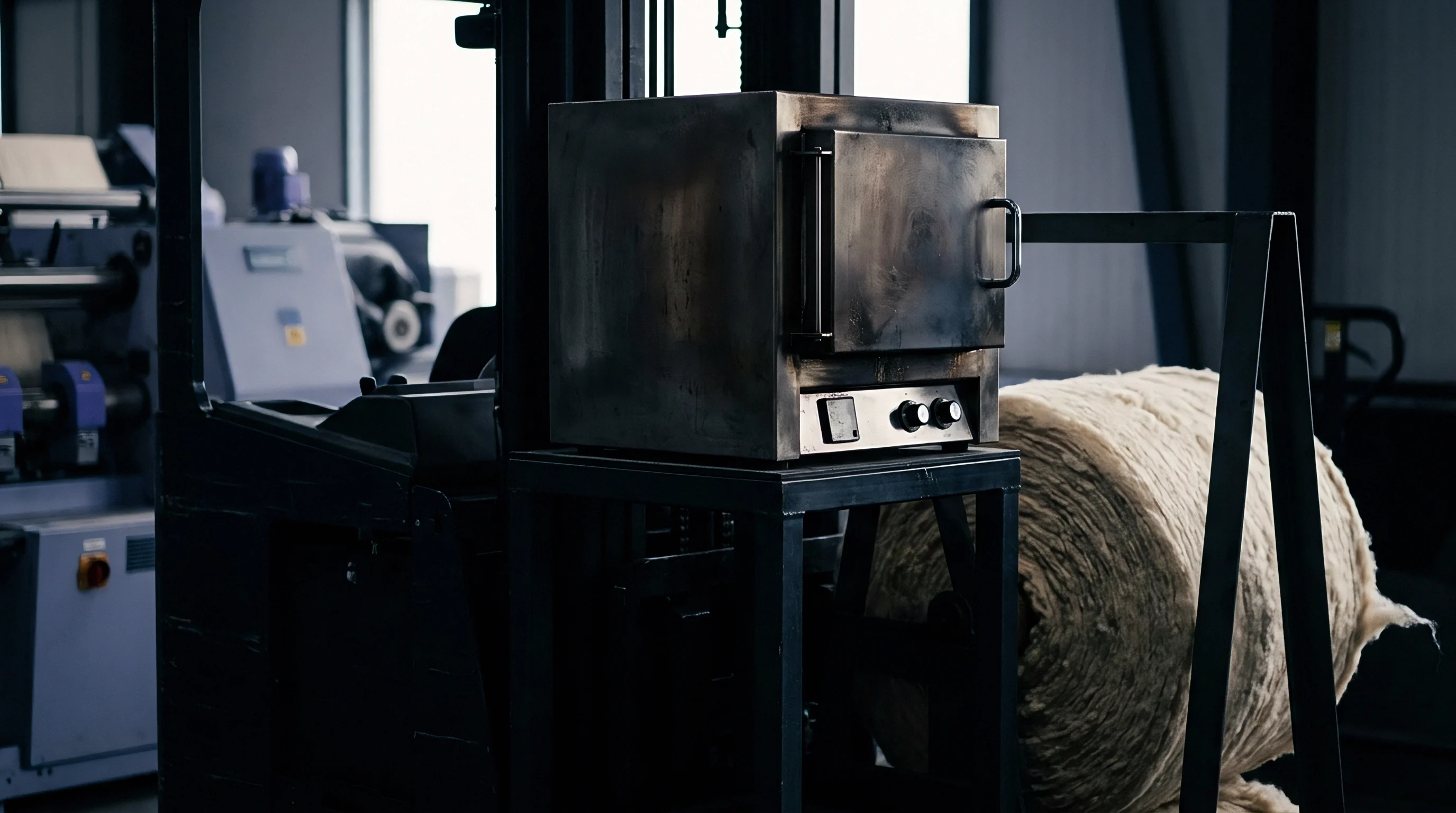
The specimen moves swiftly into a ventilated drying oven operating with positive air displacement.
Air passes through the heating chamber at 105 degrees Celsius plus or minus 2 degrees Celsius. Drying cabinets pull ambient air through desiccant columns to eliminate incoming air humidity, ensuring the drying medium carries zero water vapour pressure. The cotton specimen rests in perforated wire baskets suspended inside the airflow path.
Volatilization of free water proceeds rapidly during the opening 40 minutes, followed by the slow detachment of hydrogen-bonded water molecules clinging to the hydroxyl groups of amorphous cellulose regions.
Weighings repeat at 15-minute intervals after an initial two-hour drying exposure. Technicians consider constant dry mass attained when successive weighings show an absolute mass difference of less than 0.05 percent of the initial specimen mass. Baskets equipped with internal balance link rods permit weighing directly within the heated chamber.
Opening the drying door exposes hot dry cotton to ambient air, prompting rapid moisture absorption that ruins the analytical baseline within eight seconds.

Volatilization of Non-Cellulosic Mass
Cotton fibre consists of roughly 90 to 95 percent alpha-cellulose, alongside non-cellulosic constituents including natural waxes, pectin, organic acids, proteins, and mineral salts. High oven temperatures induce pyrolysis if airflow controls falter. Operating drying ovens above 110 degrees Celsius strips short-chain fatty acids and thermal breakdown products from external wax layers, artificially inflating apparent moisture loss values.
Standard testing methods mandate precise temperature containment to guarantee that recorded mass loss reflects water desorption rather than organic volatilization. Organic material sublimation falsifies dry mass readings, driving calculated dry yields down and generating unjustifiable invoice claims against the shipping merchant. Controlled desiccation preserves non-cellulosic surface fats while stripping internal water, yielding an authentic dry cellulosic weight.
| Constituent Fraction | Lot Share Mass Percent | Volatilization Onset Temperature | Impact On Analytical Desiccation |
|---|---|---|---|
| Free Moisture | 4.0 to 12.0 | 60 to 100 Degrees Celsius | Primary target of gravimetric drying loss |
| Bonded Hydroxyl Water | 1.5 to 3.0 | 100 to 105 Degrees Celsius | Desorbs fully at standard test plateau |
| Natural Waxes and Fats | 0.4 to 1.2 | 112 to 125 Degrees Celsius | Thermal loss if oven temperature spikes |
| Pectins and Proteins | 1.0 to 2.1 | 130 to 160 Degrees Celsius | Degrades above standard thermal threshold |
| Cellulose Backbone | 88.0 to 94.0 | 220 to 250 Degrees Celsius | Unaffected by standard analytical heating |
Technicians preserve the dry residue within sealed desiccator vessels over active silica gel or phosphorus pentoxide when external analytical balances serve the workflow. Cooling periods span 20 to 30 minutes inside these airtight desiccators, stabilizing internal air density before obtaining final dry mass numbers. The analytical report details both initial sample mass and absolute oven dry mass, forming the primary inputs for mathematical adjustment calculations.
If testing laboratories fail to confirm balance calibration across temperature variations, analytical drift invalidates commercial settlement claims across large merchant lots.


Regain

Sorption Hysteresis in Industrial Practice
Cellulose interfaces interact with ambient water vapour through moisture regain, defined as the ratio of water mass to oven dry fibre mass, expressed as a percentage. Moisture content differs by evaluating water mass against total wet fibre mass. Conflating these two mathematical expressions alters final invoice settlements by hundreds of basis points.
Pure cotton reaches equilibrium regain through a sigmoidal isotherm governed by sorption hysteresis.
Cotton desorbing moisture toward an 8.5 percent target retains higher equilibrium water content than cotton absorbing moisture from an arid state toward the same relative humidity point. A bale packed in humid conditions holds roughly 0.8 percent to 1.2 percent more bound water at 65 percent relative humidity than a bale dried during ginning and reconditioned upward. This physical reality generates discrepancies between origin moisture logs and destination testing reports, despite identical ambient readings at both ports.
A raw cotton parcel equilibrating down from transit saturation holds over one percent more moisture than an arid bale absorbing up to identical room conditions.
Industrial testing chambers maintain standard atmospheric conditions at 20 degrees Celsius plus or minus 2 degrees Celsius, and 65 percent relative humidity plus or minus 4 percent relative humidity, in compliance with ISO 139. Bales equilibrating in unconditioned storage facilities rarely hit standard regain. Marine cargo transiting tropical corridors absorbs moisture through ventilation shafts, swelling external fibres while locking internal bale humidity at arid origin levels.

Commercial Regain Allowances by Jurisdiction
Trade jurisdictions enforce differing standard commercial moisture regain allowances, establishing regional friction points across cross-border sale contracts. The International Cotton Association and United States trade customs establish 8.5 percent as standard commercial moisture regain for raw cotton transactions. European spinning mills frequently settle contracts under 8.5 percent allowances, while Chinese national standards enforce strict limits governing commercial mass recalculations.
Chinese standard GB/T 6102.1 outlines dry mass calculations paired with an 8.5 percent standard regain for commercial invoicing, but combines this with rigid upper thresholds. Shipments showing moisture content exceeding 10.0 percent trigger mandatory processing discounts or outright lot rejections at destination ports. Indian trade conventions, traditionally settled through the Cotton Association of India rules, reference an 8.5 percent regain baseline while tolerating seasonal delivery swings between 7.0 and 9.5 percent without immediate price penalties.
Export contracts must define which jurisdictional regain constant controls final ledger liquidation. A contract stating net landed weight without explicitly referencing an 8.5 percent commercial regain standard leaves settlements vulnerable to local port weighing practices. Traders manage this risk by appending specific standard codes directly to base sale prices.
The operational consequence lands on working capital when destination port authorities detain parcels displaying 10.5 percent moisture, demanding full settlement adjustments before customs entry approvals release the bills of lading.

Calculus

Mathematical Derivations for Invoice Settlement
Commercial mass determination converts physical delivery weight into contracted invoice mass through mathematically rigorous equations. Let physical net delivery mass after deducting actual tare be represented by M. Let the laboratory-determined oven dry mass of the composite sample be designated as m_d, and initial sample mass before drying be designated as m_o. The fractional moisture content W_c and moisture regain R derive directly from gravimetric loss.
Fractional moisture content equals the sample mass loss divided by initial wet sample mass: W_c = (m_o – m_d) / m_o. Fractional moisture regain represents sample mass loss divided by dry mass: R = (m_o – m_d) / m_d. Contract settlement requires applying the agreed conventional moisture regain R_c, typically set at 0.085 for an 8.5 percent trade standard.
Commercial mass M_c calculates by loading the total oven dry mass of the shipment with this standard commercial regain allowance.
Commercial mass expresses through the formula: M_c = M (m_d / m_o) (1 + R_c). Substituting fractional moisture content into the equation yields: M_c = M (1 – W_c) (1 + R_c). When commercial regain R_c equals 8.5 percent and tested moisture content W_c measures 8.5 percent, commercial mass does not equal delivery mass.
An 8.5 percent moisture content equates to a moisture regain of 9.29 percent, generating a net commercial mass adjustment that favors the buyer.
| Tested Moisture Content | Tested Moisture Regain | Net Landed Mass | Adjusted Commercial Mass | Adjustment Delta Mass | Financial Variance at 1.90 USD/kg |
|---|---|---|---|---|---|
| Calculated on a 100,000 kg net landed lot with an 8.5 percent commercial regain constant. | |||||
| 6.50 Percent | 6.95 Percent | 100,000 kg | 101,447 kg | +1,447 kg | +$2,749.30 |
| 7.50 Percent | 8.11 Percent | 100,000 kg | 100,362 kg | +362 kg | +$687.80 |
| 7.83 Percent | 8.50 Percent | 100,000 kg | 100,000 kg | 0 kg | $0.00 |
| 8.50 Percent | 9.29 Percent | 100,000 kg | 99,277 kg | -723 kg | -$1,373.70 |
| 9.50 Percent | 10.50 Percent | 100,000 kg | 98,192 kg | -1,808 kg | -$3,435.20 |
| 10.50 Percent | 11.73 Percent | 100,000 kg | 97,107 kg | -2,893 kg | -$5,496.70 |
| 11.50 Percent | 12.99 Percent | 100,000 kg | 96,022 kg | -3,978 kg | -$7,558.20 |

Worked Settlement Construction
Take a 200-tonne purchase order containing 880 universal density bales billed at 2.10 USD per kilogram, free-on-board shipping port, with an agreed 8.5 percent conventional moisture regain allowance. Destination weighbridges record total gross arrival mass at 203,450 kilograms. Certified warehouse technicians strip packaging from 44 sample bales, establishing an average tare mass of 2.15 kilograms per bale across plastic wrappers and wire bands.
Total tare mass calculates as: 880 2.15 = 1,892 kilograms. Net landed weight M equals: 203,450 – 1,892 = 201,558 kilograms. Laboratory technicians draw representative pneumatic core samples across the lot, sealing them in foil pouches for gravimetric analysis under ISO 6741.
Composite laboratory samples show an aggregate wet mass m_o of 1,250.00 grams and an oven dry mass m_d of 1,121.25 grams following 105 degrees Celsius desiccation.
Moisture content calculation gives: (1,250.00 – 1,121.25) / 1,250.00 = 0.1030, or 10.30 percent moisture content. Commercial mass derives as: 201,558 (1 – 0.1030) (1 + 0.085) = 201,558 0.8970 1.085 = 196,165.73 kilograms. The buyer adjusts the final payable volume downward from 201,558 kilograms to 196,165.73 kilograms, yielding a mass reduction of 5,392.27 kilograms.
At the contracted price of 2.10 USD per kilogram, this single technical moisture adjustment deducts 11,323.77 USD from the commercial invoice ledger.
When spinning mills skip oven drying verification on 200-tonne deliveries, payment ledgers absorb over eleven thousand dollars in evaporated water.


Dock
Bale Climatology in Containerized Transit
Maritime container shipments pass through dramatic thermal transitions that alter water distributions within raw cotton bales. High-density pressing compresses fibre to roughly 450 kilograms per cubic meter, retarding rapid gas diffusion through the bale interior. Solar radiation heating the exterior roof panels of top-tier containers generates internal temperatures reaching 60 degrees Celsius during equatorial voyages.
Moisture trapped within outer bale plies vaporizes into the internal container headspace, creating localized relative humidity spikes near 100 percent.
Nighttime thermal drop cycles rapidly cool thin corrugated container walls. This temperature drop causes airborne water vapour to condense onto ceiling panels, raining back onto upper bale surfaces in a phenomenon known as cargo sweat. Wet surface layers foster microbiological growth, triggering microbial heating and enzymatic fiber degradation.
Inspectors encountering stained bale wrappers cut deep sample plugs to verify whether elevated moisture represents superficial transit condensation or systemic ginning excess.
A container seal broken in transit without surveyor documentation forfeits all moisture claims against the ocean freight carrier.
Surveyors run initial screenings across arriving container thresholds using electronic resistance probes equipped with insulated shafts. These instruments push deep insulated needles past the bale skin to register moisture gradients across concentric depth rings. Resistance meters deliver useful comparative indications, yet international trade arbitration boards reject direct pin-meter readings as binding evidence for financial claims.
Official disputes demand core drawing and oven desiccation verification.

Drafting Enforceable Commercial Settlement Clauses?
Protective procurement requires tight contract wording to convert gravimetric oven results into enforceable invoice debits. Generic statements such as goods subject to standard moisture allowances fail to establish sampling mandates, independent laboratory authority, or claim notification windows. Operational sales terms must bind both parties to specific operational testing sequences.
Drafting enforceable trade terms requires four specific structural components:
- Governing Testing Protocols must explicitly cite standardized gravimetric drying standards like ISO 6741 or ASTM D2495 while explicitly excluding handheld pin resistance meters as arbitral evidence.
- Independent Sampling Execution must assign core extraction responsibilities to certified international survey companies within fourteen calendar days of container discharge at the destination terminal.
- Mutual Moisture Allowances must define commercial regain at 8.5 percent while establishing an operational dead-band between 8.0 and 8.5 percent where neither buyer nor seller exercises mass adjustments.
- Settlement Ledger Mechanics must govern how final debits apply against the commercial invoice, establishing whether corrections trigger amended letters of credit or direct wire refunds.
When procurement contracts lack these precise mechanical sequences, sellers reject destination testing reports as unauthorized unilateral actions. Destination classing labs then hold raw cotton bales in bonded warehouses, accumulating terminal demurrage charges while counterparties exchange legal notices over settlement authority.
The practical result leaves thousands of metric tons stranded on terminal docks, running up demurrage costs that rapidly outstrip the underlying moisture claim value.

Impurities

Trash Separation and Non-Lint Clean Yield
Oven dry mass isolates water loss, but fails to distinguish pure spinnable cotton lint from extraneous plant trash and soil particles. A raw cotton shipment exhibiting high oven dry yield may conceal heavy botanical impurities that drop out as blowroom waste during yarn manufacture. Clean commercial yield determination requires coupling oven drying protocols with mechanical trash separation via Shirley Analyzer machinery or automated High Volume Instrument trash meters.
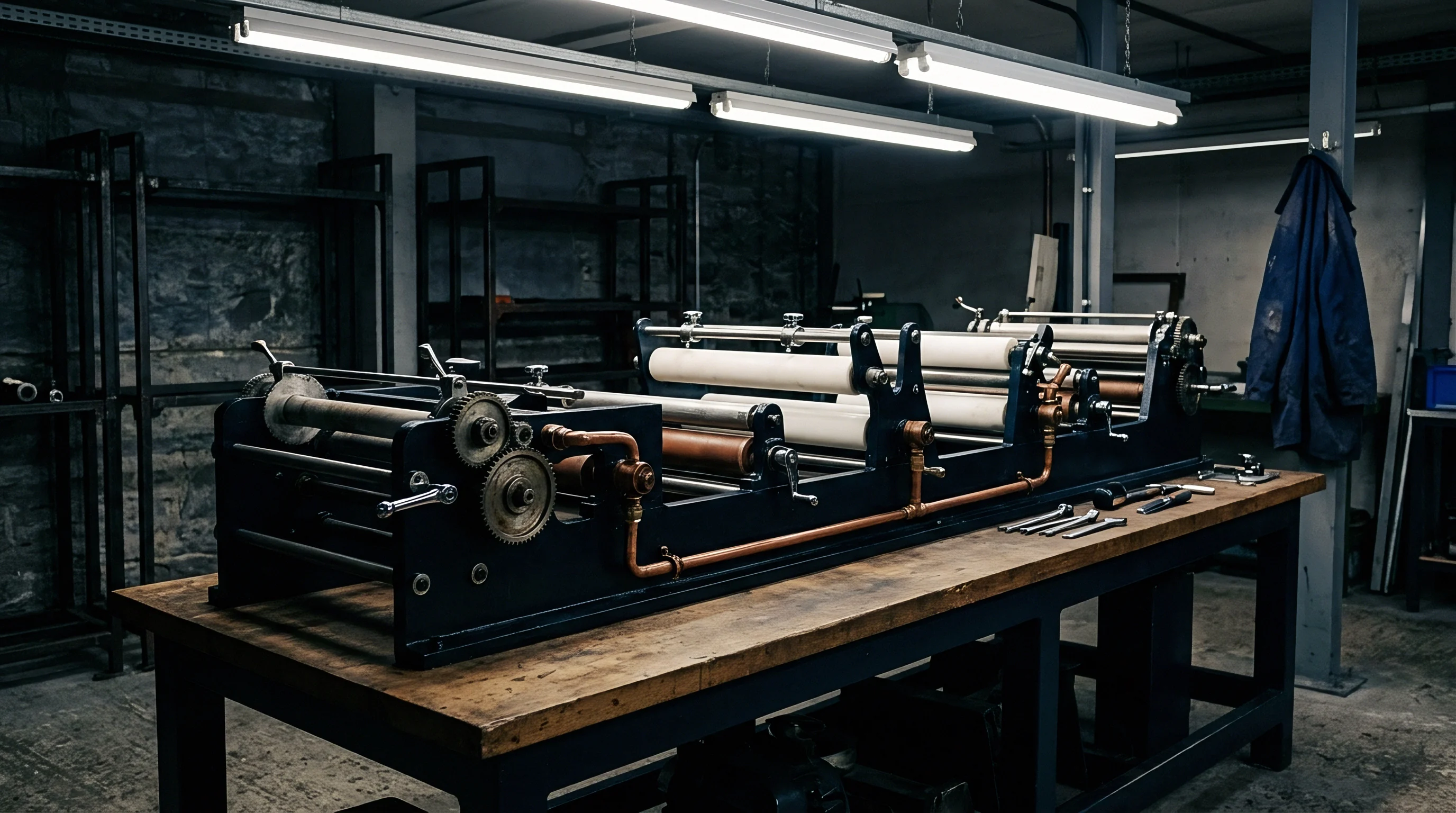
ASTM D2812 establishes the classical two-stage mechanical separation process using the Shirley Analyzer. The instrument aerodynamically separates spinnable lint from leafy bracts, broken seed coats, bark, grass, and mineral sand. Technicians feed a 100-gram conditioned lint sample across a high-speed lickerin cylinder that throws dense trash particles into a settling tray while air currents convey cleaned lint onto a receiving cage.
The operator records both the cleaned lint mass and the separated non-lint trash fraction to 0.01 grams.
If non-lint trash content exceeds the contracted Universal Standard grade allowance, mills apply secondary yield adjustments against final mass settlements. A parcel graded as Strict Middling carries a base trash allowance near 1.2 percent, whereas a parcel landing at Low Middling reveals non-lint contents approaching 4.5 percent. Converting 3.3 percent of invoice mass into blowroom waste damages spinning productivity, accelerating cleaning roll wear and forcing frequent rotor stops in open-end spinning lines.

Combined Clean Commercial Yield Derivation
Sophisticated industrial purchase agreements integrate both non-lint trash yield and gravimetric moisture regain into a consolidated clean commercial yield index. Clean commercial yield represents the exact proportion of spinnable, properly conditioned lint delivered per kilogram of raw packaging gross mass. This calculation shields the spinning mill from funding both excess transit water and heavy botanical debris.
Clean commercial yield Y_cc expresses through this formulation: Y_cc = (1 – T) (1 – W_c) (1 + R_c), where T represents the fractional non-lint trash content derived via Shirley Analyzer, W_c represents tested fractional moisture content, and R_c represents the standard commercial moisture regain constant. If a mill receives raw stock testing at 3.5 percent trash, 10.2 percent moisture content, and applies an 8.5 percent commercial regain constant, the clean commercial yield calculates cleanly: (1 – 0.035) (1 – 0.102) (1 + 0.085) = 0.965 0.898 1.085 = 0.9402, or 94.02 percent of gross delivery mass.
High non-lint content coupled with elevated moisture presents a compound processing hazard in modern blowrooms. Wet trash particles adhere stubbornly to cotton fiber clumps, resisting centrifugal extraction bars and cleaner beaters. The beater pins shatter damp seed coats into microscopic specks, driving pepper trash deep into the fiber matrix and generating visible fabric imperfections that survive scouring, bleaching, and reactive dyeing.
Raw cotton merchants frequently contest combined clean yield clauses by arguing that trash tables and moisture charts operate under separate trade arbitration sections. Buyers who negotiate combined yield formulations into master supply agreements insulate their operations from double-loss deliveries, balancing their spinning yield ledgers before raw bales hit the opening plucker line.
The standard Liverpool arbitration rules settle quality differences through point differentials on price rather than gross weight reductions, unless the master contract explicitly dictates mass adjustment protocols for non-lint excess.