Calibrating Stenter Dwell Times for Fine Gauge Polyamide Knitted Fabrics
Target fabric temperature determines dwell duration, balancing polyamide dimensional fixation against elastane degradation through verified chamber pyrometer tracking.
Heat
Thermal energy transfer inside a stenter frame dictates the crystalline morphology of polyamide filaments. Polyamide 6 melts near 220 degrees Celsius, whereas polyamide 6.6 maintains crystalline stability up to 255 degrees Celsius. When processing lightweight circular knits or warp-knitted tricot fabrics constructed from 15 to 30 denier yarns, thermal penetration across individual filaments occurs within fractions of a second.
The challenge centers on the narrow processing window where internal fiber stress relieves without degrading accompanying elastane threads. Fine yarns absorb thermal energy almost instantly. Spun or textured filaments under 1.0 denier per filament reach environmental temperature five times faster than standard apparel yarns.
Thermal Windows for Polyamide Microfilament Knits
Dyehouses target precise fabric surface temperatures rather than ambient chamber readings. Polyamide 6 requires a fabric temperature band between 185 and 192 degrees Celsius for dimensional fixation. Polyamide 6.6 operates between 195 and 205 degrees Celsius.
Underheating leaves residual torque within the knit loops. Spirality follows immediately. Laundering then triggers unrestrained shrinkage along the courses.
Exceeding these temperatures initiates polymer chain scission. Color shift ruins bulk lots. Light shades yellow noticeably when exposed to excessive temperature regimes, registering delta b values greater than 1.2 on spectrophotometer checks.
Fine yarns exhibit higher surface-area-to-mass ratios, accelerating thermal oxidation. Nitrogen blankets in specialized stenters mitigate yellowing, yet air circulation remains standard across commercial dyehouses.
Thermal fixation of twenty-denier polyamide 6.6 with twenty percent elastane achieves structural equilibrium at 192 degrees Celsius after twenty-two seconds of fabric immersion.
Elastane Preservation under Direct Exposure
Polyurethane filaments lose elastic recovery when subjected to excessive thermal soaking. Segmented polyurethane urea decomposes above 195 degrees Celsius. Spandex denier decays under prolonged exposure.
Power net and single jersey constructions lose modulus, producing limp hand feel and unrecoverable bagging at garment stress points.
Dwell calculations isolate the exact seconds during which the cloth resides at fixation temperature. Total oven passage includes preheating, moisture evaporation, and final thermal soak. Preserving elastane demands that dwell time at the target temperature stays between 15 and 30 seconds for 70 to 120 grams per square metre constructions.
Setting dwell times too long embrittles elastane filaments, dropping fabric bursting strength below commercial safety margins.
Tension spikes rip selvedges.
| Fiber Composition | Yarn Count (Decitex) | Target Fabric Temp (°C) | Minimum Dwell (s) | Maximum Dwell (s) | Thermal Risk Threshold |
|---|---|---|---|---|---|
| 100% PA 6 | 22/14/1 | 188 | 15 | 25 | Over 195°C causes glazing |
| 82% PA 6 / 18% Elastane | 22/14/1 + 22 dtex | 185 | 18 | 22 | Over 190°C softens elastane |
| 100% PA 6.6 | 33/24/1 | 202 | 15 | 30 | Over 210°C triggers oxidation |
| 78% PA 6.6 / 22% Elastane | 33/24/1 + 44 dtex | 194 | 20 | 25 | Over 198°C cuts tensile modulus |
| 72% PA 6.6 / 28% Elastane | 17/12/1 + 22 dtex | 192 | 16 | 22 | Over 195°C causes fiber rupture |
Operating outside these calibrated boundaries causes thermal degradation that manifests as irreversible modulus loss, blistering, and patchy dye pickup across the finished yardage.
Chamber
Compartment isolation inside the stenter enclosure establishes distinct physical environments along the production pass. Modern eight-chamber stenters assign initial compartments to water removal and subsequent compartments to polymer relaxation. Evaporation consumes thermal energy.
The cloth remains near wet-bulb temperature while water evaporates from the structure. True thermal soaking begins only after the moisture content drops below five percent.
Moisture Evaporation and Temperature Lag
Hydrophobic synthetic textiles carry water mechanically within interstitial loop voids. Fine gauge knitted structures trap padding liquor within dense capillaries. Passing through the padder at seventy percent wet pickup, an eighty gram fabric absorbs substantial latent heat during evaporation.
Chambers one through three elevate yarn temperature to one hundred degrees Celsius. Fabric temperature plateaus until drying finishes. Only in chamber four or five does the yarn surface temperature rise toward the set fixation point.
Running the stenter too fast pulls the evaporation phase into the fixation compartments. Effective dwell time shrinks to single digits. The polymer chains fail to reach their relaxation threshold before passing into the exit cooling zone.
Thermostats drift over time.
Pyrometer Tracking across Line Segments
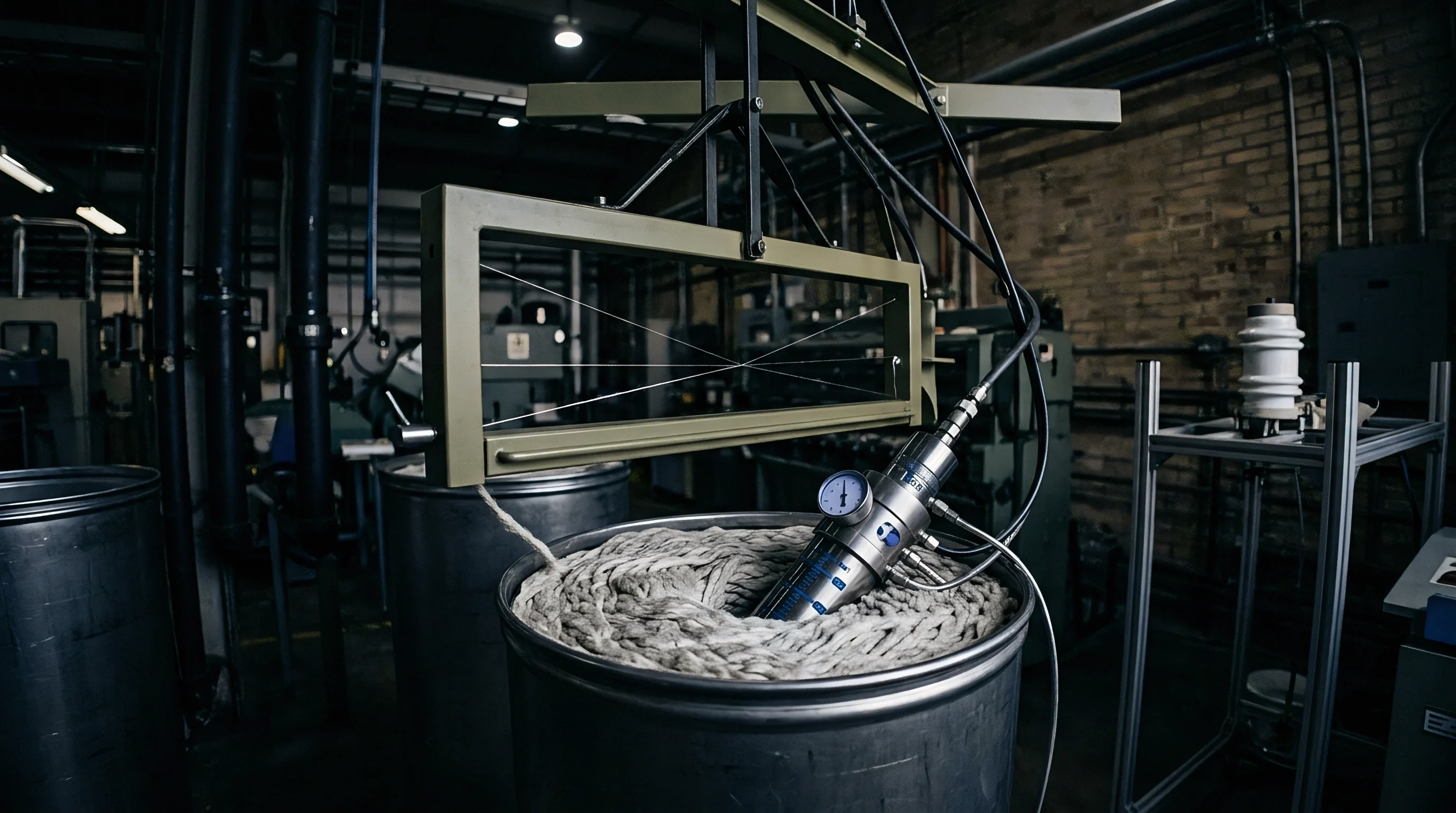
Radiometric sensors positioned throughout the compartments eliminate guesswork regarding fabric temperature. Non-contact infrared sensors register actual fabric surface readings at three-meter intervals. The sensor readings feed back to circulation blower drives and heating valves.
Calibrating the dwell clock requires identifying the exact line position where the cloth temperature hits the fixation range.
Dwell timing starts when the sensor confirms the cloth temperature matches the set point. Fabric speed governs seconds spent across the remaining meters. Relying on chamber ambient air indicators creates deceptive operational profiles.
- Radiometric pyrometer drift offsets real fabric temperature readings by several degrees when sensor optical lenses collect condensed silicone spinning oils.
- Exhaust ventilation imbalance pulls ambient cold air into entry slots, extending the required evaporation passage by several linear meters.
- Lateral temperature deviation across the width profile creates shade shading and irregular course density between the center and selvedges.
- Pin chain thermal mass absorbs localized heat, generating edge coolness that delays selvedge fixation relative to the center body.
Fabric velocity adjusted to protect synthetic elasticity preserves finished hand while preventing roll curling on the cutting table.
Mill supervisors frequently defend defective deliveries by claiming the chamber temperature displays showed target numbers throughout the entire finishing schedule.
Airflow
Ventilation nozzles deliver heated atmosphere at controlled velocities to strip moisture and establish thermodynamic contact. Impingement nozzles generate high turbulence along the yarn boundary envelope. Increasing air velocity raises the heat transfer coefficient.
Excessive pressure forces delicate knit structures to flutter off the carrier pins.
Boundary Layer Stripping and Fan Frequency
Nozzle velocity strips boundary air. Stenter fans driven by variable frequency drives push air at speeds between twenty and forty-five meters per second. Fine gauge fabrics below one hundred grams per square metre lack the areal mass to resist strong vertical jets.
Star top and bottom nozzle configurations require precise offset adjustments.
Balancing nozzle outputs keeps the moving fabric floating neutrally along the pin plane. Setting top nozzle pressure slightly higher prevents billowing. Excessive downward force bows the crosswise grain line.
Circulation fan speeds balanced between sixty and seventy percent frequency maximize heat exchange without inducing mechanical flutter.
Pin Chain Retention at Low Fabric Grammage
Holding fine warp knits on stenter chains demands aggressive pin engagement combined with gentle lateral tension. Unpinned edges roll instantly. Curled edges pass into the chambers without reaching uniform temperature.
Fixed curled edges cannot be unrolled during subsequent cutting room operations.
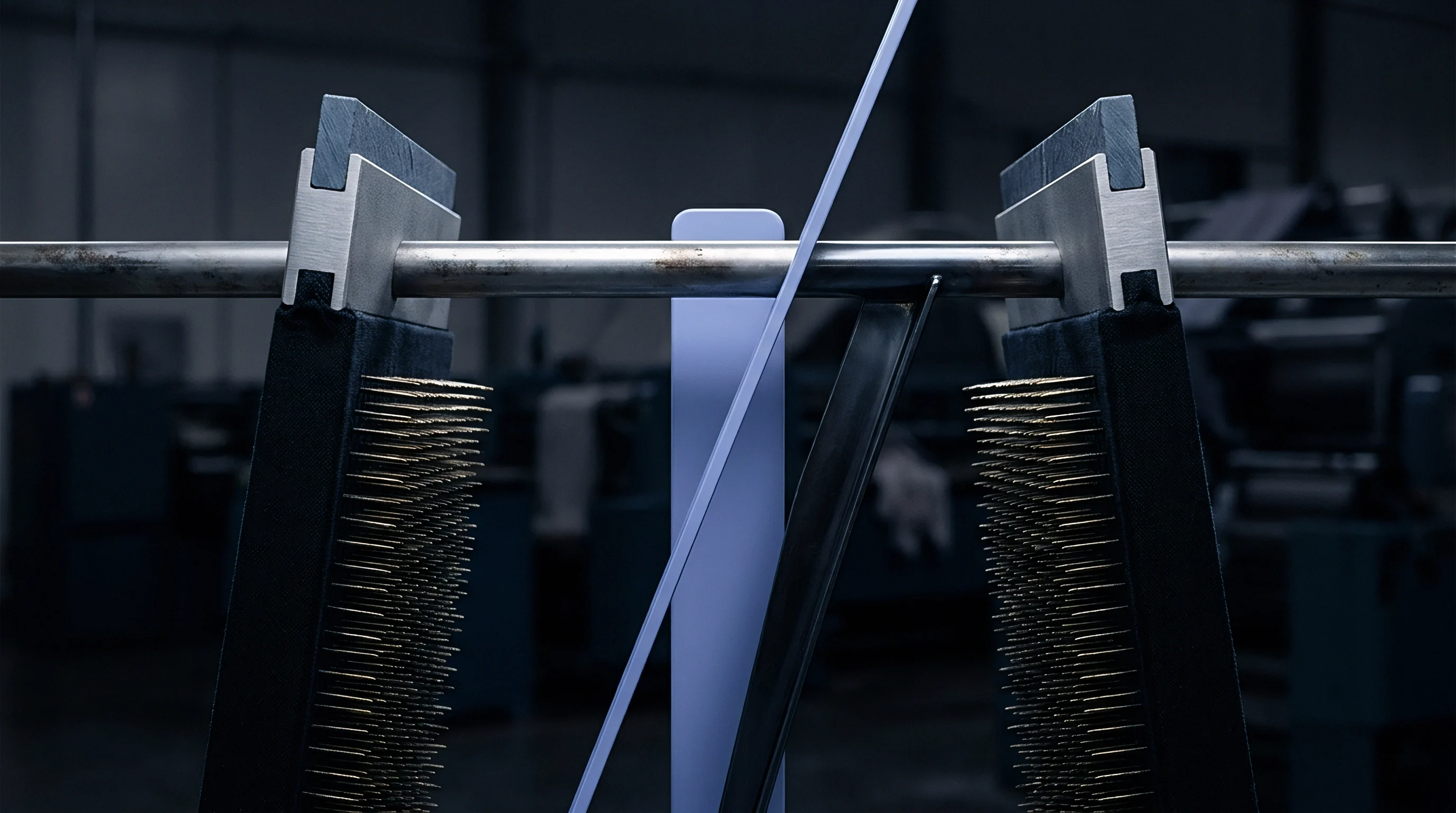
Overfeed brush wheels press the selvedges securely onto stainless steel pins. Gel residues from yarn spin finishes accumulate on pin plates, degrading penetration. Clean pin chains maintain straight fabric tracking through the drying and heating zones.
- Mechanical selvedge decurlers unroll fabric edges pneumatically immediately ahead of the primary pin chain entry wheels.
- Pin insertion brushes drive fine loops completely down onto the pin roots to prevent blow-off under maximum nozzle pressure.
- Differential overfeed drives supply positive longitudinal feed, preventing edge tension from tearing the delicate loop structures.
- Chamber exit unpinning guides release the set fabric smoothly onto driven take-up rollers without stretching warm filaments.
Tension control prevents distortion.
A contract delivery clause referencing ISO 13934 bursting strength standards enforces financial deductions whenever thermal over-exposure degrades yarn tenacity beyond ten percent of greige baseline values.
Every commercial sales agreement referencing ISO 13938-2 burst pressure parameters permits buyers to reject lots exhibiting degraded tensile resilience caused by excessive air nozzle temperatures.
Yield
Areal weight control defines the commercial profitability of knitted production runs. Polyamide knits leaving the circular or warp knitting machine arrive with latent structural elongation. The stenter sets the final course count per centimetre and finished width.
Balancing longitudinal overfeed against lateral chain expansion fixes loop geometry permanently.

Overfeed Mechanics for Course Density Control
Feeding excess linear fabric onto the pin chain increases course density. Stenter overfeed units operate across a range from minus five to plus fifty percent. Fine gauge single jersey containing twenty percent elastane demands positive overfeed between fifteen and twenty-eight percent.
Feeding fabric slackly allows loops to contract longitudinally inside the heating chambers.
Crystallites lock into alignment. Without sufficient longitudinal overfeed, heatsetting locks loops into an elongated state. The resulting finished goods exhibit low course counts, lightweight areal density, and massive residual wash shrinkage.
Speed dictates the clock.
| Trial Run | Line Velocity (m/min) | Overfeed Rate (%) | Measured Dwell (s) | Areal Weight (g/m²) | Length Shrinkage ISO 5077 (%) | Width Shrinkage ISO 5077 (%) |
|---|---|---|---|---|---|---|
| A | 38 | +8 | 12 | 92 | -8.5 | -2.0 |
| B | 28 | +14 | 17 | 104 | -4.2 | -1.5 |
| C | 22 | +22 | 22 | 116 | -1.8 | -0.8 |
| D | 18 | +28 | 27 | 122 | -1.0 | -0.5 |
| E | 14 | +35 | 35 | 128 | -0.8 | -0.5 |
Width Tension and Residual Wash Shrinkage
Chain track divergence sets the finished usable width of the textile roll. Expanding the chain rails beyond greige loop recovery limits introduces lateral stress. Heat transfers through convection.
When the stenter heating zone sets over-stretched loops, the elastane filament cannot recover its natural configuration.
Laundering tests run under ISO 6330 at forty degrees Celsius relax these trapped stresses. The garment shrinks along the width, failing buyer specifications. Stable fabric requires calibrating the rail divergence to match natural wet-relaxation geometry, followed by adequate dwell to relieve construction stresses.
Specifying ISO 5077 dimensional testing under five home laundering cycles eliminates disputes over latent relaxation shrinkage in finished knitted garments.
- Course density counts taken across three conditioned sample swatches confirm structural loop stabilization before batch dispatch.
- Elastane power retention evaluated under cyclic extension tests ensures elasticity remains within agreed performance envelopes.
- Areal mass determinations per ISO 3801 verify compliance with contracted cut-and-sew yield targets.
- Spectrophotometric yellowness index checks identify any trace polymer degradation incurred during dwell immersion.
The remaining question focuses on whether micro-encapsulated functional finishes applied during the stenter pass can survive the necessary thermal dwell windows without chemical dissociation.
Settlement
Conversion expenses rise proportionately as dwell schedules expand. Running an eight-chamber stenter at twenty meters per minute yields twelve hundred linear meters per operating hour. Accelerating the chain to thirty-five meters per minute increases hourly output to twenty-one hundred meters, substantially reducing the energy cost per finished meter.
Machine throughput dictates factory financial margins.

Line Speed Arithmetic and Dyehouse Capacity
Dwell requirements define maximum line velocities. A twenty-four meter stenter heating zone with an eighteen-second dwell requirement limits machine speed to eighty meters per minute under dry conditions. Factoring in drying requirements for wet fabric drops the real commercial speed to twenty-two meters per minute.
Increasing speed without extending chamber lengths truncates dwell periods below the physical threshold needed for structural setting.
Residual shrinkage drops below specifications. Mills facing delivery deadlines often accelerate the line, trading fabric dimensional stability for output volume. Cutting rooms receive yardage that distorts during automated panel spreading.
Commercial Penalties on Compromised Recovery
Garment returns caused by twisted side seams and distorted fits trace directly back to improper stenter calibration. When loop stresses remain unrelaxed, automated cutting knives release localized tensions. Pattern panels warp immediately upon cut release.
Sewing factories reject distorted rolls, charging converters for wasted cutting time and damaged pattern components. Verifying dwell profiles through documented data logging protects the converter from contentious claims.
Dwell controls the outcome.
A calibrated stenter line operated within verified thermal boundaries protects finished yarn elasticity while preserving commercial production margins.