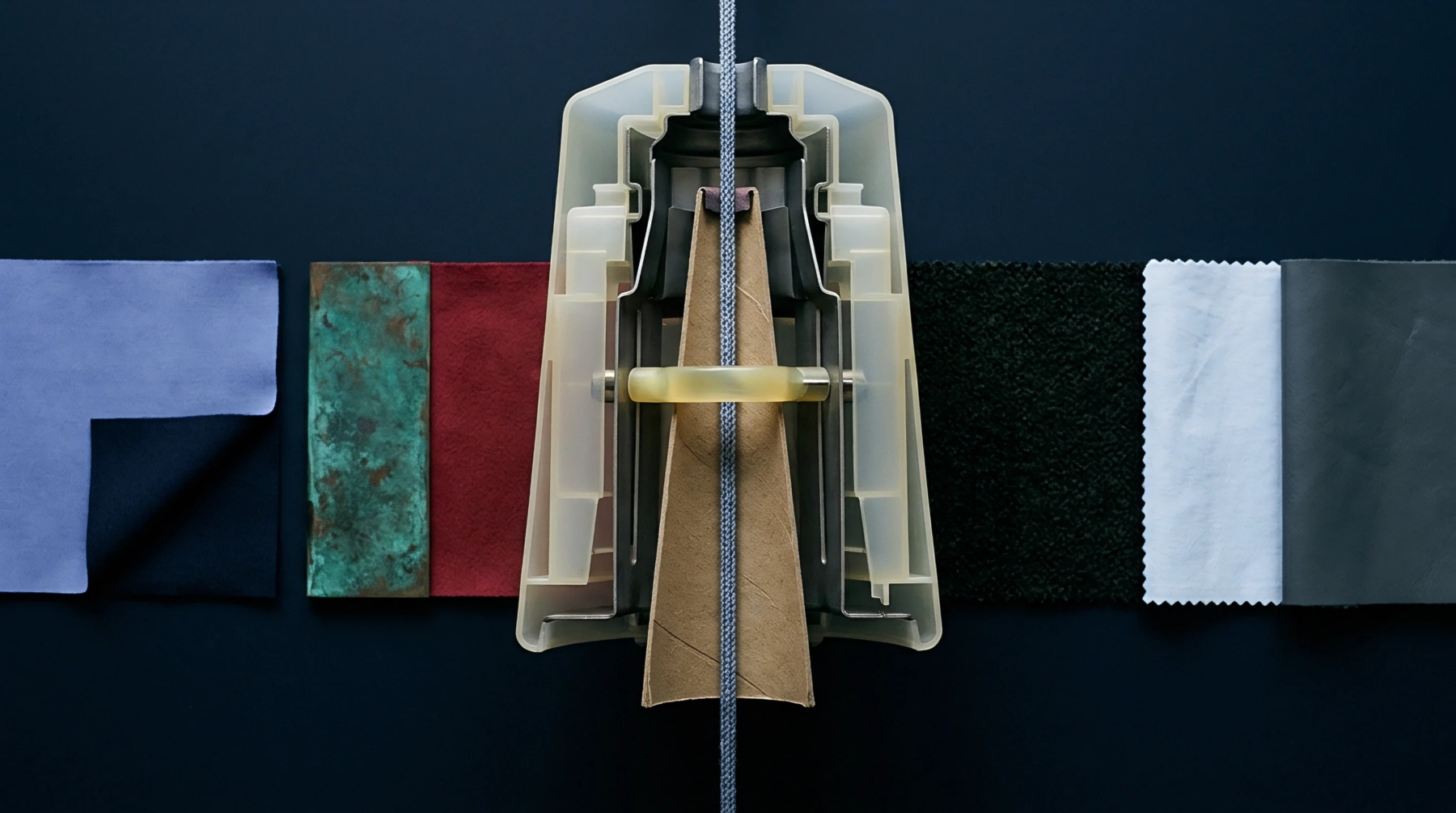
Warp Knit
Fabric construction using multiple parallel warp yarns creates stable and run-resistant structures with controlled elasticity. In the warp-knitting sector, tricot is a fabric produced on a machine with a single or double needle bar, characterized by a zig-zag pattern of loops on the face and diagonal floats on the back. This construction provides an excellent balance of dimensional stability and elasticity.
It is widely used in the manufacture of activewear and performance garments.
Loop Structure
Structural integrity in these materials is achieved by the interlocking loops that run in the vertical direction. Unlike weft knits, a tricot fabric does not run or unravel when a single yarn is severed or broken. This makes it ideal for garments that require high durability and close-fitting comfort.
Quality control laboratories test the bursting strength and snag resistance of these materials before production.
Fabric Behavior
Drape and surface characteristics are determined by the run-in ratio of the front and back guide bars. Adjusting these knitting parameters allows the mill to produce either smooth, dense surfaces or textured patterns. This versatility enables the fabric to meet various functional and aesthetic requirements.
Mill Inspection
Finishing mills must monitor tension during the washing and heat-setting of these warp-knitted structures. Excessive tension can distort the loop geometry of the tricot and cause permanent width loss. Proper handling is essential to maintain the correct fabric weight.