Elastic Capacity
Synthetic polyurethane fibre functions as a high-performance additive that restores structural recovery to textile assemblies. Elastane dictates the degree of stretch and return in a finished garment by physically pulling base yarns back into their original spatial orientation after mechanical deformation. Production facilities verify this performance through stress-strain testing protocols which quantify the force required to reach a specific elongation point and the percentage of permanent set remaining after the tension is released.
The material loses its functional integrity when exposed to high heat or persistent chlorine immersion during laundering cycles.
Polymer Synthesis
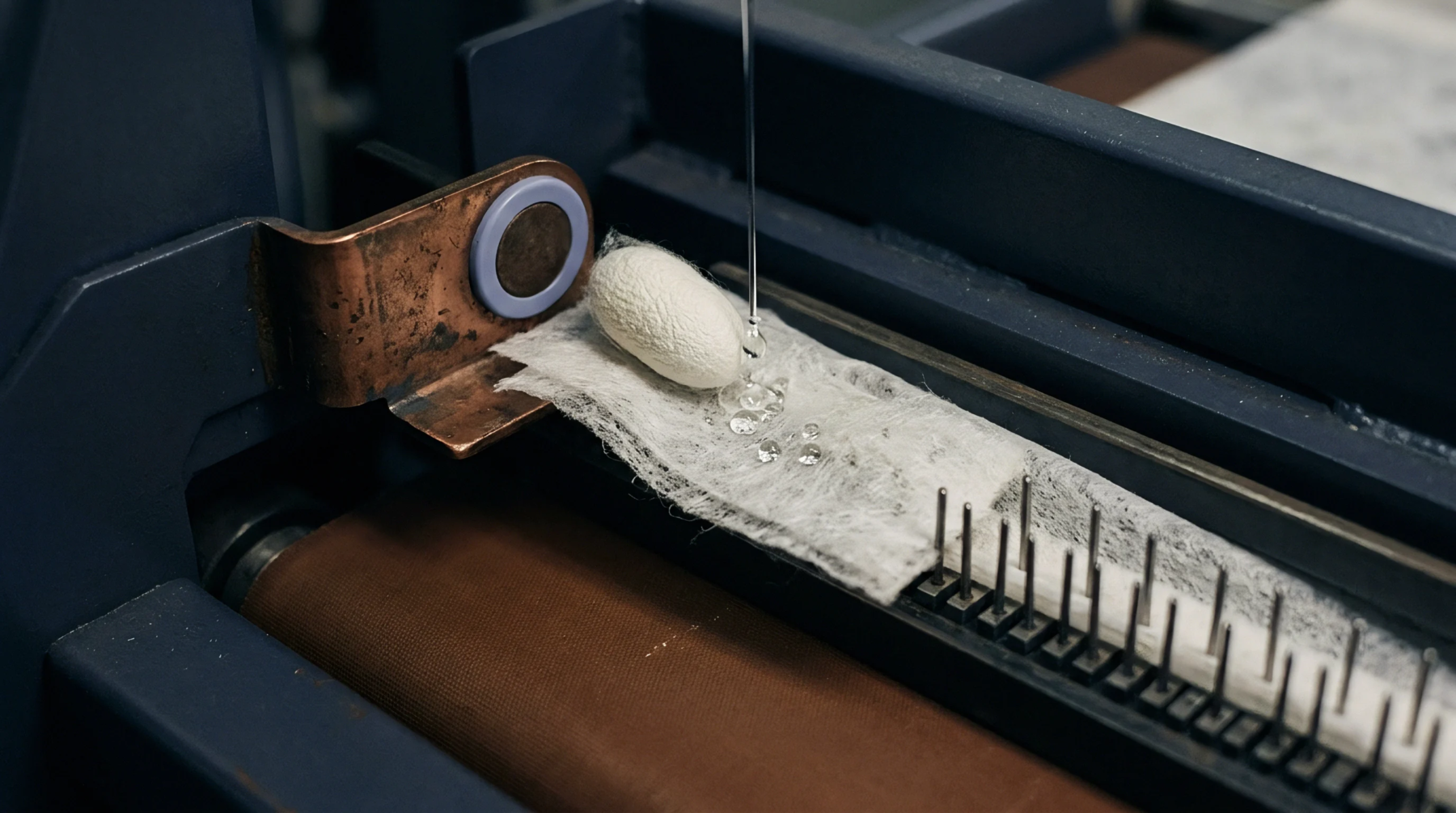
Scientists create this material through a dry spinning process where a pre-polymer solution emerges from a spinneret into a heated nitrogen chamber. Evaporation of the solvent leaves behind solid filaments that exhibit high molecular mobility. Manufacturers combine these filaments with natural or synthetic base yarns during the knitting or weaving phase to impart multidimensional flexibility to the fabric architecture.
Precise control of the spinning speed determines the final linear density of the extruded filaments.
Operational Tolerance
Textile mills account for the heat sensitivity of this polymer during the dyeing and finishing stages of garment manufacturing. Steam pressure settings must remain below the degradation temperature of the fibre to prevent snap-back failure or loss of elasticity. Dyeing processes utilize specific dispersing agents to ensure uniform color absorption without damaging the chemical bonds within the polymer chain.
Standard testing methods rely on cyclic fatigue analysis to predict the lifespan of the material under repeated stress conditions.
Fabric Integration
Garment designers determine the ratio of inclusion based on the intended physical use of the apparel item. Higher concentrations provide compression and anatomical shaping whereas lower ratios ensure comfort and garment longevity. Technical specifications mandate that the yarn supplier declares the exact draw ratio to ensure the mill maintains consistent tension during production.
This specific fibre ensures that apparel maintains its dimensional stability over prolonged periods of active use.