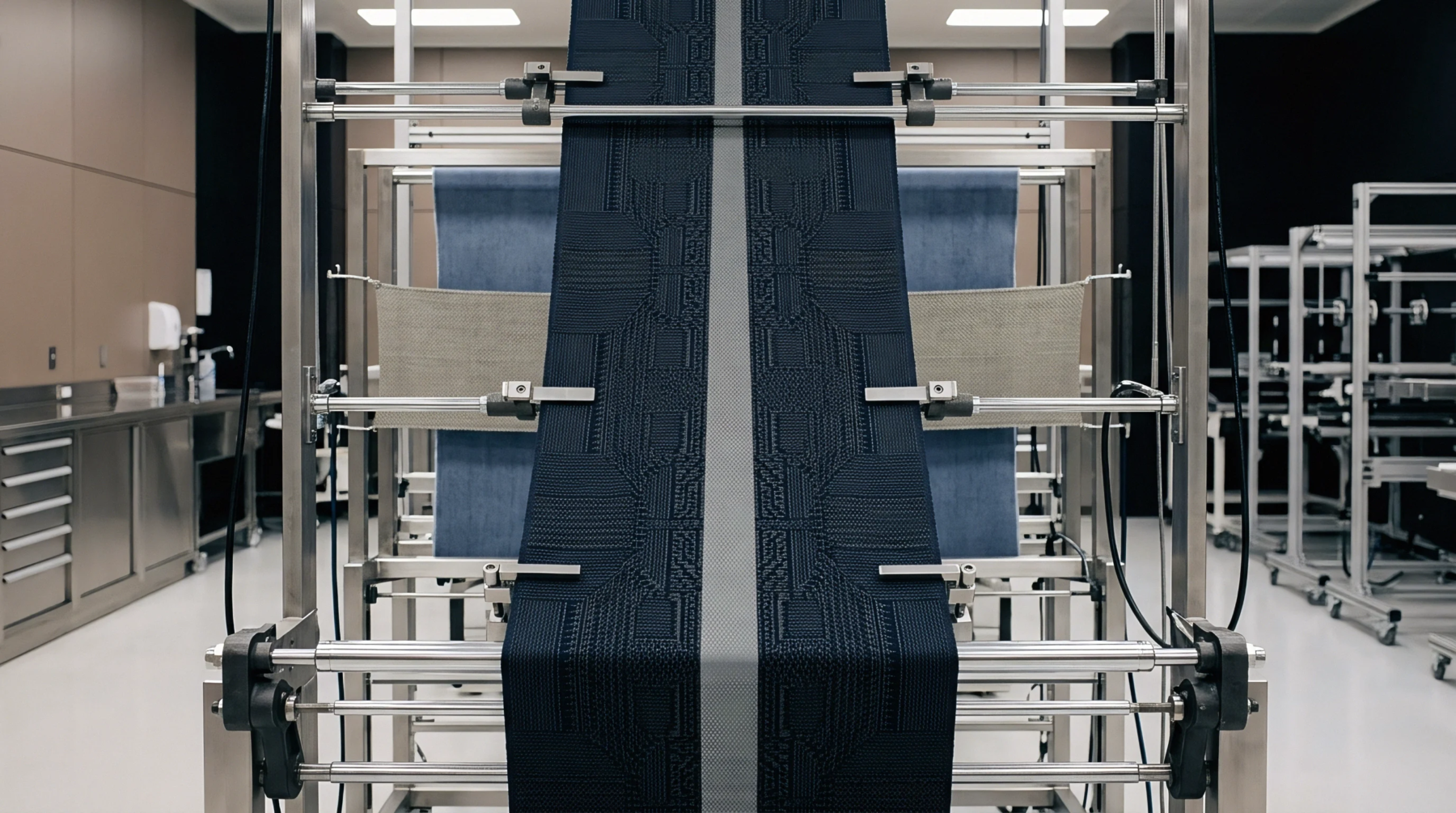
Fibre Elasticity
Highly stretchable synthetic filaments provide measurable recovery and elongation properties to knitted or woven fabrics. Every elastomeric yarn consists of long chain polymers that allow the material to stretch several times its original length and return to its initial state without permanent deformation. These yarns are typically combined with natural or synthetic base fibres to create stretch garments such as activewear or denim.
Manufacturing Integration
Covered or core spun methods protect the sensitive core from heat and mechanical stress during textile processing. An elastomeric yarn is often wrapped in cotton or polyester to modify its hand feel and dyeing characteristics. Tension control at the creel is necessary to ensure uniform stretch across the width of the finished cloth.
Physical Performance
Recovery force determines how effectively a garment retains its shape after repeated cycles of wear and stretching. If the elastomeric yarn loses its pull back capacity, the fabric exhibits bagging or permanent growth that ruins the fit. Laboratory tests measure the power of the yarn at specific elongation percentages to confirm it meets the specification for high performance athletic gear or medical compression garments.
Proper tensioning during the winding process prevents the degradation of these elastic properties before the yarn reaches the loom.
Checkpoint Verification
Breakage during knitting or weaving indicates poor yarn quality or incorrect machine settings. Using high quality elastomeric yarn reduces machine downtime and ensures a consistent finished weight. Inspectors check for lycra grin through where the shiny filament becomes visible on the fabric surface.