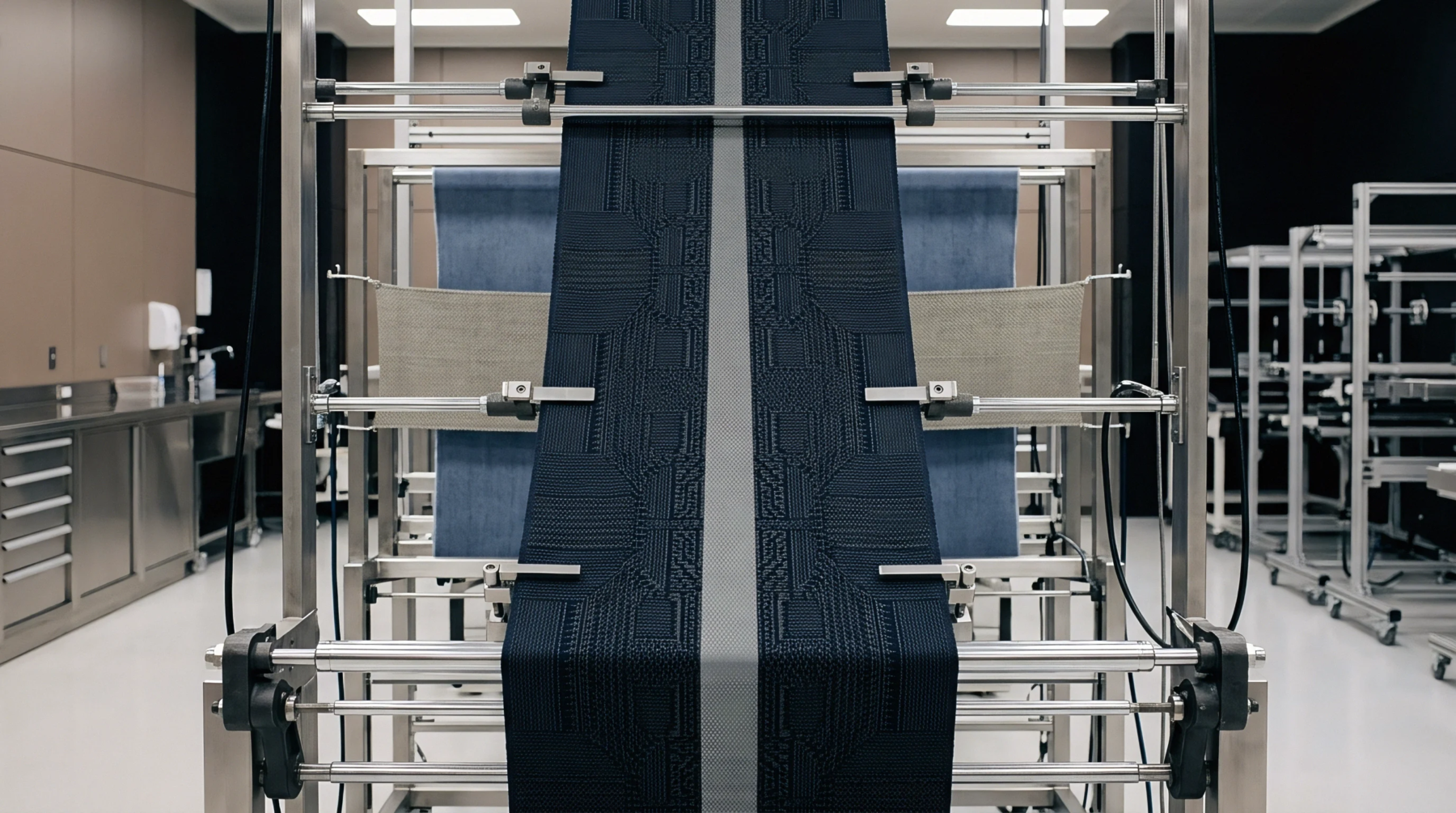
Knitting Geometry
Linear distance covered by 480 courses of yarn on a tricot or raschel machine defines the density and weight of the knitted fabric. The rack length is measured in inches or millimetres and serves as a primary setting for controlling the yield of the material. A shorter measurement indicates a tighter stitch with more yarn consumed per unit of fabric.
Machine Adjustment
Run in per rack is the actual length of yarn fed from the beam into the needles during the knitting cycle. Adjusting the rack length changes the physical properties of the cloth such as its width and elasticity. Technicians check this figure at every beam change to ensure uniformity between different batches.
Quality Correlation
Fabric weight and thickness are directly influenced by the tension settings that determine the stitch size. Monitoring the rack length allows the mill to meet the weight specifications required by the garment buyer. Deviations from the target length cause shading or striping in the finished textile.
Production Control
Accurate records of yarn consumption are maintained to calculate the cost of production per metre. Maintaining a constant rack length is essential for achieving a stable fabric that does not shrink excessively during finishing.