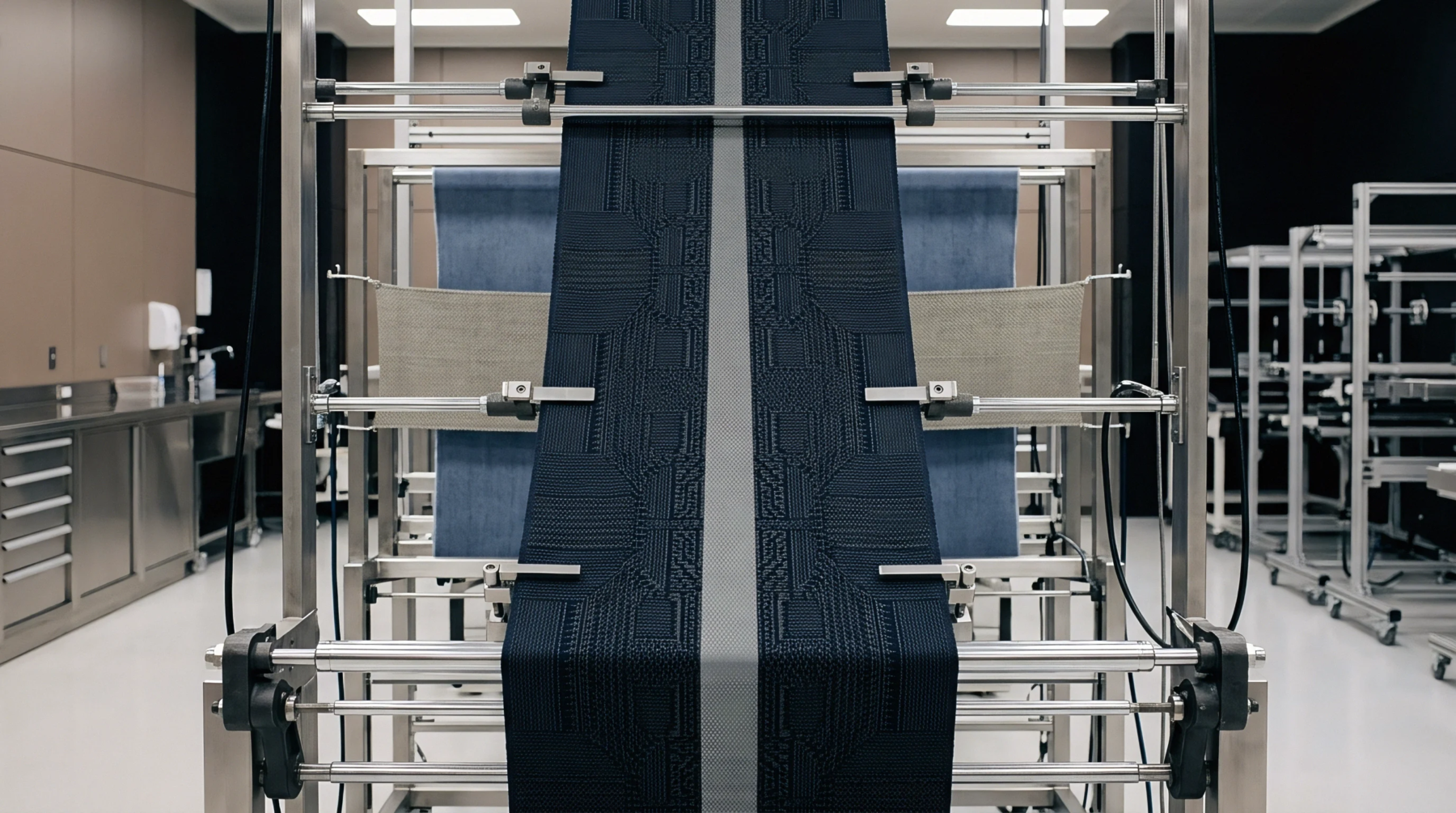
Structural Defect
Horizontal stripes or bands that repeat at regular intervals across the width of a knitted or woven fabric constitute a severe visual anomaly. These bands, known as barrings, are caused by variations in yarn tension, yarn count, or stitch length during the manufacturing process.
Mechanical Origin
Variations in the feed rate of yarn on knitting machines or uneven let-off tension on weaving looms generate structural differences in the cloth. Tension disparities cause the barrings to appear as dense or sparse sections that reject or absorb dye differently than the surrounding fabric. When a machine operates with misaligned dial gears or bent needle latches, the stitch formation fluctuates periodically, which leaves visible horizontal lines across the entire roll.
Assessment Method
Visual evaluation under standard light sources in a laboratory setting reveals the severity of these bands. Technicians scan the fabric roll against a back-lighted inspection board to identify barrings, measuring the frequency and width of the bands to determine if the roll must be downgraded or rejected.
Process Control
Regular maintenance of the yarn delivery system and calibration of feed rolls prevent the formation of horizontal bands. By keeping yarn tension uniform across all feeds, mills eliminate barrings before the fabric enters the finishing and dyeing stages.