Plasticizer Migration Mechanics in Coated Structural PVC Fabrics
Plasticizer migration degrades PVC structural fabrics through concentration-driven diffusion, requiring polymeric ester formulations and fluoropolymer barriers to prevent mechanical failure.


Diffusion
Molecular Dynamics in Flexible PVC Matrices
Rigid poly(vinyl chloride) possesses a glass transition temperature near 80°C, rendering unplasticized polymer chains stiff, brittle, and structurally unsuited for dynamic tensioning. Introducing external plasticizers lowers this thermal transition threshold by inserting small, dipolar molecules between adjacent polymer chains. These compounds neutralize dipole-dipole interactions between chlorine atoms on neighboring polymer backbones, increasing segmental mobility and creating molecular free volume.
In flexible structural membrane formulations where plasticizers account for 30 to 40 percent of total compound weight, the plasticizer molecules do not bind covalently to the polymer matrix. They remain dissolved within the amorphous regions as a homogenous liquid phase retained purely by weak Van der Waals forces and intermolecular polar attraction.
Concentration gradients drive the movement of these unbound molecules from the internal coating mass toward the external boundary surfaces. Fick’s second law of diffusion governs this physical transport process, expressing the rate of concentration change over time as a function of the internal diffusion coefficient and the second spatial derivative of plasticizer concentration across the fabric thickness. The operational diffusion coefficient varies according to ambient operating temperature, localized mechanical strain, plasticizer molecular weight, and spatial branching configuration.
Higher ambient thermal energy expands the free volume between polymer chains, accelerating plasticizer transport rates toward boundary interfaces.

Thermodynamic Equilibrium and Chemical Potential
Transport accelerates when external thermodynamic conditions alter the equilibrium concentration at the coating boundary. Surrounding atmospheric fluids, absorbent contact materials, or liquid solvents create a thermodynamic sink, lowering surface concentration toward zero. This steep surface gradient draws interior plasticizer ester molecules outward along the density pathway.
When mechanical load stretches a structural fabric, the reduced intermolecular spacing in compressed zones squeezes low-molecular-weight esters into high-strain regions, creating localized concentration peaks that destabilize surface tension.
The rate of molecular mass loss at the surface stays balanced only when the rate of internal diffusion matches the volatilization or extraction rate at the outer skin. If ambient air velocity or solvent contact extracts ester molecules faster than internal diffusion replenishes them, the outer polymer layer depletes its plasticizer content. This depletion converts the outer surface layer into a rigid, glass-like PVC crust, shifting the local glass transition temperature upward and rendering the coating surface susceptible to micro-cracking under flexural fatigue.
When internal diffusion occurs faster than surface removal, plasticizer molecules gather on the outer coating layer faster than atmospheric evaporation can clear them. Liquid plasticizer forms a micro-viscous layer on the membrane surface, creating a tacky film that collects airborne particulates and atmospheric pollutants. The balance between mass transfer inside the membrane matrix and physical surface extraction determines whether an installed membrane structure suffers surface degradation or loss of structural flexibility.
Whether specific temperature cycles can permanently alter the phase morphology of blended ester formulations without altering surface energy remains a persistent question in high-span structural engineering.
Additives
Structural Performance Profiles of Phthalate and Polymeric Esters
Selecting plasticizer chemistry requires balancing processing viscosity against long-term operational durability. Monomeric ortho-phthalates historically dominated flexible PVC production due to low costs and fast processing fusion speeds. Diisononyl phthalate and diisodecyl phthalate present lower volatility than short-chain predecessors like bis(2-ethylhexyl) phthalate, yet their moderate molecular weights leave them susceptible to slow migration under sustained solar irradiation.
Linear phthalates such as diundecyl phthalate exhibit improved low-temperature flexibility and lower volatility than branched counterparts, making them common choices for medium-life architectural membranes.
Polymeric plasticizers built from condensed adipic, phthalic, or sebacic acids offer elevated resistance to extraction and migration. With molecular weights spanning 1,500 to 8,000 Daltons, these polyester chain molecules entangle physically within the PVC matrix, inhibiting molecular transport toward surface boundaries. Trimellitates such as trioctyl trimellitate bridge the performance gap between monomeric phthalates and complex polyesters, providing heat resistance with moderate processing viscosities.
High molecular mass limits liquid migration, but polymeric additives increase paste viscosity during fabric coating, demanding higher processing temperatures during knife-over-roll manufacturing.
| Plasticizer Compound | Chemical Family | Molecular Weight (g/mol) | Migration Rate Index | Extraction Resistance | Low-Temperature Limit (°C) |
|---|---|---|---|---|---|
| Diisononyl Phthalate (DINP) | Monomeric Phthalate | 418 | High | Low | -30 |
| Diundecyl Phthalate (DUP) | Linear Phthalate | 475 | Moderate | Moderate | -45 |
| Trioctyl Trimellitate (TOTM) | Trimellitate Ester | 547 | Low | High | -35 |
| Polyadipate Polyester (Medium Viscosity) | Polymeric Ester | 2500 | Very Low | Very High | -20 |
| Polyadipate Polyester (High Viscosity) | Polymeric Ester | 6000 | Negligible | Superior | -10 |
Formulation Chemistry and Compounding Trade-Offs
Designing high-tier structural fabrics involves blending plasticizer types to optimize performance across operational temperature windows. Monomeric phthalates retain flexibility in sub-zero climates, whereas dense polymeric polyesters stiffen as temperatures drop toward freezing. Formulations containing only monomeric esters lose up to 15 percent of total plasticizer mass within seven years of outdoor service, resulting in fabric shrinkage, increased modulus, and embrittlement.
Blending a high-molecular-weight polymeric adipate with a linear phthalate produces a stable composite system, controlling volatile loss while maintaining cold-bend compliance down to minus 30 degrees Celsius.
Plasticizer choice directly influences physical stability across standard structural fabric operations. Uncontrolled additive migration yields specific failure modes during long-term field deployment:
- Surface Exudation generates an oily, sticky film on top layer coatings that collects dust, airborne pollutants, and biological matter, reducing membrane reflectivity.
- Plasticizer Crystallization produces solid white deposits along localized stress zones where low-solubility plasticizers separate out from the polymer phase under cyclic loading.
- Lacquering Softening occurs when migrated phthalates dissolve topcoat interfaces from beneath, reducing soil resistance and dulling the appearance of architectural membranes.
- Weld Seam Delamination results from plasticizer accumulation along thermal seam boundaries, weakening the structural bond between overlapped PVC layers over time.
- Biological Colonization occurs when migrating ester chains provide organic nutrients for fungi, causing internal dark stains within translucent fabric layers.
High molecular weight plasticizers improve migration resistance at the cost of requiring higher processing temperatures and reducing fabric flexibility in low-temperature applications.

Drift

Environmental Contact Mechanics and Volatilization Pathways
Plasticizer loss occurs through three distinct atmospheric and environmental pathways: gas-phase volatilization, solid-contact migration, and liquid-phase extraction. Volatilization occurs at exposed air-coating interfaces, where thermal radiation elevates the vapor pressure of plasticizer esters. Solar absorption raises surface temperatures on dark membrane structures to over 70°C, accelerating ester evaporation rates into ambient air stream currents.
Higher wind velocities across structural roof membranes drop boundary-layer pressure, accelerating volatile plasticizer loss into the surrounding air.
Solid-contact extraction takes place when coated PVC fabrics directly touch absorbent materials such as polystyrene insulation board, bitumen roofing membranes, or polyurethane foam sealants. Plasticizer molecules migrate across solid interfaces toward adjacent materials with high organic affinity. When flexible PVC rests against rigid polystyrene insulation without a barrier layer, plasticizers dissolve into the polystyrene matrix, dissolving the insulation foam while turning the structural PVC fabric brittle within months of contact.
Systematic plasticizer loss exceeding ten percent of total initial formulation weight causes micro-cracking and measurably reduces tear propagation resistance in structural membranes.
Liquid extraction occurs through rain scrubbing, pooling water, and industrial chemical contact. Rainwater removes surface plasticizer deposits, disrupting the thermodynamic surface balance and driving continuous migration of internal plasticizers outward. In rainwater collection basins or aquatic containment liners, soft water washes out short-chain phthalates faster than dry atmospheric exposure, leading to coating embrittlement and environmental leaching issues.
Field Inspection Protocol for Structural Migration Failure
- Measure fabric surface gloss levels at three separate span locations using a 60-degree reflective gloss meter to locate areas of topcoat softening or sticky surface accumulation.
- Perform a wipe test across suspect high-tack surface zones using pure isopropyl alcohol wipes, analyzing the residue via infrared spectroscopy to check for uncontained plasticizer ester traces.
- Cut a small 50 mm by 50 mm swatch sample from an un-tensioned edge margin, then weigh it on an analytical balance precise to 0.1 milligrams to track overall coating mass changes.
- Perform a cold-bend test by wrapping the fabric swatch around a 5 mm mandrel at minus 10 degrees Celsius, checking under 10x optical magnification for surface micro-cracks indicating plasticizer loss.
- Measure seam shear strength along thermal joint overlaps using standard tensile equipment, recording any structural bond strength loss against factory baseline specifications.
Ignoring contact compatibility between structural PVC coatings and adjacent insulation layer substrates causes rapid plasticizer loss, leading to structural coating embrittlement, premature fabric cracking, and costly membrane replacement claims.

Assay
Can Accelerated Thermal Extraction Predict Structural PVDF Failure?
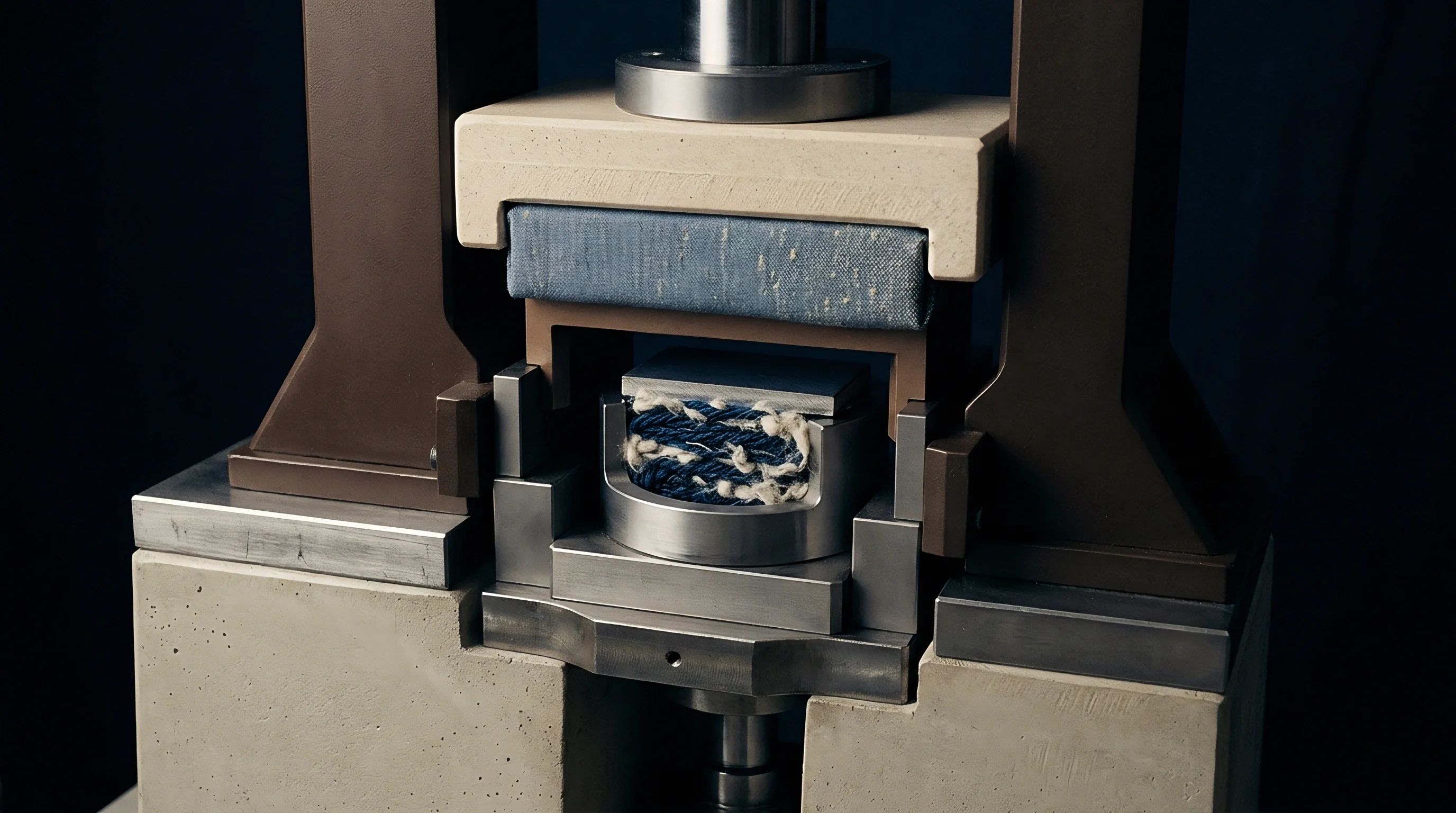
Standardized laboratory testing must isolate individual migration mechanisms to evaluate long-term plasticizer retention in structural architectural fabrics. ISO 177 measures plasticizer migration into solid absorbent materials by placing fabric swatches between absorbent discs, compressing the assembly under standardized weight, and conditioning it at elevated temperatures for set durations. Measuring disc mass gains isolates solid-contact migration rates without confounding results with volatile air loss.
Testing per ISO 176 determines volatile plasticizer loss by exposing samples to controlled oven airflow and tracking total weight reductions over specified test windows.
| Test Standard | Target Mechanism | Test Medium or Interface | Conditioning Parameters | Primary Measurement Unit |
|---|---|---|---|---|
| ISO 177 | Solid Contact Migration | Absorbent Polyethylene Discs | 70°C for 168 Hours at 5 kPa | Absorber Mass Gain (%) |
| ISO 176 (Method A) | Volatile Mass Loss | Activated Carbon Bed | 70°C to 100°C for 24 Hours | Sample Mass Loss (%) |
| EN 15777 | Phthalate Content Analysis | Solvent Extraction (Soxhlet) | Tetrahydrofuran / Ethanol | Ester Mass Concentration (mg/kg) |
| ISO 1421 | Tensile Properties Post-Aging | Thermal Air Aging Chamber | 70°C for 28 Days | Tensile Force Loss (% Retained) |
| DIN 53359 | Flex Cracking Resistance | Cyclic Continuous Folding | 100,000 Cycles Post-Aging | Visual Damage Rating Scale |
Solvent extraction followed by gas chromatography mass spectrometry allows laboratory technicians to identify and quantify specific plasticizer compounds down to single milligram per kilogram limits. Soxhlet extraction using tetrahydrofuran dissolves the whole PVC compound, separating filler additives, stabilizers, and plasticizer mixtures for precise chemical identification. High performance liquid chromatography separates polymeric plasticizers by molecular weight distribution, exposing degradation or low-molecular-weight ester contamination in incoming raw material batches.

Batch Qualification and Analytical Verification
Verifying structural compliance requires a systematic analytical testing program for each batch of coated fabric destined for permanent tension structures. Laboratory verification prevents under-formulated coatings from reaching installation sites.
- Baseline Mass Screening requires measuring unconditioned coated fabric samples on analytical balances to establish reference dry coating mass parameters before thermal processing.
- Thermal Volatilization Testing subjects fabric samples to 100°C forced-air drying for 24 hours, capping allowable weight loss at 1.5 percent of total plasticizer content.
- Gas Chromatography Isolation quantifies specific restricted ortho-phthalates in the raw paste, verifying that individual concentrations stay under 0.1 percent by weight.
- Plasticizer Exudation Assessment compresses fabric swatches against polished glass under 10 kilopascals at 60°C for 72 hours, verifying the absence of visible liquid films.
- Post-Aging Tensile Verification tests aged fabric samples per ISO 1421 strip methods, requiring a minimum 85 percent retention of baseline tensile strength.
A test report showing minimal mass loss during short-term thermal aging fails to guarantee long-term retention if the extraction medium does not match field conditions.
Suppliers frequently present short-term dry oven mass loss data to claim plasticizer stability, despite dry heat testing failing to capture the liquid leaching and rain-scrubbing mechanics that drive field degradation in outdoor tension structures.

Barriers

Fluoropolymer Topcoats and Lacquer Interfacial Adhesion
Applying thin protective topcoat lacquers provides a surface barrier that restricts plasticizer migration to exterior interfaces. Uncoated PVC coatings lose surface plasticizer rapidly when exposed to outdoor atmospheric conditions. Pure acrylic lacquers offer reasonable initial adhesion and seal micro-pores on PVC surface layers, but acrylic polymers remain vulnerable to slow solvent attack by migrating internal phthalates.
Over three to five years, migrating phthalates soften the acrylic layer from underneath, reducing its barrier effectiveness and causing soil accumulation on the top surface.
Polyvinylidene fluoride topcoats offer superior resistance against plasticizer migration, UV degradation, and environmental chemical attack. Because pure PVDF lacquers lack strong natural adhesion to flexible PVC, coating manufacturers blend PVDF with compatible acrylic resins at 70:30 ratio formulations. The acrylic component binds to the underlying PVC matrix while the PVDF migrates upward during thermal drying to form a fluoropolymer-rich outer protective layer.
This fluoropolymer outer skin presents a dense surface structure that blocks plasticizer transport, holding annual plasticizer mass loss under 0.2 percent under typical field operating conditions.
| Topcoat Coating Architecture | Typical Thickness (µm) | Crosslink Density | 10-Year Plasticizer Loss (%) | Surface Cleaning Requirement |
|---|---|---|---|---|
| Unlacquered PVC Base | None | Zero | 12.0 to 18.0 | Frequent / High Maintenance |
| Standard Acrylic Lacquer | 2 to 4 | None | 6.0 to 9.0 | Moderate / Annual Wash |
| Crosslinked Acrylic Coating | 3 to 5 | Moderate | 3.5 to 5.0 | Moderate / Low Maintenance |
| PVDF / Acrylic Blend (70/30) | 5 to 8 | Low (Thermoplastic) | 1.0 to 2.0 | Self-Cleaning / Rainfall |
| Crosslinked PVDF Fluoropolymer | 6 to 10 | High | Under 0.5 | Superior Self-Cleaning |

Interfacial Shear Loss Modeling
Consider a 1050 grams per square meter Type III architectural membrane featuring a 0.50 millimeter thick PVC coating layer containing 35 percent diisononyl phthalate plasticizer by weight. The total plasticizer mass within the fabric equals 183.75 grams per square meter. Field data establishes that an unlacquered membrane exposed to warm climates loses plasticizer at an average rate of 1.2 grams per square meter per month during the first 24 months, dropping to 0.6 grams per square meter per month as internal concentration gradients flatten.
Applying a crosslinked 70:30 PVDF acrylic topcoat reduces the initial surface migration rate to 0.08 grams per square meter per month under identical climatic exposure. Over a ten-year operational period, total plasticizer mass loss in the topcoated fabric remains under 10 grams per square meter, representing less than 5.5 percent total ester loss from the formulation. This low rate maintains the glass transition temperature of the underlying PVC layer below minus 20 degrees Celsius, preserving flexibility and preventing surface micro-cracking across structural tension spans.
High quality structural fabric specifications require clear documentation to confirm topcoat performance and plasticizer barrier integrity:
- Topcoat Dry Mass Identification specifies total topcoat weight in grams per square meter alongside layer thickness values measured via cross-sectional micro-imaging.
- Fluoropolymer Ratio Certification declares the exact PVDF-to-acrylic resin balance within the topcoat liquid baseline prior to application.
- Crosslink Density Screening verifies chemical crosslinking completeness using methyl ethyl ketone solvent rub resistance test methods.
- Interfacial Bond Strength Measurement records dry and wet peel strength values between the topcoat layer and the base PVC substrate before thermal delivery.
Crosslinked fluoropolymer topcoats maintain low plasticizer migration rates by forming a dense molecular barrier layer over flexible PVC substrates.
Standard purchase order documentation for architectural membranes must mandate topcoat adhesion testing per EN ISO 2409 post thermal aging, automatically rejecting fabric lots that exhibit topcoat flaking or adhesion degradation exceeding Class 1 thresholds.
Warrant
Regulatory SVHC Thresholds and Structural Warranty Exposure
Regulatory frameworks across international jurisdictions restrict short-chain and specific monomeric phthalates in flexible PVC applications. European Union REACH Regulation Annex XVII, Entries 51 and 52, limit diethylhexyl phthalate, dibutyl phthalate, benzyl butyl phthalate, and diisononyl phthalate concentrations to under 0.1 percent by weight in accessible plasticized materials. Including any restricted phthalate from the Substance of Very High Concern candidate list above the 0.1 percent weight-by-weight threshold triggers mandatory safety data reporting obligations throughout the distribution supply chain under Article 33 of REACH.
California Proposition 65 enforces clear warning requirements for products releasing diisononyl phthalate or di-2-ethylhexyl phthalate above safe harbor exposure limits. Importers of structural fabrics into North American markets face legal risks if untracked plasticizer migration transfers restricted phthalates onto skin-contact structural elements, field equipment, or nearby components. Importers retain legal liability for non-compliant chemical content, regardless of supplier origin or mill declaration claims.
Regulatory compliance limits for restricted phthalates require strict batch-level analytical testing before clearing international port authorities.
Structural membrane warranties typically promise ten to fifteen years of operational lifespan, guaranteeing minimal tensile loss, retained flame resistance, and continuous weather tightness. Plasticizer migration directly impacts these performance claims. When plasticizer content drops by more than fifteen percent from baseline levels, the PVC coating suffers dimensional shrinkage, placing excessive tension on structural seams and mechanical clamping borders.
This physical stress accelerates seam shear creep, causing seam delamination and premature structural failures long before structural warranty periods expire.
Loss of internal plasticizers concentrates flame retardant additives like antimony trioxide and aluminum trihydrate inside a drier, more brittle polymer matrix. While initial flame spread ratings may hold, micro-cracking exposes inner polyester base yarns to moisture, triggering hydrolysis in the load-bearing pet filaments. Wicking along uncoated yarn bundles degrades structural strip tensile strength, causing sudden fabric tears along high-stress points during severe weather events.
Sourcing practices must enforce lot-specific gas chromatography testing alongside structural performance guarantees, ensuring delivered fabric rolls meet chemical safety standards while maintaining mechanical flexibility throughout their intended service lives.