Quantifying Polyolefin Film Contamination Impact on Ring Spun Combed Yarn Dyeing Rejection
Polyolefin film contamination causes un-dyed resist defects in combed cotton yarn, driving fabric rejection rates above acceptable ASTM D5430 threshold limits.


Origin
Synthetic polymers enter raw seed cotton during mechanical harvesting and ginnery packaging. In ring-spun combed yarn, polyolefin contamination stems mainly from polypropylene harvesting twines, high-density polyethylene module covers, low-density polyethylene weed-control mulch films, and woven polypropylene bale packaging. As mechanical pickers sweep through fields, their barbed spindle assemblies shred discarded field plastics into thousands of thin film strips.
These synthetic pieces tear into shapes ranging from broad ribbons to fine micro-fibrils, mixing directly into seed cotton during field compaction.
Ginneries compound the problem during high-speed lint cleaning. Saw-gin stands and aggressive spike-cylinder cleaners break larger plastic pieces into smaller fragments without actually extracting them from the cotton mass. Grid bars and air-jet separators easily reject heavy organic trash like seed coat fragments, stalks, and motes based on mass.
Polyolefin films, however, have specific gravities between 0.89 and 0.95 grams per cubic centimeter ~ well below the 1.52 to 1.55 grams per cubic centimeter of natural cellulose. Because these lightweight plastic pieces have a high surface-area-to-mass ratio, pneumatic currents in the lint flues carry them right alongside cleaned cotton tufts directly into the bale press box.

Polymer Ingress Points across Agricultural Supply Chains
Field surveys published by the International Textile Manufacturers Federation show that synthetic packaging is the most severe category of contamination reported by mills worldwide. In hand-harvested regions, workers often pick into recycled woven polypropylene sacks, shedding torn sack fibers into seed cotton storage piles before ginning. Mechanized harvesting presents a different entry point: automated module builders wrap seed blocks in stretched polyethylene film.
When ginnery operators strip these wraps mechanically, frayed or damaged film edges tear off and pass into the gin feeder hoppers undetected.
Bale packaging itself is another major route for synthetic fiber ingress. Raw cotton bales are compressed and held by steel wire straps or woven polypropylene sleeves. Friction between raw lint and synthetic outer wrapping during transit creates micro-abrasions on the surface of the bale.
When opening machinery cuts these ties in the mill blowroom, frayed polyolefin edges shed loose filaments directly onto the exposed lint bed. These severed plastic tape segments feed straight into the automated bale plucker head alongside natural cotton tufts.
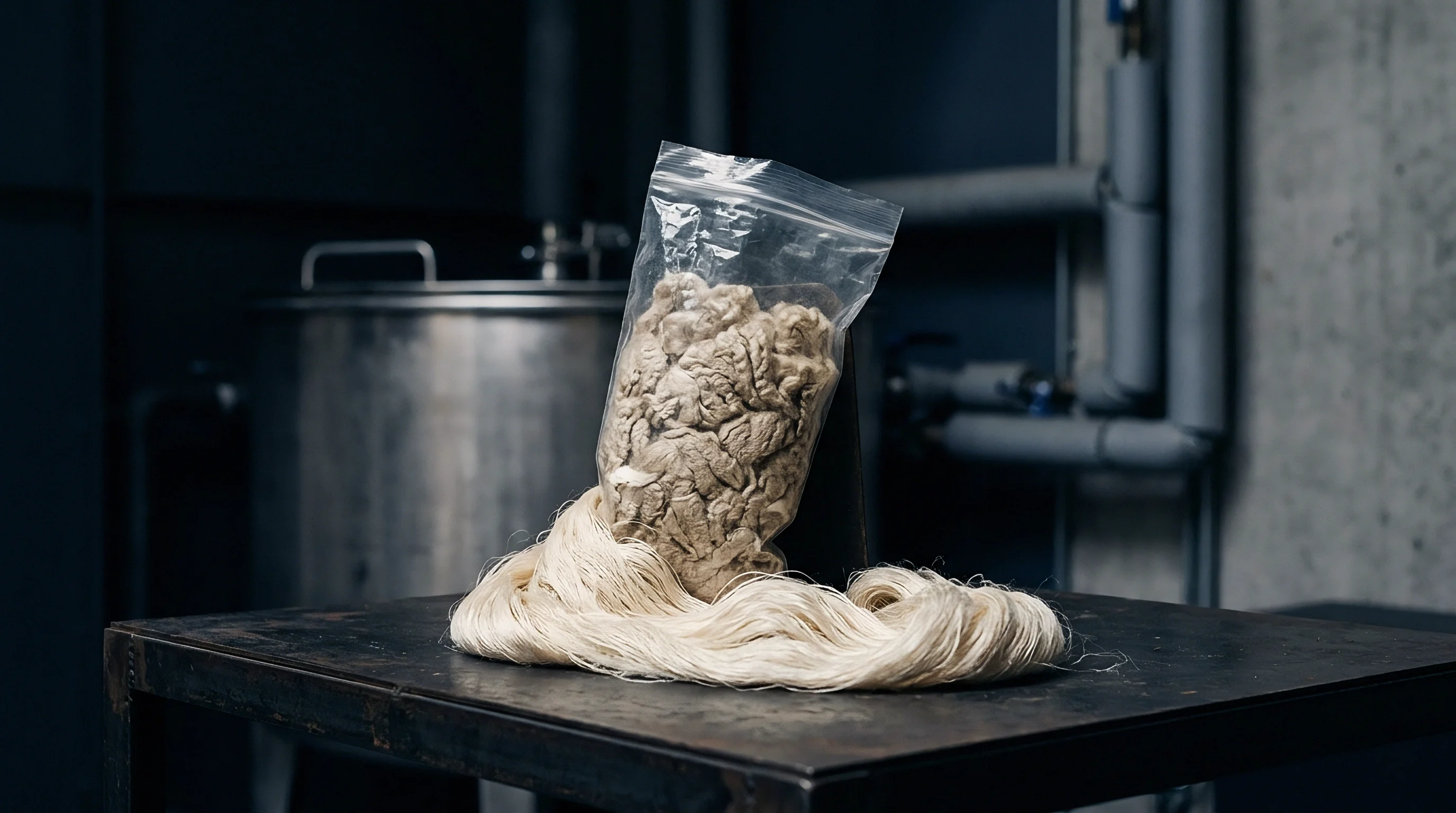
Ginnery Packaging and Bale Wrapping Breakdown
Automated bale pluckers spread this film across the opening line. Multi-blade plucking rolls pass over rows of arrayed cotton bales at high speed, shaving thin layers of lint off each face. When the plucking teeth cut across compressed bale surfaces containing embedded packaging tape, they slice long polypropylene bands into short, square fragments.
These severed tape pieces move into blending hoppers, where coarse opening rollers beat the cotton tufts into smaller aggregates.
Inside mixing chambers, mechanical blending exposes foreign film fragments to high pneumatic air velocities. Continuous tumbling and beating split layered film fragments apart, spreading them evenly throughout the lot. A single discarded two-gram piece of polypropylene bale wrap can break into more than forty thousand discrete film particles during blowroom processing.
These particles disperse across hundreds of kilograms of combed sliver, embedding in the fiber stream long before carding or combing begins.
Transparent polypropylene film remains invisible to standard optical sorting cameras until the yarn passes through wet processing.
Spinning mills purchasing lower-grade seed cotton face much higher contamination rates. High-grade long-staple cotton from audited mechanized farms shows minimal film inclusions, while rain-fed smallholder crops often carry severe polypropylene contamination exceeding fifty fragments per hundred kilograms of raw lint. On the mill floor, careless bale tie removal practices account for up to thirty percent of all secondary polypropylene film inclusions in ring spinning lines.
Plastic inclusions are frequently attributed to unpreventable regional farming practices or field-level bale tie failures rather than processing line shortcomings.
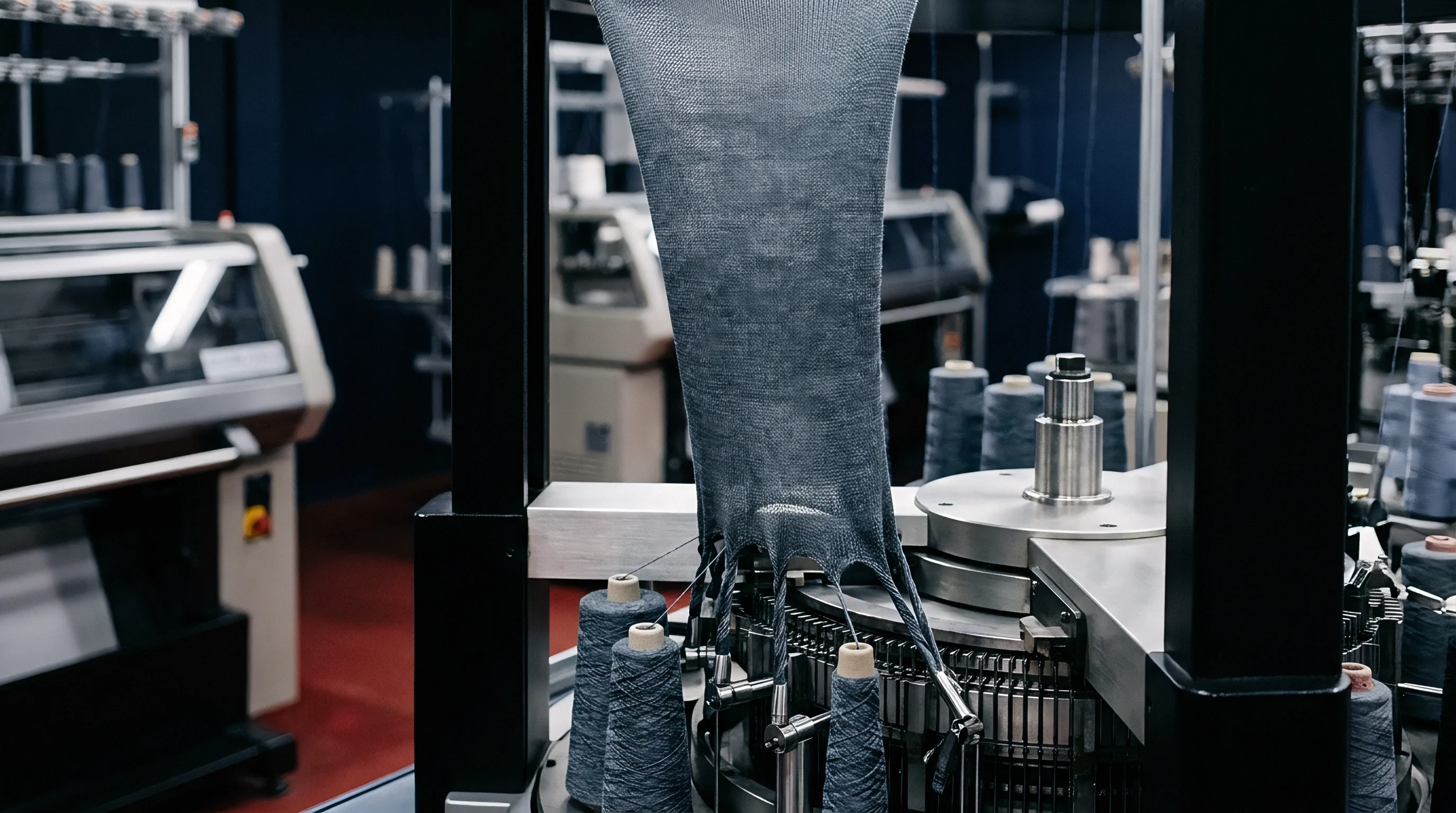
Foil
Polymer film fragments behave quite differently under mechanical stress than natural cellulose fibers. Polypropylene and polyethylene films consist of oriented aliphatic carbon backbones produced through extrusion and biaxial stretching. This aligns polymer chains parallel to the film plane, giving them high longitudinal tensile strength combined with low transverse tear resistance.
When these synthetic ribbons enter blowroom and carding machinery, mechanical forces deform them through mechanisms that bear little resemblance to the flexural bending of cotton staple.
In carding, cotton passes between the main cylinder and revolving flats separated by gaps as narrow as 0.18 millimetres. Carding shear forces align natural cellulose fibers longitudinally along the wire clothing. Flexible polyolefin films react quite differently to this environment: flat plastic pieces buckle, fold, and wrap around individual wire pins.
Rather than separating into discrete micro-fibers, synthetic films undergo structural fibrillation, splitting along their oriented grain into flat, ribbon-like micro-tapes.
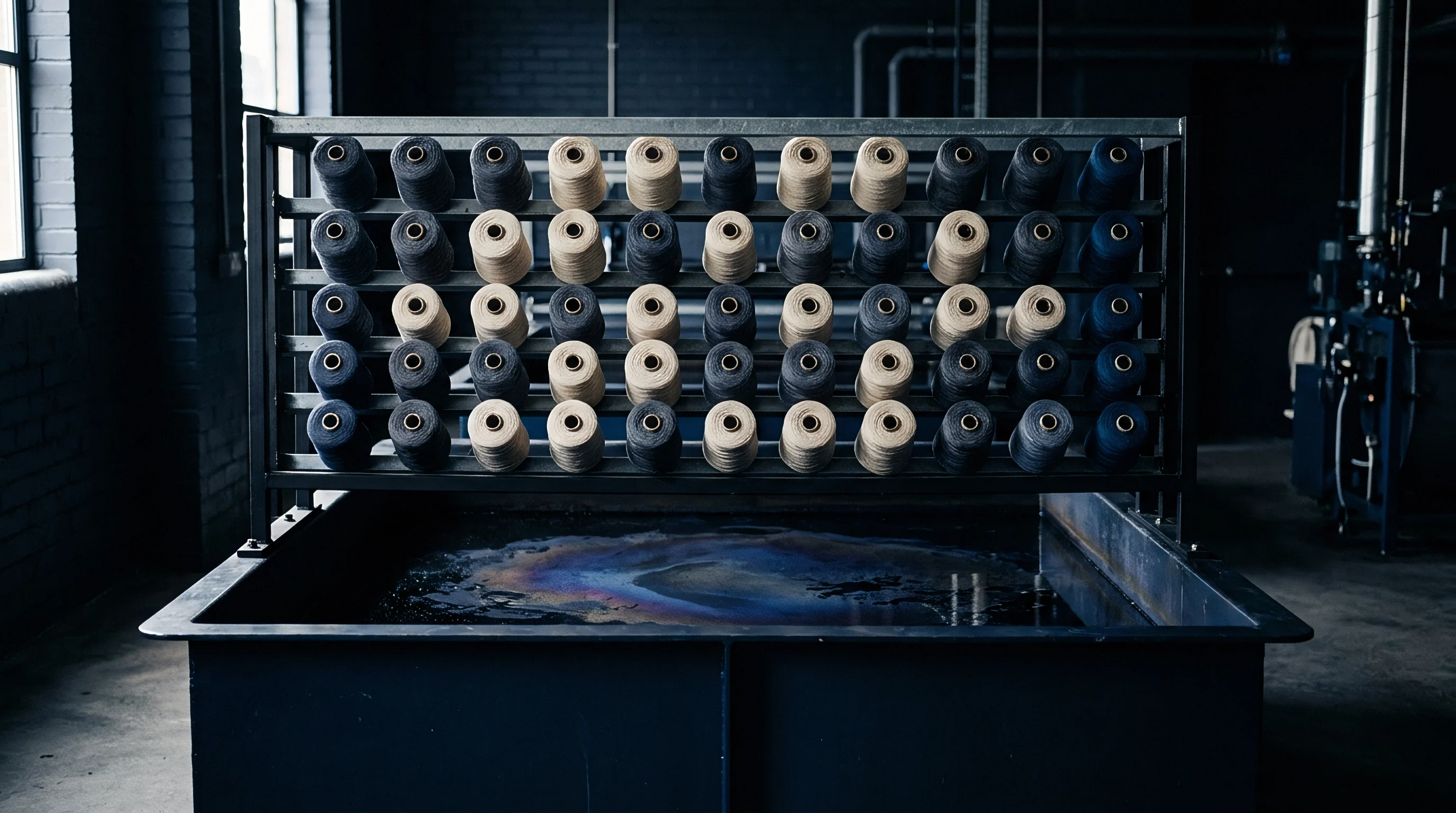
Thermal and Mechanical Behavior under Carding Shear
Frictional heat generated at the carding cylinder interface alters film morphology significantly. Main carding cylinders rotating at 400 to 500 revolutions per minute generate localized surface temperatures that frequently reach 65 to 75 degrees Celsius in the carding zone. While natural cotton handles temperatures above 180 degrees Celsius without structural damage, thermoplastic films soften under thermal load.
Low-density polyethylene reaches its Vicat softening point between 80 and 95 degrees Celsius, while polypropylene softens between 140 and 150 degrees Celsius.
Elevated processing temperatures increase film ductility while reducing shear resistance. Softened plastic ribbons stretch under the pull of card clothing teeth, drawing out into ultra-thin continuous filament bands. These stretched bands pass under the carding flats without getting caught in the card waste clothing.
As a result, standard carding machinery fails to extract more than fifteen to twenty-five percent of incoming foreign film mass, leaving most synthetic fragments to pass straight into the carded sliver coiler head.
| Material Designation | Specific Gravity (g/cm³) | Melting Point (°C) | Tensile Tenacity (cN/tex) | Fibrillation Behavior Under Shear |
|---|---|---|---|---|
| Polypropylene (PP) Tape | 0.90 – 0.91 | 160 – 165 | 35 – 55 | Splits into flat micro-ribbons along oriented fiber axis |
| High-Density Polyethylene (HDPE) Film | 0.94 – 0.96 | 130 – 135 | 20 – 35 | Deforms plastically, forming thin torn sheet fragments |
| Low-Density Polyethylene (LDPE) Wrap | 0.91 – 0.93 | 105 – 115 | 10 – 20 | Stretches into highly ductiled continuous film strings |
| Combed Cotton Staple Fibre | 1.52 – 1.55 | Decomposes >200 | 28 – 42 | Bends flexurally without plastic deformation or melting |

Fibrillation and Structural Fragmentation during Draft
Combing operations target the removal of short fibers, neps, and fine trash using precision nipper assemblies and rotating top combs. However, the physical dimensions of film fragments present severe operational challenges to comber nip rollers. A flexible plastic film strip just 0.02 millimetres thick flexes easily under the comber nipper blade, sliding through circular comb needles without dropping into the noil waste stream.
Quantitative waste analysis demonstrates that while circular combs extract short cotton fibers efficiently, they remove less than thirty percent of thin film inclusions.
In drawframe drafting zones, combined slivers undergo steep linear velocity differentials. Multi-zone roller drafting expands the distance between individual cotton fibers, reducing sliver mass per unit length. When a fibrillated plastic film strip enters the drafting zone, top roller pressure flattens the soft polymer ribbon against the bottom steel fluted rollers.
High draft ratios ~ often ranging from 6-fold to 8-fold per passage ~ pull the ribbon lengthwise, thinning its profile while extending its visible surface area.
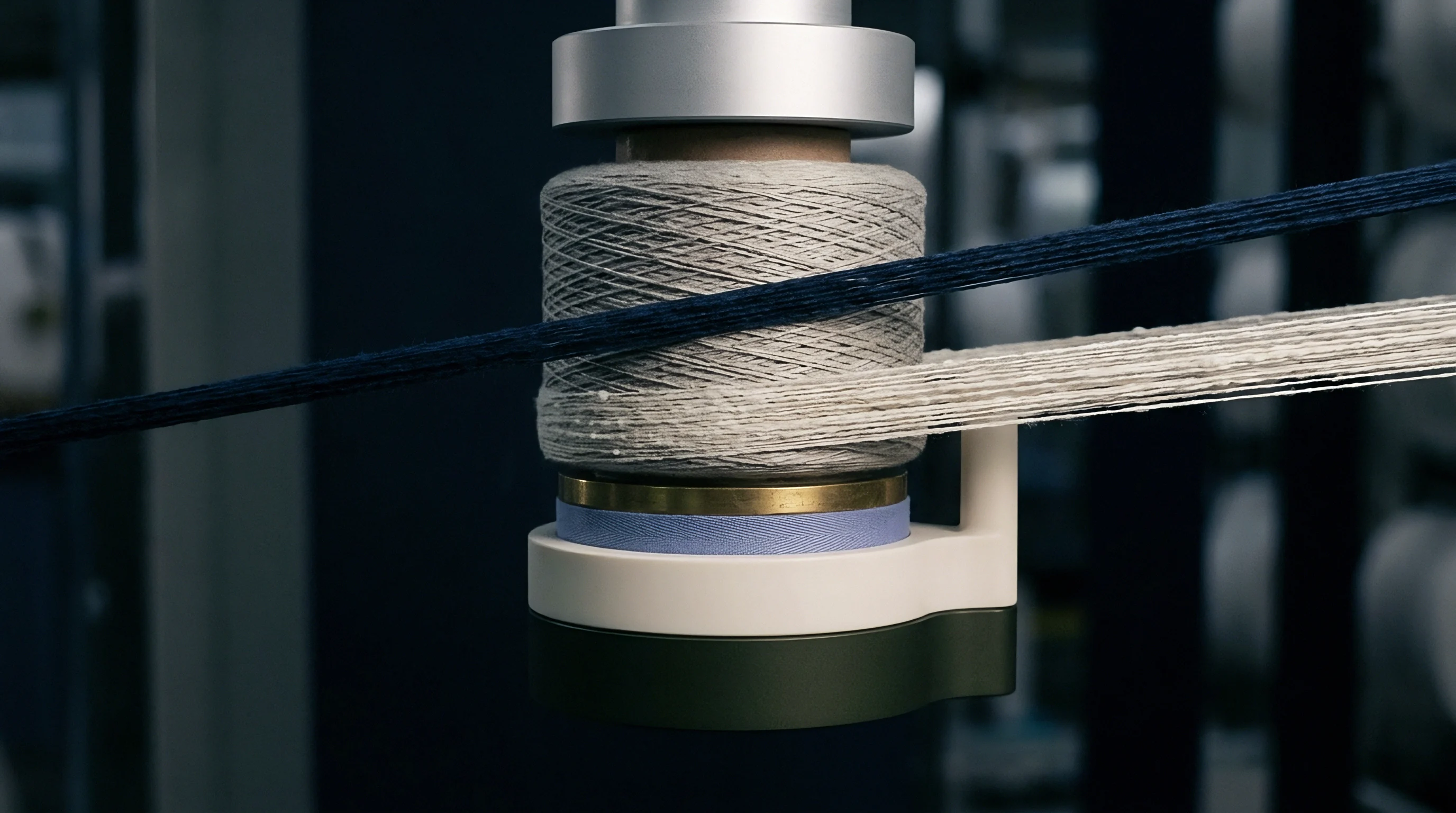
Ring spinning frame draft zones complete the attenuation process, pulling the roving through final draft ratios between 30-fold and 50-fold. Under these intense drafting forces, a single compact polypropylene fragment stretches into a fine, flat micro-tape that becomes twisted directly into the core or surface structure of the ring spun yarn. The rotating traveler inserts twist, wrapping natural cotton fibers around the smooth synthetic film strip.
This mechanical binding locks the hydrophobic polyolefin ribbon into the yarn matrix, concealing its presence from visual surface inspection prior to wet processing.
Higher draft ratios on ring spinning frames flatten polymer ribbons without breaking them, expanding the surface area of dye-resistant spots in finished fabric.

Detection
Optoelectronic sensors installed along blowroom transport ducting scan raw cotton tufts in flight to isolate foreign polymers before carding. High-speed optical sorting systems use line-scan camera arrays paired with specialized spectrum illumination to detect foreign material. Standard visible-spectrum cameras pick up dark trash particles, jute fibers, and colored synthetic twines easily by detecting color contrast against white cotton lint.
However, un-dyed, transparent, or white polypropylene film reflects light at values almost identical to bleached cotton tufts under visible light, rendering standard optical sorters ineffective for film identification.
Advanced blowroom sorters incorporate polarized light transmission arrays and ultraviolet illumination channels to overcome visible spectrum limits. Polypropylene and polyethylene exhibit strong optical birefringence due to the molecular orientation induced during film extrusion. When polarized light passes through a transparent polyolefin film fragment, polymer chain anisotropy rotates the polarization plane of the transmitted light.
Polarization-sensitive optical sensors detect this plane shift instantly, identifying white and transparent film particles regardless of underlying surface color contrast.
Optoelectronic Sorting Efficiency across Blowroom Lines
Pneumatic ejection systems follow optical detection arrays within blowroom sorters. Upon detecting a film fragment, high-speed solenoid valves actuate compressed air nozzles, blowing the contaminated tuft out of the primary air stream into a waste collection cyclone. Ejection efficiency depends on tuft size, transport velocity, and camera resolution.
High line speeds exceeding fifteen meters per second reduce sensor dwell time, leaving narrow temporal windows for pneumatic nozzle firing.
Tuft density creates additional detection barriers in blowroom lines. If a thin plastic film strip sits completely enclosed within a dense cotton tuft, light cannot penetrate the outer fiber layers, preventing the optical array from registering polarized light rotation. Consequently, blowroom sorting efficiency for transparent polyolefin films rarely exceeds sixty-five percent in commercial processing lines operating at nominal production capacities above 800 kilograms per hour.
- Transparent film transparency prevents standard color cameras from registering thin polyethylene sheets against white cotton tufts.
- Fibrillated micro-ribbons align along the yarn axis, masking their cross-sectional profile from optical clearing channels.
- High line velocity in blowroom transport ducts reduces sensor dwell time below the minimum threshold required for pneumatic ejector firing.
- Dense cotton tufts physically shield embedded plastic fragments from polarized reflection arrays during initial opening.

Can Polarized Light Sensors Eliminate Polypropylene Tape?
Ring spinning automatic winders employ electronic yarn clearers mounted directly on individual winding heads to inspect yarn quality at speeds up to 1,500 meters per minute. Modern clearing heads utilize dual measurement technologies, combining optical shadow sensors with capacitive high-frequency fields. Capacitive clearing channels measure mass per unit length by passing yarn through an electrostatic field set between parallel sensor plates.
Because polyolefin polymers possess a dielectric constant ranging from 2.2 to 2.3, compared to 3.2 to 8.5 for conditioned cotton, capacitive clearers detect significant capacitance drops when a plastic fragment passes through the sensor gap.
Optical yarn clearing channels measure light obstruction caused by the yarn profile. Specialized polyolefin clearing modules add polarized light reflection sensors that illuminate the yarn stream with polarized light beams. Smooth, crystalline polyolefin film surfaces reflect polarized light with high specular intensity, whereas natural cotton fibers scatter light diffusely in all directions.
Photodiodes positioned at specular reflection angles register these high-intensity light spikes, triggering the winder cutting knife to slice out the contaminated yarn segment.
ISO 105 colorfastness testing fails to reveal polyolefin tape inclusions until the reactive dyestuff undergoes final fixation and soaping off.
Single-head optical clearers show an average bypass rate of twelve percent for transparent low-density polyethylene films. Fibrillated film micro-tapes wrapped tightly inside the yarn core exhibit reduced surface specular reflection, allowing short foreign segments to pass cutter threshold limits undetected. Setting winder clearer sensitivity thresholds too aggressively increases yarn break frequencies exponentially, generating excessive winding waste and reducing winder room efficiency below acceptable commercial limits.
Whether optical sensor resolution can advance fast enough to distinguish transparent linear low-density polyethylene from natural cotton wax droplets at commercial blowroom duct velocities remains an open operational question for high-speed spinning mills.

Affinity
Reactive dyestuffs depend on covalent bonding with hydroxyl groups along the cellulose chain to achieve permanent color fixation. Cellulosic fibers contain abundant primary and secondary hydroxyl groups (-OH) available for chemical substitution. During reactive dyeing of cotton yarn or fabric under alkaline conditions at pH 10.5 to 11.5, reactive dyes containing vinyl sulfone or monochlorotriazine functional groups undergo nucleophilic addition or substitution reactions with ionized cellulosate anions (Cell-O⁻).
This chemical reaction forms robust ether linkages (Cell-O-Dye) that lock the color molecule into the crystalline and amorphous regions of the cotton fiber matrix.
Polyolefin polymers possess aliphatic hydrocarbon structures completely lacking polar functional groups. Polypropylene (CH₂-CH(CH₃))ₙ and polyethylene (CH₂-CH₂)ₙ consist entirely of non-polar carbon-carbon and carbon-hydrogen single bonds. These saturated hydrocarbon chains present zero hydroxyl, carboxyl, or amino dye sites.
Consequently, reactive dyes, direct dyes, vat dyes, and sulfur dyes used in cellulosic wet processing exhibit zero chemical affinity or thermodynamic solubility within polyolefin structures.
Dye Bath Thermodynamics and Reactive Dye Exclusion
During dyebath exhaustion and fixation cycles, water-soluble dye molecules migrate rapidly toward hydrophilic cotton fibers, drawn by hydrogen bonding and van der Waals interactions. Hydrophobic polyolefin film fragments reject aqueous dye solutions completely. The contact angle of water on clean cotton fibers approaches zero degrees, facilitating instantaneous wetting and dye liquor penetration.
In contrast, the contact angle of water on smooth polypropylene surfaces exceeds 95 degrees, establishing a physical thermodynamic barrier that prevents dye liquor absorption into the synthetic film interior.
Dyebath auxiliaries like leveling agents, wetting agents, and inorganic salts (sodium sulfate or sodium chloride) fail to force reactive dye sorption into non-polar polymers. While disperse dyes can color polypropylene under high-temperature pressurized conditions above 130 degrees Celsius, standard cotton wet processing operates between 60 and 80 degrees Celsius. At these low dyeing temperatures, polyolefin polymer chains remain in a rigid, non-swollen state, preventing even uncharged dye molecules from diffusing into the plastic film matrix.
| Inclusion Material | Chemical Backbone | Dye Binding Mechanism | Visual Defect Appearance under Dark Shades | Mercerization Behavior |
|---|---|---|---|---|
| Polypropylene (PP) Film | Aliphatic hydrocarbon (non-polar) | Zero binding; complete reactive dye exclusion | Sharp, highly defined un-dyed white streak or ribbon | Melts or distorts surface under hot stenter drying |
| Polyethylene (PE) Wrap | Saturated carbon chain (non-polar) | Zero binding; absolute hydrophobic resist | Irregular white speck or translucent surface spot | Softens, spreads flat, increasing defect surface area |
| Jute / Hemp Fibres | Lignocellulosic polymer complex | Partial binding via cellulose hydroxyls; variable yield | Dull brown or unevenly shade-matched fiber fleck | Swells moderately without thermal plastic deformation |
| Immature Cotton Neppiness | Cellulose with low secondary wall build | Weak binding due to reduced crystalline mass density | Lighter shade speck, partially covered by dye leveling | Swells fully, reducing color shade contrast after alkali |
Mercerization Heat Deformation and Surface Resist Defects
Woven and knitted cotton fabrics frequently undergo mercerization, a chemical treatment using 20 to 25 percent concentration aqueous sodium hydroxide (NaOH) solutions at 15 to 20 degrees Celsius under tension. Mercerization converts natural Cellulose I crystal structures into Cellulose II, swelling round fiber cross-sections, closing central lumens, and enhancing dye reactivity. Caustic soda solution induces intense swelling in natural cotton fibers while leaving synthetic polyolefin film fragments completely unaffected.
The dramatic cross-sectional expansion of surrounding cotton fibers compresses embedded plastic films, forcing them outward toward the fabric surface.
Subsequent high-temperature fabric drying and heat-setting operations on stenter frames subject wet cloth to temperatures between 150 and 175 degrees Celsius. These temperatures cross the melting point threshold of low-density polyethylene (110 to 115 degrees Celsius) and approach the softening range of polypropylene (160 to 165 degrees Celsius). Molten or softened plastic fragments flow under tension, spreading across adjacent dyed cotton yarns.
Upon cooling, the re-solidified polymer film forms a flat, impermeable plastic shield over the fabric face.
This re-solidified film shield creates a severe visual defect known as a dye resist spot. In dark fabric shades like navy blue, deep black, or rich forest green, a polyolefin fragment measuring only 0.2 millimetres in width creates a stark white or highly reflective un-dyed patch up to three millimetres long. The high visual contrast ratio between dark dyed cotton cellulose and untinted white plastic ribbon renders the finished fabric unusable for high-end apparel manufacturing, triggering immediate fabric lot rejections during quality control audits.
A single polypropylene film fragment measuring 0.15 millimetres in width creates a visible three-millimetre un-dyed white streak in dark navy reactive-dyed jersey fabric.
Scrapping entire dyed fabric lots or selling them at steep off-price discounts becomes unavoidable when hydrophobic film fragments pass through wet processing undetected.
Arithmetic
Quantifying the financial yield loss from polymer contamination requires mapping raw lint contaminant mass directly to fabric point deductions. Commercial yarn contracts define acceptable yarn quality limits using physical parameters like Uster CV%, thin places, thick places, and neps. However, standard yarn testing instruments fail to capture sporadic polyolefin inclusions due to the low statistical frequency of film fragments relative to small sample test lengths.
A standard 400-meter yarn test spool may contain zero plastic film particles, while an entire 100-kilogram fabric roll spun from the same yarn batch contains dozens of destructive film inclusions.
To evaluate commercial risk accurately, quality engineers convert raw cotton contamination levels measured in grams of synthetic film per metric ton of lint into predicted fabric defect frequencies. A raw cotton lot exhibiting a contamination level of 0.20 grams of polypropylene film per metric ton contains approximately 40,000 discrete micro-film fragments after blowroom carding, assuming an average post-carding fragment mass of 0.005 milligrams. If ring spinning clearers operate at an overall polyolefin removal efficiency of seventy-five percent, 10,000 active film fragments survive in the finished yarn stream.

Mathematical Modeling of Contaminant Mass to Fabric Defect Frequency
Knitting this contaminated yarn lot into a standard 160 gram per square meter combed cotton single jersey knitted fabric illustrates the exponential scaling of fabric defects. One metric ton of raw cotton yields approximately 820 kilograms of combed yarn after removing 18 percent comber waste and blowroom lint loss. Spun into Ne 40/1 combed cotton yarn (linear density of 14.77 tex), 820 kilograms of yarn produces 5,125 square meters of finished knitted cloth.
Distributing the 10,000 surviving film fragments uniformly across 5,125 square meters yields a defect density of 195.1 defects per thousand square meters, or 19.5 defects per hundred square meters of fabric. Visual fabric inspection systems grade quality using the ASTM D5430 standard 4-point system. Under ASTM D5430, any individual visible defect measuring between 3 inches and 6 inches in length incurs a penalty of 2 points, while defects exceeding 9 inches or severe localized color resists incur the maximum penalty of 4 points per linear yard.
- Representative raw lint samples are drawn from ten percent of incoming cotton bales across the shipment lot to establish base contaminant mass in grams per metric ton.
- The laboratory processes sample tufts through a gravimetric trash analyzer to isolate non-cellulosic synthetic films from natural plant material.
- Spinning technicians calculate the predicted fragment count per thousand meters of combed yarn using clearer efficiency parameters and drafting multiplication factors.
- Quality inspectors evaluate knitted fabric swatches under dark shade reactive dye trials to map actual point penalties against ASTM D5430 limits.
- Sourcing managers apply the total defect density to the landed fabric contract cost to determine raw material claim debits against the yarn spinner.

Worked Financial Exposure Model for a Combed Yarn Order
Calculating the commercial impact of a 10,000-kilogram order of Ne 40/1 combed cotton yarn intended for dark-dyed apparel illustrates the total landed financial risk. Assume a base yarn procurement price of $4.50 per kilogram delivered to the knitting mill, yielding a raw yarn order value of $45,000. Knitting conversion costs add $1.20 per kilogram ($12,000), and dark reactive dyeing and finishing adds $2.10 per kilogram ($21,000), creating a total accumulated fabric production cost of $78,000 ($7.80 per kilogram of finished fabric).
When the dyed fabric undergoes 4-point visual inspection, a defect density of 19.5 polyolefin film spots per hundred square meters converts to a total point count of 78 points per hundred square meters, assuming each white film streak triggers a maximum 4-point penalty due to dark color contrast failure. Standard commercial apparel contracts establish an absolute maximum rejection threshold of 28 to 30 points per hundred square meters for first-quality fabric acceptance.
| Raw Lint Contamination (g/ton) | Clearer Removal Rate (%) | Surviving Defect Count (per 1,000 m²) | ASTM D5430 Penalty Points (per 100 m²) | Commercial Quality Status | Financial Loss Factor (% of Order Value) |
|---|---|---|---|---|---|
| 0.05 | 85% | 36.5 | 14.6 | Accepted (First Quality) | 0.0% (Zero loss) |
| 0.10 | 80% | 97.5 | 39.0 | Rejected (Exceeds 28pt threshold) | 35.0% (Off-price markdown) |
| 0.15 | 75% | 182.9 | 73.1 | Rejected (Severe non-conformance) | 65.0% (Redyeing & secondary scrap) |
| 0.25 | 65% | 426.8 | 170.7 | Total Scrap (Scrapped at dyehouse) | 100.0% (Total order write-off) |
Because the fabric generates 78 points per hundred square meters, the buyer rejects the entire 10,000-kilogram fabric lot. Redyeing the fabric into over-dyed black shades to cover white resist spots rarely succeeds, as raised plastic film surface shields continue to reflect light differently under standard illuminants, causing metameric visual defects. The mill must liquidate the rejected fabric lot to off-price jobbers at $2.50 per kilogram, recovering only $25,000 against the total accumulated manufacturing cost of $78,000.
Net financial loss on the transaction equals $53,000 ($78,000 total cost minus $25,000 scrap recovery). This net loss represents 117.7 percent of the original raw yarn procurement contract value. The financial liability exceeds the cost of the raw yarn itself, illustrating why cross-border sourcing practices write strict contamination indemnity clauses directly into yarn purchase orders.
Combing removes short cotton fibers and leaf particles effectively while allowing thin polyolefin film strips to pass straight into the drawn sliver.
Incorporating ITMF Contamination Class 4 maximum thresholds directly into yarn procurement contracts shifts financial liability for fabric dyeing rejections back to the spinning mill.

Remedy
Spinning mills prevent polyolefin contamination failures by implementing strict raw material audit protocols before bale opening. Raw cotton buyers must mandate origin-verified cotton lots carrying maximum contamination guarantees. Purchasing contracts should specify ITMF Contamination Class 4 film inclusions below 0.05 grams per metric ton.
Upon bale delivery at the warehouse dock, classing technicians draw 100 percent sample sweeps from ten percent of the arrayed bales, placing seed cotton samples under high-intensity ultraviolet light inspection to identify fluorescent synthetic packaging fibers before feeding the blowroom line.
Blowroom machinery configurations must prioritize multi-stage optoelectronic clearing. Installing primary optical tuft sorters immediately following the coarse opener prevents large film sheets from reaching fine opening beaters, where mechanical shear breaks plastic into unrecoverable micro-tapes. Setting pneumatic ejector air pressures to a minimum of 6.0 bar guarantees clean separation of heavy contaminated tufts without choking duct airflows.
Calibrating Dual-Sensor Spinning Clearers for Film Extraction
Automatic winding machines require dual-sensor clearing heads configured specifically for polyolefin ribbon detection. Spinning technicians must calibrate optical polarized reflection channels to maximum sensitivity levels matching the specific film characteristics of the raw cotton lot. Setting the polyolefin channel sensitivity parameter (P-channel) between +12% and +15% over base yarn matrix reflection enables the sensor array to cut thin transparent polyethylene films down to 0.10 millimetres in width.
Maintaining carding and combing machinery settings optimizes physical separation of non-cellulosic trash. Carding cylinder wire profiles should feature specialized teeth angles (75 to 80 degrees knee angle) designed to retain foreign film fragments on the wire surface for extraction by revolving flat strip knives. Comber nipper assembly clearances must be adjusted to minimum tolerances (0.12 to 0.15 millimetres), maximizing top comb penetration into the cotton lap tuft during cylinder combing passes.
- Specify origin-verified cotton from ginning facilities using automated plastic removal systems and non-polymeric bale packaging materials.
- Mandate continuous optical clearing on winding machines set to a minimum polyolefin detection sensitivity of eighty percent.
- Audit combing waste fractions weekly to verify that machine settings maintain physical separation of synthetic tape residues.
- Insert explicit claim clauses into yarn contracts defining maximum allowable white speck and polymer defect counts per hundred square meters of dyed cloth.

Raw Material Sourcing Agreements and Quality Penalty Specifications
Commercial sourcing dossiers must integrate explicit risk-shifting legal provisions into yarn supply agreements. Contracts should mandate that yarn suppliers provide continuous Uster Quantum clearing reports for every production lot shipped. Inclusion of a standardized claim calculation formula ensures automatic debiting of supplier accounts whenever fabric dyeing rejections trace back to foreign film inclusions confirmed by chemical laboratory analysis.
Sourcing practices mandate certified ISO 1833 solvent extraction or FTIR spectroscopy testing on rejected fabric swatches to confirm the chemical identity of resist defects. Infrared spectra displaying absorption peaks at 2917 cm⁻¹, 2849 cm⁻¹, 1472 cm⁻¹, and 718 cm⁻¹ provide indisputable analytical proof of polyethylene inclusion, while peaks at 2950 cm⁻¹, 2838 cm⁻¹, 1456 cm⁻¹, and 1376 cm⁻¹ confirm polypropylene film structure. Presenting standardized spectroscopic laboratory evidence alongside 4-point fabric inspection scorecards eliminates supplier dispute cycles, enforcing immediate commercial settlement and protecting fabric manufacturing margins.