Chemical Add on Mass Variations across Continuous Stenter Lines
Chemical add-on variations stem from mangle nip deflection and rapid drying thermomigration, requiring gravimetric controls to enforce delivery specs.


Trough
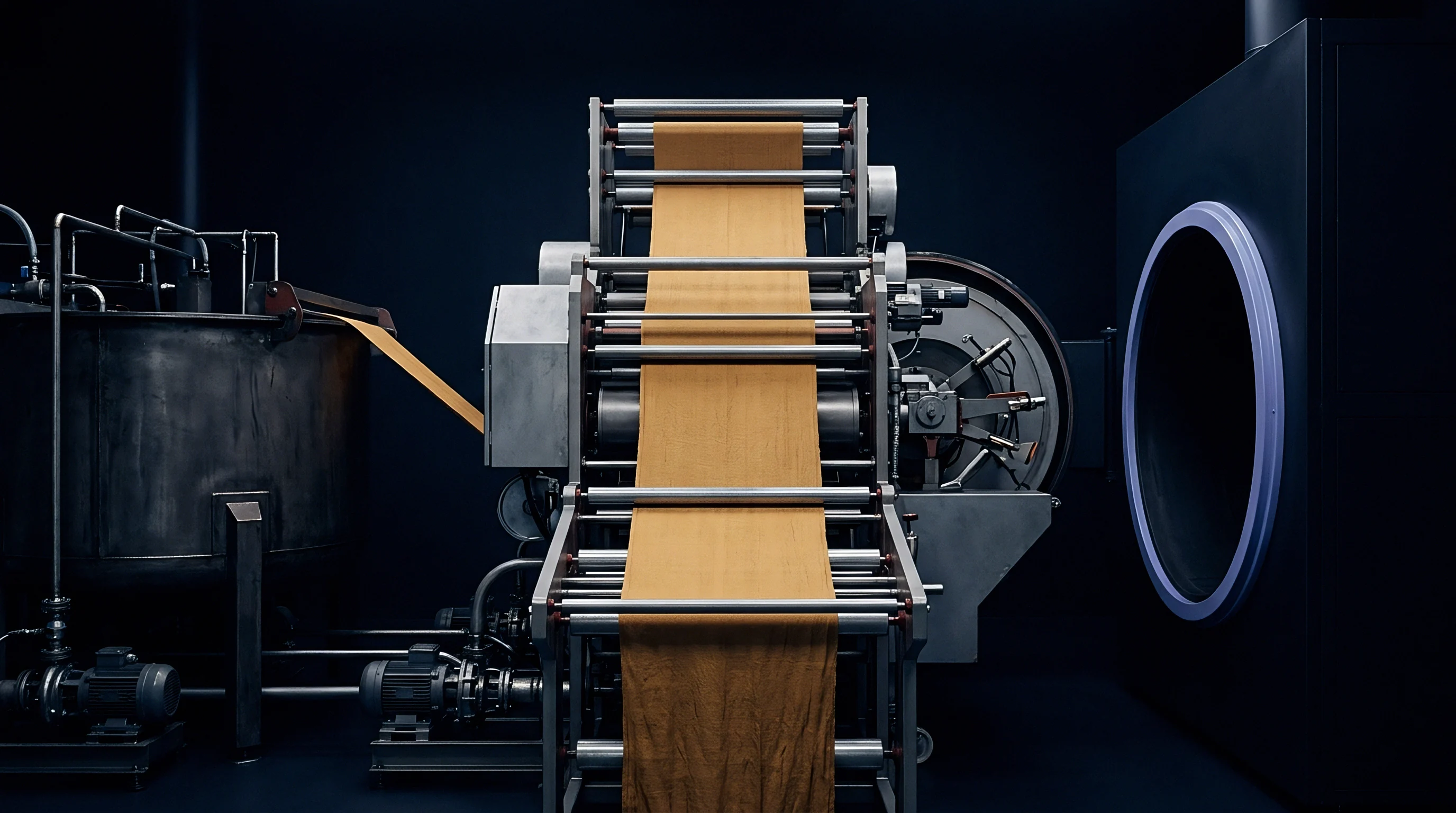
Padding liquor mechanics dictate the mass of functional chemistry transferred onto woven and knitted substrates. When greige fabric enters a pad trough, it displaces air within the yarn bundle and absorbs water along with dissolved active solids. The continuous application of durable press resins, softeners, water repellents, or flame retardants relies on maintaining a stable liquor equilibrium inside this trough.
Variations in chemical add-on mass across continuous stenter production runs originate at this first wet-processing step.

Mangle Nip Pressure and Wet Pick up Equilibrium
Mechanical squeezing between elastomeric rolls forces chemical emulsion into core yarn structures. Mangle nip pressure determines the expression wet pick-up percentage ~ the weight of wet liquor retained by the cloth divided by the dry weight of the un-treated fabric. Higher roll squeezing forces drive down wet pick-up, leaving less active chemistry on the yarn, while lower nip pressures leave a thicker liquid film that increases chemical add-on weight after drying.
Roll hardness, measured in Shore A durometer, governs the contact area inside the nip squeeze zone. Softer roll coverings deform under load into a wider contact footprint that decreases peak squeezing force per square millimetre. Harder roll coverings create a narrow footprint with high localized peak pressure, cutting wet pick-up.
Over extended production hours, mechanical friction warms the bowl surface; the resulting thermal expansion alters rubber resilience and causes wet pick-up rates to shift across multi-thousand-metre runs.
Line speed changes alter the hydrodynamic forces inside the nip bank. At elevated web speeds, liquid cannot escape the nip region fast enough, forcing the rolls slightly apart through hydraulic pressure. Fabric running at eighty metres per minute retains a higher wet pick-up than fabric running at forty metres per minute under identical pneumatic pressure settings.
Accelerating the stenter line to boost output inadvertently increases wet chemical mass loading on the web.
| Mangle Roll Hardness (Shore A) | Line Speed (m/min) | Applied Nip Load (N/mm) | Wet Pick Up Range (%) | Dry Add On Variance (g/m²) |
|---|---|---|---|---|
| 70 Shore A | 30 | 15 | 68 to 71 | +0.45 |
| 70 Shore A | 60 | 15 | 73 to 77 | +1.20 |
| 85 Shore A | 30 | 15 | 58 to 61 | -0.30 |
| 85 Shore A | 60 | 15 | 62 to 65 | +0.15 |
Bath Concentration Dynamics and Substantive Depletion
Active solids in the application reservoir drop when textile fibres selectively absorb specific functional molecules. This phenomenon, known as tailing or substantive depletion, occurs when cationic softeners or specific fluorocarbon molecules exhibit higher affinity for cellulosic or synthetic fibres than water does. The fabric strips active chemical from the bath faster than bulk liquid leaves the trough.
Initial meters of the production lot receive target chemical mass, while trailing meters receive depleted bath chemistry.
Liquor replenishment systems compensate for this depletion by continually dosing fresh chemical concentrate into the dip trough. Bath volume management controls chemical retention time inside the pan. Small volume troughs with rapid turn-over rates suppress tailing effects because fresh mix continuously replaces consumed liquor.
Large volume troughs allow significant concentration gradients to develop between the dosing pipe and the fabric entry point.
Dense woven constructions with high cover factors present high hydraulic resistance to liquor penetration during brief immersion times, whereas loose single jersey knits absorb liquor instantaneously through capillary suction. Incoming greige moisture regain acts as another variable: dry fabric absorbs bath liquid rapidly, while pre-dampened cloth dilutes trough chemistry, reducing net dry add-on weight.
Batch weight drift frequently reflects underlying variations in incoming fabric absorbency across the dye lot.


Migration
Thermal evaporation during early drying stages redistributes active finish chemistry across the fabric cross-section. As wet fabric enters the initial heat chambers of a continuous stenter, water evaporates rapidly from the outer surfaces. This rapid phase change establishes a continuous capillary flow of liquid water from the wet interior of the yarn bundle toward the hot outer faces of the fabric.

Thermomigration and Solute Movement during Evaporation
Capillary forces drive dissolved finishing agents toward hot outer surfaces while moisture vaporizes. Soluble resins, fluorochemical emulsions, and inorganic flame retardants travel alongside migrating water molecules. When water evaporates into the air stream, non-volatile chemical solids deposit at the fiber surface boundaries.
Thermomigration creates a severe density gradient across the thickness of the cloth, concentrating chemistry on the upper and lower faces while starving the inner yarn cores.
High drying temperatures applied immediately at the stenter entrance accelerate thermomigration. If air temperatures in the first two drying bays exceed one hundred and forty degrees Celsius, rapid boiling drives active solids to the outer faces before polymers can cross-link inside the amorphous fiber regions. Lower initial drying temperatures permit gradual water evaporation, allowing chemicals to fix evenly within the fiber matrix.
Rapid surface evaporation pulls soluble chemical finishing agents toward the fabric face before internal moisture equilibrium forms.
Substrate construction alters migration pathways. Heavy twill fabrics display asymmetric migration because air jets impinging on the face side evaporate water faster than air reaching the back side. Thin plain weave fabrics dry symmetrically, maintaining balanced chemical profiles.
Solute redistribution alters mechanical properties, causing stiff hand feel, reduced tear strength, and inconsistent liquid repellency across fabric faces.
Air Nozzle Velocity and Horizontal Mass Distribution
Impingement drying jets generate localized pressure variations that disrupt liquid films on running webs. Differential air velocities between top and bottom nozzle boxes cause uneven thermal exchange rates: upper nozzles operating at higher fan speeds drive moisture downward, causing active chemical mass to concentrate on the back face of the textile.
Balancing evaporative profiles across continuous stenter bays prevents severe chemical redistribution across the web.
- Measure air velocity at each nozzle outlet across the full stenter width using a calibrated hot-wire anemometer to establish baseline balance.
- Adjust upper and lower damper settings until top-to-bottom air pressure differentials fall within two percent of parity.
- Set the temperature profile across heating zones to ramp progressively from one hundred and ten degrees Celsius in bay one to one hundred and seventy degrees Celsius in the curing bays.
- Verify exhaust fan extraction rates to maintain negative pressure inside the drying chambers, preventing vapor stagnation.
- Check edge-to-center air baffle positions to match the current fabric running width, avoiding excess air bypass at selvedges.
High air velocity in the initial heating bay drives moisture to the surface faster than bulk diffusion can replenish internal chemical density.

Mass
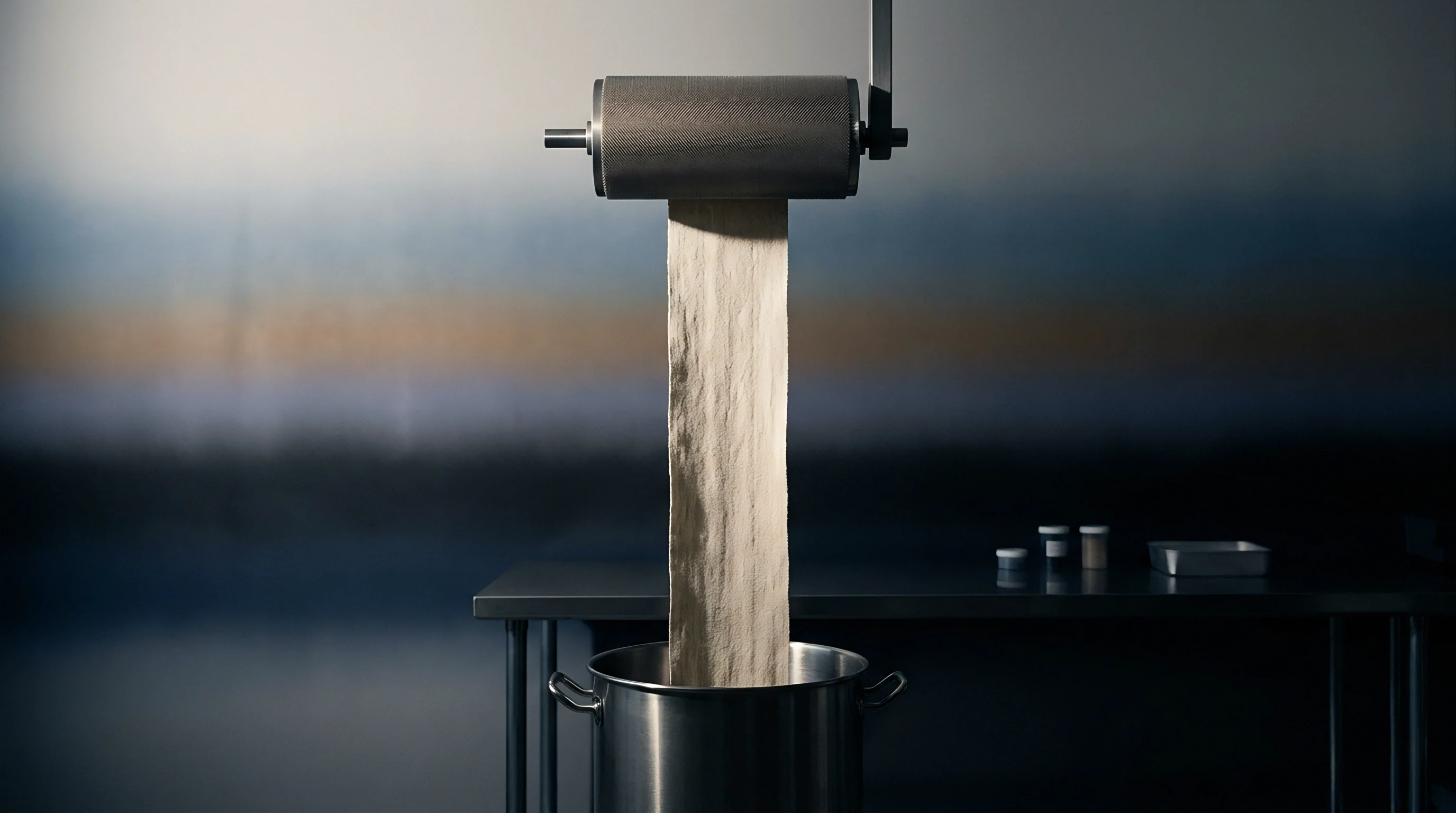
Gravimetric balances form the technical baseline for verifying dry chemical add-on percentages. Calculating chemical add-on requires precise subtraction of conditioned bare fabric mass from conditioned finished fabric mass. Small gravimetric measurement errors yield large deviations when converted to percentage dry add-on targets across multi-tonne bulk orders.
Gravimetric Equations for Net Dry Chemical Density
Calculating dry pickup relies on comparing conditioned un-finished base cloth against extracted finished rolls. Total dry chemical add-on percentage follows a clear mathematical relationship defined by fabric weight, liquor bath concentration, and expression wet pick-up percentage. The theoretical dry chemical mass per square metre equals the conditioned base fabric GSM multiplied by the wet pick-up fraction and the percentage of active non-volatile solids in the padding bath.
Conditioning specimens according to standard atmosphere guidelines, twenty degrees Celsius and sixty-five percent relative humidity under ISO 139, prevents ambient moisture absorption from distorting dry mass values. Unconditioned weighing introduces errors because synthetic fibers regain less ambient moisture than hydrophilic fibers like cotton or viscose. A two percent shift in ambient humidity alters cotton weight sufficiently to mask small variations in applied chemical finishes.
A three percent drift in wet pick up alters final dry add on weight by zero point two grams per square metre on two hundred gram fabric.
Worked Case for Fluorocarbon Finish Mass Balance
Evaluating a production lot of two hundred gram cotton twill reveals how small liquid shifts alter performance. Consider a lot processed on a continuous line at forty-five metres per minute. Target dry chemical add-on is two point five percent active fluorocarbon polymer mass, adding exactly five grams of dry chemical per square metre to reach a finished fabric weight of two hundred and five grams per square metre.
The padding bath contains forty grams per litre of active fluorocarbon emulsion, and the mangle is set for a target wet pick-up of sixty-two point five percent.
During the run, pneumatic pressure across the mangle roll drifts, causing wet pick-up to shift from fifty-eight percent at the center to sixty-seven percent at the selvedges. The center zone receives twenty-three point two grams of wet liquor per square metre, yielding two point three two grams of dry chemical add-on per square metre, or a one point one six percent dry add-on rate. The selvedges receive twenty-six point eight grams of wet liquor, yielding two point six eight grams of dry chemical add-on, or a one point three four percent rate.
The selvedge-to-center chemical add-on mass delta equals zero point three six grams per square metre, representing a fifteen point5 percent relative variation across the width.
| Incoming Dry GSM (g/m²) | Liquor Bath Concentration (g/L) | Wet Pick Up (%) | Wet Chemical Load (g/m²) | Final Dry Chemical Add On (g/m²) | Deviation from Target (%) |
|---|---|---|---|---|---|
| 200.0 | 40.0 | 55.0 | 110.0 | 2.20 | -12.0 |
| 200.0 | 40.0 | 60.0 | 120.0 | 2.40 | -4.0 |
| 200.0 | 40.0 | 62.5 | 125.0 | 2.50 | 0.0 |
| 200.0 | 40.0 | 65.0 | 130.0 | 2.60 | +4.0 |
| 200.0 | 40.0 | 70.0 | 140.0 | 2.80 | +12.0 |
| Calculations based on 100% active resin formulation at standard 20 degrees Celsius bath temperature. Test method ISO 3801. | |||||
Evaluating chemical qualification documentation before approving bulk finishing runs prevents costly post-delivery rejections.
- Base Fabric Mass Records documentation providing conditioned un-finished fabric weight per square metre across five sampling locations per dye lot.
- Active Solid Certifications chemical supplier technical data sheets specifying exact non-volatile polymer content percentages for each batch.
- Bath Concentration Logs hourly automated titration or refractometer records tracking active liquor density inside the pad trough.
- Mangle Pressure Profiles digital transducer data showing left, center, and right pneumatic roll loading forces throughout the production run.
- Continuous Moisture Graphs full-length inline sensor traces recording web water content before entering and immediately after exiting the stenter frame.
Standard purchasing specifications citing ISO 3801 allow mills to bill gross finished roll mass while masking localized active chemistry deficits.
Sensing
Online industrial detectors enable real-time measurement of wet pickup variations across running fabric lengths. Non-contact sensor arrays mounted immediately after the pad mangle squeeze rolls calculate total mass per unit area by measuring signal absorption or radiation scatter across the moving web.

Online Radiometric and Microwave Mass Detection Systems
Attenuation measurements using high-frequency electromagnetic fields track water density changes across fabric widths. Microwave attenuation sensors pass a continuous microwave beam through the damp fabric. Water molecules absorb microwave energy proportionally to total liquid mass, providing instant feedback on wet pick-up fluctuations.
Linking these sensors directly to automated pneumatic mangle controllers enables automatic nip adjustment when liquid mass strays from pre-set target bands.
Nuclear beta-gauge sensors measure total mass density using krypton or strontium isotope sources. The sensor detects signal attenuation as alpha or beta particles pass through the fabric. Subtracting bare greige fabric mass data stored in the plant control software yields continuous wet chemical mass values.
Safety regulations and disposal requirements limit nuclear sensor installations, leading dyehouses to prefer high-speed near-infrared spectroscopy systems.
Contracts invoking ISO 105 test procedures reject deliveries when water repellency grades drop below four after three home wash cycles.
Near-infrared reflection sensors measure specific absorption bands corresponding to water hydroxyl groups or chemical resin carbon-hydrogen bonds. Optical sensors scanning transversely across the stenter entrance generate a high-resolution edge-to-center mass profile every few seconds. This data reveals instantaneous bowl deflection issues before thousands of metres receive uneven chemical add-on.
Whose Mill Calibration Prevails When Add on Yield Diverges?
Discrepancies between factory sensor readings and independent lab extractions create buyer claims. Mill inline sensors measure total wet mass including water, assuming uniform chemical bath concentration. Laboratory solvent extractions measure net dry polymer mass directly from cut swatches.
If chemical tailing depleted the pad bath active solids without changing bath density or water volume, the mill sensor reports correct wet pickup while the actual dry chemical add-on drops below specification limits.
Because density shifts alter shade fastness, independent testing laboratories rely on Soxhlet extraction using organic solvents like dichloro-methane or ethanol to dissolve applied resins from fabric samples according to ISO 14419 or ISO 3801. Comparing extracted dry mass against bare base cloth establishes absolute legal proof of chemical add-on mass. When factory microwave readings conflict with lab extraction results, buyers base financial rejections on verified gravimetric solvent extraction data.
Whether optical fluorescence sensors can distinguish resin active solids from residual surfactant salts on dyed ground without laboratory extraction remains unanswered in high-speed continuous production.

Profile
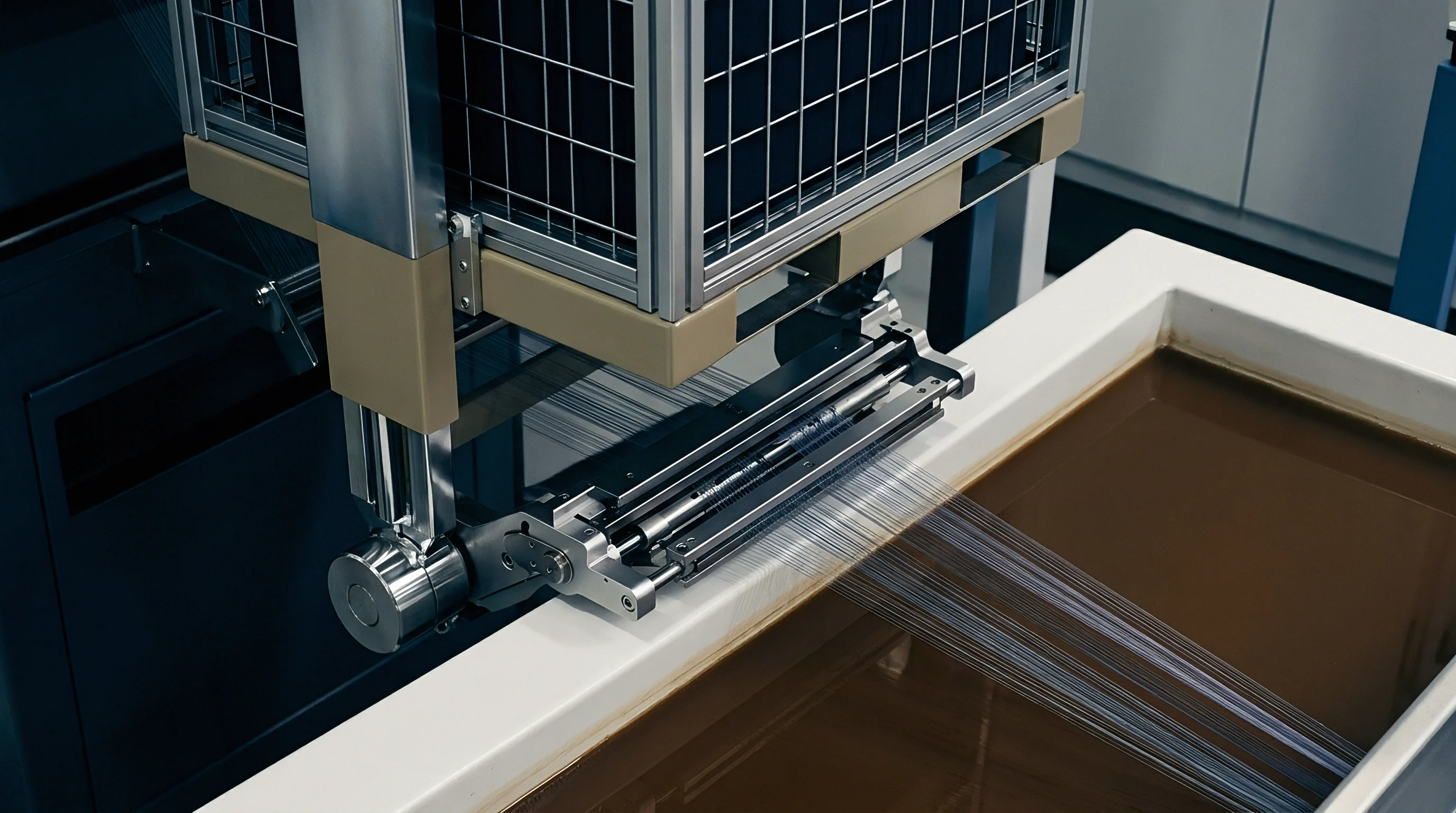
Cross-web uniformity depends on maintaining identical squeeze forces across the full face width of the pad mangle. Heavy steel squeeze rolls flex slightly under high hydraulic loading, increasing clearance at the roll center while concentrating squeezing force at the outer journal bearings. This structural deflection causes heavy chemical application in the fabric center and thin chemical application near the selvedges.

Transverse Deflection and Mangle Bowl Geometry
Crown-ground rolls feature an engineered convex diameter profile that counteracts mechanical deflection under load. Grinding the roll center slightly larger than the edges creates a parallel nip gap when hydraulic cylinders load the journals. If the applied pneumatic pressure matches the exact design load of the crown, liquid squeeze forces remain uniform across the fabric width.
Operating below design pressure creates tight edges and a loose center, whereas operating above design pressure crushes the center and floods the selvedges.
Variable crown rolls, known as swimming rolls, feature internal hydraulic chambers that adjust pressure along the inner roll core. Pressurizing internal oil zones counteracts roll bending in real time, allowing technicians to flatten the nip profile across varying fabric widths and line speeds. Edge margins show high add-on when roll crown parameters do not match web width.
| Sampling Zone across Width | Measured Wet Pick Up (%) | Active Chemical Add On (g/m²) | Hydrostatic Head Performance (kPa) | Spray Rating Grade (AATCC 22) |
|---|---|---|---|---|
| Left Selvedge (0-15 cm) | 68.5 | 2.74 | 35.0 | 100 |
| Left Mid (25% Width) | 63.0 | 2.52 | 31.5 | 90 |
| Center (50% Width) | 59.0 | 2.36 | 26.0 | 80 |
| Right Mid (75% Width) | 62.5 | 2.50 | 31.0 | 90 |
| Right Selvedge (85-100 cm) | 69.0 | 2.76 | 36.0 | 100 |
Mechanical wear and operational errors generate transverse chemical variations across running webs.
- Asymmetric Pneumatic Loading air cylinder pressure differentials between drive-side and operator-side roll mountings cause lopsided wet pickup profiles.
- Elastomeric Bowl Wear uneven rubber degradation along frequent fabric running paths creates permanent channels that reduce localized squeeze efficiency.
- Thermal Expansion Gradients localized bearing heat warming roll journals expands rubber ends, pinching edges and pushing wet liquor toward the center.
- Baffle Air Misalignment uneven drying jet velocities across stenter bays cause differential water evaporation rates, inducing cross-web thermomigration patterns.
- Tension Skew Angles crooked web feeding stretches one selvedge tight while leaving the opposite loose, altering fabric liquid absorption capacity.

Longitudinal Speed Transitions and Thermal History Variations
Acceleration during roll changeovers alters dwell time inside heat chambers. When a continuous stenter line slows down to stitch the tail of an expiring fabric roll to a fresh seam, dwell time inside the heating zones doubles. Prolonged exposure to high temperatures causes thermal degradation of functional resins, reducing active chemical performance without altering total mass.
Continuous stenter lines operating without automated deflection bowls display higher chemical variance at roll transitions than during steady state runs.
When a stenter speeds up following a roll seam, web tension increases, narrowing fabric width inside the entry field. Overfeeding fabric onto the stenter pins compensates for width loss, but alters local fabric mass per square metre. Fabric running with high overfeed enters drying bays with higher moisture mass per linear metre, requiring higher heat energy to achieve complete chemical curing.
Inconsistent resin distribution causes uneven cross-linking that generates streakiness during garment dyeing and causes localized seam puckering under domestic laundering.


Dispute
Commercial contracts define acceptable numerical limits for finishing chemical active solids on bulk deliveries. Settling claims requires comparing factory roll logs against certified test methods. When functional performance fails end-use specifications, buyers and mills isolate whether deficits stem from chemical bath formulation errors, uneven nip squeezing, or excessive drying thermomigration.
Analytical Laboratory Extraction versus Continuous Roll Weighing
Soxhlet solvent removal methods yield precise chemical mass values from cut samples. Testing teams cut three ten-by-ten centimetre swatches across the left, center, and right zones of a suspect roll. Boiling these swatches in suitable organic solvents extracts cross-linked resins, fluorochemical polymers, or silicone softeners.
Weighing the dried sample before and after extraction isolates net dry chemical mass per square metre according to ISO 3801 procedures.
Mill production records relying on total roll mass often contradict laboratory extraction data. Roll weights recorded at the stenter exit include residual moisture, processing oils, and sizing residues alongside active chemistry. A gross roll weight indicating three percent chemical add-on may mask an actual yield of only one point five percent active polymer if residual moisture regain was underestimated during inline weighing.
Commercial Settlement Frameworks for Non Conforming Add on Batches
Financial deductions apply when delivered fabric fails minimum performance thresholds due to inadequate chemical coverage. Standard commercial agreements establish tolerance bands for chemical add-on mass. Deviations within plus or minus five percent of target dry mass incur no penalty.
Deviations between six and fifteen percent trigger pre-agreed price discounts per linear metre to compensate for reduced durability or hand feel deficits.
Delivered lots displaying dry chemical add-on variations beyond fifteen percent face complete rejection. If transverse chemical variation causes water repellency ratings to drop below grade four on the AATCC 22 spray test in center zones while edges pass at grade one hundred, the entire lot fails functional qualification. Mills must replace non-conforming yardage or pay re-processing costs to strip and re-apply functional chemistry under verified lab supervision.