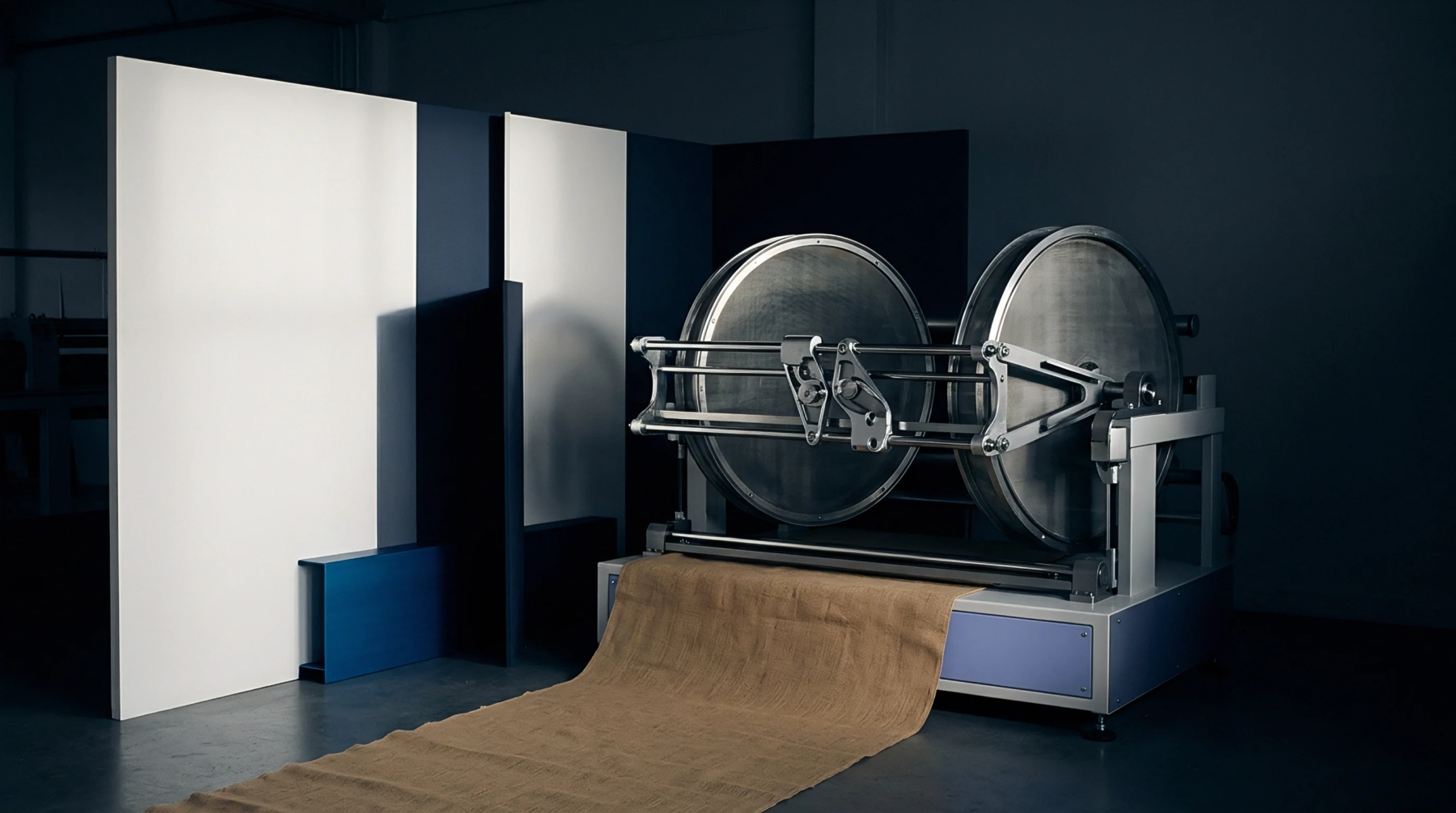
Finishing Machine
Open-width fabric finishing relies on long thermal treatment chambers to dry, cure, and heat-set both woven and knitted textiles. This equipment is known as a continuous stenter, and it uses heated air to establish final fabric dimensions. The machine controls moisture content while correcting skewed weft yarns.
Fabric Tension
Grip systems secure the fabric edges along two parallel tracks to pull the material to its targeted width. Adjusting this lateral pull directly influences the finished weight and density of the cloth. Excessive tension can rupture the selvage or cause yarn breakage.
Drying Mechanics
Air circulation systems blow hot air onto both the upper and lower surfaces of the moving textile. Evaporating water from the wet fabric consumes energy, and the temperature must be kept high enough to set the fibers without causing yellowing. For instance, a typical polyester-cotton blend is processed at one hundred and eighty degrees Celsius to cure the finishing agents and lock the polyester filaments into a stable configuration, ensuring the fabric does not shrink during subsequent home laundering.
Process Control
Speed regulation maintains the correct residency time inside the heating zones to avoid over-drying or under-curing. An infrared pyrometer monitors the surface temperature of the fabric to adjust the conveyor speed dynamically. Running the machine too fast leaves the center damp, while running it too slowly degrades the fiber strength.