Dynamic Steam Pressure Variations and Alkali Migration Boundaries in Dense Viscose Filament Assemblies
Dynamic steam pressure shifts drive localized condensation surges, expanding alkali boundaries and causing halo defects in dense viscose filament assemblies.
Mass
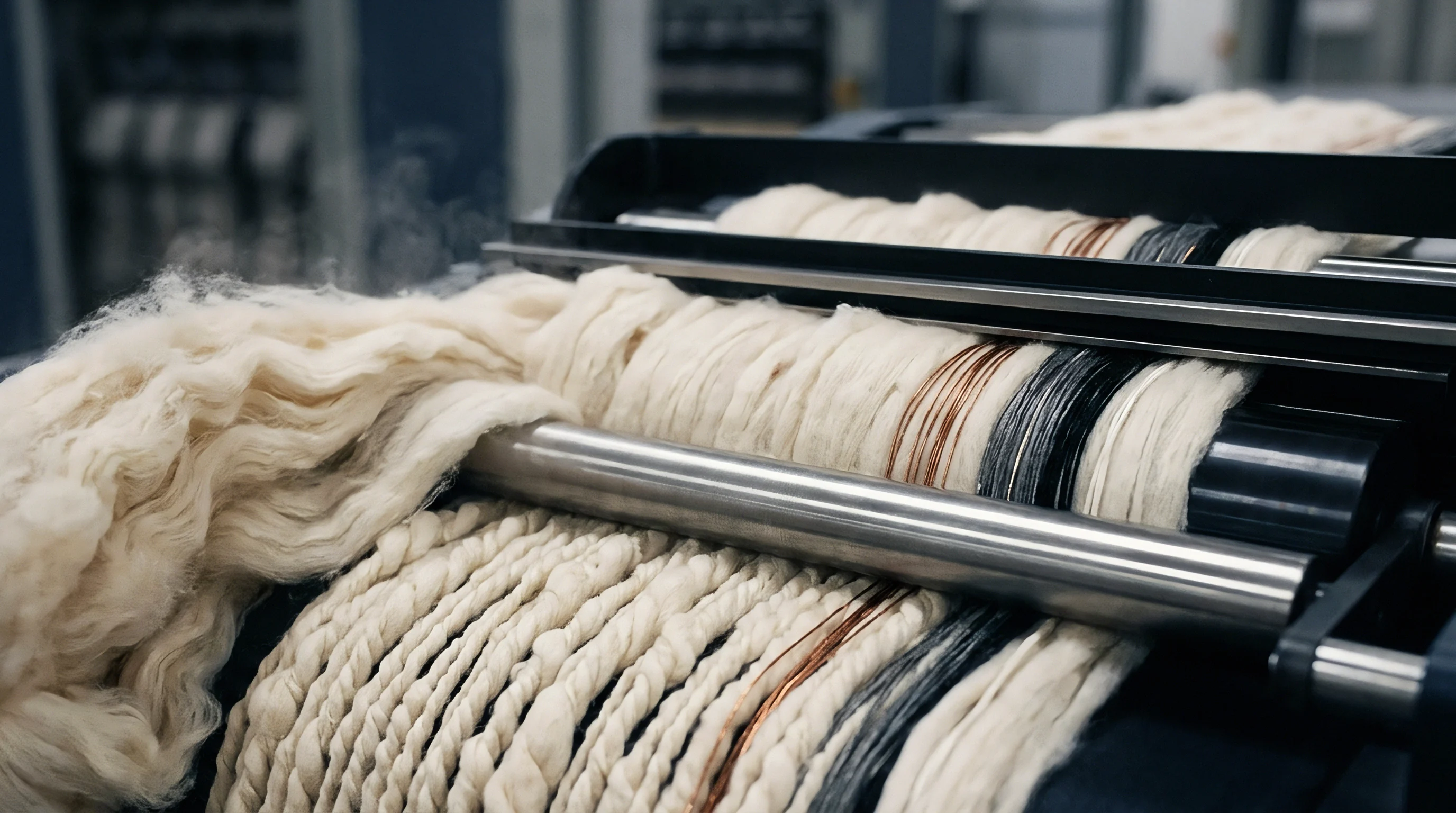
Regenerated cellulose filaments in continuous high-density constructions pack into tight spatial geometries. In a 75-denier, 72-filament continuous viscose warp satin, the packing density within individual yarn bundles ranges from 0.72 to 0.81, leaving minimal inter-filament void space. Capillary structures formed between parallel filament walls present narrow pore diameters ranging between 0.8 and 2.5 micrometres.
When un-steamed wet goods enter a processing line after alkali padding or screen printing, the liquid carrying sodium hydroxide or sodium carbonate resides primarily in these narrow inter-filament spaces rather than inside the amorphous cellulosic matrix.
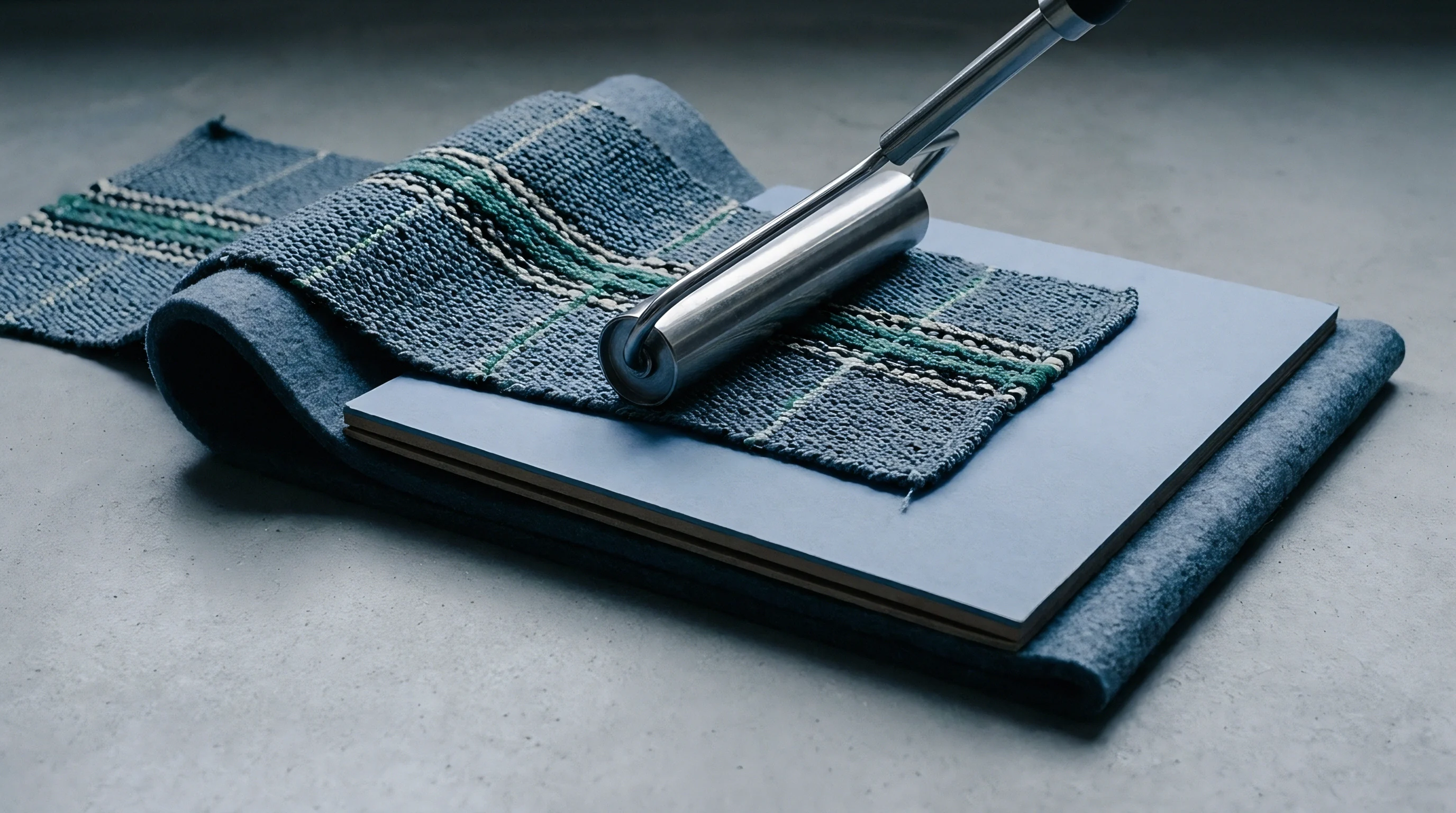
Filament Packing Density and Substrate Voids
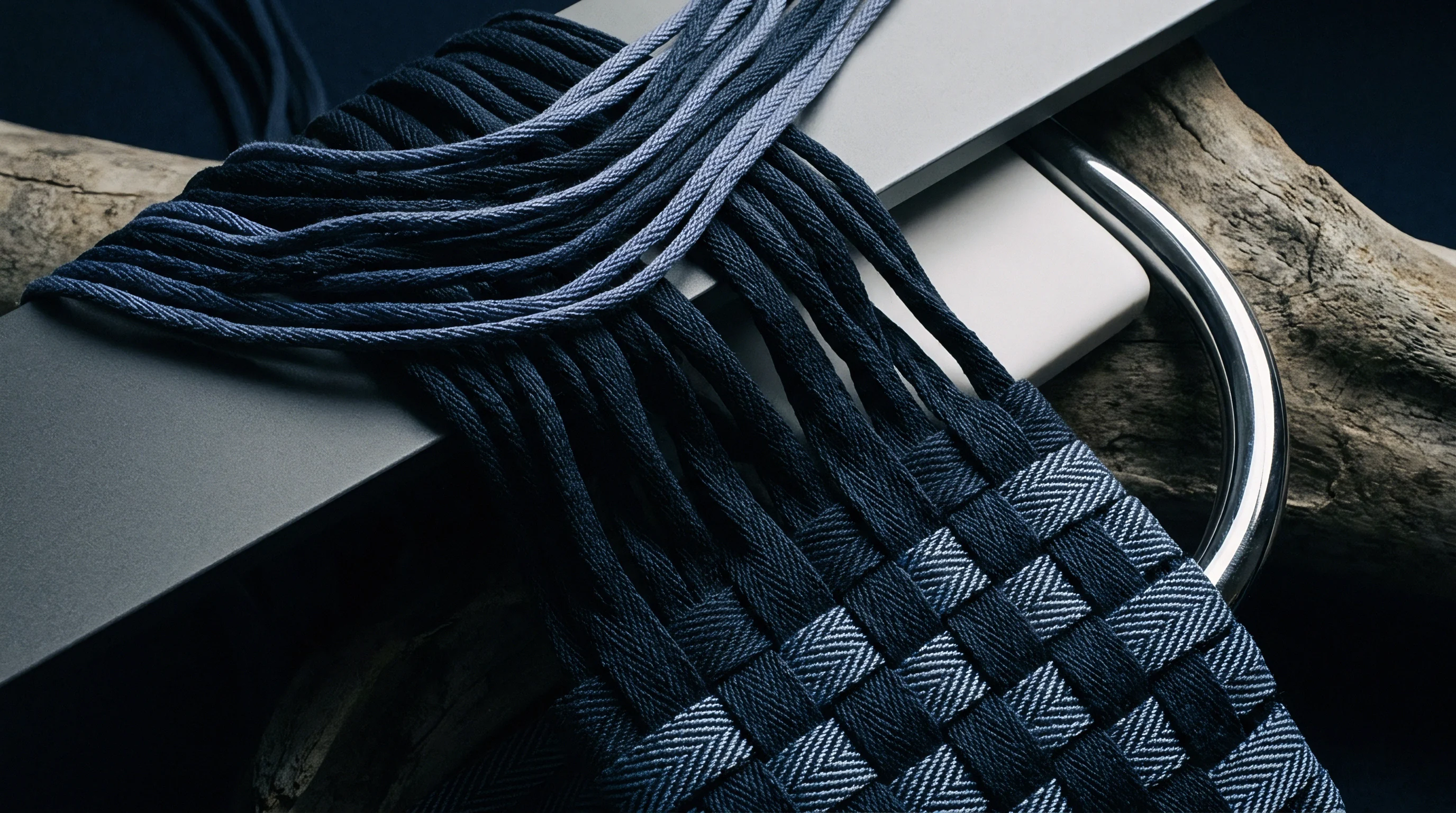
Parallel yarn alignments inside 75-denier filament satin weaves yield inter-fiber spaces below three micrometres. Filament cross-sections feature serrated perimeters characteristic of xanthate-route viscose rayon. These perimeter serrations create longitudinal micro-channels along every individual filament line.
Liquid retention within these channels obeys Young-Laplace capillary action, where small radii generate high capillary pressures exceeding 150 kilopascals.
Filaments lack natural crimp. Filament alignment stays straight under warp tension. Consequently, liquor distribution in dense filament assemblies shows steep concentration peaks at the bundle surface.
The interior core of a 140-ends-per-inch warp yarn bundle remains relatively dry during rapid padding speeds exceeding 40 metres per minute. Saturated air trapped within dense yarn cores resists liquid penetration during brief pad-dip dwell times of 0.8 seconds.
Viscose filament satin fabrics padded at 85 percent wet pick-up retain 62 percent of applied alkali solution within the outer 30 percent of yarn bundle cross-sectional volume.
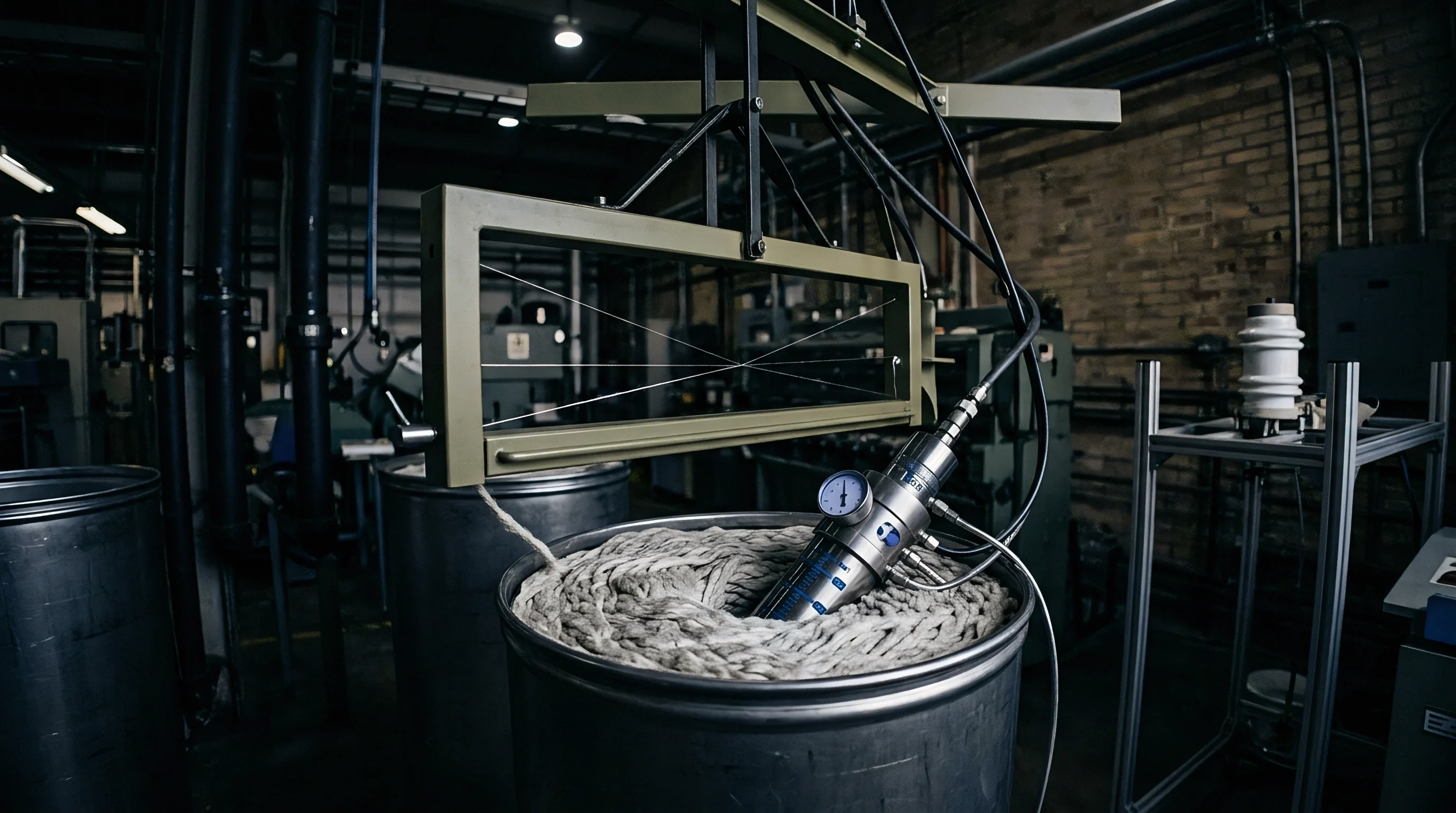
Initial Liquor Distribution across Dense Assemblies
Pad application of sodium hydroxide or sodium carbonate deposits alkaline chemistry predominantly along the outer perimeter of tight yarn bundles. The core of dense 120-picks-per-inch filament filling structures receives alkali primarily through post-padding diffusion during batching or transit into the steam chamber. Initial pick-up uniformity determines whether alkali migration remains localized or spreads into adjacent unprinted zones.
Liquid moves through capillary channels. High thread counts increase channel resistance. When dense viscose constructions enter the steam environment, the initial alkali concentration ratio between outer filament layers and yarn bundle cores stands at approximately 3.5 to 1.
This imbalance establishes a driving gradient before steam condensation commences.
Operating a padding line on high-density filament viscose without adjusting liquor viscosity or pad nip pressure forces alkali solution to pool on web surfaces rather than penetrate yarn interstices, producing severe edge halos and tensile strength drops exceeding 25 percent along outer filament faces after steaming.
Vapor
Continuous steaming chambers maintain saturated atmospheric conditions near 100 degrees Celsius to initiate reactive dye fixation. Saturated steam transfers energy rapidly through latent heat of condensation upon contact with cooler incoming textile goods. In dense viscose filament constructions, this phase change generates a surface water film that immediately dilutes and mobilizes pre-padded alkali.
Steamer Chamber Thermal Equilibrium
Enclosed heating chests experience cyclical pressure spikes when fabric inlet slots undergo atmospheric air entrainment. Exhaust fan speed variations and steam supply main valve oscillations cause internal chamber pressure to drift within a range of plus or minus 2.5 to 12.0 kilopascals around atmospheric baseline. These pressure swings immediately alter the saturated steam temperature inside the chamber according to thermodynamic steam tables.
Pressure drops alter heat transfer. Condensation accelerates instantly. A pressure drop from 101.3 kilopascals to 95.0 kilopascals lowers the condensation temperature from 100.0 degrees Celsius to 98.2 degrees Celsius.
This drop momentarily stops condensation while the substrate equilibrates, allowing liquid films on filament surfaces to stabilize. Conversely, a positive pressure surge to 108.0 kilopascals raises the steam temperature to 101.8 degrees Celsius, forcing immediate, intense condensation onto the cooler viscose filaments.
Condensation Rates during Pressure Fluctuation
Latent heat release onto cold cellulosic surfaces varies directly with localized chamber barometric shifts. During positive pressure pulses, condensed water volume on web surfaces increases by up to 0.04 grams of water per gram of fiber per minute. Dense filament yarns, constrained by small void fractions, cannot store this extra liquid volume within internal pores.
Moisture floods the filament bundle perimeter.
| Steam Chamber Pressure Differential (kPa) | Saturated Steam Temperature (°C) | Condensation Rate (g H2O / g Fiber / min) | Filament Void Saturation Level (%) | Alkali Film Thickness Surge (nm) |
|---|---|---|---|---|
| -5.0 | 98.6 | 0.012 | 68 | +15 |
| 0.0 (Baseline) | 100.0 | 0.025 | 84 | +45 |
| +3.5 | 100.9 | 0.034 | 96 | +90 |
| +7.0 | 101.8 | 0.046 | 112 (Overflow) | +165 |
| +12.0 | 102.9 | 0.058 | 128 (Overflow) | +240 |
Overflowing moisture dissolves fixed sodium ions. The expanded liquid film bridges adjacent filament yarns. As steam chest pressure cycles continuously, liquid films expand and contract, dragging dissolved alkali away from original application boundaries.
Commission finishers frequently claim that shade levelness variations across dense filament runs stem entirely from incoming greige yarn denier non-uniformity rather than steam chest pressure valve hysteresis.
Gradient
Ionic mobility across wet filament bundles follows capillary force vectors and localized concentration differentials. Sodium hydroxide ions possess high ionic mobility in aqueous media, diffusing at rates near 2.13 × 10⁻⁵ cm2/s at 25 degrees Celsius, escalating significantly at 100 degrees Celsius. When steam pressure fluctuations deposit excessive condensation, capillary forces pull dissolved sodium and hydroxyl ions laterally across dense filament surfaces.
Does Steam Pressure Fluctuation Shift Migration Limits?
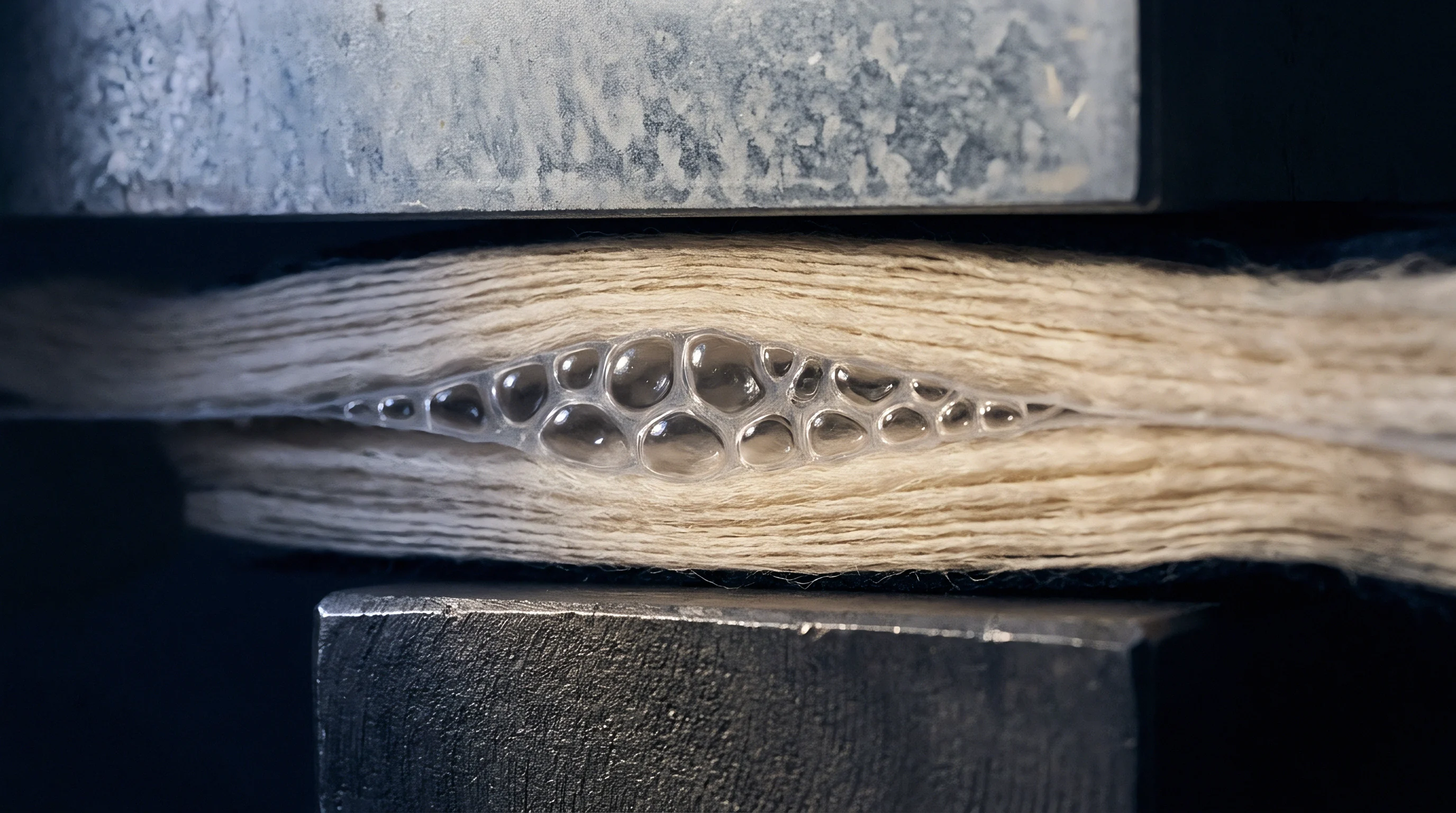
Transient pressure increases drive moisture condensed at the outer web boundary inward toward yarn cores. When condensation exceeds void capacity, excess water reverses direction, flushing alkali outward through capillary micro-channels. This back-and-forth liquid flow widens the boundary layer where alkali interacts with unprinted or differently dyed regions.
Capillary force drives lateral migration. Hydroxyl ions move faster than bulk dye molecules. Consequently, an alkali front advances ahead of reactive dye molecules during steaming.
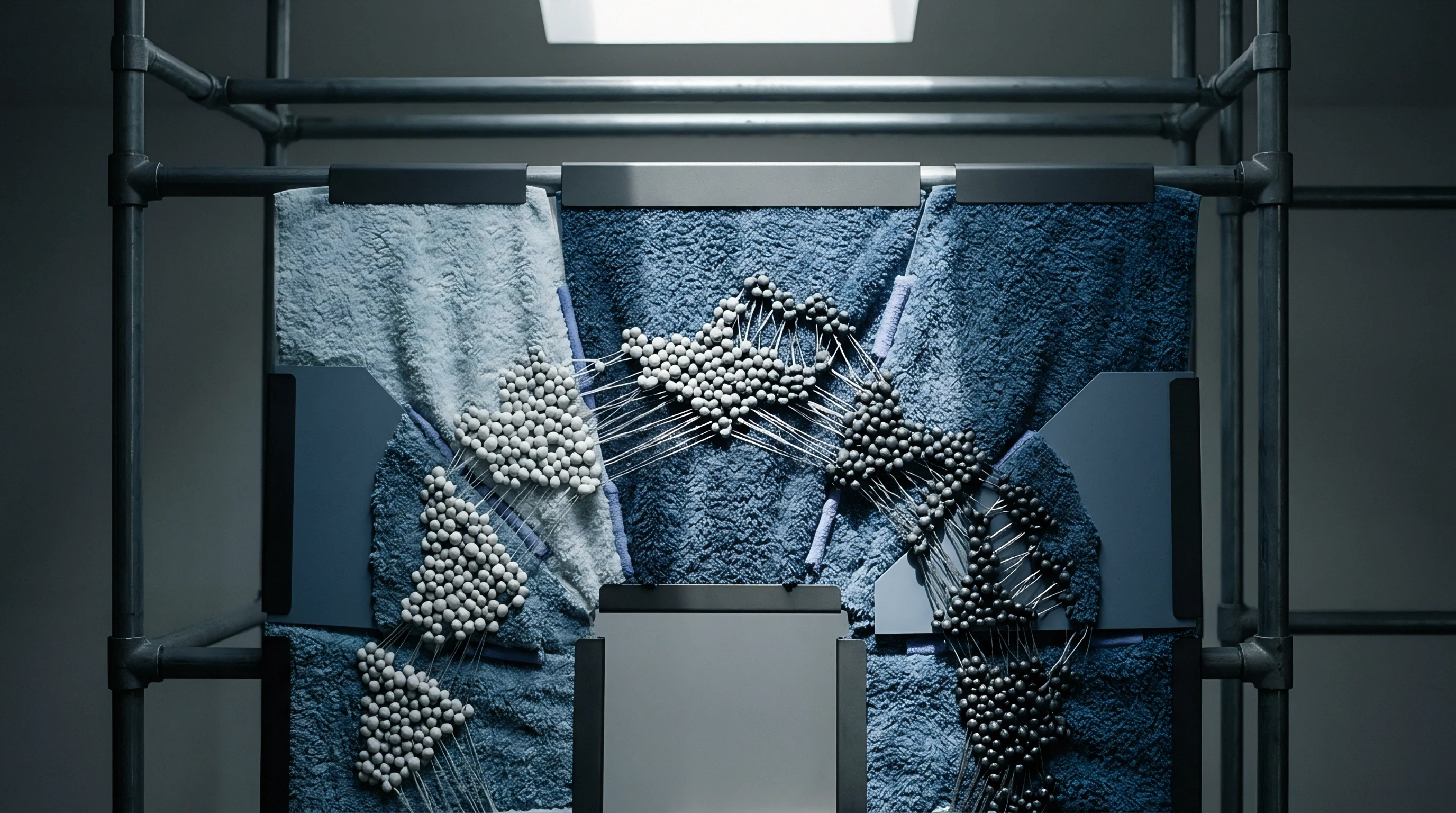
If steam pressure oscillates at frequencies matching liquid capillary flow relaxation times (typically 1.2 to 3.5 seconds in dense viscose), the alkali boundary moves outward by up to 1.8 millimetres beyond specified print outlines.
ISO 105-Z11 testing protocols show that alkali boundary displacement exceeding 0.5 millimetres causes visible halo defects and local shade deviations exceeding a dE of 1.2 on high-density filament satins.
Alkali Boundary Displacement Dynamics
Chemical transport across individual 1.3-dtex filament voids accelerates when condensed water film thickness exceeds four nanometres. Hydroxyl ion accumulation at outer boundary limits elevates local pH from 10.5 to over 13.0. High pH initiates localized cellulosate ion formation on regenerated cellulose chains, swelling individual filaments and altering light refraction index across boundary boundaries.
- Install high-speed piezoelectric pressure transducers within the steam chest at fabric entry, central dwell zone, and fabric exit.
- Connect steam inlet control valves to variable-position actuators capable of response times under 0.5 seconds.
- Set static steam supply pressure regulators to maintain delivery main pressure at 250 kilopascals above atmospheric pressure.
- Calibrate loop steamer exhaust dampers to maintain constant internal overpressure at exactly 0.20 kilopascals.
- Monitor condensation temperature continuous logging probes across all three steamer zones to confirm stability within 0.3 degrees Celsius.
Exothermic absorption releases heat. Fiber swelling closes capillary channels. As individual viscose filaments swell up to 35 percent in cross-sectional area under high alkali concentration, inter-filament spaces close down.
This closure traps alkali within localized pockets, creating stark migration boundaries that resist leveling during subsequent wash-off steps.
Remains unresolved whether low-viscosity polymeric thickeners can fully suppress pressure-driven alkali migration without impairing reactive dye diffusion into dense viscose filament cores during 8-minute saturated steam exposures.

Boundary
Printing outlines blur when dissolved alkaline chemicals bleed beyond their laid down wet edge. The interface where alkali concentration drops from active fixation strength (approximately 20 to 30 grams per litre of sodium carbonate or equivalent hydroxide) to baseline zero represents the alkali migration boundary. Steam pressure instability expands this boundary from a sharp 0.1-millimetre zone into a diffused 2.5-millimetre margin.
Cellulosic Swelling and Localized Microstructure Alteration
High concentrations of sodium hydroxide force the crystalline regions of regenerated cellulose to expand laterally. Hydroxyl ions disrupt intermolecular hydrogen bonds between cellulose chains, causing non-uniform cross-sectional swelling along the filament axis. In dense constructions, outer filaments in a yarn bundle swell fully while core filaments experience restricted swell due to spatial constraints.
Uncontrolled swelling creates tension. Filament length decreases under lateral expansion. This differential shrinkage across the yarn cross-section generates microscopic stress gradients.
When combined with dynamic steam pressure shifts, local fiber degradation occurs through accelerated alkaline hydrolysis of glycosidic bonds, reducing filament tenacity by up to 18 percent in heavy alkali accumulation zones.
| Steamer Pressure Oscillation Band (kPa) | Alkali Boundary Shift (mm) | Viscose Filament Tenacity Retained (%) | Shade Difference at Boundary (ΔE cmc 2:1) | Fixation Efficiency Ratio (%) |
|---|---|---|---|---|
| ± 1.0 | 0.2 | 98.2 | 0.3 | 91.5 |
| ± 3.0 | 0.6 | 95.1 | 0.8 | 88.2 |
| ± 6.0 | 1.3 | 89.4 | 1.9 | 81.0 |
| ± 10.0 | 2.2 | 83.7 | 3.1 | 72.4 |
| ± 15.0 | 3.1 | 78.1 | 4.4 | 64.0 |
Fixation Non-Uniformity and Edge Bleed Defects
Color yield fluctuations develop where localized moisture surges dilute alkali below the threshold necessary for covalent bonding. Reactive dyes require a specific alkali concentration range to form ether linkages with cellulosic hydroxyl groups. Dilution below pH 10.2 halts dye fixation, while alkali accumulation above pH 13.2 promotes dye hydrolysis over fiber reaction, leading to un-fixed dye washing off during wet processing.
When steam chest pressure varies by more than plus or minus 4.0 kilopascals, local condensation variances disrupt chemical fixation equilibrium, rendering 100 percent visual inspection mandatory.
A systematic analysis reveals multiple physical structural defects resulting from uncontrolled alkali movement across dense filament webs:
- Halo Bleed Edges appear as pale or darkened rings along print perimeters caused by hydroxyl ion migration outpacing large reactive dye molecules during rapid steam condensation.
- Localized Filament Cockling develops when differential cross-sectional swelling creates uneven shrinkage stresses between warp and filling yarn crowns.
- Shade Levelness Banding manifests as transverse stripes across web width corresponding directly to periodic steam pressure adjustments by automatic boiler cycling systems.
- Tensile Striping Lines occur where high sodium hydroxide concentrations degrade outer filament layers under sustained steam heat, reducing tear strength along specific warp ends.
- Surface Glazing Variations emerge when swollen filament bundles flatten unevenly against steamer guide rollers under elevated moisture conditions.
Standard delivery contracts referencing ISO 105-X12 for rubbing fastness allow buyers to reject entire production lots when alkali boundary migration creates localized surface unfixed dye concentrations that lower wet crocking fastness below Grade 3.
Tolerance
Commercial dyehouses set target limits for chamber pressure variance to lock in repeatable color yields across ten-thousand-metre runs. Maintaining steam chest stability requires precise balancing of main supply pressure, loop steamer steam recirculation fans, and exhaust damper settings. High-density viscose filament constructions require tighter operational windows than open staple-spun cotton fabrics due to high capillary forces and rapid moisture sensitivity.

Steamer Pressure Control Tolerances
Proportional-integral-derivative control valves on steam main feeds restrict pressure fluctuations to plus or minus one kilopascal. Steam delivery systems must deliver dry saturated steam with a dryness fraction between 0.97 and 0.99. Wet steam carrying entrained water droplets introduces localized water spots on dense filament surfaces, instantly triggering severe alkali migration spots independent of overall chamber pressure.
Saturated steam prevents local drying. Condensation rates stabilize under steady thermal delivery. Installing automated steam desuperheaters ensures steam entering the chest remains within 1.5 degrees Celsius of saturation temperature.
Superheated steam dries out padded alkali paste before fixation occurs, blocking chemical migration but permanently reducing color yield by up to 40 percent.
Financial Model for High-Density Filament Steaming
A worked comparative financial calculation demonstrates the operational impact of steam pressure control on a 50,000-metre continuous run of 120 g/m² viscose filament satin printed with reactive chemistry. Assume greige fabric cost at $1.80 per metre, wet processing chemical cost at $0.45 per metre, and converting labor plus utility cost at $0.35 per metre, establishing a base finished manufacturing cost of $2.60 per metre.
Under Case A, the finishing plant operates an unmonitored steam chest exhibiting pressure swings of plus or minus 8.0 kilopascals. Defect analysis shows an alkali migration edge-bleed rate of 8.5 percent across the run. Off-spec goods are downgraded to second quality and sold at $1.40 per metre, incurring a direct loss of $1.20 per metre on downgraded yardage.
Total yield drop equals 4,250 metres, producing a direct revenue loss of $5,100.
Under Case B, the plant installs an active steam chest pressure regulation unit with closed-loop transducer control costing $12,000, holding pressure variance to plus or minus 1.0 kilopascal. The defect rate drops to 0.8 percent (400 metres of seconds). The downgraded yardage loss reduces to $480.
Net savings per 50,000-metre production lot equal $4,620, amortizing the control system investment across three production runs.
Maintaining steam pressure fluctuations within plus or minus 1.5 kilopascals preserves target color yield and eliminates customer credit claims on high-density filament viscose runs.
Mill selection audits require structured criteria to confirm converting plant capability before placing bulk orders for dense filament goods:
- Closed-Loop Pressure Telemetry verifies that steamers log real-time internal pressure data at intervals no greater than two seconds throughout production runs.
- Automated Exhaust Modulation ensures atmospheric air ingress is actively suppressed through dynamic exhaust fan speed adjustment tied to internal pressure sensors.
- High-Capacity Steam Separators confirm entrained moisture is removed from supply steam lines immediately before entering the steamer manifold.
- Infrared Pre-Drying Units confirm padded goods reach optimal moisture levels (25 to 30 percent residual moisture) prior to entering saturated steam environments.
To ensure total compliance, purchase agreements must explicitly detail technical requirements for wet processing execution:
- Continuous Pressure Logging Dossier obligates the commission finisher to attach digital steam pressure and temperature logs corresponding to specific roll serial numbers.
- Alkali Migration Tolerance Limits establishes a maximum allowable boundary blur of 0.3 millimetres measured under 10x optical magnification.
- Minimum Tenacity Retention Thresholds mandates that finished goods retain at least 90 percent of un-steamed greige fabric tensile and tear strength.
- Shade Levelness Verification Protocol defines acceptance criteria using spectrophotometer line scans taking readings every 10 centimetres across fabric width.
Flawless steam pressure regulation cannot compensate for inconsistent pad-mangle nip pressure distributions across wide web widths.

Settlement
Purchase contracts specify physical parameters, chemical tolerances, and acceptable shade variance limits. When sourcing high-density viscose filament textiles, buyers align technical specifications with mill capabilities to isolate liabilities before greige goods enter pad-batch or steam fixation ranges. Clear specifications eliminate ambiguity regarding financial responsibility when alkali migration defects appear in finished lots.
Technical Specifications in Purchase Orders
Standardized supply agreements require commission wet processors to record continuous pressure chart data. Contracts stipulate that steam pressure variations exceeding plus or minus 2.0 kilopascals for periods longer than 15 consecutive seconds classify the affected fabric yardage as potentially non-conforming. Buyers reserve the right to audit mill log files prior to releasing final invoice payments.
Audit logs verify pressure variance. Reject rates escalate rapidly when chart logs show repeated pressure spikes. Technical annexes attached to purchase orders define explicit sampling plans based on ISO 2859-1 single sampling protocols, setting an Acceptable Quality Limit (AQL) of 1.0 for visual migration defects and 2.5 for shade levelness variations.
Verification Methods at the Commission Finisher
Audit teams inspect incoming web rolls under standard light sources while cross-referencing steam pressure telemetry. Laboratory testing confirms whether edge bleeding stems from excessive pad pick-up, improper thickener rheology, or steam chest condensation dynamics. Measuring cross-sectional sodium concentrations via x-ray photoelectron spectroscopy or wet chemical extraction identifies whether alkali localized on outer filament perimeters or penetrated yarn cores evenly.
Yield loss penalizes the finisher. Commission finishing agreements establish clear financial chargeback schedules for goods downgraded due to steam pressure instability. Finisher contracts specify that when defective yardage exceeds 2.0 percent of total lot volume, the processor reimburses the buyer for both greige fabric landed cost and lost conversion margins.
Verification protocols mandate taking cut swatches from head, middle, and tail ends of every dyed bulk roll for immediate spectrophotometer evaluation under D65, A, and TL84 illuminants. Color difference values (ΔEcmc) calculated between swatch centers and selvedge edges must remain under 0.8 units. When edge-to-center shade variation exceeds this threshold, technical analysis isolates whether steam chest cross-flow currents or alkali migration boundaries created the non-conformity, allowing the desk to issue formal claims against the processor.