Dimensional Alteration
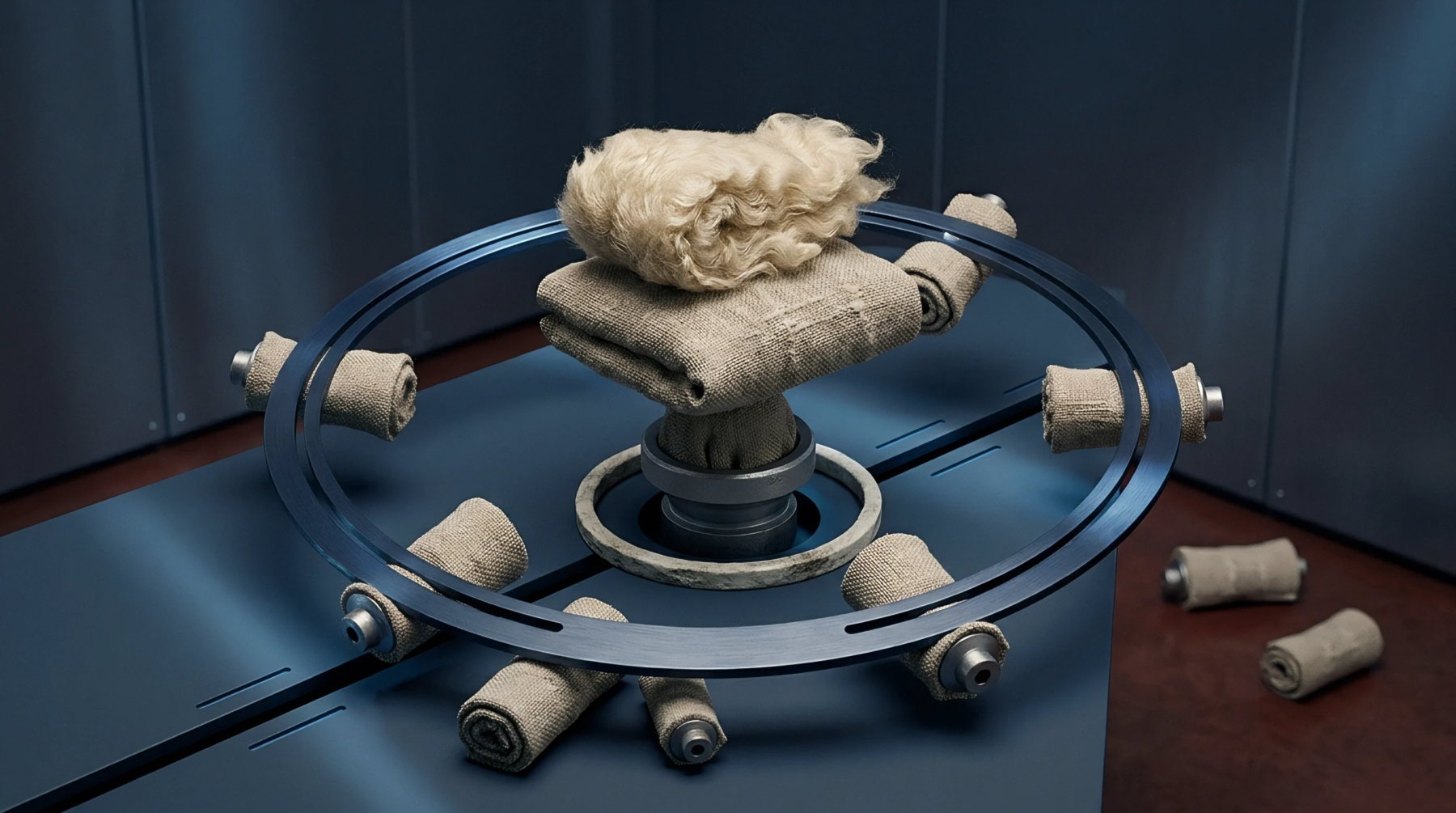
Dimensional change in fabrics occurs when laundering processes release the stresses locked into yarns during weaving or knitting. This reduction in size is called wash shrinkage and is measured as a percentage of the fabric’s original dimensions. The measurement is critical for determining how a garment will fit after repeated washing by the consumer.
Structural Relieving
Moisture and heat during laundering lubricate the fibers, allowing the yarn loops and crimps to relax and return to their low-energy states. Natural fibers like cotton and wool are highly susceptible to this effect due to their high swelling capacity when wet. Synthetic fibers, which are thermoplastic, require high temperatures to trigger similar structural relaxation.
Testing Standards
Laboratory testing follows international standards where fabric specimens are marked with reference points and laundered under controlled temperature and agitation. After drying, the distance between the markings is remeasured to calculate the dimensional change in both length and width directions. Brands use these test results to adjust garment patterns or to reject fabric batches that exceed the allowable shrinkage limits, protecting consumer satisfaction.
Garment Allowance
Pattern makers compensate for this behavior by adding extra fabric to the cutting patterns of garments made from high-shrinkage fabrics. Preshrinking the fabric during finishing also minimizes this effect before garment construction.