Yarn Disruption
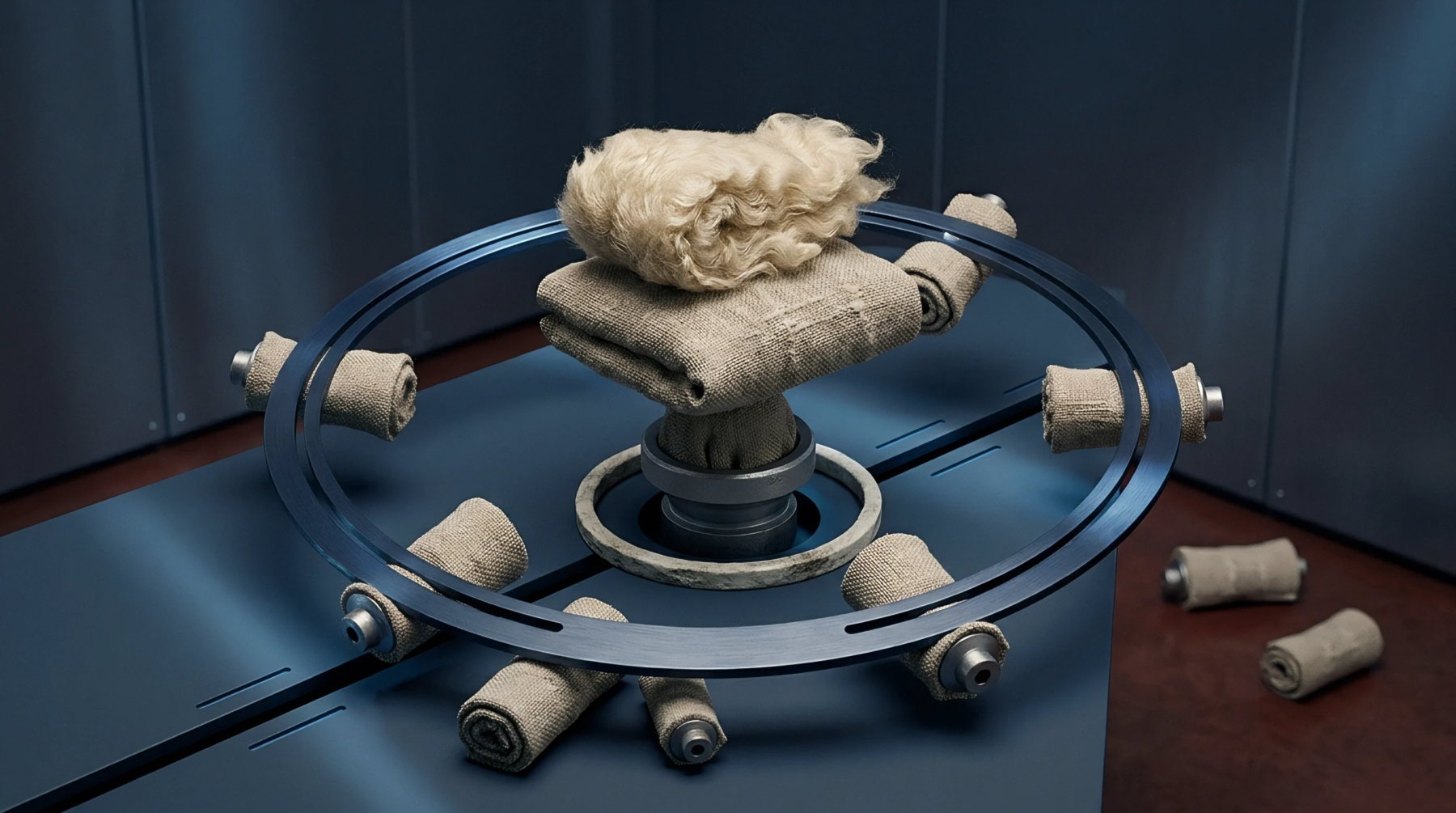
Structural displacement in composite spun yarns occurs when the outer protective fibers slide along the central filament. This mechanical failure is known as sheath-core slip and results in exposed core filaments or bunched clusters of staple fibers. The defect degrades yarn uniformity and causes failures during subsequent weaving or knitting.
Friction Mechanism
Insufficient friction between the core elastomeric filament and the surrounding cotton or wrap leads to this dislocation. During high-speed drawing or knitting, the yarn experiences sudden tensions that overcome the adhesive force between the two components. Once the sheath begins to slide, it accumulates in thick lumps, leaving bare core sections exposed.
Production Consequence
Downstream fabric production suffers from high defect rates when yarns with unstable core wrapping are used in the looms. Exposed core filaments can catch on machine parts, causing yarn breakages that halt knitting or weaving machinery and reduce efficiency. In finished elastomeric fabrics, this slip creates uneven stretch zones, pick-out defects, or irregular dye uptake because the sheath fibers and core filaments dye differently.
Prevention Strategy
Adjusting the core yarn tension and increasing the twist factor during ring spinning prevents this displacement. Applying a cohesive finish to the filament before wrapping also improves fiber adhesion.