Applying Standard Moisture Regain Values to Commercial Yarn Invoice Mass
Commercial yarn invoice mass derives from oven-dry weight adjusted by standardized commercial regain values rather than uncorrected physical scale mass.


Scale
Commercial yarn transactions settle on calculated mass rather than raw physical scale weight. Ambient atmospheric relative humidity shifts continuously between the spinning room floor, warehouse racks, container hulls, and ocean terminals. Hydrophilic polymers absorb atmospheric vapour during humid transit, while hydrophobic synthetics shed surface condensation under warm, dry stowage.
If an invoice followed scale mass taken at the arrival port, the transaction would price environmental humidity rather than processed polymer mass.
International commerce resolves ambient mass drift by enforcing commercial invoice weight calculations anchored to an oven-dry baseline. The standardized framework established under ISO 6741 and ASTM D2494 strips all unbound water from drawn yarn samples inside convection drying ovens, establishing an absolute bone-dry mass. Standard commercial moisture regain percentages, negotiated by trade bodies including the International Bureau for the Standardisation of Man-Made Fibres and the International Cotton Advisory Committee, are subsequently added to that dry core.
Under ISO 6741-1 testing, the calculated commercial mass equals the oven-dry desiccant weight multiplied by one plus the agreed commercial moisture regain divided by one hundred.
A persistent error in commercial management conflates moisture regain with moisture content. Moisture content expresses the mass of water as a fraction of the original moist material mass. Moisture regain expresses the mass of water as a percentage of the bone-dry fibre mass.
Converting between these expressions governs the pricing adjustment on every shipment document.
The standard commercial weight formula governs cross-border settlement:
Commercial Mass = Oven Dry Mass × (1 + (Commercial Regain / 100)) × (1 + (Commercial Allowance for Finish / 100))
Water drives invoice variance. Spinners packing yarn at nine percent moisture content when the commercial standard allows eight point five percent cotton regain generate half a percent of billed phantom weight across the lot. Uncorrected billing discrepancies erode gross margins across continuous container deliveries.
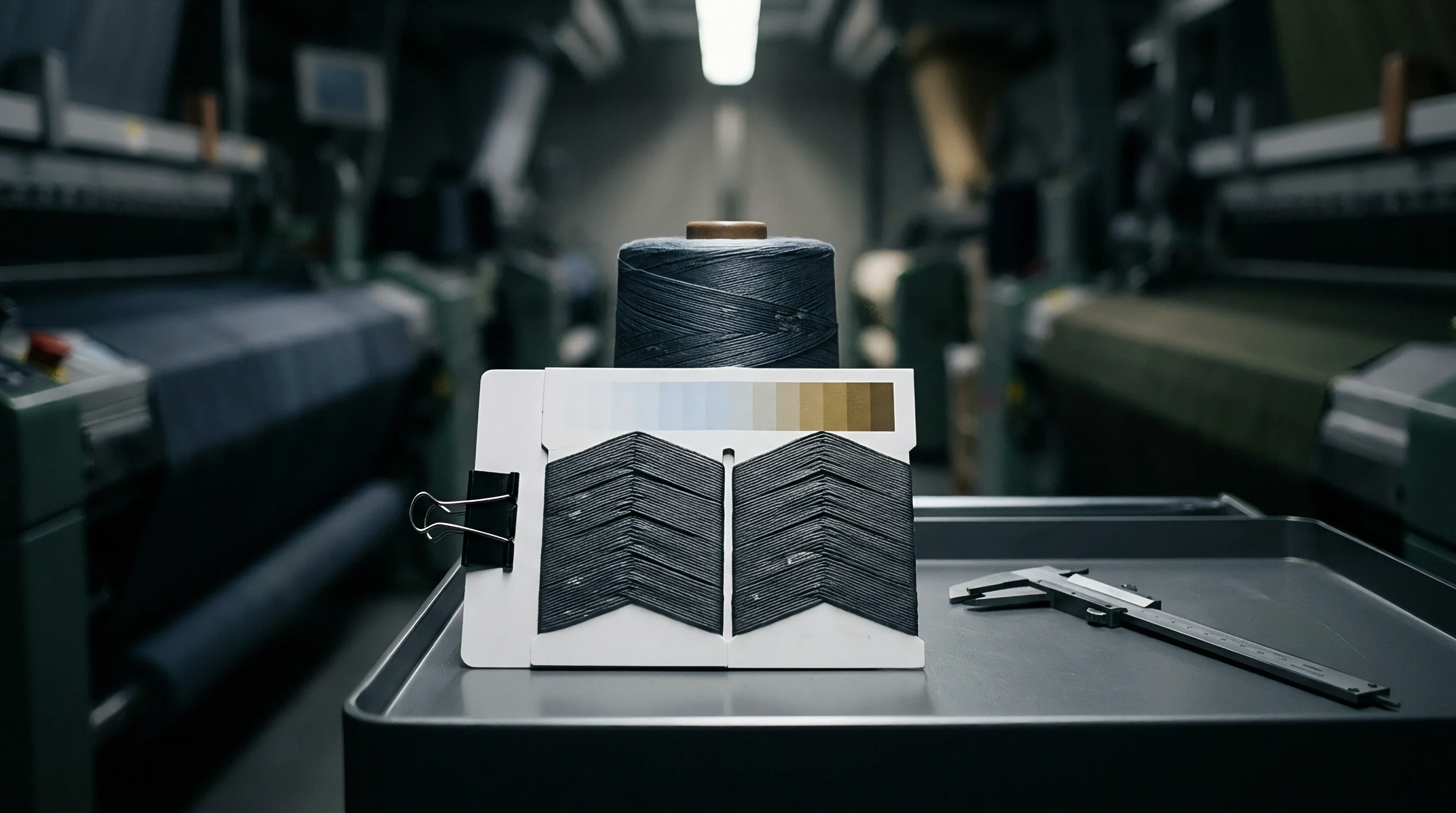
Vapour
Fibre polymers exhibit distinct affinities for ambient water vapour based on molecular structure and amorphous accessibility. Cellulosic fibres contain abundant polar hydroxyl groups that bond water molecules rapidly. Wool protein chains contain hydrophilic amino acid residues inside a complex amorphous cortex.
Polyester and polypropylene possess crystalline structures with minimal chemical affinity for water.
Commercial contracts specify standard regain values to normalize weight discrepancies across diverse supply chains. The table below outlines international trade values established across standard fibre categories under BISFA regulations, ASTM D1909, and international trading custom.
| Fibre Classification | Polymer Base | Commercial Regain Percentage | Standard Commercial Allowance | Testing Norm Reference |
|---|---|---|---|---|
| Raw Carded Cotton | Natural Cellulose | 8.50 | 0.00 | ASTM D1909 |
| Combed Cotton Yarn | Natural Cellulose | 8.50 | 0.00 | ISO 6741-2 |
| Viscose Rayon Staple | Regenerated Cellulose | 13.00 | 0.00 | BISFA Rules |
| Lyocell Staple | Solvent Spun Cellulose | 13.00 | 0.00 | BISFA Rules |
| Modal Staple | Modified Viscose | 13.00 | 0.00 | BISFA Rules |
| Polyester Filament | Polyethylene Terephthalate | 0.40 | 1.00 | ISO 6741-3 |
| Nylon 6 Spun | Polyamide | 6.25 | 0.00 | ASTM D1909 |
| Nylon 66 Spun | Polyamide | 4.50 | 0.00 | ASTM D1909 |
| Scoured Wool Tops | Animal Keratin | 18.25 | 0.00 | IWTO-33 |
| Acrylic Wet Spun | Polyacrylonitrile | 2.00 | 0.00 | BISFA Rules |
Determining commercial invoice mass across multi-fibre yarn blends requires weighted blend regain calculations. Spinners cannot apply a single broad percentage to intimate or drawn blend constructions. The composite standard regain derives from the dry proportion of each constituent component.
Consider a ring-spun intimate blend yarn specified as 60 percent combed cotton and 40 percent polyester by nominal weight. The dry mass split dictates the composite factor:
Composite Commercial Regain = (Dry Fraction Fibre A × Regain A) + (Dry Fraction Fibre B × Regain B)
Placing combed cotton at 8.5 percent and polyester at 0.4 percent yields an exact commercial regain calculation:
Composite Commercial Regain = (0.60 × 8.5) + (0.40 × 0.4) = 5.10 + 0.16 = 5.26 percent
A lot shipped with 20,000 kilograms of nominal packaged mass exhibiting an oven-dry sample mass of 18,800 kilograms yields a commercial corrected invoice mass of 19,788.88 kilograms. The invoice reconciles against 19,788.88 kilograms rather than the dispatch scale docket.
Blend components absorb water independently according to their respective chemical structures.
Spinning finishes introduce further calculation variables. Coning oils, antistatic preparations, and paraffin waxes applied during winding add non-polymer mass to the finished yarn package. ISO 6741-1 accounts for added process chemicals by providing distinct extraction protocols that isolate pure solvent-extracted dry fibre from spin-finish residues.
BISFA rules establish specific commercial allowances for finish that add directly into the invoice mass equation alongside regain.
Hydrophobic lots shed weight fast.

Chamber
Accurate commercial mass calculation depends on laboratory drying equipment. Technicians sample incoming yarn packages according to statistically stratified protocols specified under ISO 6741-1. The extraction takes cones from randomly selected master cartons across the shipping container.
Technicians strip yarn layers from the package surface to eliminate shipping skin contamination. Skeins wound on motorized wrap reels form test specimens weighing between 50 and 100 grams. Skeins hang inside the drying chamber at 105 degrees Celsius with forced ventilation until successive weighings spaced fifteen minutes apart show less than 0.05 percent variation.
The resulting balance readout gives the true bone-dry mass.
The qualification sequence enforces strict handling procedures:
- Carton Stratification guarantees specimen representation across top, middle, and bottom stowage tiers inside the container. Outer boxes absorb atmospheric condensation first during transit.
- Package Stripping removes the top 200 metres of exposed package yarn before laboratory skein winding. Outer yarn windings reflect warehouse relative humidity rather than the bulk cone body.
- Oven Desiccation runs at 105 degrees Celsius under constant air velocity until balance readouts achieve complete thermal equilibrium. Operators monitor scales directly through top chamber access ports.
- Anhydrous Weighing captures bone-dry weight inside the hot chamber without intermediate desiccator cooling. Ambient air transfer reintroduces immediate ambient moisture gain.
Drying wool requires lower chamber temperatures. Wool protein structures decompose chemically under prolonged exposure to 105 degrees Celsius, releasing volatile sulfurous compounds that mimic moisture loss. IWTO test regulations mandate 100 degrees Celsius desiccation for scoured wool to prevent thermal keratin degradation.
The sample size controls verification integrity. Drawing five packages across a twenty-tonne shipment yields insufficient statistical resolution to defend an invoice dispute. Industrial quality protocols require testing twenty packages per batch to hold standard errors below 0.2 percent.
Mills often explain mass discrepancies by claiming ambient marine air expanded packages during ocean voyages.

Spread
Disputes in commercial settlements emerge when scale weights diverge from dry-calculated weights beyond standard contractual thresholds. Yarn contracts stipulate specific tolerance bands inside purchase orders to avoid constant administrative accounting revisions. The standard commercial tolerance across international ring-spun yarn trading stands at plus or minus one percent of invoiced mass.
Variance originates from several operational sources:
- Packaging Tare Weights fluctuate across wooden pallets, plastic cones, carton liners, and strapping tape. Net yarn weight verification fails if tare estimations use nominal averages rather than verified tare tare-offs.
- Spin Finish Volatilization occurs inside high-temperature drying chambers when low-boiling lubricant oils evaporate alongside unbound water. Laboratories failing to run solvent extraction erroneously register lost spin finish as water loss.
- Atmospheric Hysteresis traps differing water volumes within identical cellulosic polymers depending on whether equilibrium was reached by desorption or absorption. Cotton drying down retains more moisture than cotton wetting up at matching ambient conditions.
The financial impact of moisture miscalculation escalates rapidly across high-volume procurement programs. The scenario model below details the monetary exposure generated by moisture drift across a 50-tonne combed cotton delivery priced at 3.80 US dollars per kilogram.
| Parameter Stage | Case Alpha: Packed Dry | Case Beta: Target Regain | Case Gamma: Saturated Shipment |
|---|---|---|---|
| Gross Physical Scale Mass | 48,500 kg | 50,000 kg | 51,200 kg |
| Tested Bone-Dry Core Mass | 46,083 kg | 46,083 kg | 46,083 kg |
| Contract Regain Percentage | 8.50 % | 8.50 % | 8.50 % |
| Calculated Invoice Mass | 50,000 kg | 50,000 kg | 50,000 kg |
| Uncorrected Billing Exposure | -5,700 USD | 0 USD | +4,560 USD |
Over-conditioned shipments penalize careless buyers. Cones wound hot off autoclaves retain water droplets deep within inner layers. Weighing containers at maritime ports without certified oven-dry correction forces mills to bill water at prevailing yarn rates.
A container weighing 51,200 kilograms invoiced on scale mass charges the purchaser for 1,200 kilograms of surplus ambient water. At 3.80 US dollars per kilogram, that shipment carries 4,560 US dollars in unearned margin. Core testing prevents that loss.
A contract clause specifying ASTM D2494 as the sole mass settlement mechanism eliminates physical scale weight arguments.
The industry continues to dispute whether container condensation during equatorial voyages alters polymer core weights permanently or merely redistributes unbound moisture between packaged cones.

Credit
Reconciling yarn deliveries against standard moisture regain requires structured accounting adjustments. Procurement desks implement credit memos or balance debits following accredited laboratory test certificates. When calculated commercial mass falls below the vendor invoice mass by more than the agreed tolerance window, finance teams issue debit notes against outstanding letters of credit.
The settlement audit demands complete paper trails:
- Certified Weighbridge Slips establish gross container mass and vehicle tare mass at the dock receipt terminal prior to unsealing container doors.
- Independent Sampling Affidavits record package draw sequences, seal codes, ambient dock temperatures, and relative humidity figures at container de-stuffing.
- Accredited Test Dossiers document ISO 6741-2 bone-dry oven readings, package count, sample tare deductions, and calculated regain values.
- Blend Ratio Certificates provide quantitative chemical separation percentages under ISO 1833 for blended lots to confirm the composite commercial regain multiplier.
The accounting department calculates the net credit value using contract unit prices:
Credit Adjustment Amount = (Billed Invoice Weight – Audited Commercial Mass) × Contract Price Per Kilogram
When tests return a commercial mass exceeding invoiced mass by more than the agreed tolerance, standard contract terms prohibit suppliers from issuing retroactive supplementary invoices. Mills bear the cost of under-invoicing resulting from uncalibrated dispatch scales or over-drying during package winding.
Contracts omitting standardized commercial weight reconciliation clauses default to gross scale weights, transferring all humidity risk and financial loss directly to the purchasing entity.