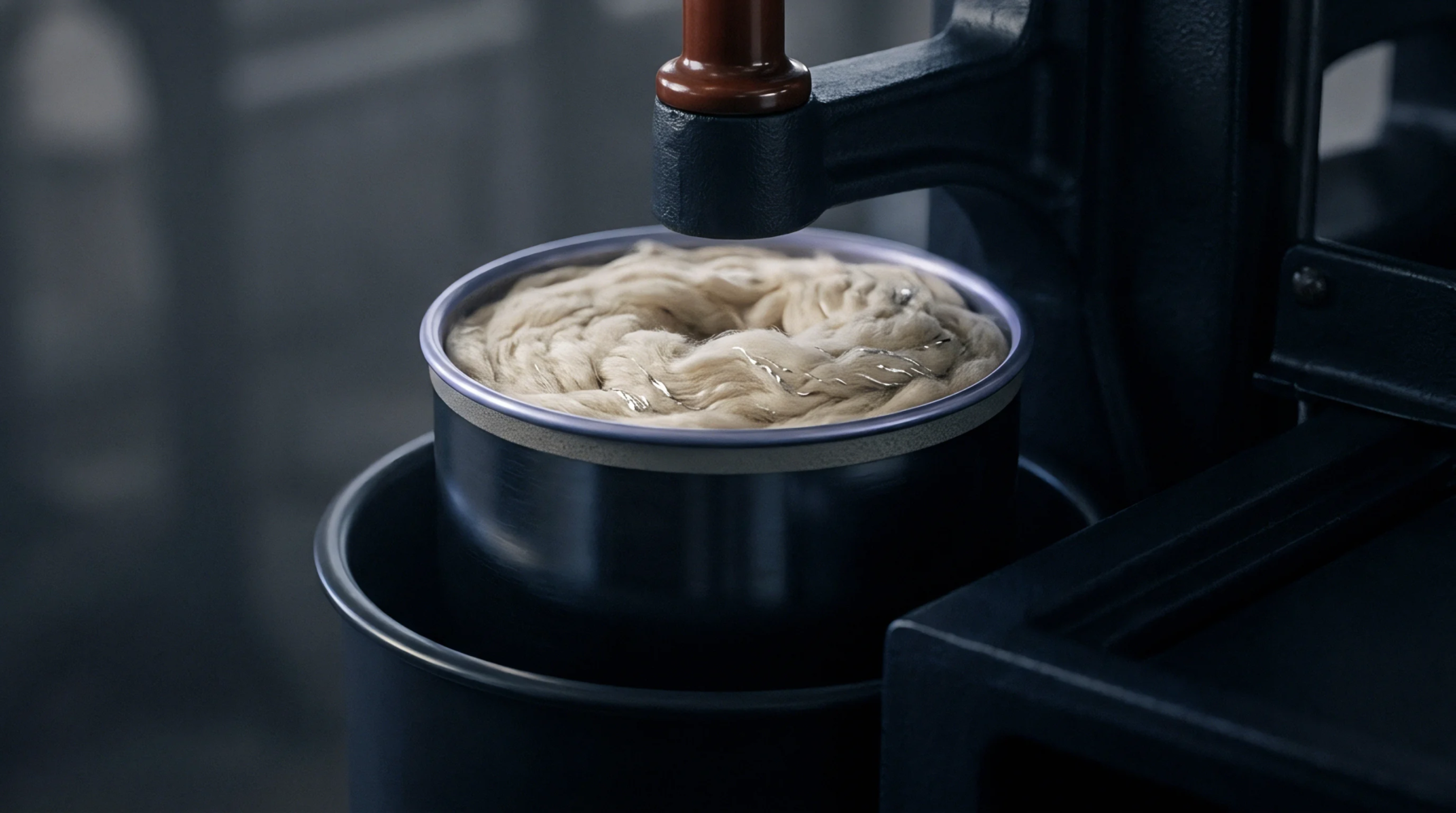
Moisture Assessment
Laboratory testing methods determine the commercial mass of textile fiber shipments by accounting for water content and extracted finishes. The standard known as astm d2494 defines the required oven-drying techniques to eliminate moisture before weighing. This process operates at a specified temperature until the sample reaches a constant mass.
Technicians draw representative samples from bulk packages, weigh them immediately to capture the original moisture state, and then place them in the drying oven. This multi-step sequence isolates the dry fiber weight from environmental factors.
Calculated Allowance
Standard moisture regain values are added back to the bone-dry weight to establish the invoice baseline. Under the rules of astm d2494, distinct moisture allowances are applied to different fiber types. These calculations stabilize invoice mass across varying shipping climates.
Drying Protocol
Forced-draft ovens operated at specific temperature ranges represent the central apparatus used in these measurements. The oven drying procedure within astm d2494 demands that the specimens remain in the heated chamber until successive weighings show negligible difference. This phase requires precise timing to avoid fiber degradation from overexposure.
Commercial Weight
Financial settlements for large fiber transactions rely on these laboratory results to adjust raw weights. The final calculated mass derived from astm d2494 replaces the gross shipped weight on the commercial invoice. This value establishes the official quantity for payment.
Accurate commercial mass prevents overpayment for excess water.