Seam Slippage Calibration in ASTM D4034 Testing
ASTM D4034 calibration requires verifying ASTM E4 load cells, 305 mm/min crosshead speeds, pneumatic jaw parallelity, 7 spi sewing, and 6.35 mm curve offset.
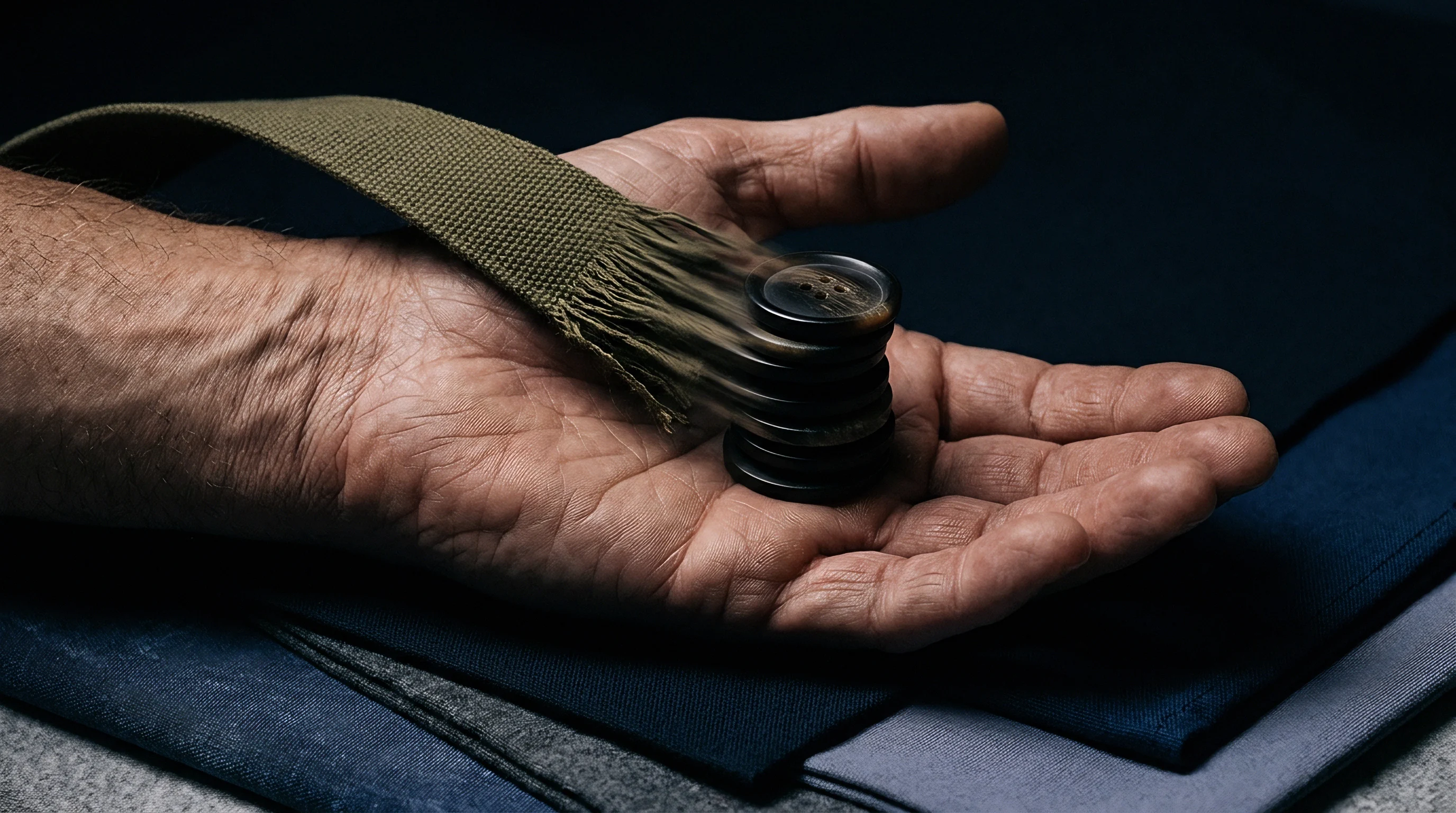

Grip
Tensile testing frames record distorted seam opening values whenever mechanical clamping systems lack verified jaw face parallelity or pneumatic pressure stabilization. ASTM D4034 assesses the force required to produce a 6.35 mm (0.25 in) seam opening in woven upholstery textiles under a constant rate of extension set at 305 mm per minute (12 inches per minute). An uncalibrated load sensor or uneven clamping pressure shifts the recorded displacement curve, transforming an acceptable commercial weave into a rejected lot.
Clamping mechanics dictate test reliability. The standard specifies modified grab test jaws with a front jaw face measuring 25 by 25 mm (1 by 1 in) and a rear jaw face measuring at least 25 by 50 mm (1 by 2 in), mounted with the longer dimension perpendicular to the direction of application of the load. Rubber-coated, serrated, or smooth steel faces alter specimen retention based on yarn composition and resin finishes.
A load cell verification error exceeding one percent across the ten to fifty pound force working band invalidates every ASTM D4034 test certificate generated on that frame.
Laboratories verify tensile test frames in accordance with ASTM E4 practices. Static calibration weights verify the load cell across its operational range, while digital displacement encoders confirm crosshead travel speed within a tolerance of plus or minus two percent. Jaw face alignment requires routine inspection with pressure-sensitive film to detect asymmetric contact points that induce yarn shearing prior to true seam opening.
| Apparatus Component | Calibration Standard | Operational Target | Permissible Tolerance | Verification Frequency |
|---|---|---|---|---|
| Load Cell Assembly | ASTM E4 | 10 lbf to 100 lbf Range | Plus or minus 1.0% indicated load | Annual or post-overload |
| Crosshead Velocity | ASTM D76 | 305 mm/min (12 in/min) | Plus or minus 2.0% travel speed | Quarterly verification |
| Pneumatic Jaw Clamps | In-House Gauge | 60 psi to 80 psi Line Pressure | Plus or minus 2.5 psi line pressure | Monthly check |
| Front Jaw Dimension | Direct Micrometer | 25.4 mm by 25.4 mm | Plus or minus 0.5 mm plane squareness | Semi-annual check |
| Rear Jaw Dimension | Direct Micrometer | 25.4 mm by 50.8 mm | Plus or minus 0.5 mm plane squareness | Semi-annual check |
Specimen slippage within the clamps invalidates the test. When testing high-performance polyester or nylon upholstery with slick filament yarns, technicians apply pneumatic jaw pressures between 60 and 80 psi to eliminate jaw slip without crushing yarns at the clamping perimeter.
- Load verification confirms force reading precision across the lower fifth of cell capacity where upholstery seam displacement initiates.
- Crosshead timing evaluates linear displacement against a calibrated external dial indicator over a sixty-second run.
- Jaw parallelism checks uniform contact pressure across the entire twenty-five millimeter gripping surface using pressure-transfer paper.
- Pneumatic regulator calibration ensures consistent air pressure delivery to prevent specimen slippage during peak load application.
Section 6.2 of the ASTM test method specifies that any jaw slippage exceeding 0.8 mm renders the individual test specimen invalid and requires retesting on fresh material.
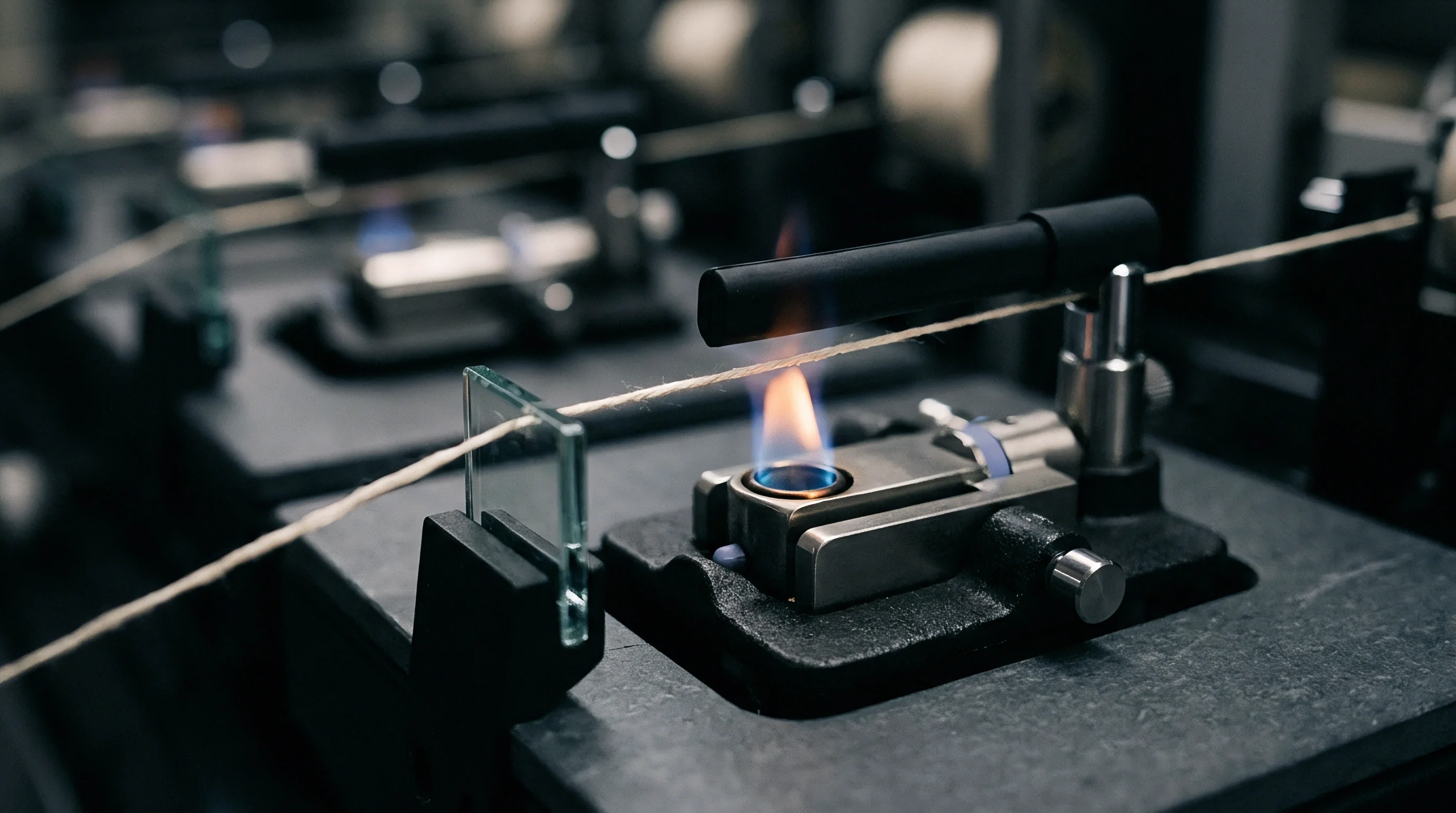

Stitch
Sewing preparation introduces significant operational variance into yarn separation data. ASTM D4034 demands rigorous standardization of sewing threads, needle geometries, stitch densities, and seam allowances before any tensile test occurs. A slight alteration in sewing machine thread tension produces artificial tightness or premature yarn displacement along the seam line.
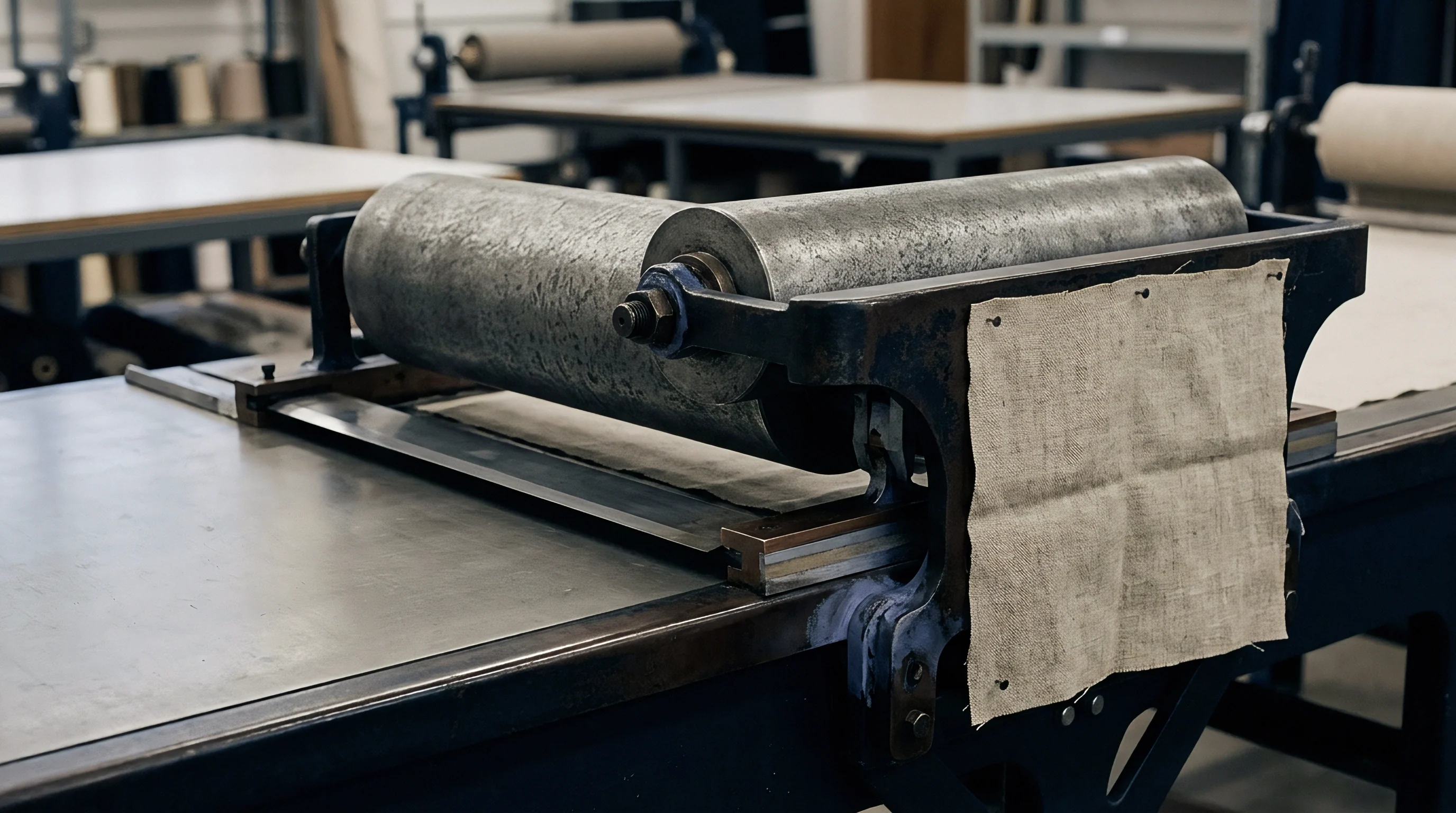
Why Do Needle Heat and Thread Tension Skew Seam Results?
High-speed sewing needles generate frictional thermal energy exceeding two hundred degrees Celsius in synthetic structures. This localized heat weakens synthetic filament yarns adjacent to needle perforations, degrading warp or weft stability before tensile mounting. Standard sewing machines operating at reduced speeds of twelve hundred to fifteen hundred stitches per minute prevent yarn melting and maintain base textile integrity.
Needle specifications dictate hole geometry in the woven matrix. ASTM D4034 specifies a heavy-duty industrial sewing needle, specifically a size 22 (metric 140) with a light ball or regular round point. Thread tension must remain balanced: upper needle thread and lower bobbin thread must interlock exactly in the center of the sewn seam assembly without puckering the textile layers.
Needle deflection during automated specimen assembly produces uneven stitch distribution that drops peak seam resistance.
Stitch density calibration requires optical measurement. The standard fixes seam construction at seven stitches per inch (2.76 stitches per centimeter) using a bonded nylon or bonded polyester continuous filament thread meeting Tex size 70 to 90. Technicians use a calibrated optical loupe to verify exactly seven needle penetrations per 25.4 mm along the cut edge.
- Needle dimension check eliminates oversized punctures that permit yarn dislocation at low applied forces.
- Stitch counter verification maintains uniform load sharing among consecutive thread loops across the specimen width.
- Seam margin control guarantees an exact thirteen-millimeter distance from the sewing line to the raw textile edge.
- Thread tension calibration utilizes a mechanical gram-tension meter to set consistent needle and bobbin thread release forces.
A supplier who cuts seam allowances down to eight millimeters routinely claims that industrial upholstery margins naturally carry less sewing tolerance.

Offset
Seam opening determination depends upon an algebraic subtraction procedure between two distinct force-elongation curves. ASTM D4034 does not measure seam failure by textile rupture; it isolates the precise tensile load causing a 6.35 mm (one-quarter inch) opening across the seam line. The test protocol compares the force-extension curve of an unsewn specimen against that of a sewn specimen cut from the identical yarn direction.
Curve overlay requires precision. Modern testing software records force and crosshead displacement continuously at data acquisition frequencies of one hundred Hertz or greater. The unsewn specimen curve tracks base cloth elongation under pure tension.
The sewn specimen curve tracks the combined elongation of the cloth, the sewing thread deformation, and the physical slippage of yarns away from the needle line.
ASTM D4034 section 11 mandates compensation for raw textile elongation, penalizing laboratories that log direct crosshead travel as seam opening.
Manual chart recorders utilize a mechanical divider to establish the 6.35 mm compensation line. Technicians measure the horizontal distance between the unsewn curve and the sewn curve parallel to the displacement axis. The intersection where the sewn curve separates from the unsewn curve by exactly 6.35 mm indicates the reported slippage resistance force.
| Tensile Applied Load | Unsewn Specimen Extension | Sewn Assembly Extension | Net Seam Opening Value | Test Status at Target (6.35 mm) |
|---|---|---|---|---|
| 10 lbf (44.5 N) | 1.2 mm | 3.8 mm | 2.6 mm | Sub-threshold displacement |
| 20 lbf (89.0 N) | 2.5 mm | 6.9 mm | 4.4 mm | Sub-threshold displacement |
| 30 lbf (133.4 N) | 4.1 mm | 10.5 mm | 6.4 mm | Calibrated seam opening reached |
| 40 lbf (177.9 N) | 6.0 mm | 14.2 mm | 8.2 mm | Slippage threshold exceeded |
| 50 lbf (222.4 N) | 8.3 mm | 18.9 mm | 10.6 mm | Textile yield or yarn rupture |
| Data derived under ASTM D4034 standard atmospheric conditions of 21 plus or minus 1 degree Celsius and 65 plus or minus 2 percent relative humidity. | ||||
Digital curve analysis eliminates human drafting errors. When testing laboratory software performs curve subtraction, baseline zero-load points must align perfectly. If pre-tension settings differ between the unsewn and sewn runs by even 0.1 lbf, the resulting displacement calculations shift by up to two millimeters, distorting the final compliance rating.
Software algorithms sometimes struggle to identify the exact inflection coordinate when tested textiles exhibit non-linear viscoelastic relaxation during initial loading cycles.
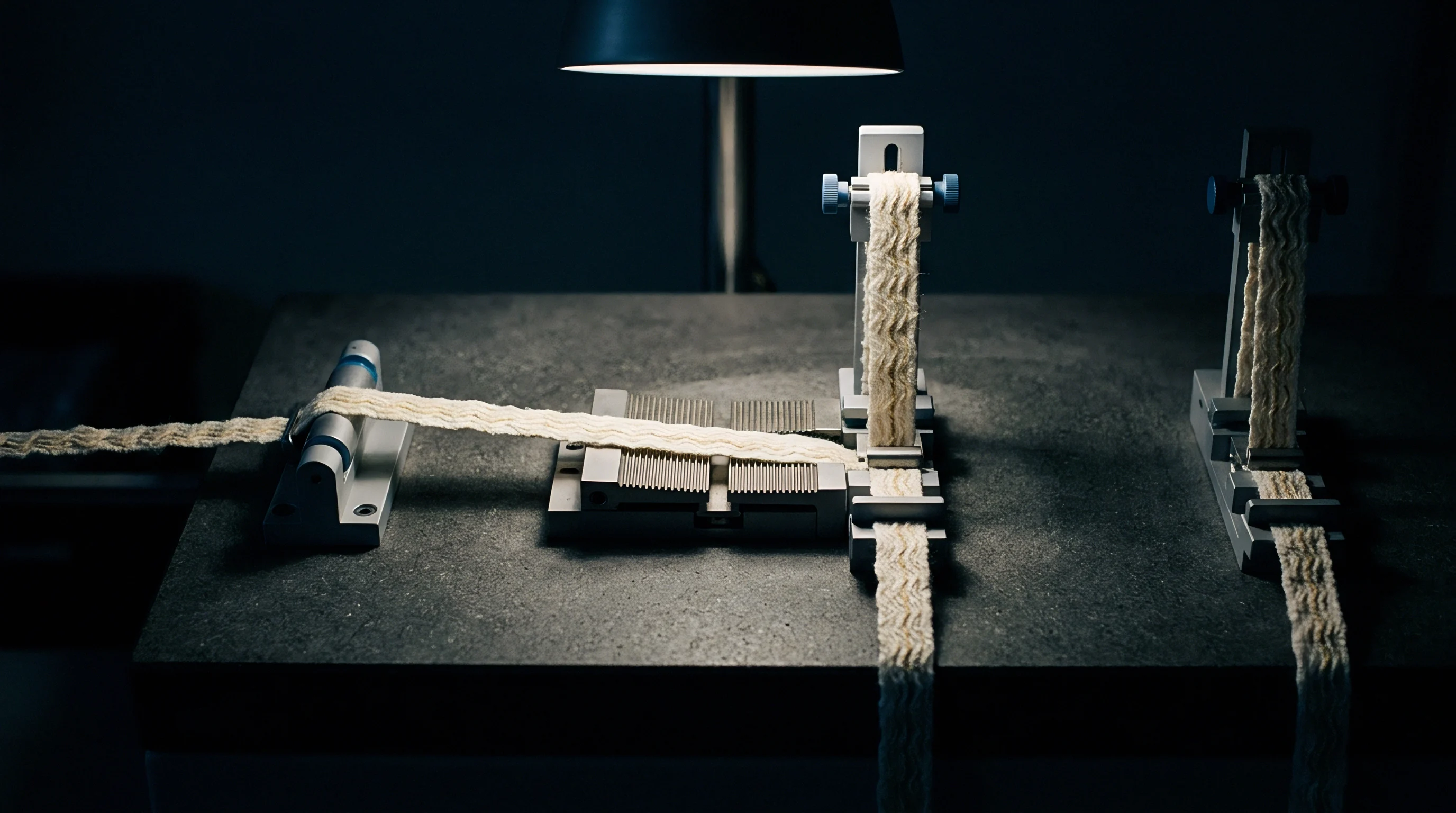
Variance
Inter-laboratory discrepancy in ASTM D4034 testing originates primarily from specimen preparation and backing integrity. Woven upholstery materials incorporate diverse yarn structures, including chenille, bouclé, textured filaments, and high-twist flat yarns. Without proper sample conditioning under standard textile atmosphere (21 plus or minus 1 degree Celsius, 65 plus or minus 2 percent relative humidity), natural fibers change elasticity, skewing the unsewn baseline curve.
Will Back-Coating Penetration Alter Yarn Slippage Values?
Back-coatings lock structural yarns into position. Acrylic latex, polyurethane, or flame-retardant salt compounds applied to the reverse side of upholstery weaves prevent warp and weft yarns from sliding under lateral stress. Incomplete resin polymerization or uneven coating dry-weight across the roll width creates catastrophic testing variance.
Washing and dry-cleaning cycles degrade secondary coatings. When upholstery undergoes commercial cleaning qualification, resin breakdown permits rapid yarn displacement. An uncalibrated test protocol that records passing values on freshly finished rolls may mask severe batch instability that manifests after delivery.
- Coating weight variation produces wide shifts in yarn fixation across different sections of a single dye lot.
- Specimen skewing during jaw clamping introduces diagonal shear stresses that cause premature single-yarn pullout.
- Humidity fluctuations change hydrophilic fiber friction coefficients, altering yarn-on-yarn traction inside the weave.
- Needle burrs slice micro-filaments during sample sewing, dropping the apparent force needed to cause a quarter-inch opening.
Failure to standardize stitch tension and jaw displacement results in expensive commercial product recalls when finished furniture seams separate under ordinary residential loading.
Settlement
Commercial furniture contracts and upholstery specifications rely directly on ASTM D4034 passing thresholds to assign commercial liability. The Association for Contract Textiles (ACT) defines minimum performance standards for commercial upholstery applications. Woven materials intended for low-traffic commercial installations require a minimum seam slippage resistance of 25 lbf (111 N), while high-traffic heavy-duty upholstery demands at least 40 lbf (178 N) in both warp and weft yarn directions.
Disputes emerge when buyer laboratories and mill laboratories report conflicting values around these regulatory cutoffs. A test reading of 24.5 lbf on a 25.0 lbf specification triggers shipment rejections, cancelled letters of credit, and downstream chargebacks from furniture manufacturers.
| Application Grade | Minimum Slippage Force | Critical Failure Mode | Re-Test Threshold Band | Commercial Exposure Risk |
|---|---|---|---|---|
| Residential General | 20 lbf (89 N) | Yarn separation at cushion seam | 18.5 to 21.5 lbf | Consumer warranty return |
| Contract Light Duty | 25 lbf (111 N) | Gapping along tufting lines | 23.5 to 26.5 lbf | Batch rejection at cut-and-sew |
| Contract Heavy Duty | 40 lbf (178 N) | Total structural seam opening | 38.0 to 42.0 lbf | Commercial contract cancellation |
| Transportation Seating | 50 lbf (222 N) | Yarn pullout under cyclic shear | 47.5 to 52.5 lbf | Safety compliance default |
Precision calibration protocols protect both converter and purchaser. When mills maintain documented ASTM E4 load cell logs, digital crosshead verification records, and sewing machine tension calibration receipts, commercial arguments dissolve into verifiable mechanical data.
Heavier yarn counts demand firmer backing adhesion before seam strength matches tensile ratings.
Purchase orders linking acceptance criteria directly to calibrated ASTM D4034 test reports eliminate the ambiguity of subjective visual seam inspections at receiving docks. Tight weave structures with balanced yarn counts naturally distribute mechanical loads more evenly across sewing lines.