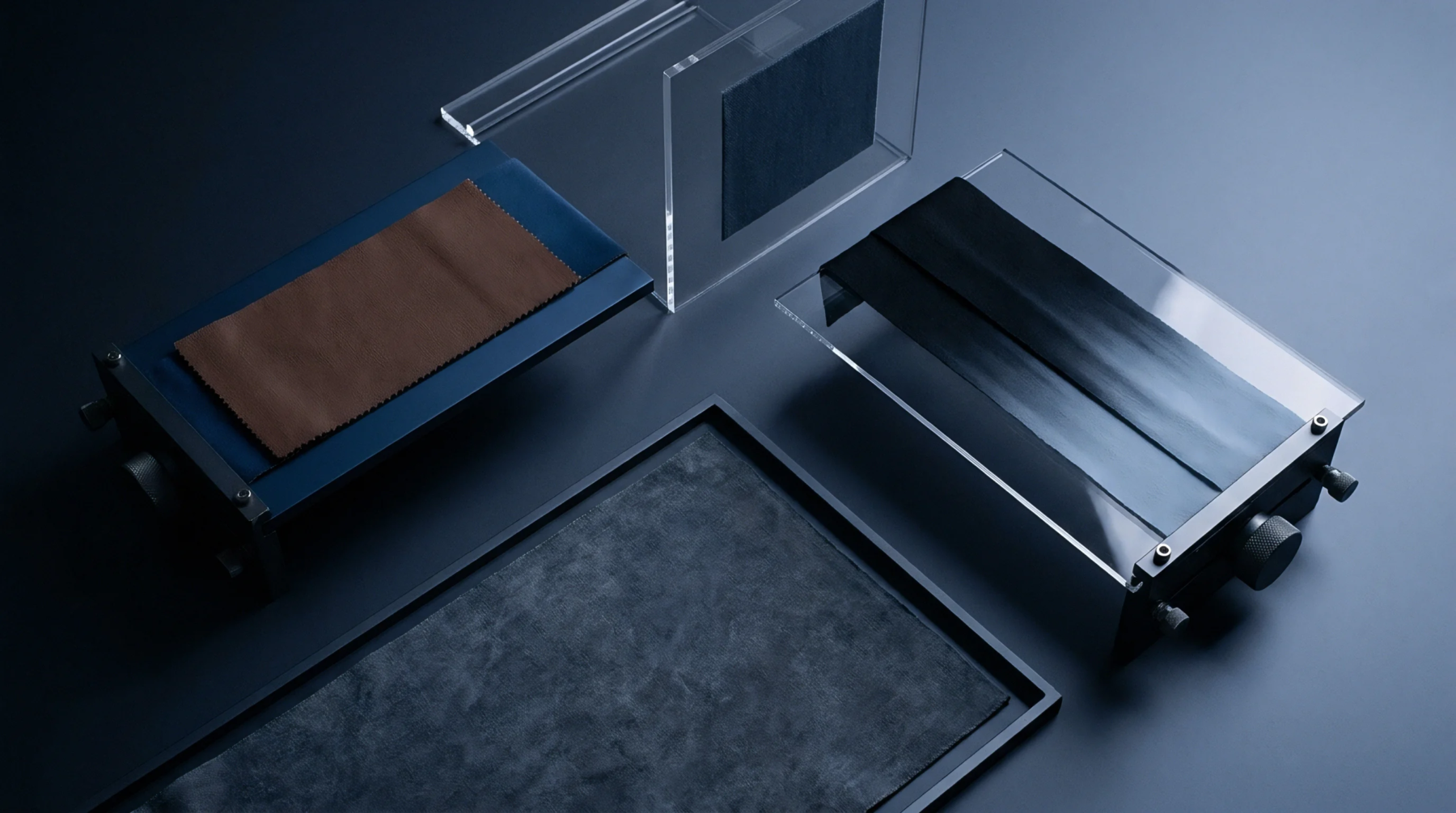
Resistance Measurement
Yarn slippage in woven fabrics describes the displacement of threads from their original position when subjected to specific tension loads. Astm d4034 governs the laboratory assessment of this physical property by measuring the force required to create a designated opening between adjacent yarns. This protocol provides a quantitative baseline for evaluating the structural integrity of fabric constructions during standard use.
Performance Expectation
Finished goods rely on this metric to predict how seams will perform under mechanical stress. When the test shows low resistance to slippage, garments likely suffer from premature seam failure or thread pull at points of high movement. Manufacturers verify these results against durability targets established for specific end uses like upholstery or heavy apparel.
Testing Mechanism
Technicians secure a rectangular specimen into a holding frame to isolate the zone of interest. A jaw mechanism applies a constant rate of extension to the fabric while sensors record the load at the precise moment a measured gap appears between the threads. Results represent the internal friction of the yarns and the density of the weave structure.
Boundary Condition
Factors such as fabric count, yarn twist and finish type shift the outcome of these trials significantly. High density weaves with textured yarns generally exhibit superior resistance due to increased mechanical interlocking. Environmental conditions like temperature and humidity occasionally alter the friction of synthetic fibres, so maintaining a controlled testing atmosphere ensures the consistency of the reported values.