Hydrodynamic Shear Controls and Dyebath Exhaustion Rates in Jet Dyeing
Hydrodynamic shear controls dyebath exhaustion by thinning the liquid boundary layer; excess velocity damages yarns, mandating precise pressure-flow balancing.

Boundary
Hydrodynamic Shear Gradients in Venturi Jets
In high-temperature piece dyeing of synthetic and blended substrates, the Venturi nozzle operates as the primary engine for both liquor circulation and kinetic energy transfer. Liquor moves through the annular gap of the nozzle at velocities between 2.0 and 8.0 metres per second, generating localized boundary layers where hydrodynamic shear rates regularly exceed 15,000 reciprocal seconds. These intense physical forces strip the stagnant hydrodynamic boundary layer away from the textile perimeter.
The boundary layer thickness, denoted as delta, governs the diffusion distance dye molecules traverse through bulk liquor to reach the individual fiber wall.
Reducing boundary layer thickness elevates the mass transfer coefficient across the liquor-fiber interface. Dyer operational logs confirm that bath kinetic energy accelerates initial surface contact. Dye exhaustion rate equations show that boundary layer stripping becomes the governing rate-limiting step during the rapid heating phases of dye cycles, overriding internal polymer diffusion when liquor velocity drops below 1.5 metres per second.
Under turbulent boundary shear conditions at 130 degrees Celsius, reducing liquor boundary layer thickness from 45 micrometres down to 6 micrometres increases the external mass transfer rate by a factor of seven.
Direct exposure of delicate knit goods to excessive shear induces structural distortion, fiber cleavage, and localized surface erosion. Jet dyeing systems enforce a balance between kinetic mass transfer and the physical integrity of the rope. When nozzle cross-sectional diameters shrink to maximize liquor velocity, the resultant fluid shear can degrade loose filament structures, resulting in unwanted pilling, rope marks, and irreversible fabric fuzzing.
Fluid Velocity Profiles across Nozzle Assemblies
The geometry of the nozzle throat fixes the kinetic energy conversion from the main circulation pump. As pressurized dye liquor exits the annular orifice into the transport tube, static pressure converts into kinetic velocity according to Bernoulli principles adjusted for frictional pipe losses. The maximum shear stress occurs precisely at the annular throat boundaries, while the rope core experiences comparatively lower shear forces.
The differential across this radial velocity profile creates mechanical friction between exterior and interior filaments within the drawn rope. Exterior filament strands track with high-velocity liquor streams, whereas inner rope cores lag behind. Dye uptake rates consequently display radial variations across thick fabric ropes if the turnover cycle fails to rearrange the bundle before entering the next constriction cycle.
Balancing nozzle backpressure against reel speed limits fiber scuffing. Modern short-liquor machines balance circulating pump pressure between 0.35 bar and 1.20 bar. Raising pump discharge beyond 1.50 bar produces excessive velocity differentials across the nozzle throat, rupturing filament skins on textured polyester without yielding measurable gains in exhaustion rates.
Transport

Interfacial Mass Transfer across Stagnant Boundary Layers
Mass transport of dissolved dyes from the turbulent bulk liquor to the static fiber interface occurs through three sequential physical mechanisms: bulk convection, boundary layer diffusion, and polymer pore sorption. Bulk convective transport remains rapid in circulating jet vessels with liquor turnover frequencies above 1.5 cycles per minute. In contrast, diffusion through the stagnant boundary layer represents a persistent kinetic barrier.
The Reynolds number within the transport tube governs the hydrodynamic profile of this stagnant layer. High Reynolds numbers indicate turbulent flow regimes that depress laminar sublayer dimensions. Film theory predicts that the external dye flux is proportional to the concentration gradient across this film divided by its instantaneous physical thickness.
The operational consequence lands when fluid velocity falls: dye molecules exhaust solely onto exposed peripheral surfaces, generating unlevel ring dyeing across yarn cross-sections before internal polymer diffusion can occur.
High circulation pump frequency guarantees continuous replacement of exhausted boundary liquor with fresh dye-laden bulk liquor. This continuous replenishment prevents localized bath depletion around outer bundle perimeters, evening out the chemical potential across the entire batch.
| Nozzle Velocity (m/s) | Calculated Reynolds Number | Boundary Layer Thickness (μm) | External Mass Transfer Coefficient (m/s × 10&sup5;) | Observed PES Exhaustion Rate (%/min at 110°C) |
|---|---|---|---|---|
| 1.2 | 4,200 | 48.2 | 1.12 | 0.85 |
| 2.5 | 8,900 | 22.4 | 2.45 | 1.72 |
| 4.0 | 14,500 | 11.8 | 4.80 | 2.95 |
| 6.2 | 22,800 | 5.9 | 8.65 | 3.40 |
| 7.8 | 28,400 | 4.1 | 11.20 | 3.55 |
Data from controlled trials indicate that exhaustion rates plateau beyond a liquor velocity of 6.0 metres per second. At this velocity threshold, boundary layer resistance drops below fiber core diffusion resistance. Driving the pump past this point burns electrical power without expanding dyebath strike rates.
Rope Cycle Frequency and Liquor Exchange Rates
Uniform shade reproduction requires consistent liquor-to-goods contact cycles. Cycle time represents the exact duration in seconds for a continuous loop of fabric to complete one full pass through the jet nozzle and collection chamber. Standard commercial cycles target between 45 and 120 seconds per pass depending on fabric construction.
Rope cycle time must correlate with dyeing kinetics. When dye exhaust rates reach 2.0 percent exhaustion per minute during peak migration windows, an extended cycle time of 150 seconds produces visible shade variances across the piece. Fabric sections passing the nozzle encounter differing bath concentrations, generating tailing or side-to-center shading.
Pumping dynamics determine bath turnover intervals. A 300-kilogram machine carrying a 1:6 liquor ratio contains 1,800 litres of dye bath. A circulation pump operating at 1,200 litres per minute completely cycles the machine liquor volume in 90 seconds.
Rope transit times synchronized with liquor turnover frequency prevent shade banding.
Skipping this hydrodynamic synchronization generates unlevelness that requires chemical stripping and re-dyeing, doubling processing utility consumption and damaging yarn tensile strength.

Kinetics
Dyebath Exhaustion Modeling under Dynamic Flow
Mathematical modeling of dyebath exhaustion in jet dyeing systems links physical fluid mechanics with chemical thermodynamics. The classical Cegarra-Puente equation describes the kinetics of dye sorption onto synthetic substrates, integrating temperature-dependent diffusion coefficients with time-dependent bath concentrations. Under dynamic flow conditions, this formulation requires adaptation to account for fluid shear stress.
Dynamic shear enhances the apparent diffusion coefficient by depressing the interfacial activation energy barrier. As liquor rushes past yarn bundles, shear stresses distort the physical bundle geometry, briefly opening inter-filament spaces and expanding fluid penetration into yarn centers. The effect manifests as an accelerated dyeing rate constant during early temperature ramping phases.
Thermal ramping must match dynamic exhaustion characteristics. Ramping a polyester dye cycle at 2.5 degrees Celsius per minute while running high pump pressures accelerates dye uptake past the critical strike rate. An unlevel strike forces prolonged high-temperature holding times to allow migration, wasting thermal energy and boiler capacity.
A processing lot running a cycle frequency of two passes per minute maintains exhaustion unlevelness below one Delta E unit across the entire batch length.
Mills often run reactive dyeing of cellulosics at lower shear rates to prevent fiber linting. In reactive dyeing, salt concentrations alter the zeta potential of the cellulose surface, while mechanical fluid motion transports hydrolyzed and reactive dye molecules to the fiber wall. Jet shear forces facilitate salt distribution, avoiding localized electrolyte spikes that cause premature dye precipitation.
Temperature-Dependent Diffusion and Sorption Curves
Synthetic fibers such as polyamides and polyesters undergo glass transition events that rapidly alter dye uptake behavior. Disperse dye sorption on polyester increases sharply above 85 degrees Celsius, reaching maximum strike velocity between 110 and 125 degrees Celsius. In this temperature zone, liquor flow rates must provide continuous, high-volume agitation to keep surface sorption even.
For nylon 6,6 structures processed with acid dyes, the critical strike window shifts down to the 60 to 80 degrees Celsius range. In this range, affinity-driven ionic bonding occurs rapidly. Elevated shear forces during this specific window prevent rapid surface flash-exhaustion by sweeping away localized concentration pockets, maintaining a uniform bath concentration profile.
Adjusting flow parameters without altering temperature profiles is insufficient. Process controllers continuously map machine frequency drives to dye bath temperature curves. Ramping rates fall to 0.8 degrees Celsius per minute throughout critical strike ranges, while pump speeds increase to maintain high rope velocity without mechanical damage.
The standard commercial contract line specifies a maximum total colour difference of Delta E equal to 0.8 under D65 illumination for bulk shipments versus master standards.
Stress

Tensile Loading and Filament Degradation
Mechanical tensions inside the jet transport chamber subject delicate substrates to axial and transverse physical stresses. The jet nozzle exerts drag forces that propel the textile forward, but this force simultaneously tensions the warp or course elements. Knitted fabrics containing elastane filaments show vulnerability to high-shear elongation, which causes irreversible recovery loss.
Filament damage stems from shear-induced surface abrasion. When the rope travels through the restricted nozzle throat at velocities above 400 metres per minute, peripheral friction can rip individual microfilaments from low-twist yarn matrices. These ruptured filaments form surface lint that rolls into dense pills under mechanical agitation.
Textile structures demand adjusted mechanical parameter windows inside pressurized dyeing machines:
- Interlock circular knits require lower nozzle hydrodynamic pressures between 0.35 and 0.50 bar to protect micro-loop arrangements from shear distortion and bursting failures.
- High-tenacity nylon woven ripstops withstand pump pressures up to 1.10 bar, leveraging deep liquor penetration to force dye molecules into tightly twisted filament cores.
- Single jersey elastane blends necessitate synchronized reel and jet drive speeds to prevent edge rolling and longitudinal elongation that ruin finished fabric recovery performance.
- Textured polyester fleeces mandate open-nozzle diameters above 90 millimetres to prevent surface shear forces from stripping pile loops off the structural ground yarn.
Excessive drag forces pull the fabric rope taut, which closes the open void spaces between yarns. A constricted yarn structure blocks liquor passage through the interior, ironically lowering dyebath exhaustion inside tightly packed yarns while increasing surface deposition.
Internal Friction in Low Liquor Ratio Environments
Reducing liquor ratios from historical benchmarks of 1:12 down to modern ratios between 1:4 and 1:6 lowers steam consumption and chemical waste. However, low liquor volumes elevate the fabric-to-fabric and fabric-to-steel friction coefficients. Less liquor is available to act as a lubricating hydrodynamic cushion inside the transport tube and J-box storage chamber.
To prevent mechanical running marks, specialty lubricating auxiliaries are dosed into the bath. These polymers coat the fiber surface, lowering mechanical shear friction without impeding dye diffusion kinetics. Lubricant additions stabilize rope travel through the vessel, preventing snags, folds, and static friction points that trigger creasing.
The failure mode appears as permanent running creases across light-shade finished goods. Crease marks become set during the polyester cooling cycle if rope movement is retarded by high vessel friction. Controlled cooling rates of 1.0 degree Celsius per minute down to 75 degrees Celsius ensure smooth rope passage, releasing relaxation stresses before the machine drains.
Suppliers typically claim that surface fiber chafing originated on the spinning frame rather than from excessive jet nozzle pressures.
Control

Differential Pressure Transducers and Frequency Drives
Monitoring hydrodynamic shear inside pressurized jet dyeing vessels requires differential pressure sensing. Industrial pressure transmitters measure the pressure drop across the nozzle assembly, sending continuous feedback to variable frequency drives powering the liquor circulation pump. This closed-loop control maintains liquor volume flow and velocity regardless of bath temperature shifts and viscosity changes.
As dye liquor temperature climbs from 40 degrees Celsius to 130 degrees Celsius, fluid viscosity drops by over 60 percent. A fixed-speed pump operating without differential pressure feedback increases volumetric discharge at elevated temperatures, inadvertently driving up hydrodynamic shear stress when the fiber matrix is warm, soft, and vulnerable to surface abrasion.
Frequency drives compensate by dialing back motor speeds as the dyebath heats. This dynamic adjustment maintains a stable boundary layer thickness across the thermal ramp, decoupling mechanical shear risks from bath kinetic requirements.
| Dyebath Temperature (°C) | Water Dynamic Viscosity (mPa·s) | Pump Motor Frequency (Hz) | Measured Nozzle ΔP (bar) | Linear Fabric Speed (m/min) |
|---|---|---|---|---|
| 40 | 0.653 | 50.0 | 0.85 | 280 |
| 70 | 0.404 | 46.2 | 0.72 | 280 |
| 95 | 0.298 | 42.8 | 0.61 | 282 |
| 115 | 0.244 | 40.1 | 0.54 | 278 |
| 130 | 0.211 | 38.5 | 0.48 | 280 |
Process controllers use these curves to balance exhaustion acceleration against physical surface damage. Consistent linear speed preserves loop geometry across delicate circular knit runs.

Which Process Metric Dictates Real-Time Jet Adjustments?
Floor operators often dispute whether reel drive amperage or nozzle differential pressure serves as the primary metric for machine adjustments. Reel drive amperage indicates mechanical rope tension between the J-box and the nozzle entrance. Elevated reel amperage signifies fabric slippage, rope tangling, or excessive bottom-track dragging within the collection chamber.
Differential pressure monitors fluid energy transferred into the fabric rope inside the transport venturi. A sudden collapse in differential pressure signals a choked nozzle or pump cavitation. A sudden pressure spike points to a knot or ball of bunched fabric wedging into the nozzle throat.
Real-time automation networks continuously balance both inputs. The process controller modulates pump speed to maintain the targeted differential pressure setpoint while adjusting reel drive speeds to match fabric linear velocity. This eliminates fabric slip on the driven reel wheel, which is a major contributor to localized friction burns.
Relying on manual valves instead of automated frequency drives leads to batch-to-batch shade variances, requiring manual additions that lengthen machine cycle times by several hours.
Audit
Verification of Kinetic Machine Parameters
Verifying jet dyeing execution requires auditing physical machine configurations rather than relying on automated software summaries. Software logs can report target frequencies while actual pump impellers suffer cavitation, erosion, or clogged line filters that slash true volumetric flow rates. A proper mill audit demands physical validation of circulation systems.
Auditors must record specific operating values across the dye cycle:
- Differential pressure sensor calibration using external certified digital manometers across the nozzle body under ambient and elevated temperatures.
- Tachometer verification of rope speed by timing a fixed physical marker sewn into the fabric loop over ten full machine cycles.
- Pump electrical draw checks against specified pump curves to detect mechanical slippage or degraded impeller efficiency.
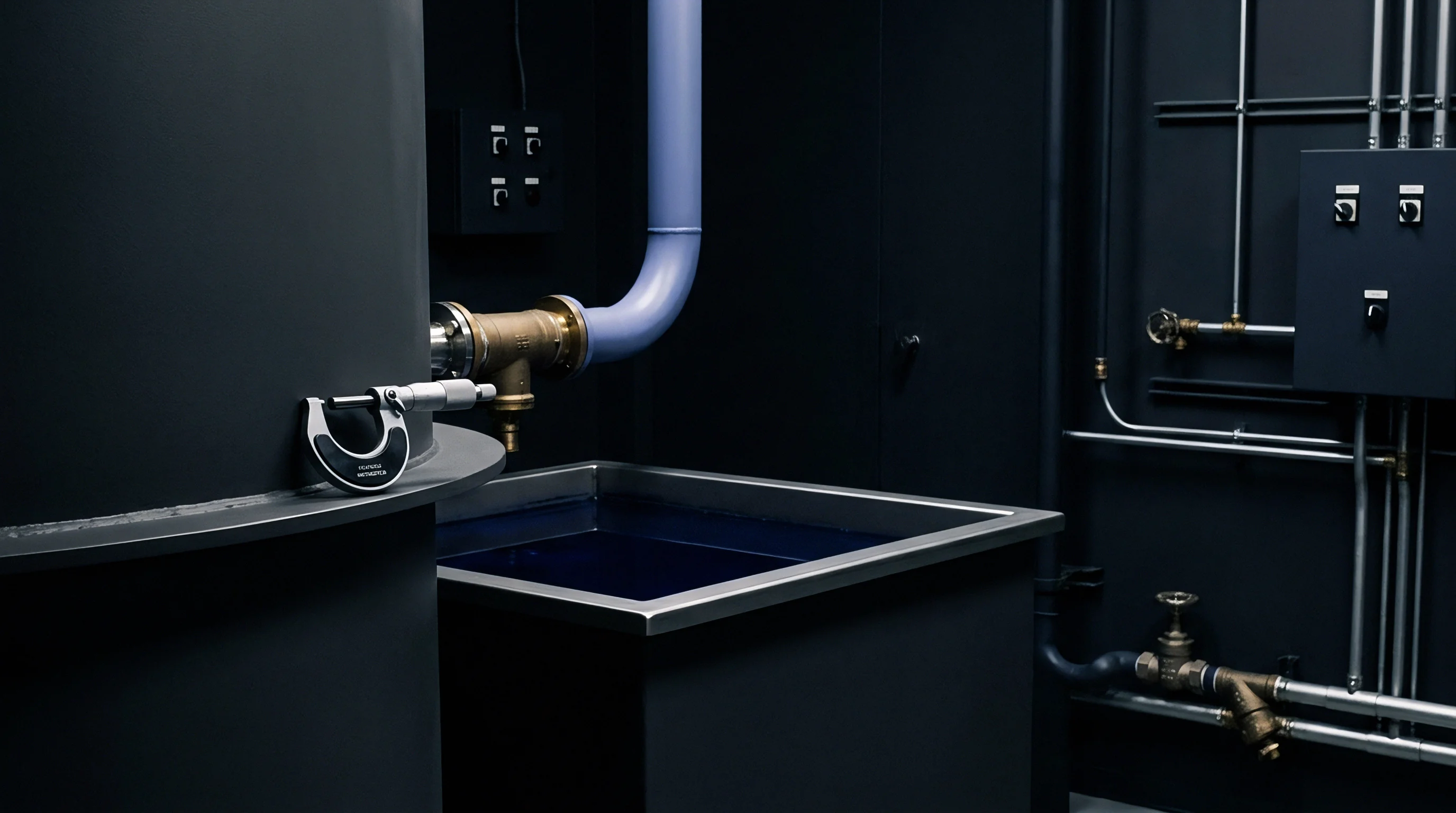
- Nozzle throat diameter confirmation utilizing internal micrometers to prevent processing lots through incorrectly sized venturi assemblies.
Confirming these parameters ensures that dyebath shear kinetics align with lab dip recipes. Laboratory jet simulation units rarely replicate the complex shear forces present in production vessels, creating disparities in exhaustion rate kinetics between pilot runs and bulk dyeings.
Laboratory recipes that match production exhaustion rates require compensation for shear variations. If the production jet operates at higher liquor velocities than the lab machine, the initial dye strike in bulk will proceed faster, necessitating slower dye dosing sequences or shifted salt addition curves.
Whether modern automated nozzle control systems can completely eliminate the trade-off between exhaustion speed and surface fiber fuzzing across ultra-fine synthetic microfibers remains an open technical question in production plants.