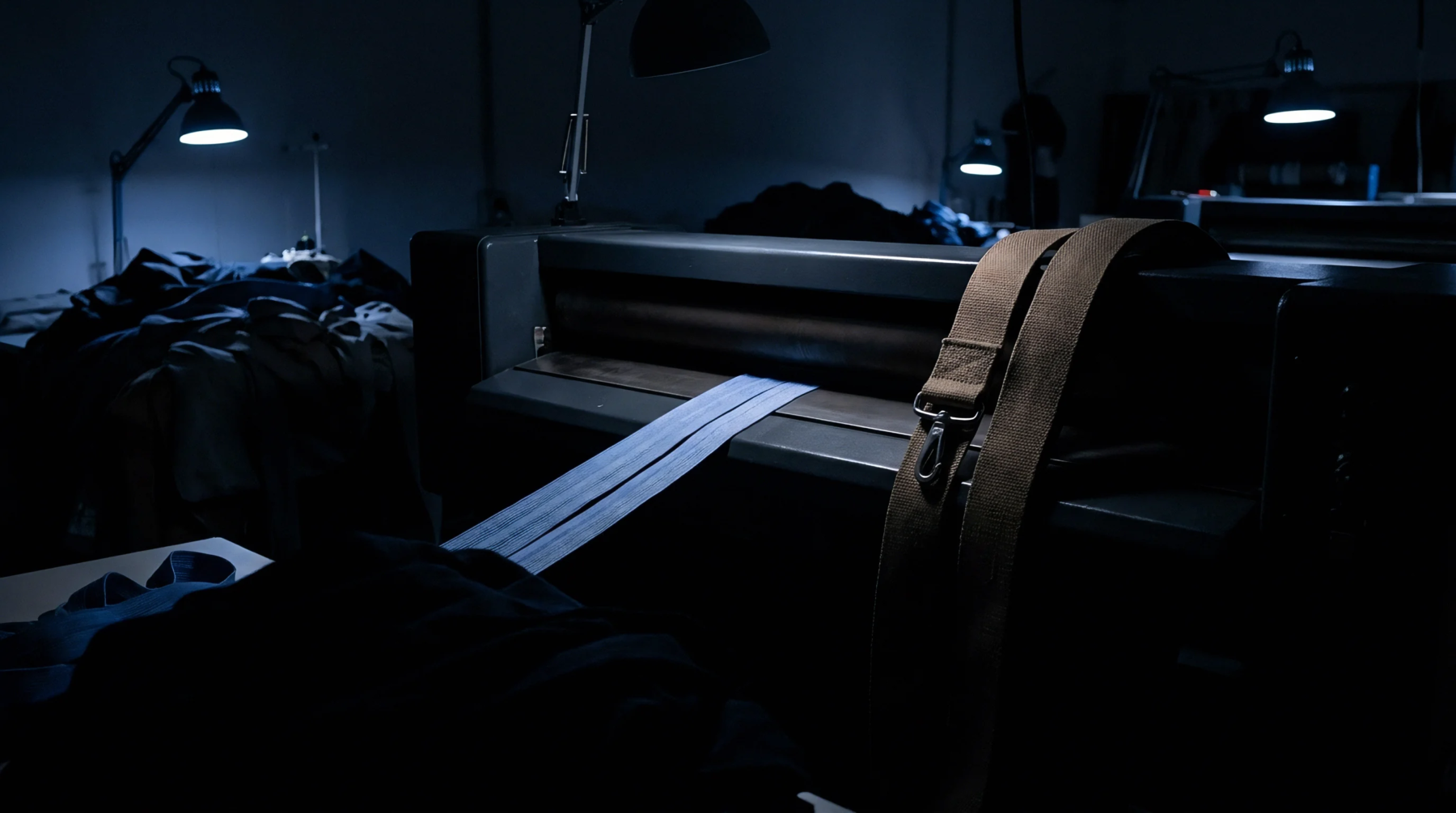
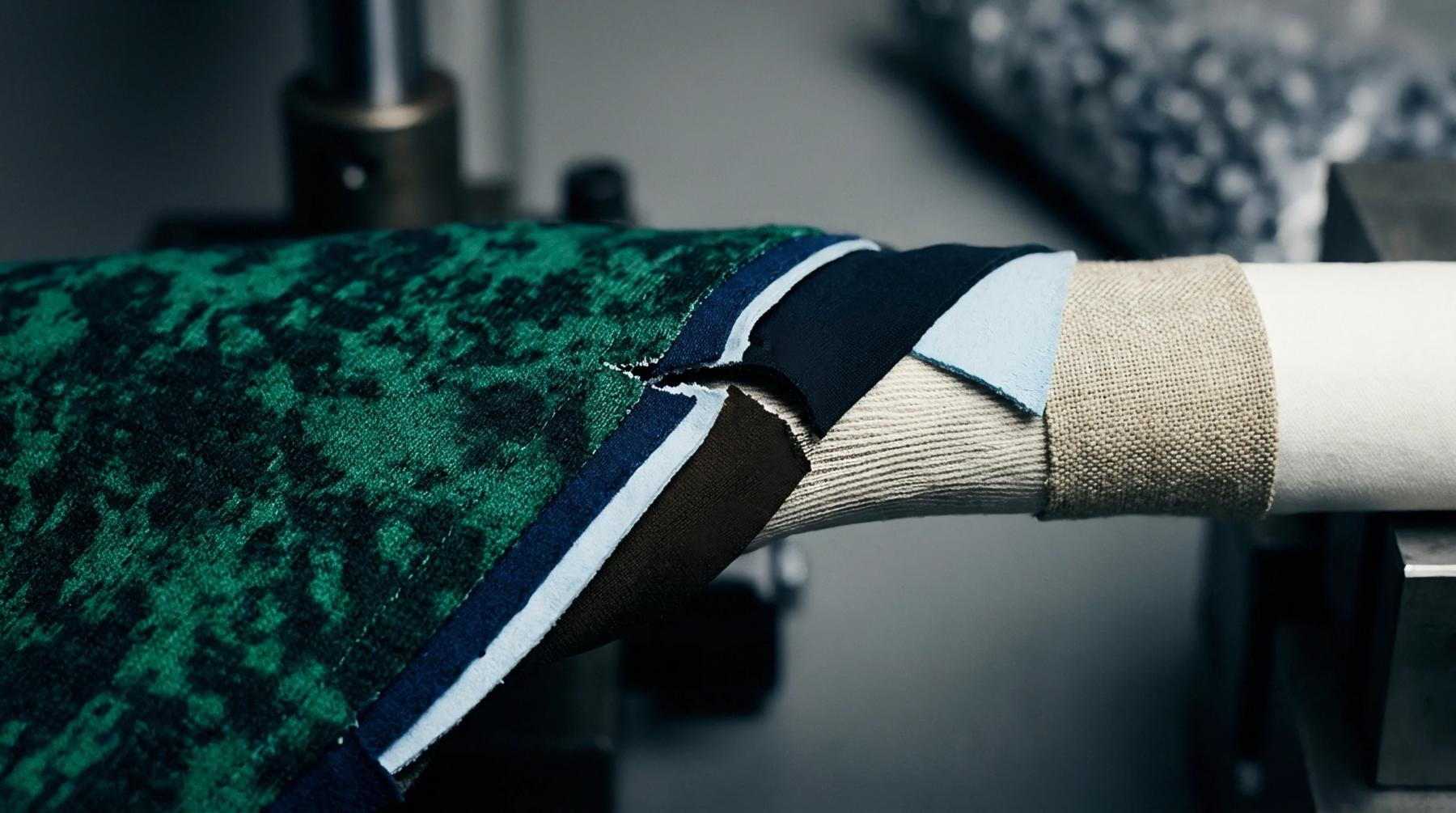
Structural Breakdown
Polyurethane-polyurea copolymers used in stretch fabrics suffer a loss of elasticity and strength when exposed to environmental and processing elements. This process of elastane degradation leads to fiber breakage and unrecoverable bagging in garments. It is an irreversible phenomenon that occurs during wet finishing or extended exposure to heat.
Mills must measure this loss of performance to prevent premature garment failure.
Chemical Stressor
Chlorine bleach and industrial pool sanitizers represent major triggers for polymer chain scission. Exposure to these chemical agents splits the urethane linkages in the polymer chain, breaking down the molecular network that gives the fiber its stretch. Acidic sweat and UV radiation accelerate this reaction, leading to rapid degradation of the elastomeric core.
Synthetic yarn spinners often add stabilizer packages during extrusion to slow this process.
Physical Consequence
Damaged fibers retract into the fabric structure, causing a complete loss of surface tension. Fabric holding power drops significantly as the elastic core disintegrates, leaving the garment unable to return to its original dimensions. This damage appears as surface ripples and distorted loops on knitted sportswear.
In heavy-use garments like swimwear, this degradation results in a loose fit and permanent fabric deformation.
Longevity Testing
Standardized laboratory tests assess the resistance of stretch fabrics to chemical and thermal degradation. These procedures subject fabric samples to simulated sweat, heat-setting tests, and wash cycles to determine the retention of elastic properties.