Quantifying Shear Degradation and Thermal Drift Mechanics in High Pressure Dual Stream Metering Manifolds
High pressure dual stream metering stability requires controlling wall shear rates below 20000 1/s and active block thermal balancing to eliminate ratio drift.
Chamber
High-pressure fluid delivery systems operating between 100 bar and 250 bar rely on balanced fluid mechanics across parallel flow passages to maintain precise volumetric metering. Pressure gradients drive flow. When processing dense polymer precursors, high-pressure polyols, or resin streams through dual-stream dosing blocks, localized fluid velocities within internal metering ports frequently exceed 25 metres per second.
Hydraulic pressure drops across restrictive orifices convert pressure energy into mechanical shear stress along channel boundary layers. Wall shear stress scales directly with volumetric flow rate and inversely with the cube of the internal channel radius. In dual-stream configurations where Component A and Component B flow through separate internal bored channels within a single forged steel manifold, variations in channel wall roughness, bend radii, or localized orifice restrictors create mismatched shear fields.
Fluid dynamic forces within metering blocks generate high localized velocity profiles. Near the channel walls, high velocity gradients generate elevated local shear rates. Local shear rate calculations for Newtonian and non-Newtonian power-law fluids in circular manifold bores utilize standard fluid mechanics formulations:
gamma = (3 n + 1) / (4 n) (4 Q) / (pi R^3)
Where gamma represents wall shear rate in reciprocal seconds, n is the fluid power-law index, Q is volumetric flow rate in cubic metres per second, and R is internal bore radius in metres. For a polyol stream with a power-law index of 0.85 flowing at 0.0001 cubic metres per second through a 1.5 millimetre radius manifold channel, local wall shear rates routinely exceed 45,000 reciprocal seconds. High shear rates alter the fluid velocity profile across the channel cross-section.
Velocity profile flattening occurs in shear-thinning liquids, which increases boundary layer friction and concentrates mechanical kinetic dissipation into a thin fluid annulus near the metal wall.
Velocity Profiles and Internal Pressure Drop
Pressure losses across parallel metering channels directly govern flow distribution stability. Pressure differential variations between Component A and Component B streams cause cross-stream metering inaccuracies, disrupting target stoichiometric ratios. Flow asymmetry disrupts stoichiometric balance.
Hydraulic resistance within an unheated manifold port consists of both wall friction losses and minor losses from internal direction changes or entrance geometries. Differential pressure losses across individual manifold sections are calculated using the modified Darcy-Weisbach equation incorporating shear-dependent dynamic viscosity:
delta_P = f (L / D) (density v^2 / 2)
Where f represents the friction factor, L is channel length, D is hydraulic diameter, density is fluid density, and v is mean flow velocity. When process fluids exhibit strong shear-thinning behavior, the friction factor decreases non-linearly with increasing velocity, making pressure drop predictions dependent on exact shear rate mapping.
| Orifice Diameter (mm) | Fluid Velocity (m/s) | Wall Shear Rate (1/s) | Pressure Drop (bar/m) | Apparent Viscosity (mPa.s) |
|---|---|---|---|---|
| 1.0 | 38.2 | 152,800 | 84.5 | 112 |
| 1.5 | 17.0 | 45,300 | 28.2 | 185 |
| 2.0 | 9.5 | 19,100 | 11.4 | 240 |
| 2.5 | 6.1 | 9,800 | 5.8 | 295 |

Dual Stream Flow Symmetries
Internal flow splitters and balance valves inside high-pressure manifolds attempt to maintain matched flow resistances across both stream legs. Mechanical tolerances during deep-hole drilling or precision electrical discharge machining produce slight surface roughness variations between stream channels. Internal wall surface finish variations as small as 0.8 micrometres Ra induce measurable flow imbalance between channels.
Pressure drops along the stream leg with higher surface roughness create localized hydrodynamic resistance differences, forcing fluid volume redistribution toward the lower resistance path. Component ratios drift over time.
Flow balance across dual stream blocks requires precise geometric symmetry and matched fluid viscosity profiles. When high pressure drives fluid through constricted ports, localized flow acceleration creates sharp shear stress peaks. Equipment manufacturers frequently claim that precise internal machining eliminates flow imbalances, attributing stream ratio drift entirely to raw material batch variation or downstream mixer backpressure fluctuations.

Heat
Viscous dissipation within high-pressure chemical metering lines generates internal thermal energy. Fluid friction produces heat. As hydraulic energy collapses across metering valves and manifold channels, the mechanical energy converts directly into thermal energy within the fluid medium.
The magnitude of shear-induced thermal rise per pass follows adiabatic conversion energy balance principles:
delta_T = (delta_P (1 – beta T)) / (density C_p)
Where delta_T is temperature rise in Kelvin, delta_P is fluid pressure drop across the manifold in Pascals, beta is volumetric thermal expansion coefficient, density is fluid density in kilograms per cubic metre, and C_p is specific heat capacity in Joules per kilogram-Kelvin. For typical polyol formulations with a density of 1,050 kilograms per cubic metre and a specific heat capacity of 1,900 Joules per kilogram-Kelvin, a pressure drop of 180 bar generates a theoretical adiabatic fluid temperature increase of approximately 0.9 degrees Celsius per pass, assuming zero thermal losses to the metal manifold wall.
At a flow rate of 4.5 liters per minute through a 2.0 millimeter metering port, viscous dissipation raises the fluid stream temperature by 3.8 degrees Celsius per pass at 180 bar pressure.
Thermal conduction transfers fluid-generated heat into the surrounding metallic manifold block. Stainless steel blocks absorb heat slowly. Low thermal conductivity in standard Austenitic stainless steels creates localized internal hot spots near high-shear metering zones.
Thermal energy accumulation raises manifold block temperature, inducing uneven structural thermal expansion across internal flow channels.
Viscous Dissipation Mechanics
Local heat generation concentrated along the boundary layer reduces fluid viscosity adjacent to channel walls. Viscosity reduction creates a self-reinforcing lubrication layer, altering the shear stress distribution across the bore. The temperature-dependent dynamic viscosity of process chemicals typically follows an Arrhenius relationship:
mu(T) = mu_0 exp(E_a / (R_gas T))
Where mu_0 is reference viscosity, E_a is activation energy for viscous flow, R_gas is universal gas constant, and T is absolute fluid temperature. Elevated temperatures along channel boundaries reduce localized viscosity, shifting peak velocity profiles away from channel centerlines and generating distorted, asymmetric flow fields in non-isothermal manifolds.
Manifold Thermal Expansion and Bore Dimensional Shifts
Metallic manifold blocks undergo elastic and thermal strain when subjected to internal pressure loads and shear-induced thermal gradients. Thermal gradients alter geometry. Temperature differentials between internal fluid channels and outer block surfaces generate localized thermal stresses.
Linear expansion of internal channel bores alters cross-sectional areas and hydraulic diameters. Bore dimensions expand under load. A 10 degrees Celsius rise in block temperature expands a 2.000 millimetre channel bore in 316L stainless steel by approximately 0.32 micrometres, altering hydraulic area and flow capacity.
| Material Grade | Thermal Conductivity (W/m.K) | CTE (10^-6 / K) | Bore Expansion at 15 delta_T (um) | Volumetric Flow Drift (%) |
|---|---|---|---|---|
| 316L Stainless Steel | 16.3 | 16.0 | 0.48 | +0.096 |
| 17-4 PH Stainless Steel | 17.8 | 10.8 | 0.32 | +0.064 |
| Tool Steel H13 | 24.3 | 10.4 | 0.31 | +0.062 |
| Inconel 718 | 11.4 | 13.0 | 0.39 | +0.078 |
Asymmetric thermal growth across dual stream manifolds warps internal port alignment, binding precision valve spools and causing flow control drift between metering streams. Uncompensated thermal expansion inside high-pressure dual-stream manifolds alters internal metering channel diameters, leading to continuous volumetric ratio errors, unreacted chemical residues, batch rejects, and structural seal degradation.
Strain
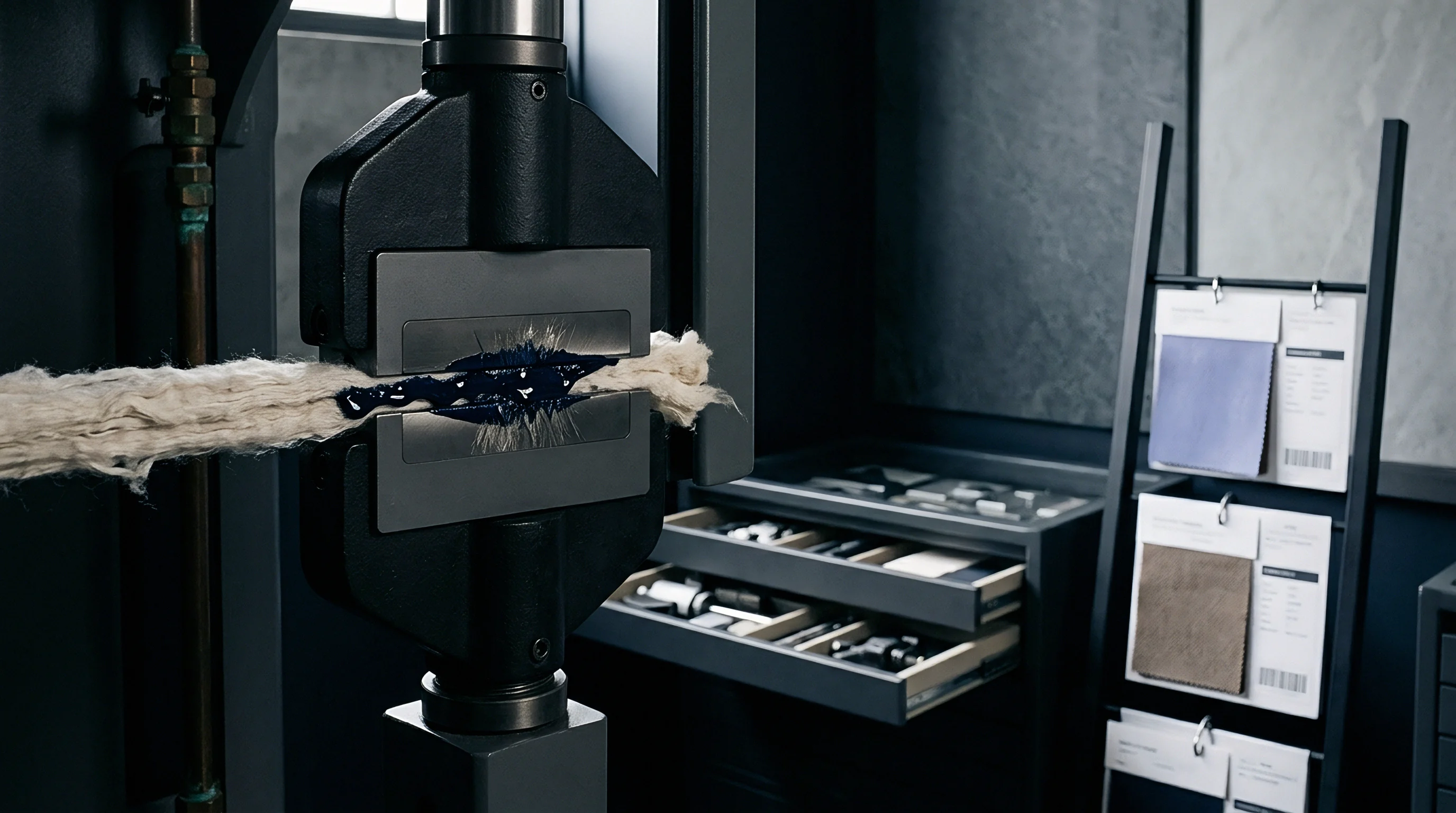
High shear stresses encountered in narrow metering passages induce severe mechanical deformation in polymer molecules. High shear breaks polymer chains. Long-chain polymer molecules, polyols, and pre-polymer additives align along stream lines under strong velocity gradients.
Shear deformation causes chain entanglements to unravel, producing temporary shear-thinning behavior. Beyond critical shear thresholds, mechanical forces overcome chemical bond energies, cleaving covalent polymer backbones and causing permanent molecular weight reduction.
Polymer backbone scission permanently reduces fluid dynamic viscosity under all flow regimes. Viscosity loss changes stream ratio. Irreversible molecular breakdown alters fluid rheology, reducing baseline viscosity during subsequent process passes.
Mechanical shear degradation depends on shear rate magnitude, fluid residence time within high-shear zones, fluid temperature, and initial molecular weight distribution of chemical precursors.
Polymer Scission and Viscosity Loss Mechanics
Mechanical degradation rates of polymeric components in high-pressure manifolds scale with localized energy dissipation density. Molecular weight distribution shifts from high molecular weight fractions toward lower molecular weight fragments following repeated passes through high-pressure metering orifices. The kinetics of shear-induced polymer degradation follow first-order rate equations where rate constants depend exponentially on shear stress:
dM / dt = -k_shear (tau – tau_critical)^m M
Where M is average molecular weight, k_shear is degradation kinetic constant, tau is local shear stress, tau_critical is critical shear stress threshold for covalent bond cleavage, and m is reaction order exponent.
Polyol component viscosity drops permanently once local shear rates exceed fifty thousand reciprocal seconds inside restricted manifold channels.
Severe shear conditions generate permanent changes in chemical rheology, leading to fluid metering instability and compromised physical properties in cured polyurethanes or cross-linked polymers downstream.
- Viscosity decay ~ Long-chain polyols undergo molecular chain scission under extreme shear stress, altering the stoichiometry of stream convergence.
- Phase separation ~ High local velocity gradients induce phase segregation in filled chemical systems, clogging sub-millimeter metering channels.
- Cavitation erosion ~ Local pressure drops below vapor pressure cause micro-implosions that pit stainless steel manifold walls over extended production cycles.
- Thermal run-out ~ Shear-induced heating creates localized hot spots, accelerating cross-linking reactions prior to downstream mixing nozzles.
Reversible Viscosity Drops versus Irreversible Degradation
Process control systems must distinguish between temporary non-Newtonian shear-thinning and permanent chemical degradation. Temporary shear-thinning recovers rapidly once fluid exits high-shear orifice ports and enters larger transport lines. Permanent mechanical degradation permanent molecular weight reduction lowers static fluid viscosity measured under low-shear laboratory conditions.
Distinguishing temporary orientation effects from permanent chain cleavage requires dual-point viscometric analysis using capillary or rotational viscometers across controlled shear rate spectrums. What critical shear stress threshold separates reversible polymer orientation from irreversible covalent backbone scission in modified polyol formulations under industrial dosing conditions?


Bench
Accurate calibration and verification of dual-stream high-pressure metering blocks requires rigorous physical testing protocols under controlled thermal and hydraulic conditions. Calibration checks reveal mechanical wear. Standard flow verification protocols utilize high-precision Coriolis mass flow meters positioned upstream and downstream of the manifold assembly to capture localized density, mass flow rate, and temperature variations in real time.
Verification testing requires establishing steady-state thermal and hydraulic equilibrium prior to recording metering accuracy data. Calibration loops must circulate fluid through manifold blocks under real operational pressures and temperatures to quantify thermal drift effects and mechanical shear degradation simultaneously.

What Dimensional Shift Defines Manifold Thermal Equilibrium?
Thermal equilibrium in high-pressure manifolds occurs when temperature differentials between internal fluid channels and outer block surfaces drop below 0.1 degrees Celsius over a 15-minute sampling interval. Equal line pressures stabilize flow. Dynamic thermal balance requires matching fluid inlet temperatures with internal manifold channel wall temperatures, preventing wall-layer heat transfer and localized viscosity shifts.
Internal thermal drift is monitored using multi-point RTD sensor arrays installed at strategic locations along internal fluid channels. Channel wall expansion and fluid temperature rise are correlated against measured mass flow variations to isolate thermal expansion effects from shear degradation mechanics.
DIN EN ISO 16961 Clause 6.3 mandates dynamic flow calibration at minimum and maximum operational fluid temperatures prior to system commissioning.
Differential Flow Transducer Verification Procedures
Transducer calibration and verification follows structured testing sequences to guarantee volumetric metering compliance across dual component streams:
- Equalize both fluid stream inlet pressures to within 0.5 bar using upstream supply pump regulators.
- Circulate chemical components through bypass loops until manifold block temperature stabilizes within 0.2 degrees Celsius across three sensor points. Bypass loops prevent thermal spikes.
- Record baseline mass flow rate readings across five incremental pressure steps between 50 bar and 220 bar.
- Sample fluid from discharge ports and test kinematic viscosity according to ASTM D445 to detect permanent shear degradation.
- Calculate stream ratio deviation between Component A and Component B channels to establish drift compensation parameters.
Standard quality framework EN 10204 Type 3.1 material certificates require verified hydrostatic test pressure performance at 1.5 times maximum allowable working pressure, alongside strict geometric compliance reports specifying internal channel bore tolerances within +/- 0.005 millimetres across total channel length.
Layout
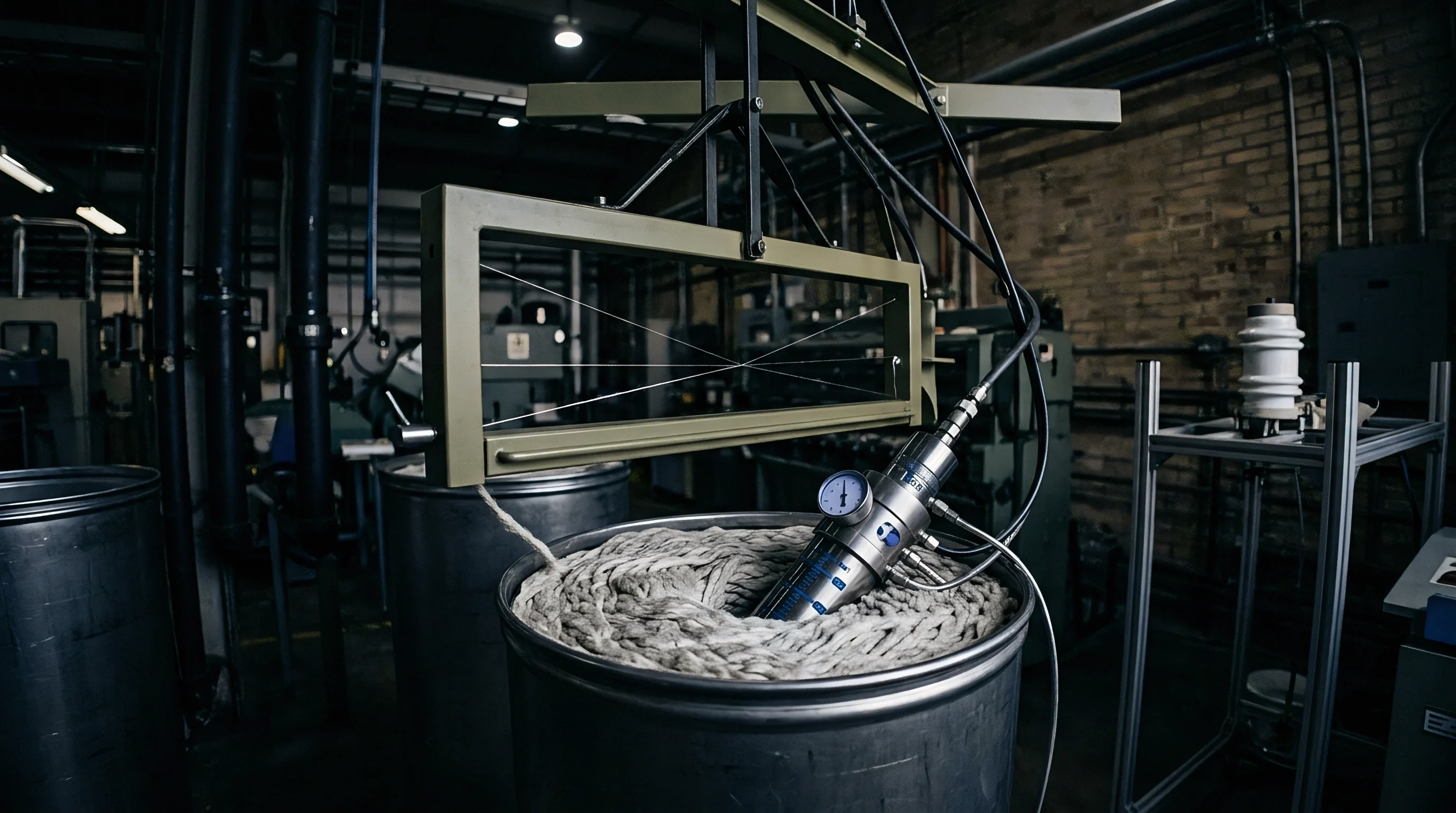
Mitigating shear degradation and thermal drift in high-pressure dual-stream metering manifolds requires optimized structural layout, active temperature control, and strategic material selection. Proper channel sizing minimizes wall shear rates while maintaining sufficient fluid velocity to prevent particulate settling or phase segregation. Channel diameters exceeding 3.0 millimetres drastically reduce wall shear stress without compromising overall manifold compact footprint.
Symmetrical internal channel routing ensures equal hydraulic resistance and thermal exposure across both chemical stream paths. Symmetrical flow paths eliminate asymmetric pressure drops and equalize shear-induced heat generation between Component A and Component B legs.
Internal active heating loops integrated into forged 316L stainless steel manifolds prevent asymmetric thermal gradients between parallel chemical streams.
Active Temperature Management and Fluid Channel Geometry
Integrating active fluid thermal management systems directly within the manifold block mitigates heat-induced thermal drift. Internal tempering channels circulating temperature-controlled heat transfer fluids neutralize shear-generated thermal energy before local fluid temperature spikes can reduce viscosity or alter channel bore geometry.
| Design Strategy | Max Shear Rate Reduction (%) | Thermal Drift Suppression (%) | Cost Premium (%) | Maintenance Impact |
|---|---|---|---|---|
| Expanded Bore Diameters | 68 | 12 | +15 | Negligible |
| Active Internal Cooling Jackets | 15 | 85 | +40 | Moderate |
| Symmetrical Flow Routing | 35 | 45 | +25 | Low |
| Surface Polishing (Ra < 0.2 um) | 22 | 8 | +18 | Low |

Commercial Sourcing Specifications for High Pressure Manifold Blocks
Procurement specifications for high-pressure dual stream dosing blocks must define clear physical, dimensional, and operational constraints to guarantee long-term system stability:
- Alloy selection ~ Forged 316L stainless steel or Inconel 718 provides thermal stability and prevents localized mechanical flexure under pressure fluctuations.
- Channel sizing ~ Wall shear rates remain below twenty thousand reciprocal seconds when internal port diameters exceed three millimeters for high-viscosity polyols.
- Active cooling jackets ~ Fluid heating loops surrounding fluid channels absorb shear-generated thermal energy before stream temperature shifts alter flow calibration.
- Symmetrical geometry ~ Identical channel lengths and turn radii for both fluid paths ensure uniform fluid dynamic behavior and balanced heat absorption.
Internal port diameters greater than three millimetres combined with active thermal jacket balancing keep stream ratio drift within a two percent envelope across extended high-pressure dispensing runs.