Thermal Degradation Thresholds during Laboratory Desiccation of Volatile Spin Finishes in Synthetic Yarns
Laboratory desiccation above 105°C volatilizes synthetic spin finish esters, requiring solvent extraction baselines to prevent commercial weight penalties.

Volatility
Synthetic filament production applies complex chemical mixtures directly to extruded polymer streams to suppress static electricity, modulate friction over ceramic guides, and maintain bundle cohesion during high-speed take-up. These liquid formulations consist of lubricating base oils, nonionic and ionic emulsifiers, antistatic additives, corrosion inhibitors, and bactericides applied at target pick-up levels between 0.35 percent and 1.50 percent on yarn weight. Standard testing regimes dry raw yarn packages in convection ovens to establish commercial invoice mass.
That thermal exposure strips low-boiling lubricant fractions alongside physical moisture, causing errors in clean dry weight determinations.
Testing laboratories encounter significant variance when processing polyester, polyamide, and polypropylene continuous filaments through dry-air desiccation. Formulators build spin finishes from synthetic esters, ethoxylated aliphatic alcohols, block copolymers, and alkyl phosphate salts. The volatile organic compounds present in these formulations exhibit boiling ranges and vapor pressures that overlap standard textile drying regimes.
Water leaves first. When heating cycles run past thirty minutes, short-chain esters and free fatty alcohols lose mass into the exhaust stream. Analysts recording the gravimetric plateau mistake chemical stripping for residual moisture elimination, establishing an artificially depressed yarn mass that distorts fiber yield accounts.
Thermal stripping of butyl stearate lubricants initiates at 108°C under continuous air circulation, generating a 1.4 percent mass loss before moisture equilibrium registers.
The rate of lubricant stripping depends upon the interaction between chemical structure, yarn surface area, and airflow dynamics inside the testing cabinet. Microdenier yarns present surface areas per unit weight up to five times greater than conventional apparel decitex products. This expanded surface area accelerates surface boundary evaporation of hydrophobic base oils.
Liquid lubricants migrate under heat. Mineral hydrocarbons and neopentyl polyol esters flash off the yarn package exterior while internal core layers remain saturated with boundary moisture.
Chemical Composition of Synthetic Spin Finishes
Modern processing formulations incorporate diverse functional chemical families across polyester, nylon, and polyolefin spinning lines. Primary lubricating components typically represent forty to sixty percent of the non-aqueous finish solids. Base oils balance boundary friction against hydrodynamic drag at processing speeds exceeding five thousand meters per minute.
- Fatty acid esters contribute low viscosity and controlled lubricity during drawing operations, exhibiting thermal dissociation thresholds starting near 115°C depending on aliphatic chain length.
- Polyoxyethylene block copolymers provide hydrodynamic lubrication across godet rolls, undergoing oxidative scission under continuous thermal drying above 120°C in standard atmosphere.
- Ethoxylated fatty alcohols disperse lubricant phases across aqueous emulsions, releasing free ethylene oxide adducts through vaporization when cabinet air reaches 105°C.
- Potassium alkyl phosphates suppress triboelectric charge generation across high-speed winding zones, developing sticky polymeric residues under prolonged dry heat exposure.

Vapor Pressure Profiles in Filament Lubricants
Evaporative losses follow Antoine equation dynamics across common synthetic processing oils. Butyl stearate, isooctyl stearate, and trimethylolpropane tricaprylate exhibit measurable mass loss profiles at testing temperatures historically designated as safe for moisture determination. Standard oven settings strip finish.
Capillary evaporation from the filament bundle produces an apparent moisture content that diverges from absolute Karl Fischer titration values.
Laboratory personnel frequently overlook the volatility of low-molecular-weight friction modifiers. When samples undergo prolonged desiccation, volatile organic components evacuate the oven chamber, escaping gravimetric detection. Whether chemical fragmentation of secondary emulsifiers during prolonged desiccation introduces a systematic gravimetric offset across varied yarn counts remains disputed across commercial test houses.
Heat
Convection chambers running under ASTM D2257 or ISO 1833 parameters rely on uniform air movement to drive off unbonded water molecules from the polymer matrix. Filament bundles subjected to 105°C convection heating experience simultaneous drying and finish stripping. The mass reading falls.
Polyethylene terephthalate yarns exhibit negligible polymer degradation at this temperature, but the boundary layer of topical spin finish undergoes continuous distillation. Testing facilities that monitor loss-on-drying curves without chromatographic controls record cumulative weight drops that falsely represent fiber regain.
Testing standards establish drying durations based on reaching constant weight, defined as less than 0.05 percent change between successive weighings at fifteen-minute intervals. Ester bonds cleave readily. In finishes with high proportions of ethoxylated emulsifiers, the weight continues to decline over several hours.
Technicians interpret this persistent loss as recalcitrant internal moisture trapped within the fiber crystalline regions. In reality, the finish is steadily volatilizing into the ventilation ductwork.
Adherence to ASTM D2257 oven parameters at 105°C strips short-chain polyoxyethylene lubricants, creating a false clean dry weight that lowers the certified commercial mass.
Establishing the true boundary between water evaporation and spin finish volatilization requires thermogravimetric analysis paired with evolved gas analysis. Differential thermal analysis curves demonstrate that moisture desorption peaks between 70°C and 95°C under forced draft. Volatilization of fatty esters accelerates past 110°C, intersecting the conventional drying plateau.
Polyester filaments endure higher temperatures. Polypropylene softens near thermal thresholds. Uncontrolled desiccation conditions alter the underlying yarn structure and distort commercial mass accounting.
Thermogravimetric Inflection Points in Forced Draft Ovens
Differential thermogravimetry clarifies the sequential stages of sample mass reduction during laboratory heating cycles. Thermograms reveal sharp mass loss inflections corresponding directly to finish evaporation rather than pure water vapor discharge. Testing samples without extracting active lubricating oils produces compounded measurement errors.
| Chemical Compound Class | Initial Mass Loss Point | Rapid Volatilization Point | Loss at 105°C Over 2 Hours | Loss at 130°C Over 2 Hours |
|---|---|---|---|---|
| Isobutyl Stearate | 98°C | 124°C | 8.6% | 42.1% |
| Trimethylolpropane Tricaprylate | 122°C | 158°C | 1.2% | 14.8% |
| Polyoxyethylene (9) Lauryl Ether | 104°C | 136°C | 5.4% | 28.7% |
| Diethanolamine Cetyl Phosphate | 145°C | 182°C | 0.3% | 3.1% |
| White Mineral Oil (70 SUS) | 92°C | 118°C | 12.8% | 68.4% |

Where Does Desiccation Loss Exceed Finish Mass?
Substantial measurement errors arise when thermal stripping consumes the spin finish coating entirely and initiates secondary matrix extraction. Volatile components escape into air. On microdenier polyamide 6.6 yarns carrying 0.80 percent target application levels, desiccation cycles extended to four hours at 110°C yield total mass losses exceeding 1.65 percent.
The physical moisture regain of nylon accounts for roughly half of this volume, while volatile finish components and low-molecular oligomers account for the remainder.
- Airflow velocity variations between oven shelves accelerate volatile solvent stripping unevenly across sample positions, producing standard deviation spreads above 0.18 percent between replicates.
- Filament decitex values determine convective heat transfer efficiency, causing 50-decitex bundles to strip finish forty percent faster than 300-decitex industrial cords.
- Specimen presentation geometries govern boundary layer vapor saturation, meaning loose skeins lose volatile organic content far more aggressively than tightly wound yarn cakes.
Lower desiccation temperatures maintained over extended drying cycles protect low-boiling lubricant fractions while still driving off unbonded surface water.
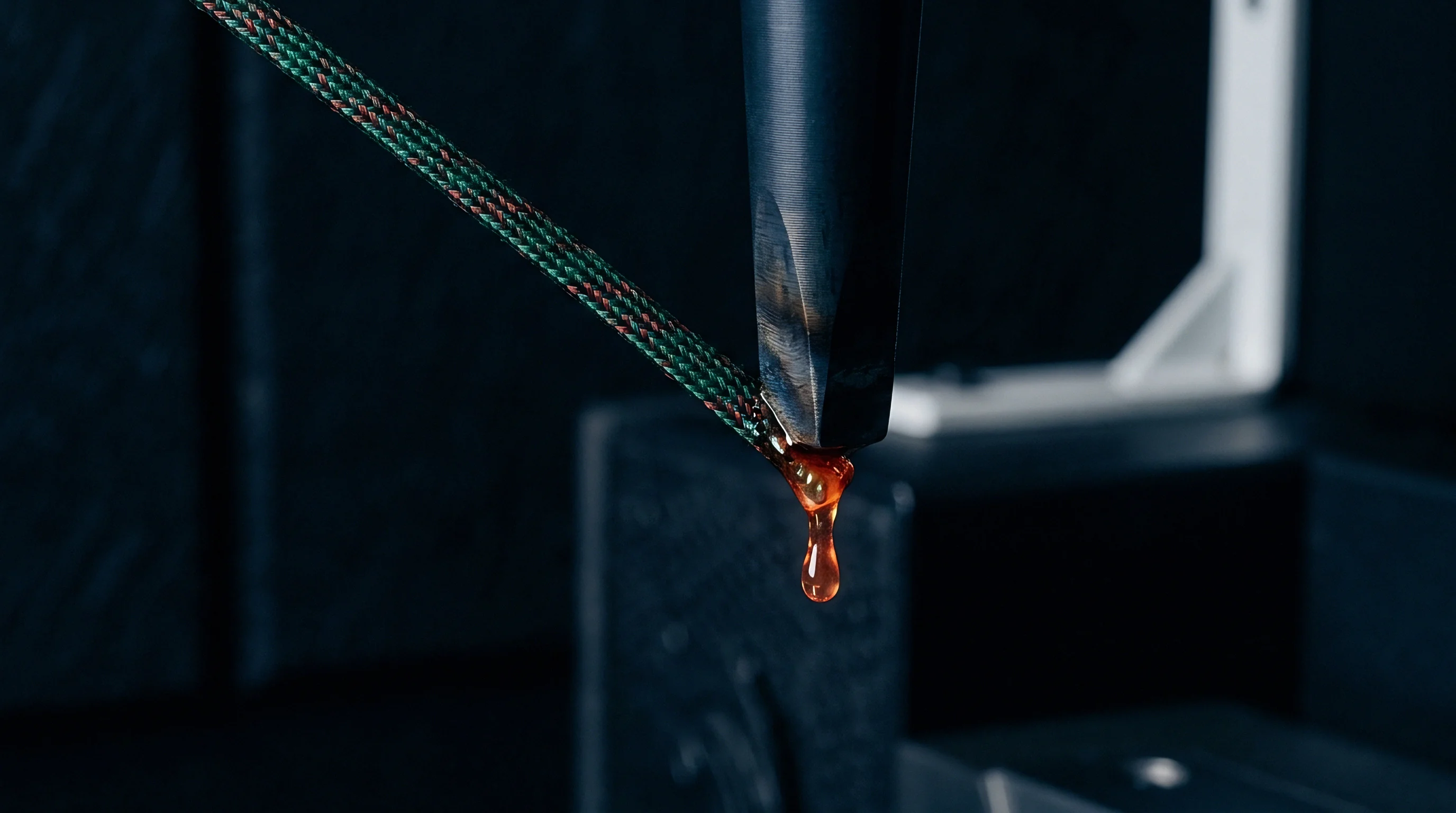
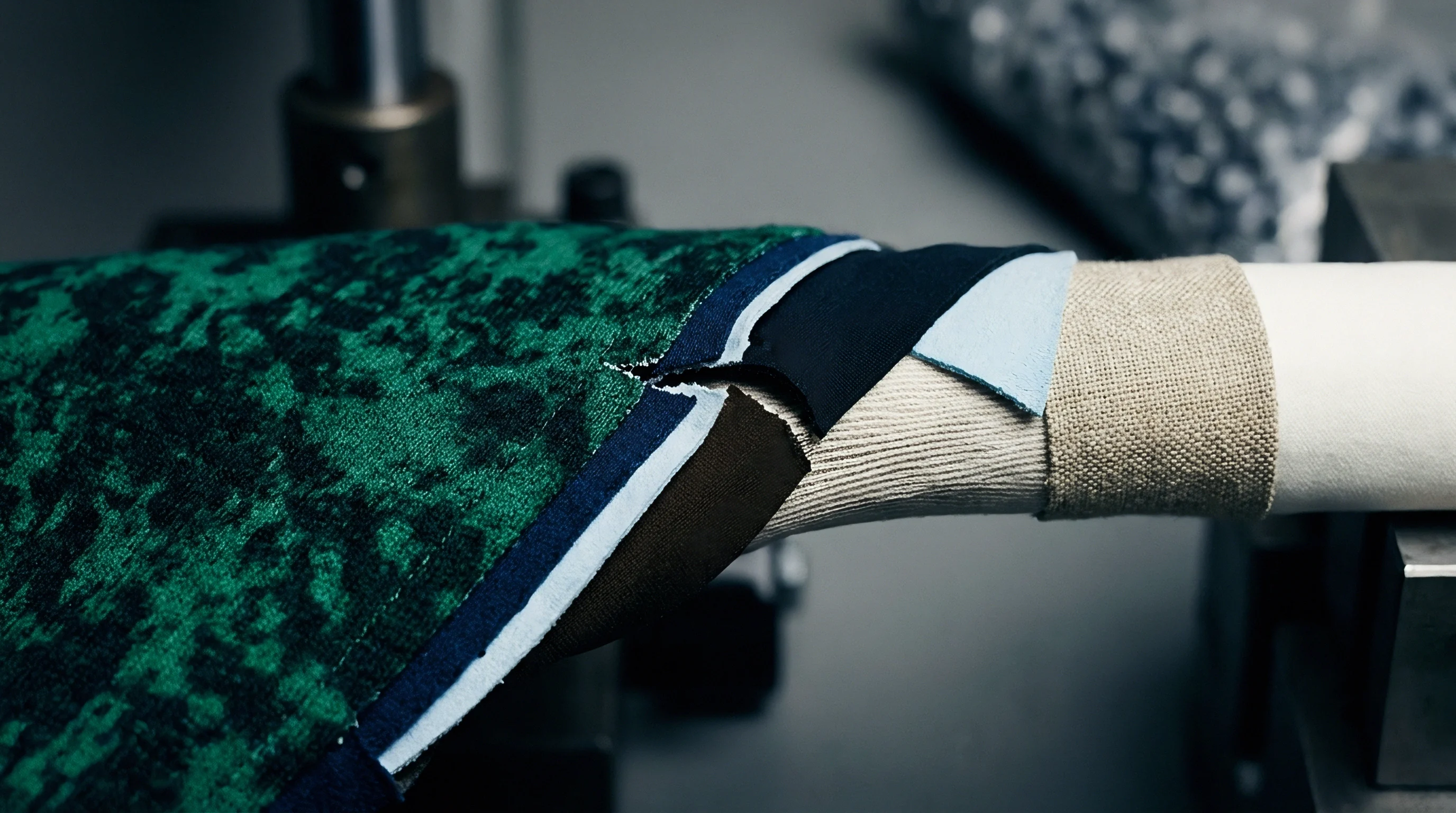
Residue
Secondary reaction mechanisms manifest when spin finish chemistries remain exposed to oxygen-rich thermal zones for prolonged periods. Antistatic agents volatilize very early. Certain polyether additives undergo thermal cross-linking rather than clean evaporation, forming insoluble varnishes across the yarn surface.
These pyrolytic polymers bond tenaciously to polyester substrates, resisting standard post-drying solvent washes. The technician encounters a specimen whose apparent mass stabilizes because volatile losses balance against oxygen uptake through auto-oxidation pathways.
Prolonged thermal exposure inside ventilated ovens darkens ester residues and binds degradation byproducts directly to the polyester filament core.
Auto-oxidation of ethoxylated long-chain surfactants produces hydroperoxides that subsequently decompose into volatile aldehydes, volatile organic acids, and non-volatile polycondensates. Lubricant loss distorts the tare. These acidic reaction byproducts attack sensitive ester linkages within continuous filament polyesters and accelerate the thermal cleavage of polyamide amide groups.
The yarn loses tensile tenacity while the non-volatile residue shifts the fiber baseline mass.
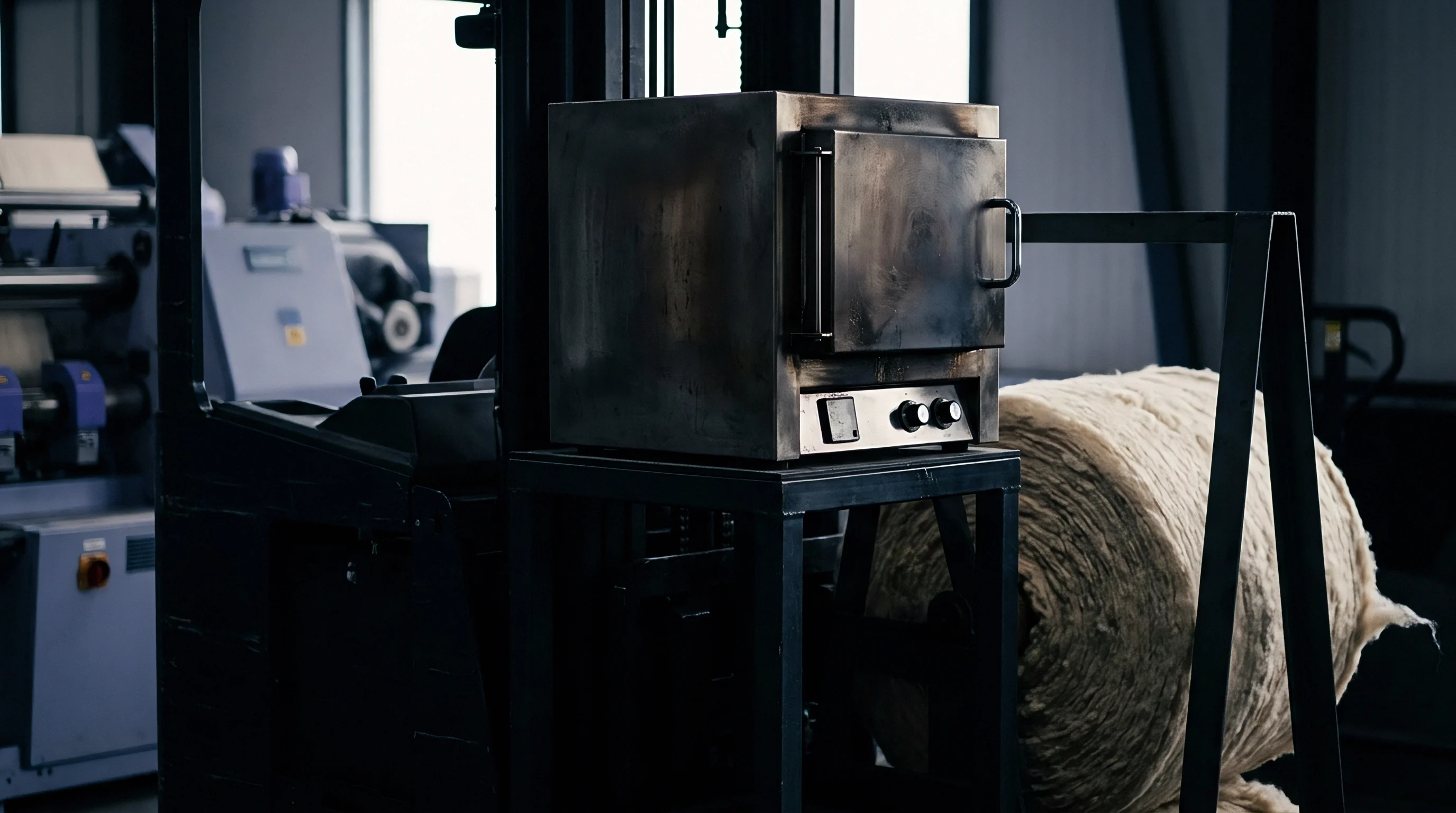
Pyrolytic Cross Linking on Polyester and Polyamide
Degradation pathways diverge based on polymer substrate polarity and finish formulation additives. Polyalkylene glycol block polymers subjected to 110°C in atmospheric air experience radical-induced coupling reactions. The resulting cross-linked network coats yarn grooves, trapping volatile residues within a vitrified film.
Standard petroleum ether extractions fail to dislodge these cross-linked crusts during subsequent chemical verification testing.
Colorimetric shifting provides physical evidence of finish degradation during oven drying. Heat treatment transforms clear topical oils into yellow or brownish residues on white yarn packages. Reflectance measurements at 420 nanometers register distinct yellowing indexes on yarns subjected to standard 105°C desiccation for periods exceeding ninety minutes.

When Does Matrix Cleavage Distort Gravimetric Results?
Molecular weight reductions in the underlying synthetic yarn occur when acidic finish byproducts dwell at elevated temperatures. Caprolactam monomer and cyclic oligomers in polyamide 6 migrate toward the fiber surface alongside evaporating surface finishes. Gravimetric tests record this combined migration as finish loss, skewing the reported oil pick-up values.
Consider a 50-tonne commercial lot of 167 dtex / 48 filament drawn textured polyester yarn with an invoiced finish application level of 1.20 percent oil pick-up. When verified via oven drying at 120°C for three hours, the measured loss equals 1.85 percent. Traditional analysis attributes 0.40 percent to fiber moisture regain and 1.45 percent to total finish content.
Chromatographic inspection of the condensate traps reveals that 0.35 percent of this mass loss consists of cleaved short-chain polymer oligomers and decomposed surfactant head groups. The true topical finish content was 1.10 percent, while the oven protocol degraded the yarn matrix itself. Spinners routinely contend that higher oven temperatures eliminate processing water exclusively rather than evaporating their proprietary lubrication oils.


Invoice
Commercial transactions in continuous synthetic filament turn upon certified commercial mass calculations. Contracts establish monetary settlements using invoiced weight derived from clean dry mass augmented by standard commercial moisture regain allowances. Commercial mass governs the invoice.
If the testing oven volatilizes spin finish during desiccation, the reported clean dry weight falls below its true value. This testing artifact depresses the calculated commercial mass, creating phantom shortages on bulk filament container shipments.
Standard moisture regain allowances differ significantly from actual physical moisture content. Polyester carries an official commercial moisture regain value of 1.50 percent, while polyamide 6.6 carries 6.25 percent under international trade definitions. In an invoice settlement, every tenth of a percent deviation in certified clean dry weight scales across millions of kilograms of annual supply.
Customs assessments penalize dry weight errors.
Discrepancies between solvent extraction mass and desiccation loss widen as the proportion of low molecular weight antistatic agents in the finish formulation rises.
International customs authorities calculate tariff assessments using declared net mass and fiber composition boundaries. Harmonized Tariff Schedule headings distinguish between high-tenacity industrial yarns and standard textile yarns based on certified tenacity figures expressed in centinewtons per tex. Excessive heat distorts moisture regain.
When desiccation procedures strip spin finishes and damage yarn structural integrity, laboratory tenacity readings shift, triggering customs reclassifications and punitive tariff adjustments.
Commercial Mass Discrepancies in Filament Shipments
Evaluating commercial settlement math demonstrates the severe financial impact of laboratory drying errors. A standard purchasing contract covers forty metric tonnes of drawn nylon 6.6 yarn at an agreed price of 3.85 euros per kilogram delivered duty paid. The contractual specification permits a maximum spin finish level of 0.90 percent.
| Testing Parameter | Solvent Extraction Baseline | Oven Desiccation at 105°C | Overheated Oven at 125°C |
|---|---|---|---|
| Gross Lot Mass | 40,000 kg | 40,000 kg | 40,000 kg |
| Measured Mass Loss | 4.75% | 5.45% | 6.20% |
| Volatilized Finish Mass | 0.00% | 0.70% | 1.45% |
| Calculated Clean Dry Mass | 38,100 kg | 37,820 kg | 37,520 kg |
| Commercial Allowance (6.25%) | 2,381 kg | 2,364 kg | 2,345 kg |
| Invoiced Commercial Mass | 40,481 kg | 40,184 kg | 39,865 kg |
| Invoice Value at 3.85 €/kg | €155,852 | €154,708 | €153,480 |
| Settlement Discrepancy | Baseline | -€1,144 | -€2,372 |
Tariff Classifications Dependent on Fiber Content
Cross-border customs declarations require quantitative verification of fiber blends when synthetic yarns combine with natural staples or regenerated cellulose. Solvent extraction isolates pure yarn. Customs laboratories employing destructive thermal desiccation rather than selective solvent extraction strip finishes along with volatile sizing agents, shifting the measured component ratios.
- Chief weight reclassifications occur when blended yarns sit on the border of critical tariff thresholds, such as the fifty-five percent synthetic threshold in apparel fabric imports.
- Preferential origin qualifications fail when laboratory test reports cite lower synthetic mass percentages than declared on the accompanying invoice certificates.
- Antidumping duty exposures arise when imported filament masses are challenged through inaccurate dry weight certificates issued by import border posts.
Miscalibrating drying parameters inflates fiber purchase costs, distorts yarn inventory balances, and invites commercial invoice rejections across international trading boundaries.

Settlement
Commercial disputes over clean yarn weights require clear procedural boundaries established before yarn orders leave the extrusion facility. Disagreements between spinning mills and weaving operations typically trace back to incompatible testing methods. Spinners record net weight using gravimetric ovens on production lines, while downstream converters employ solvent extraction techniques to measure topical spin finish directly.
Uncorrected tare weights inflate tariffs. Harmonizing these verification methods prevents protracted legal claims and freight rejections.
Solvent extraction using dichloromethane, diethyl ether, or hexane isolates topical organic lubricants without subjecting synthetic polymers to thermal distress. Modern testing houses utilize automated Soxhlet extraction apparatus or accelerated solvent extractors operating under closed pressure vessels. These systems extract both nonpolar mineral lubricants and polar polyalkylene glycol emulsifiers at temperatures well below the thermal breakdown thresholds of the host fibers.
The extracted oil is weighed directly after gentle solvent evaporation, leaving the baseline synthetic yarn intact for subsequent moisture analysis.
Where laboratory operations lack solvent extraction systems, low-temperature vacuum desiccation provides a reliable mechanical alternative to convection ovens. Operating drying cabinets under reduced pressure of twenty millibars lowers the vaporization temperature of water to approximately 20°C. Moisture departs rapidly while high-boiling spin finish esters remain condensed on the yarn bundle. This separation prevents volatile organic component loss, delivering true moisture regain measurements without stripping the lubricating matrix.

Solvent Extraction and Alternative Drying Procedures
Implementing solvent extraction protocols eliminates the ambiguities caused by oven volatilization. ISO 10580 outlines cold solvent washing and hot Soxhlet methods designed explicitly for synthetic filament yarns. Extracting with petroleum ether captures nonpolar lubricants, while subsequent ethanol washing dissolves polar surfactants and antistatic salts.
The cumulative mass of these two fractions establishes the true finish content without inducing pyrolytic degradation.
Vacuum oven drying protocols operating at 60°C under five kilopascals pressure dry hygroscopic synthetic polymers within two hours. This environment suppresses thermo-oxidative cross-linking reactions and eliminates the yellowing of polyester substrates. The resulting clean dry mass reflects true polymer mass, providing an uncorrupted foundation for commercial moisture calculations.

Contractual Specifications for Laboratory Weight Determinations
Procurement teams protect commercial margins by drafting rigorous technical annexes into supply contracts. Standard procurement terms often refer generically to drying at 105°C without specifying airflow volumes, oven shelf locations, or maximum heating durations. A precise contractual clause stipulates exact temperature limits, mandates vacuum desiccation or solvent extraction for arbitration cases, and defines allowable test tolerances.
Technical specifications must establish that in cases of commercial weight discrepancy exceeding 0.30 percent, referee testing will rely exclusively on ISO 6741 solvent extraction protocols rather than convection oven loss-on-drying measurements. Incorporating a mandatory vacuum desiccation provision under ISO 6741 prevents the inadvertent volatilization of secondary emulsifiers and locks the settlement weight to verifiable fiber mass.