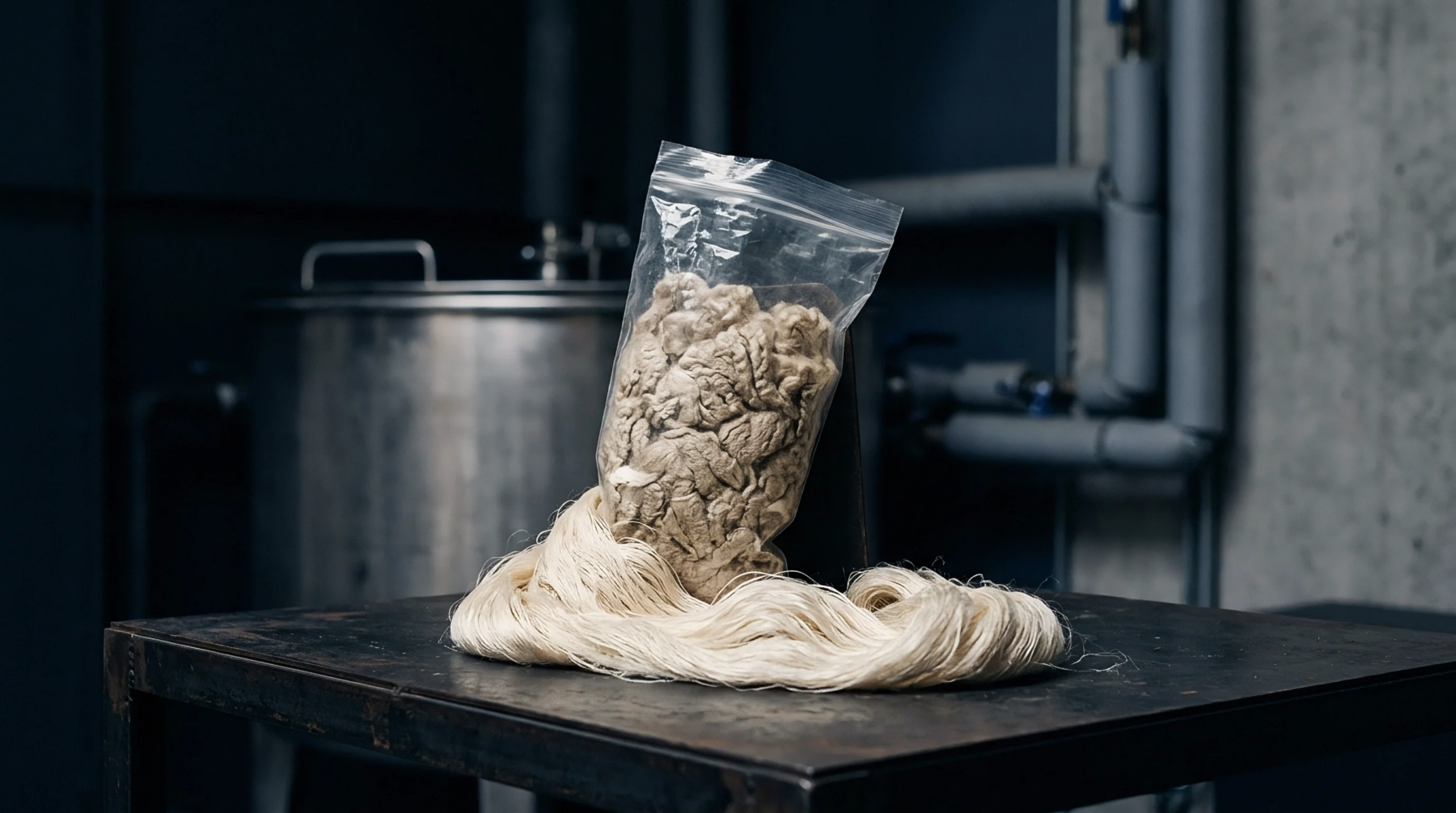
Determining Commercial Mass from Oven Dry Fibre Weights
Commercial mass equals oven-dry mass multiplied by standard regain allowances, establishing an immutable billable weight independent of transit moisture shifts.
Controlled heat application drives moisture from wet textile substrates during high speed industrial finishing to ensure that thermal desiccation meets precise production specifications before packaging. This drying modality operates through calibrated heat transfer stages where water vapour escapes fibre matrices under strictly regulated airflow. Factories implement this procedure on continuous line equipment to reach target regain levels in natural yarns and synthetic blends.
Achieving a specific mass balance requires steady temperature output across rollers or through convection chambers. Excess moisture removal guards against microbial degradation during transit while maintaining mechanical integrity for downstream knitting or weaving stages. Uniformity in heat distribution prevents local hardening or brittle segments in cellulose fibres.
Radiant energy cycles facilitate rapid evaporation across the surface of open width fabric sections as they pass through enclosed drying bays. Steam heated cylinders provide the necessary latent heat to phase change liquid water into gas while suction systems remove saturated air from the proximity of the cloth. High volume airflow patterns prevent stagnant pockets of humidity from forming between the textile face and the machinery walls.
Machine operators monitor internal chamber sensors to track gradient shifts in temperature between the inlet and outlet of the range. Stable drying environments prevent spot burning or shade variation caused by uneven evaporation rates in reactive dyeing processes. Consistent cooling cycles following the heat input stabilize the fibre dimensions prior to winding onto rolls for final storage.
Excessive heat loads permanently degrade structural polymers in synthetic filament yarns or natural protein fibres. Thermal desiccation stops being effective when fibre moisture drops below the critical equilibrium point where hydrogen bonds within the molecular structure undergo irreversible shift. Testing methods rely on conditioned gravimetric analysis to distinguish between structural water removal and simple surface dryness.
Quality control departments verify final moisture regain against international standards to ensure that shipments do not gain weight through ambient humidity absorption during sea freight. Labs reject batches exhibiting irregular dryness levels because unequal tension profiles across the width of the fabric cloth cause catastrophic needle breakage in subsequent sewing factory operations.
Mechanical inspectors measure electrical resistance or infrared absorption spectra on finished rolls to confirm moisture content levels fall inside the acceptable range. Fabric samples undergo oven drying tests to establish the baseline mass versus the conditioned weight before shipment. Reliable output demands constant calibration of thermal sensors because sensor drift causes gradual shifts in product weight statistics.
Technicians correlate machine speed with energy input to maintain output quality standards when production volume shifts significantly. Achieving accurate dryness levels remains the primary mechanism for preventing mould growth in sealed shipping containers crossing high humidity transit routes. Accurate moisture management preserves the physical durability of all natural and synthetic fibres throughout the global logistics chain.
Commercial mass equals oven-dry mass multiplied by standard regain allowances, establishing an immutable billable weight independent of transit moisture shifts.
Expertise is a utility, not a secret. sentiention™ publishes its working knowledge as open reference: intelligence layer covering the materials it sources, the markets it enters, and the reference that serves both.