Autoxidation Mechanisms of Residual Spinning Lubricants during Greige Storage and Dye Absorption
Autoxidation cross-links residual spinning lubricants into insoluble resins during storage, creating hydrophobic barriers that disrupt dye strike and color yield.
Rancidity
Peroxide Generation on Stored Greige Yarn
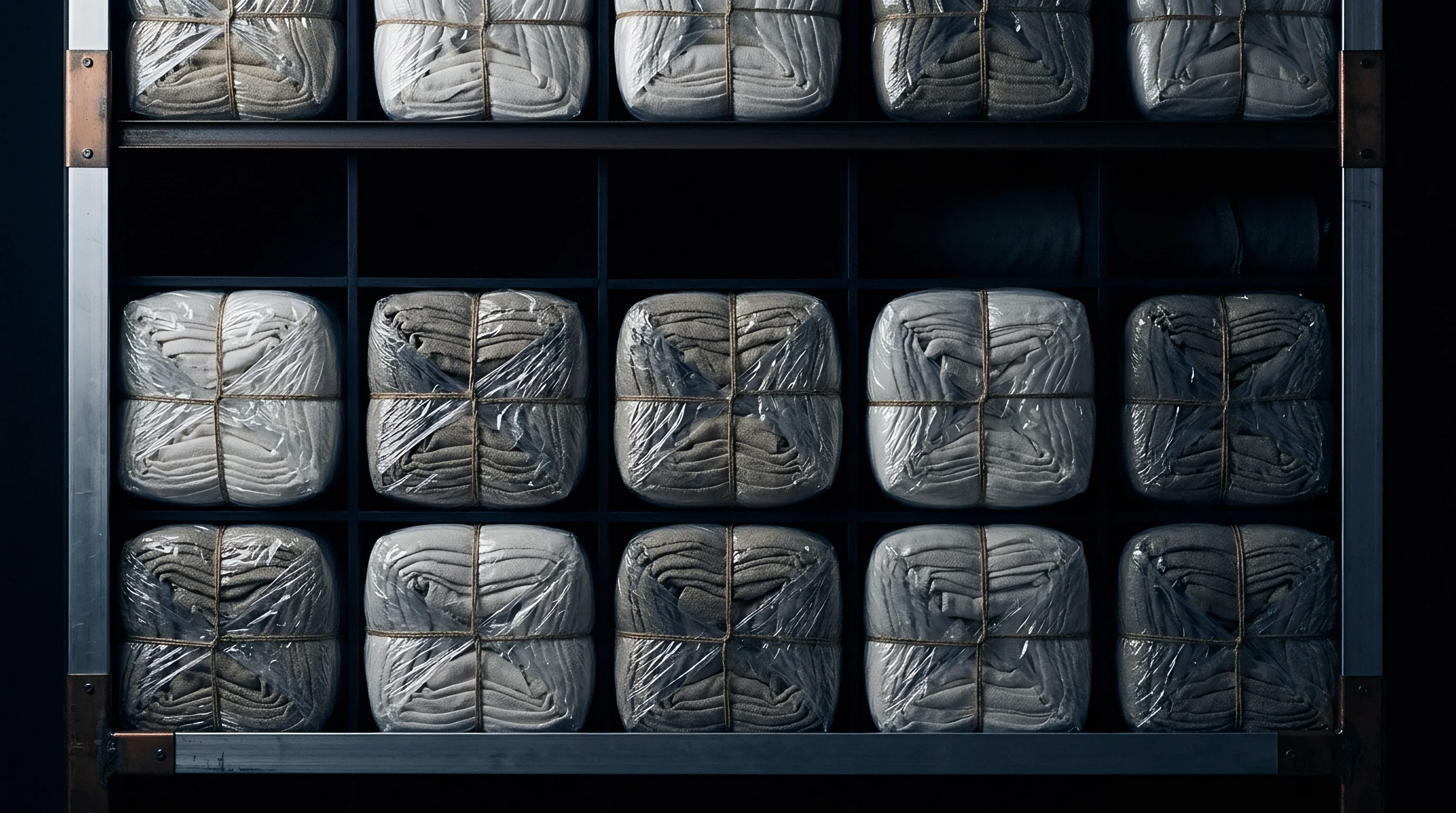
Storage warehouses convert unsaturated ester lubricants into insoluble yellow polymers before the greige rolls ever meet a scouring bath. Coning oils, knitting lubricants, and carding aids rely on emulsifiable mineral fractions or synthetic fatty acid esters to minimize friction during mechanical processing. When mill floors apply formulations containing unsaturated fatty acids such as oleates, linoleates, or under-refined vegetable derivatives, thin oil films coat the perimeter of natural and synthetic filaments.
Atmospheric oxygen reacts directly with the allylic carbons adjacent to these double bonds. The reaction proceeds through a radical chain involving hydrogen abstraction, structural rearrangement into conjugated dienes, and addition of ground-state molecular oxygen. This sequence generates transient lipid hydroperoxides directly on the substrate.
Ambient storage conditions accelerate hydroperoxide formation when warehouse temperatures reach 30 degrees Celsius or relative humidity exceeds 65 percent. Transition metal traces left behind by spinning hardware, specifically iron and copper ions from guide eyes and traveller rings, function as direct electron transfer catalysts. These metals decompose fragile hydroperoxides into alkoxy and alkylperoxy radicals.
Unchecked propagation drives further hydrogen abstraction across adjacent aliphatic segments. Over twelve weeks of warehouse dwell, grease layers turn into reactive, volatile-rich matrices containing conjugated diene structures and active peroxy bridges.
Peroxide values in residual oils escalate fourfold within sixty days of uncontrolled warehouse dwell.
Analytical quantification of this initial rancidity phase relies on the peroxide value, measured in milliequivalents of active oxygen per kilogram of extracted fatty matter. Extraction via petroleum ether or dichloromethane following ISO 3960 isolates the greasy fraction from the greige package. Unoxidized mineral or synthetic ester formulations typically test below 5.0 milliequivalents per kilogram upon yarn exit from the winder.
Greige packages left in unconditioned sheds register readings well above 35.0 milliequivalents per kilogram. At these concentrations, chemical breakdown of the lubricant ceases to be a theoretical surface modification and becomes an irreversible processing liability.
Hydroperoxides lack thermodynamic stability. Their cleaving yields an array of reactive carbonyl intermediates, secondary alcohols, and bifunctional volatile fragments. Low-molecular-weight aldehydes, such as hexanal, 2,4-decadienal, and malondialdehyde, generate the characteristic acrid, sour odor of oxidized greige inventory.
The chemical risk broadens as bifunctional aldehydes react with nucleophilic groups within the yarn matrix itself. Secondary oxidation shifts pale natural yarns toward visible yellow cast, measurable via spectrophotometric yellowness index under ASTM E313. This transformation alters both the surface tension of the applied oil and the surface energy of the underlying textile base.
The standard supply contract clause addressing greige shelf life limits storage to sixty days under controlled atmospheric ceilings, thereby voiding quality claims when mills expose goods to open warehouse yards.
Polymerization
Cross-Linking of Scission Products
Advanced autoxidation transforms low-viscosity spinning oils into cross-linked, high-molecular-weight surface resins. Radical propagation terminates when two radical centers collide, forming stable covalent carbon-carbon, ether, or peroxide bridges between distinct fatty chains. As polyunsaturated lipid components deplete, secondary condensation reactions dominate the film layer.
Aldol additions between reactive scission aldehydes generate conjugated unsaturated systems that undergo subsequent Diels-Alder cyclizations. Polymeric networks form across the fiber sheath, creating varnishes that adhere tenaciously to the filament grooves.
Viscosity measurements trace this structural shift directly. Liquid lubricants exhibiting dynamic viscosities between 15 and 35 millipascal-seconds at 20 degrees Celsius cross-link into gummy residues exceeding 800 millipascal-seconds after prolonged oxidation. Cross-linking impairs the thermodynamic mobility of the surfactant systems co-formulated into the spinning lubricant.
Standard nonionic emulsifiers, such as ethoxylated nonylphenols or fatty alcohol ethoxylates, suffer simultaneous oxidative degradation. Their polyoxyethylene chains undergo oxidative scission, forming short-chain glycol segments and carboxylic acids, which destroys their balanced hydrophilic-lipophilic index.
Physical confinement inside tightly wound cones or dense fabric rolls concentrates reaction exotherms. Trapped heat compounds the rate of cross-linking. Fibers buried deep within the package center encounter a distinct oxidative environment compared to exposed yardage on the outside wrap, generating differential degrees of polymer buildup across a single continuous piece.
| Lubricant Chemistry | Initial Viscosity (mPa·s) | Aged Viscosity (mPa·s) | Initial Peroxide Value (meq/kg) | Terminal Peroxide Value (meq/kg) | Polymeric Fraction (wt%) |
|---|---|---|---|---|---|
| High-Oleic Synthetic Ester | 22.4 | 48.1 | 1.8 | 14.2 | 2.1 |
| Refined Mineral Oil plus Oleate Emulsifier | 18.5 | 310.0 | 3.2 | 48.6 | 14.8 |
| Vegetable Triglyceride Blend | 34.0 | 920.0 | 6.5 | 84.0 | 28.5 |
| Polyether Polysiloxane Fluid | 45.0 | 52.0 | 0.4 | 2.1 | 0.3 |
| Data recorded at 20 degrees Celsius after ninety days exposure at 30 degrees Celsius and 70 percent relative humidity under ASTM D445 and ISO 3960. | |||||
Gummy varnish formations display negligible solubility in standard water-detergent solutions. The cross-linked matrices encapsulate mineral fractions and particulates, shielding them from aqueous wetting. This crust forms an impermeable layer over polar dyeing sites, altering fiber accessibility before the fabric ever meets the dye liquor.
The operational cost following an unmonitored greige hold surfaces as non-remediable shade band rejects across entire knitting lots.
Scour

Alkaline Stripping and Emulsification Limits
Aqueous preparation lines cannot reliably dislodge oxidized spinning resins using standard scour baths. Continuous open-width washers and batch jet systems rely on nonionic detergents, sodium hydroxide or sodium carbonate, and sequestering agents to wet the textile and suspend oils in stable microemulsions. Pristine mineral and mono-ester spinning lubricants lift off synthetic and cellulosic fibers at temperatures between 60 and 70 degrees Celsius when treated with 1.0 to 2.0 grams per liter of fatty alcohol ethoxylate.
Autoxidized resins demand drastically higher chemical energy to cleave cross-linked segments.
Alkaline saponification of oxidized triglycerides or complex fatty esters requires sustained temperatures above 90 degrees Celsius combined with concentrated caustic soda up to 4.0 grams per liter. Polyester fabrics encounter fiber risk under these conditions. Elevated caustic concentrations initiate surface hydrolysis of polyethylene terephthalate, eroding filament mass, stripping tensile capacity, and altering the yarn’s critical oligomer balance.
Polyamide structures risk oxidative yellowing and end-group degradation when exposed to severe alkaline stripping baths. Cotton fabrics endure the caustic regime, but oxidized oils transform into calcium or magnesium soaps when process water carries hard ions, redepositing as insoluble grey scales along the selvages.
A standard scouring bath removes unoxidized paraffin oils while leaving behind cross-linked ester polymers.
Solvent-assisted scouring or specialized continuous solvent degreasing lines remain an alternative, using perchloroethylene or modified hydrocarbon fluids. Environmental discharge rules and operating costs exclude this processing route for standard apparel programs. Scour efficiency is monitored via Soxhlet extraction according to ISO 10594, measuring residual extractable organic matter on cleaned greige.
Standard commercial specifications require residual oil levels below 0.3 percent on yarn weight. Oxidized fabrics routinely yield residual oil levels between 0.8 and 1.5 percent after double scouring, revealing a stubborn organic residue.
Detergent selection determines whether the fragmented oils separate into the liquor or redeposit onto clean zones. Standard nonionic surfactants exhibit a cloud point, the temperature above which the surfactant dehydrates, phase-separates, and loses detergency. Operating a scour line above the surfactant cloud point without suitable defoaming co-surfactants drives suspended, cross-linked oil polymers straight back onto the fiber surface.
The redeposited oil acts as a hydrophobic barrier that resists secondary rinsing steps.
The common mill excuse claims that downstream jet dyeing temperatures will melt and purge any grease traces that survive the washer.

Barrier

Hydrophobic Masking and Kinetic Retardation
Insoluble lubricant skins block aqueous dye migration by altering local contact angles and diffusion kinetics. Disperse, reactive, acid, and direct dyes all require an aqueous medium to reach the fiber surface before partitioning into the amorphous polymer regions. Unoxidized spinning oil disperses smoothly into surfactant micelles, exposing clean fiber polar sites.
Oxidized lubricant skins act as physical barriers with surface energies dropping below 28 millinewtons per meter. Water droplets bead up across the yarn surfaces, exhibiting initial contact angles above 110 degrees under sessile drop testing.
The dye sorption process follows well-defined kinetic stages: transport through the bulk liquor, diffusion through the aqueous boundary layer, adsorption onto the outer filament boundary, and internal diffusion into the amorphous polymer matrix. Autoxidized oil coats alter the boundary layer, introducing an irregular hydrophobic mass transfer resistance. Liquid-solid interfacial partition coefficients deviate from standard values, causing local dyestuff depletion in yarn segments bearing oxidized films.
Cellulosic fibers dyed with reactive dyestuffs show catastrophic vulnerability to this surface masking. Dichlorotriazine and vinyl sulfone reactive dyes require direct access to cellulosate anions under alkaline fixation conditions. The hydrophobic resin film excludes hydroxyl ions and water, preventing both dye strike and covalent bond creation with the cellulose backbone.
The result is pale resists, uneven patches, and ring-dyed yarns lacking wet fastness.
Disperse dyeing of polyester reveals a distinct interaction mechanism. The disperse chromophore dissolves preferentially into the hydrophobic lipid mass instead of partitioning cleanly into the polyester matrix. The lubricant layer acts as a competing solvent phase during the heating cycle, extracting dyestuff molecules and trapping them on the outside of the fiber.
Trapped disperse dyes cannot establish wash resistance, dropping laundering fastness under ISO 105-C06 from Grade 4-5 down to Grade 2.
Polyamide fibers dyed with acid dyes exhibit charge disruption. The secondary oxidation products of the oils contain aliphatic carboxylic acids. These functional groups dissociate in acidic dye baths, imparting a negative charge to the fiber surface.
The anionic barrier repels incoming anionic acid dye chromophores via electrostatic repulsion, depressing the exhaustion rate and inducing severe warp-way or weft-way striations.
- Hydrophobic Shielding prevents aqueous dye solution from wetting the filament surface uniformly during the initial strike phase.
- Electrostatic Repulsion arises from localized fatty acid generation, turning neutral surfaces into negatively charged fields that repel anionic dyes.
- Alternative Partitioning dissolves disperse dyestuffs directly into the residual surface oil layer rather than the fiber interior, destroying wash fastness.
- Fixation Inhibition halts covalent ester or ether bonding between reactive dye chromophores and cellulosic hydroxyl chains due to excluded alkali.
Does prolonged dye cycle dwell overcome this surface barrier?
Extended dwell cycles at elevated dyeing temperatures partially dissolve cross-linked surface films, but this migration distributes the dissolved residue unpredictably throughout the liquor bath. As temperatures cool during drain phases, the free oils re-solidify into tar-like drops. These oil particles deposit on cooling yarn wraps, transforming general surface unlevelness into sharp, permanent oil-spot defects.
The rule of thumb states that any grease mark surviving heat-setting will remain visible across all subsequent dark shades.


Strike

Spectral Disruption and Colorimetric Drift
Dye yield falls sharply across areas masked by lubricant autoxidation products. Spectrophotometers measuring reflectance curves over the visible spectrum between 400 and 700 nanometers record higher reflectance values over oiled regions, which translates to a lower color strength (K/S) calculated via the Kubelka-Munk equation. The K/S value directly correlates with dye concentration on the fiber.
Fabrics carrying patches of oxidized lubricants exhibit localized K/S reductions ranging from 15 to 45 percent compared to cleanly scoured regions, producing visible light streaks and cloudiness across bulk fabric yardage.
Colorimetric assessment using the CIELAB color space defines the severity of this defect through the total color difference metric, Delta E. Standard commercial agreements set a maximum allowable Delta E CMC (2:1) of 0.8 to 1.0 against the approved standard under illuminant D65. Autoxidized lubricant variations drive batch Delta E values well beyond 2.5, creating visible two-sidedness and shaded roll centers. The defect proves metameric, shifting under changing illuminants such as Illuminant A and Illuminant F11, because uneven oil residues distort both surface scatter and inner dye distribution.
| Substrate and Dye System | Lubricant Condition | Color Strength (K/S at λ max) | CIELAB Delta E (CMC 2:1) | Wash Fastness ISO 105-C06 | Crock Fastness Dry/Wet |
|---|---|---|---|---|---|
| Polyester Interlock (Disperse Blue 56) | Scoured Fresh | 14.8 | Base (0.00) | Grade 4-5 | Grade 5 / Grade 4-5 |
| Polyester Interlock (Disperse Blue 56) | Autoxidized Residue | 10.2 | 2.85 | Grade 2 | Grade 3 / Grade 2 |
| Cotton Single Jersey (Reactive Red 195) | Scoured Fresh | 18.5 | Base (0.00) | Grade 4-5 | Grade 4-5 / Grade 4 |
| Cotton Single Jersey (Reactive Red 195) | Autoxidized Residue | 12.1 | 3.40 | Grade 3 | Grade 3 / Grade 2-3 |
| Nylon 6,6 Warp Knit (Acid Blue 113) | Scoured Fresh | 16.2 | Base (0.00) | Grade 4 | Grade 4-5 / Grade 4 |
| Nylon 6,6 Warp Knit (Acid Blue 113) | Autoxidized Residue | 11.4 | 2.10 | Grade 2-3 | Grade 3 / Grade 2 |
Crock fastness drops simultaneously under standard testing protocols. Testing under ISO 105-X12 reveals poor rubbing resistance on goods bearing oxidized lubricants. Surface-adsorbed dye flakes transfer onto test cloths under mechanical friction, dropping dry crocking ratings from Grade 4-5 down to Grade 3.
Wet crocking ratings decline more severely, often registering Grade 2. The oil layer inhibits the dye from embedding within the fiber core, leaving exposed chromophores on the exterior surface.
The dyehouse auditor identifies these defects on the continuous inspection frame via directional streaks aligning with knitting tracks or spinning lots. Uneven winding tension during spinning packs varying densities into cone packages. Dense segments limit oxygen ingress, whereas loose exterior wraps absorb ambient air freely.
When knit into continuous fabric, these alternating yarn zones generate repetitive, horizontal banding (barré) that defies conventional leveling agents. The defect tracks directly back to non-uniform autoxidation kinetics across the package density profile.
The uncorrected variation leaves open the question of whether enzyme-driven bioremediation can selectively cleave cross-linked lipid networks without accelerating underlying fiber degradation.
Assay
Spectroscopy and Diagnostic Protocols
Accurate identification of autoxidized lubricants demands targeted analytical testing rather than visual inspection. Attenuated Total Reflectance Fourier-Transform Infrared (ATR-FTIR) spectroscopy delivers non-destructive diagnostic identification of aged oil coatings. Unaged ester and mineral spinning oils produce distinct absorbance bands at 2920 and 2850 reciprocal centimeters for aliphatic C-H stretching, along with a sharp carbonyl ester peak at 1735 reciprocal centimeters.
Autoxidized yarns develop a broad shoulder spanning 1710 to 1725 reciprocal centimeters, confirming the presence of free carboxylic acids and secondary scission ketones. A broad, flat absorption band between 3200 and 3500 reciprocal centimeters indicates the accumulation of organic hydroperoxides and alcohol end-groups.
Gas Chromatography coupled with Mass Spectrometry (GC-MS) isolates volatile decomposition products directly. Greige fabric strips loaded into thermal desorption units at 150 degrees Celsius release trapped volatile organic compounds directly into the carrier gas stream. Chromatograms identifying elevated levels of hexanal, octanal, nonanal, and decadienal confirm lipid autoxidation.
The presence of butylated hydroxytoluene (BHT) or synthetic phenolic antioxidants indicates formulated stabilization, while the ratio of consumed antioxidant to primary degradation fragments reveals the remaining chemical shelf life of the yarn package.
- Spectroscopic Profiling via ATR-FTIR identifies functional group degradation, specifically tracking the emergence of carboxylic and hydroxyl absorption bands.
- Chromatographic Screening via GC-MS isolates volatile aldehyde fragments to confirm the presence of rancid lipid degradation products.
- Solvent Extraction Analysis measures total non-polar oil loadings against standard gravimetric baselines via Soxhlet extraction.
- Colorimetric Spectrophotometry quantifies substrate yellowness shifts and local color strength variances using the Kubelka-Munk equation.
Spot testing with chemical reagents on the dyehouse floor yields fast screening data before loading full lots into jet machines. A 1.0 percent solution of potassium iodide in acetic acid drops onto greige fabric patches, oxidizing iodide ions to elemental iodine in the presence of active hydroperoxides. A brown-yellow stain develops within thirty seconds over affected areas.
Starch indicator applied to this test site immediately yields a deep blue-black charge-transfer complex, proving the presence of active peroxides directly on the raw goods.
Quantifying iodine levels provides unambiguous evidence of oil oxidation before goods enter the scour line. Fabric testing positive for hydroperoxides requires segregation for aggressive pre-scour treatments or immediate supplier rejection. Relying on visual greige inspection misses early-stage lubricant oxidation, as high peroxide levels develop weeks before visible yellowness manifests across the roll edges.
Careful buyers integrate the potassium iodide spot protocol into their standard raw material receiving specifications, establishing an objective cutoff threshold that prevents contaminated greige from entering production runs.