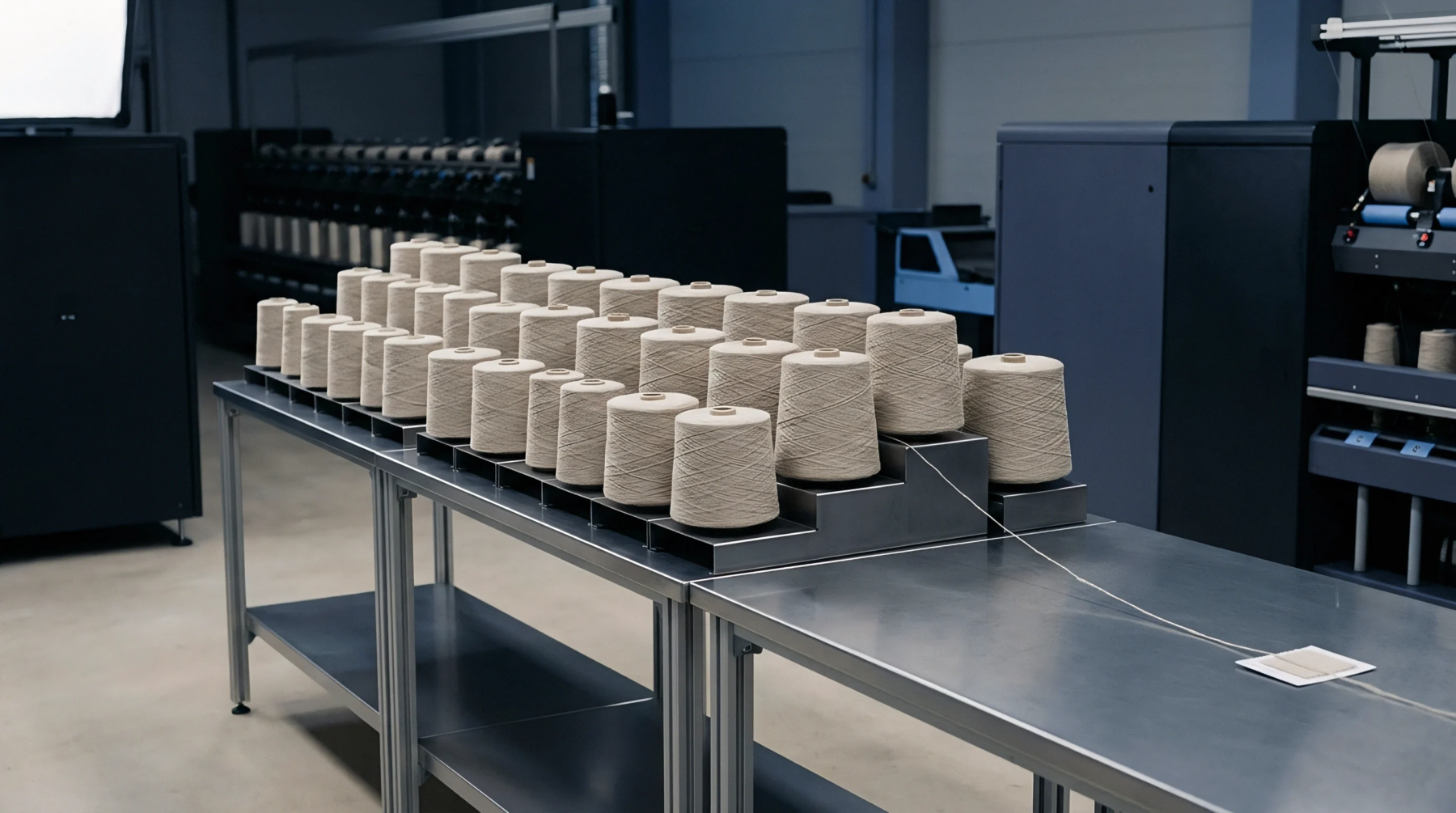
Crimp Exchange Metrics
Synthetic filament production requires a precise quantification of how fibres recover their original length after a load is removed to ensure consistent fabric hand and elastic recovery. A crimp exchange value defines the percentage difference between the length of a fibre under a high tension load and the length recorded under a lower testing tension after the fibre recovers from a standard heat setting process. Laboratories apply this calculation to continuous filament yarns during the post extrusion phase to establish the effectiveness of mechanical texturing or bulked continuous filament treatments.
Such data binds the manufacturer to a quality ceiling because variations beyond a specific tolerance cause uneven dyeing or irregular patterns in finished knitted textiles.
Processing Verification
Mechanical texturing equipment exerts force on filaments to generate helical structures that provide the final product with loft and stretch. Operators verify the crimp exchange during the wind up stage by extracting samples from bobbins and placing them on an automatic tester that alternates weights. This procedure identifies whether the heat applied in the stuffer box or the disc friction zone produced the required degree of permanent deformation.
If the results fall outside the predetermined range for a specific denier, the machinery settings for air pressure or heater temperature require an immediate manual adjustment.
Material Behaviour
High denier yarns intended for heavy duty upholstery fabrics demand different recovery thresholds compared to fine denier filaments used for hosiery. A fibre property such as inherent elasticity dictates the upper limit of the calculation because material with low modulus values reaches its stretch capacity before the full load is applied. When internal structure prevents full recovery, the crimp exchange drops and indicates a failure in the polymer stabilization process.
This phenomenon shows why mills discard batches that display high variability during the initial quality control audit.
Production Constraints
Synthetic manufacturing relies on these measurements to maintain uniformity across massive shipments of yarn. A mill producing polyester or nylon verifies the stability of its output through the constant monitoring of physical deformation recovery. Variations in the moisture content of the fibre or the ambient temperature inside the facility shift the readings even when the mechanical tension remains constant.
Every batch is evaluated against the baseline requirement to confirm the yarn behaves predictably during the subsequent weaving or knitting cycles. Proper calibration of the weighted tensioner remains the singular way to ensure the recorded values are reliable across all product lines. Rigid adherence to the defined recovery window prevents the downstream manufacturing defects that arise from non homogeneous yarn elasticity.