Quantifying Transverse Hydrodynamic Permeability Decay Limits in Ultra High Warp Density Continuous Dyeing Routes
High warp density restricts transverse fluid penetration during continuous padding, requiring hard-roll high-pressure nips to prevent ring-dyeing.

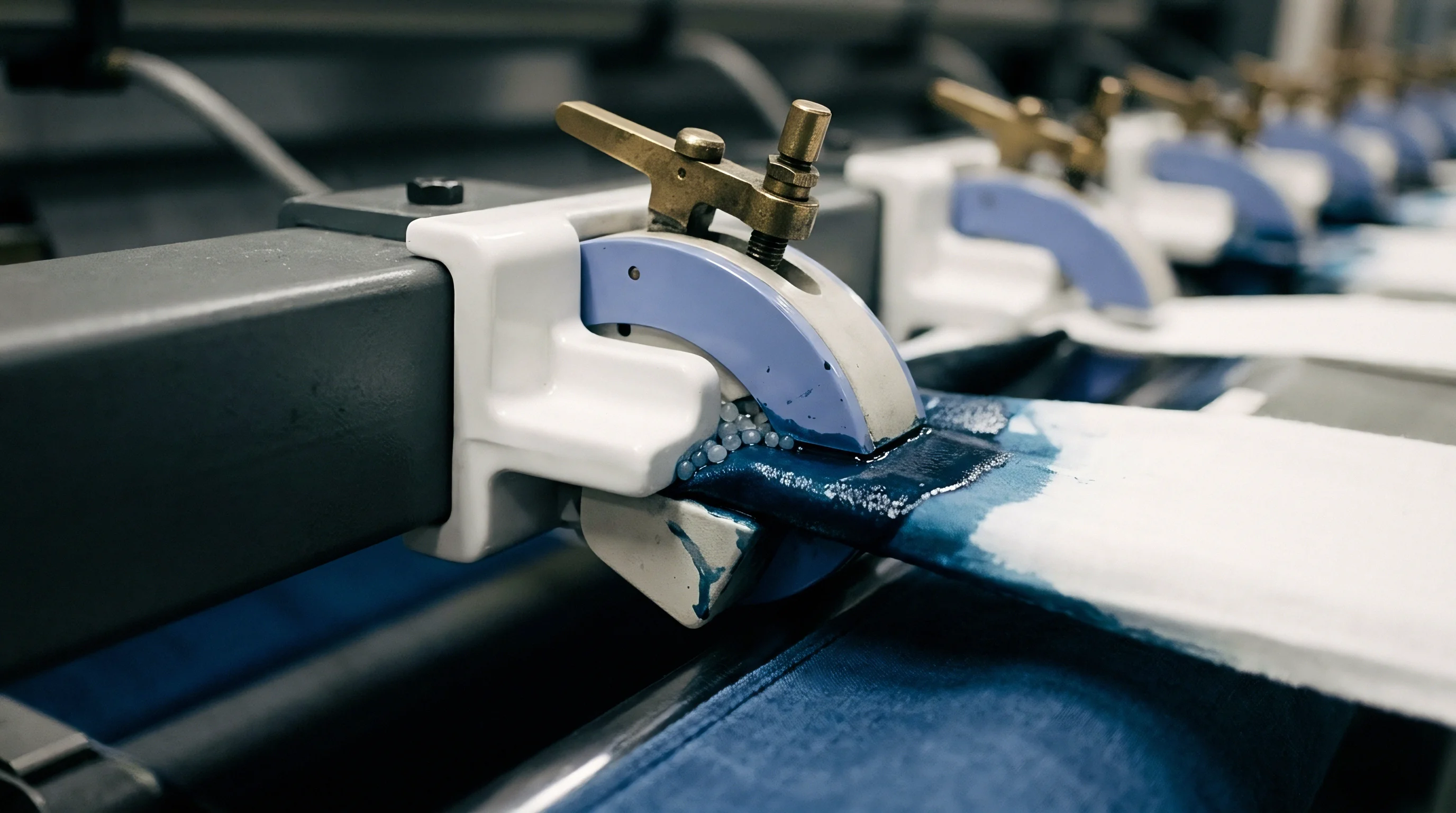
Sieve
Continuous wet processing of ultra-high warp density fabrics presents immediate fluid dynamic obstacles at the entry nip of a pad mangle. Woven constructions engineered for high water repellency, down-proof barrier performance, or high-density military specifications rely on extreme thread counts. Warp densities frequently range from 80 to 140 ends per centimetre using fine combed cotton or micro-denier synthetic filament yarns.
High thread packing restricts the spatial area available for transverse liquid transport during continuous pad dyeing. As warp yarns compress under weaving tension and subsequent finishing alignments, the geometric interstice between adjacent warp threads shrinks to sub-micron dimensions.
The calculation of fabric cover factor defines the physical boundary of this geometric restriction. Using the Walz cover factor formulation, constructions exceeding 88 percent total cover exhibit severe structural flow resistance. Inter-yarn void spaces no longer function as open capillary channels.
The pore geometry shifts from open network transport to constrained micro-planar crevices. When greige cloth enters the pad trough, liquid dye liquor cannot instantly displace air trapped within these high-density yarn networks.
| Fabric Construction Specification | Warp Cover Factor (%) | Inter-Yarn Interstice Width (μm) | Greige Porosity Ratio (ε) | Transverse Flow Resistance Factor |
|---|---|---|---|---|
| Standard Poplin (40s/1 x 40s/1, 52 x 28 threads/cm) | 72.4 | 24.5 | 0.42 | 1.0 |
| High-Density Typewriter Cloth (60s/1 x 60s/1, 72 x 36 threads/cm) | 84.1 | 11.2 | 0.31 | 3.8 |
| Ultra-Density Barrier Plain (80s/2 x 80s/2, 98 x 44 threads/cm) | 91.8 | 4.1 | 0.19 | 14.6 |
| Micro-Filament Taffeta (50D/144f x 50D/144f, 120 x 50 threads/cm) | 95.2 | 1.8 | 0.12 | 42.1 |
The interstice closes rapidly. Fiber alignment within high-twist combed yarns further restricts lateral fluid pathways. Hydrodynamic drag inside a 4-micrometre interstice reduces transverse liquid velocity by orders of magnitude compared to standard apparel fabrics.
When liquor immersion time in a high-speed continuous pad trough drops below 0.5 seconds, fluid mechanical equilibrium cannot develop across the fabric plane.
Capillary pressure resists fluid flow. Standard wetting mechanics assume rapid capillary uptake governed by the Lucas-Washburn equation. High warp density renders classical capillary assumptions invalid.
Hydrodynamic pressure must overcome structural back-pressure generated by compressed air pockets trapped inside yarn cores. Immersion without adequate mechanical pressure leaves yarn interiors untouched by dye chemistry.
A tight warp grid creates a physical barrier that forces dye liquor to travel around yarn bundles rather than penetrating through them. Yarn packing density determines the primary limit of transverse fluid movement before chemical auxiliaries enter the bath.

Impulse
Transverse liquid transport through a saturated textile substrate follows Darcy’s Law for fluid flow in porous media under controlled boundary conditions. Dynamic continuous padding alters these theoretical parameters. The pressure gradient across the fabric thickness arises from the mechanical force generated in the pad mangle nip wedge.
Fluid velocity depends on substrate permeability, fluid viscosity, and applied hydrodynamic pressure gradient.
Dye liquor inside the pad trough encounters high shear forces as the fabric web travels at production speeds between 30 and 80 metres per minute. Squeezing action at the nip roll contact zone creates a localized pressure field. Hydrodynamic pressure forces liquor through the warp sheet.
Transverse hydrodynamic permeability drops non-linearly as fluid moves from outer surface fibers toward the internal core of the yarn bundle.
Darcy permeability drops by two orders of magnitude when warp packing density exceeds 90 percent cover under saturated swelling conditions.
The fluid transfer process during dynamic padding under high hydrodynamic resistance follows a precise mechanical progression.
- Hydrodynamic Wedge Entry creates initial fluid pressure as fabric enters the liquor trough at high web velocity.
- Surface Wetting Instability develops when dynamic contact angle hysteresis prevents immediate air displacement from dense warp crowns.
- Nip Squeeze Compression forces liquid transversely into external warp interstice spaces while generating radial yarn flattening.
- Internal Pore Pressurization forces trapped air into microscopic bubbles that block transverse fluid pathways.
- Liquor Backflow Redistribution ejects excess dye solution backward into the trough, leaving inner yarn fibers dry.
Radial expansion narrows the pore. Fluid friction within micro-channels increases exponentially with decreasing hydraulic radius. High line speeds reduce contact time inside the pressure field.
At 60 metres per minute, fabric passes through a 15-millimetre nip contact zone in 0.015 seconds. High hydrodynamic velocity gradients generate fluid shear, altering the local viscosity of dye formulations containing high-molecular-weight thickeners or anti-migration polymers.
Viscosity modifiers alter flow behavior. Shear-thinning liquor formulations lower dynamic resistance under high nip pressure. Dynamic wetting agents lower surface tension below 24 millinewtons per metre, accelerating air displacement during initial immersion.
Mechanical pressure applied by the roller nip must match the dynamic capillary resistance of the specific greige warp structure.
Machinery manufacturers frequently attribute core-shell shade variations to improper dye class selection rather than hydrodynamic penetration limits within high-density warp structures.

Drag
Cellulosic and synthetic fibers react dynamically to water contact during continuous wet processing. Cellulosic fibers absorb water rapid-fire, triggering substantial radial swelling within milliseconds of immersion. Cotton fiber cross-sections expand radially by 14 to 20 percent upon contact with aqueous liquor.
This dimensional swelling alters fabric pore geometry while the web passes through the pad trough.
Warp yarns under longitudinal tension cannot expand along their axis. Hydrodynamic swelling forces fiber expansion inward into inter-yarn void spaces. Inter-yarn gaps that measured 5 micrometres in dry greige cloth narrow to less than 1 micrometre during wet processing.
Transverse hydrodynamic permeability decays exponentially over time following initial fluid contact.
Slower line speed allows liquid diffusion to reach core yarns before swelling closes inter-yarn pore channels.
Permeability decay limits cross-sectional dye liquor distribution. Dense warp packing combined with instant fiber swelling creates an impermeable outer layer. Chemical auxiliaries, soluble dyes, and particulate pigment dispersions encounter a localized physical barrier.
The core of the warp yarn remains dry or partially un-dyed, causing severe structural ring-dyeing.
The failure to manage transverse hydrodynamic decay yields distinct physical defects on finished woven goods.
- Frosting Defects manifest as white micro-flecks on the fabric surface when abrasion exposes un-dyed filament cores.
- Center-Selvedge Shade Variations arise from non-uniform transverse pressure distributions across wide roller nips during swelling transitions.
- Warp Streak Intensification occurs where minor warp end tension variations cause localized spatial differences in permeability decay rate.
- Tailing Phenomena result from selective dye molecule filtration as liquor filters through swollen surface fibers.
- Rub Fastness Degradation develops when un-penetrated surface dye aggregates deposit on outer yarn crowns instead of fixing internally.
Liquid velocity falls to zero. When inter-yarn pores close completely, fluid movement transitions from hydrodynamic bulk flow to slow molecular diffusion through solid polymer networks. Frictional drag inside restricted inter-fiber channels strips dye particles from the moving fluid phase.
Outer fiber crowns take up excess dye mass while inner fibers receive negligible dye concentration.
Sub-surface core dry zones leave bulk fabric orders vulnerable to severe visual shade shifts after light brushing, calendering, or garment laundering. Financial losses accumulate rapidly when entire continuous dye runs exhibit surface-only dye fixation.
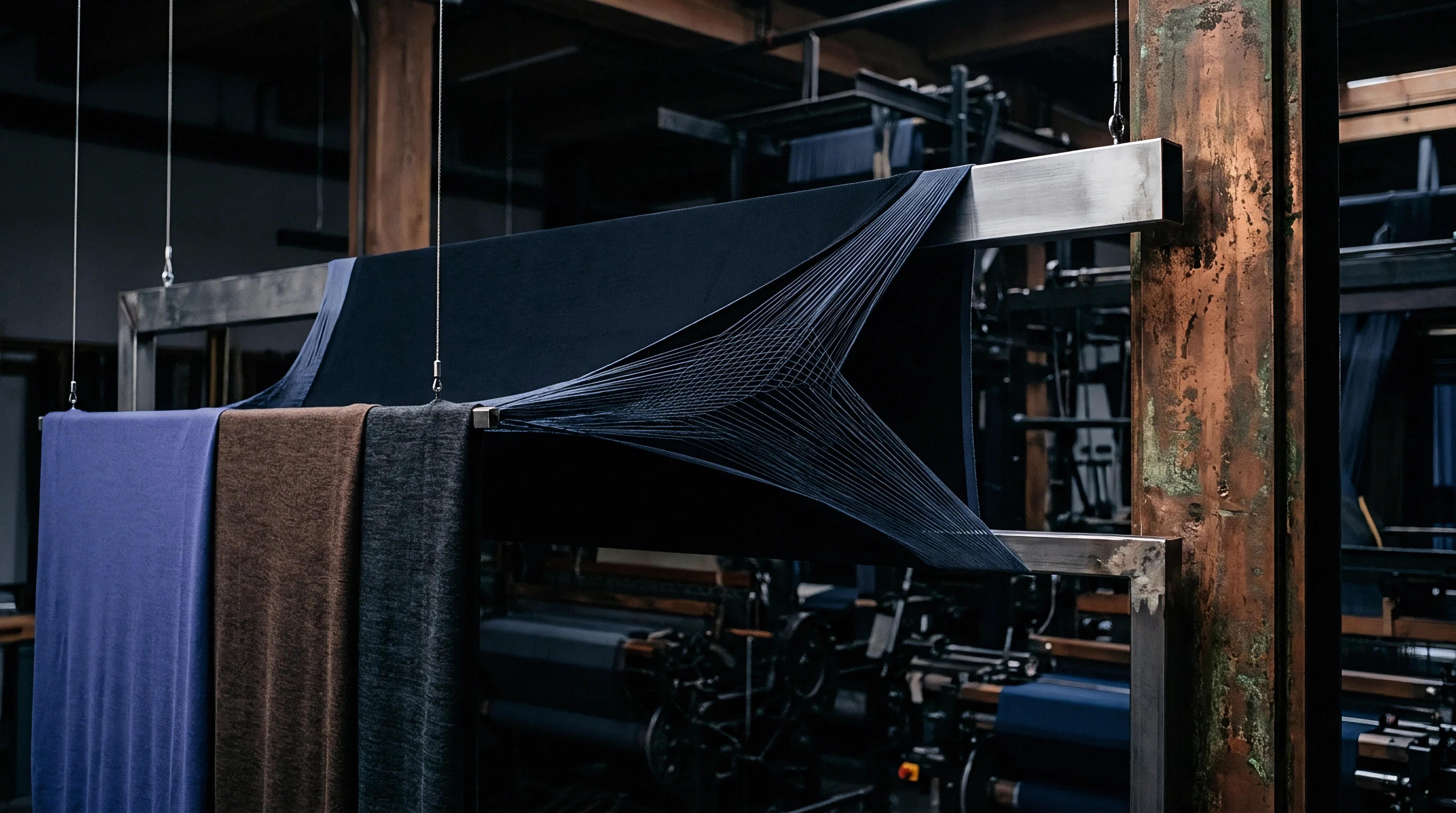
Nip
Controlling continuous pad dyeing on ultra-high warp density constructions requires exact coordination of roll durometer, linear nip pressure, liquor viscosity, and immersion path geometry. Pad mangles equipped with standard soft rubber rolls allow excessive deflection under heavy loading, causing non-uniform transverse penetration across wide fabric widths. Deflection-compensating rolls using internal hydraulic or pneumatic zones maintain controlled pressure profiles across the roll face.
Harder roll covers reduce the width of the nip footprint while elevating peak fluid impulse pressure. Roll hardness levels between 85 and 95 Shore A concentrate mechanical energy into a narrow contact zone. High impulse pressure forces liquor through high-density warp grids before fiber swelling closes transverse flow channels.
ISO 105-J03 color difference limits of Delta E sub-CMC below 0.6 require a minimum core penetration ratio of 85 percent across all warp bundle cross-sections.
Pneumatic pressure drives the wedge. A worked engineering scenario clarifies fluid transport behavior across contrasting machine setups during high-density warp processing.
Consider a 100 percent combed cotton high-density weave (80s/2 warp, 110 ends/cm, greige warp cover factor 92.5%) processed on a continuous dye line. Dye liquor formulation maintains a surface tension of 25 millinewtons per metre and a dynamic viscosity of 4.2 millipascal-seconds. Target wet pick-up stands at 55 percent by weight.
Setup A operates with 70 Shore A rubber rolls under a linear load of 20 Newtons per millimetre at a line speed of 50 metres per minute. Nip width measures 28 millimetres, yielding a dwell time of 0.033 seconds in the pressure zone. Peak hydrodynamic force reaches 0.71 Megapascals.
Transverse liquor penetration reaches 42 percent of the yarn core depth before fiber swelling restricts flow.
Setup B utilizes 90 Shore A synthetic rolls under a linear load of 38 Newtons per millimetre at a reduced line speed of 32 metres per minute. Nip width compresses to 14 millimetres, yielding a dwell time of 0.026 seconds. Concentrated mechanical loading elevates peak hydrodynamic force to 2.71 Megapascals.
Penetration depth increases to 88 percent of yarn core depth under elevated fluid pressure.
| Machine Operational Variable | Conventional Setup A | High-Density Setup B | Vacuum-Assisted Setup C |
|---|---|---|---|
| Roll Cover Hardness (Shore A) | 70 | 90 | 85 |
| Linear Nip Load (N/mm) | 20 | 38 | 28 |
| Production Speed (m/min) | 50 | 32 | 35 |
| Peak Hydrodynamic Pressure (MPa) | 0.71 | 2.71 | 1.85 |
| Pre-Nip Vacuum Slot Slot Pressure (-kPa) | 0.0 | 0.0 | -45.0 |
| Average Wet Pick-Up (%) | 68 | 54 | 52 |
| Yarn Core Penetration Depth (%) | 42 | 88 | 96 |
Vacuum slots installed before the pad nip remove trapped air from the greige structure. Pre-wetting with low-foaming surfactant combinations reduces dynamic contact angle hysteresis. Slower line speeds extend effective trough immersion time, matching fluid delivery to the swelling kinetics of the substrate.
Standard delivery contracts state that fabric lots displaying cross-sectional dye core penetration under 80 percent fail ISO 105-X12 crocking fastness requirements by at least one full grade.

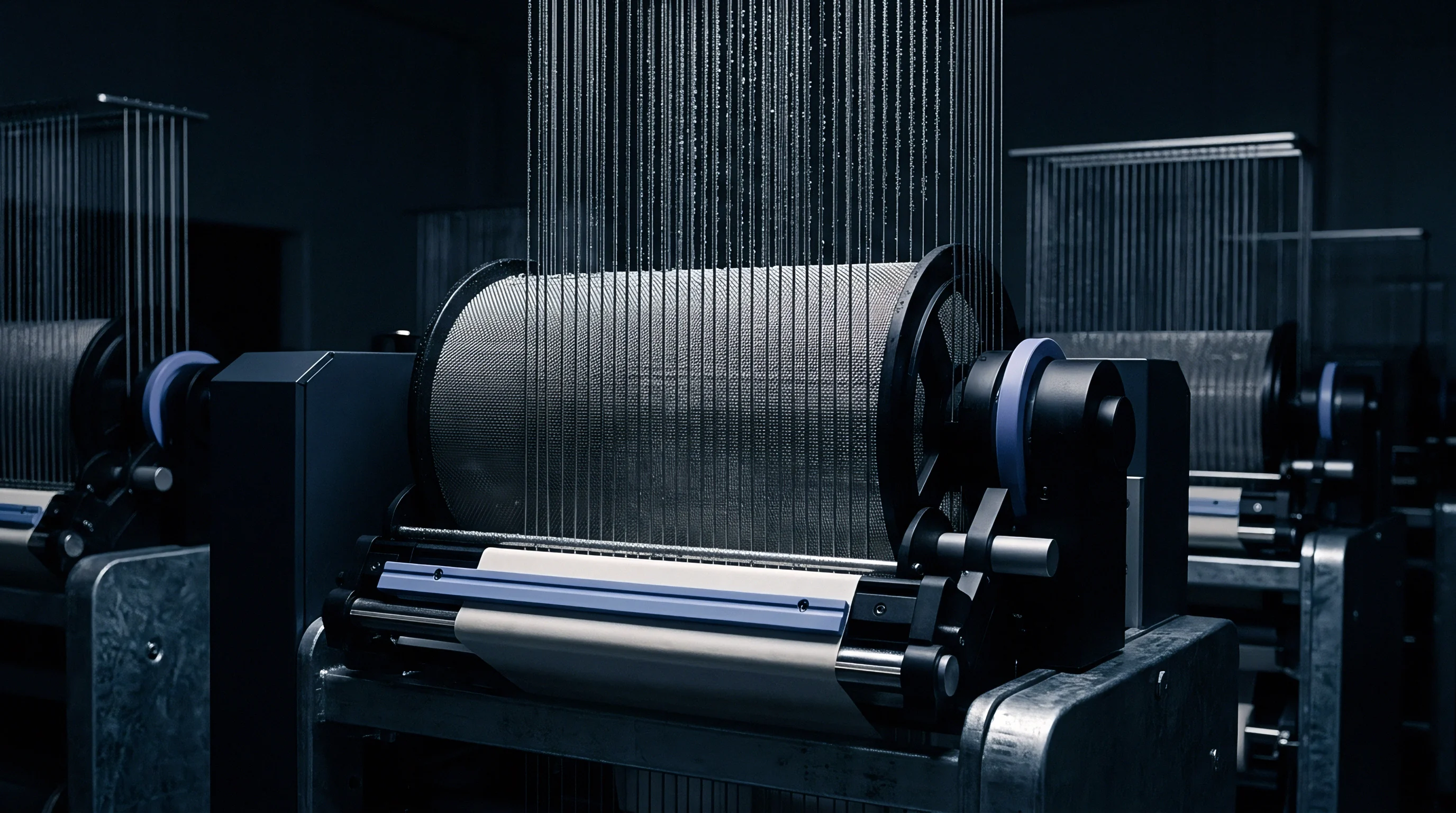
Probe
Quantifying transverse permeability decay limits requires analytical methods capable of resolving dye distribution within individual yarn cross-sections. Standard reflectance spectrophotometers measure integrated surface light absorption across a multi-yarn aperture. Surface spectro-colorimetry fails to distinguish between uniform yarn core penetration and concentrated surface ring-dyeing.
Microtome sectioning provides exact visual cross-sections of dyed warp yarns. Embedded fabric samples, frozen in epoxy resin, are microtomed into 5-micrometre slices perpendicular to the warp axis. Digital optical microscopy paired with image analysis software quantifies light intensity across the core-to-sheath radius of individual fiber bundles.
Core yarns remain un-dyed under poor penetration conditions. Computerized image analysis calculates the radial Colorant Density Distribution Index by comparing outer fiber color saturation against inner fiber values.
| Penetration Index Class | Core-to-Sheath K/S Ratio | Dry Rub Fastness (ISO 105-X12) | Wet Rub Fastness (ISO 105-X12) | Abrasion Frosting Rating (ISO 12947) |
|---|---|---|---|---|
| Class 1: Surface Ring (Unacceptable) | < 0.25 | Grade 3.0 | Grade 1.5 | Grade 2.0 |
| Class 2: Partial Shell (Marginal) | 0.25 – 0.55 | Grade 4.0 | Grade 2.5 | Grade 3.0 |
| Class 3: Extended Core (Compliant) | 0.56 – 0.85 | Grade 4.5 | Grade 3.5 | Grade 4.0 |
| Class 4: Total Uniform (Optimal) | > 0.85 | Grade 4.5 | Grade 4.0 | Grade 4.5 |
Reflectance values deviate sharply. Spectral evaluation of microtomed cross-sections utilizes Kubelka-Munk K/S transformations to measure absolute color strength at 10-micrometre radial intervals from the yarn surface inward.
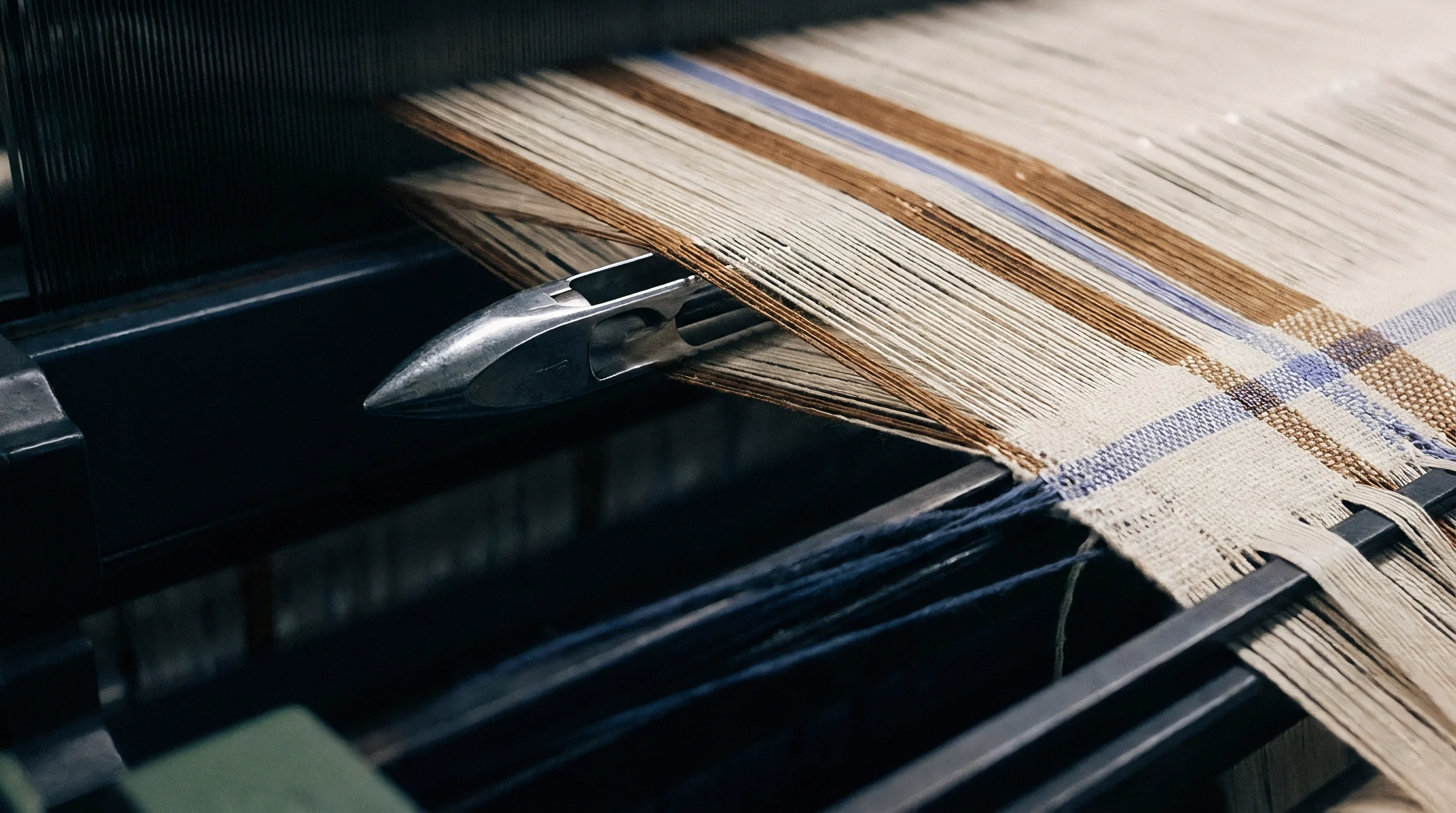
Is Cross-Sectional Colorimetry Sufficient for Penetration Verification?
Cross-sectional colorimetry verifies spatial dye positioning, but modern quality auditing requires complementary physical testing. Dynamic capillary absorption testing measures liquid transport rate under applied hydraulic head. AATCC 197 liquid wicking tests verify whether residual wetting agents alter post-dyeing fluid transport.
Ring-dyed warp fibers reveal high surface reflectance under light box examination despite showing adequate total dye pick-up mass.
Technical dossiers for ultra-high warp density continuous dye approval must contain four mandatory verification elements.
- Microtomic Radial Dye Distribution Profiles displaying K/S values across ten concentric radial zones per warp bundle.
- Dynamic Wetting Time Metrics measured via drop absorption testing under ISO 9073-6 test conditions.
- Wet-to-Dry Rub Fastness Certificates demonstrating compliance with ISO 105-X12 standards across three independent lot samples.
- Differential Wash Fastness Metrics confirming shade stability following five consecutive ISO 6330 wash cycles.
Whether microtomic K/S profiling can replace long-term abrasion wear testing as a mill batch release gate remains an open technical dispute among continuous finishing specialists.

Tariff
Managing transverse hydrodynamic permeability limits carries direct commercial consequences for mill profitability and finished fabric landed cost. Operating continuous dyeing ranges at reduced speeds to compensate for fluid decay increases machine-hour allocations. Running a continuous pad-thermosol line at 30 metres per minute instead of 60 metres per minute doubles the direct labor and power cost assigned to every metre of finished fabric.
Hard rolls sharpen the gradient. Equipment modifications, including high-pressure S-roll pad mangles, vacuum de-aeration units, and specialized penetrant chemical packages, add capital outlay and chemical cost per metre. Surfactant formulations designed for extreme dynamic wetting increase dye bath chemical costs by 0.08 to 0.14 Euros per linear metre.
The process window narrows. Failure to alter machine parameters for high-density warp builds increases bulk rejection rates. Bulk re-dyeing attempts on ring-dyed high-density goods rarely succeed.
Strip-and-redye operations cause further yarn compacting, permanently degrading tear strength along warp lines.
Yield loss inflates landed price. High scrap rates on ultra-dense technical fabrics carry heavy cost penalties due to high greige yarn values. A 5 percent bulk shade rejection on an 80s/2 combed cotton dense barrier fabric eliminates the converter’s target profit margin for the entire production route.
Machine capacity governs unit cost. Continuous lines operating below nominal velocity consume greater energy per kilogram of processed cloth. Dyehouses set strict minimum order quantities for high-density routes to amortize line setup and wash-down overhead.
Sourcing contracts for ultra-high density wovens must balance processing velocity against the financial risk of surface ring-dyeing failures.