Process Force
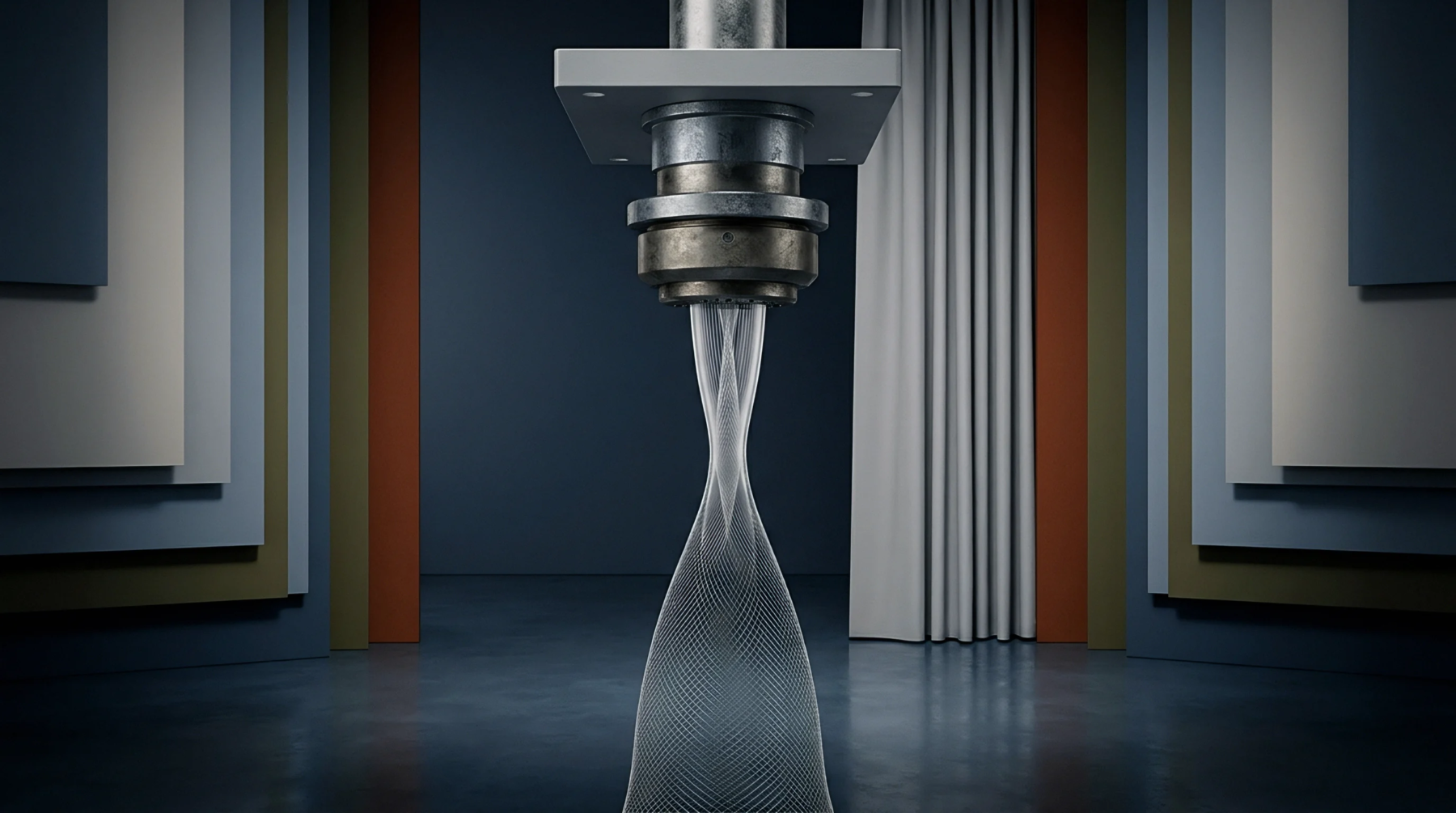
Hydraulic force exerted by moving liquor inside pressurized wet processing machinery drives dye liquor into dense textile structures. In jet dyeing vessels, hydrodynamic pressure forces liquid through nozzle orifices to propel fabric rope while simultaneously forcing dye molecules into yarn interiors. The metric measures kinetic liquid force against fabric surfaces during continuous or batch wet processing, distinct from static hydrostatic pressure applied to waterproof membrane coatings.
The force calculation stops at the outer boundary of the wet processing chamber where fluid flow ceases.
Penetration Mechanism
Rapid liquid movement creates force gradients across woven or knitted structures. Controlled hydrodynamic pressure ensures even dye liquor distribution through tight yarn intersections in high-density fabrics. When flow velocity drops, liquor penetration becomes inadequate, resulting in shade ring formation and surface shade variations across dyed rolls.
Equipment Control
Nozzle diameter and pump rotation speeds establish internal liquid velocity within jet dyeing systems. Operating parameters must balance hydrodynamic pressure against delicate fabric surfaces to prevent filament distortion or pilling. Heavy woven fabrics demand elevated liquid pressure to achieve full core penetration, whereas delicate warp knits require gentle fluid movement to preserve surface texture.
Differential pressure sensors log real-time values across internal flow manifolds.
Material Resistance
Dense structures demand high hydrodynamic pressure to achieve thorough liquor penetration.