Tension Regulation
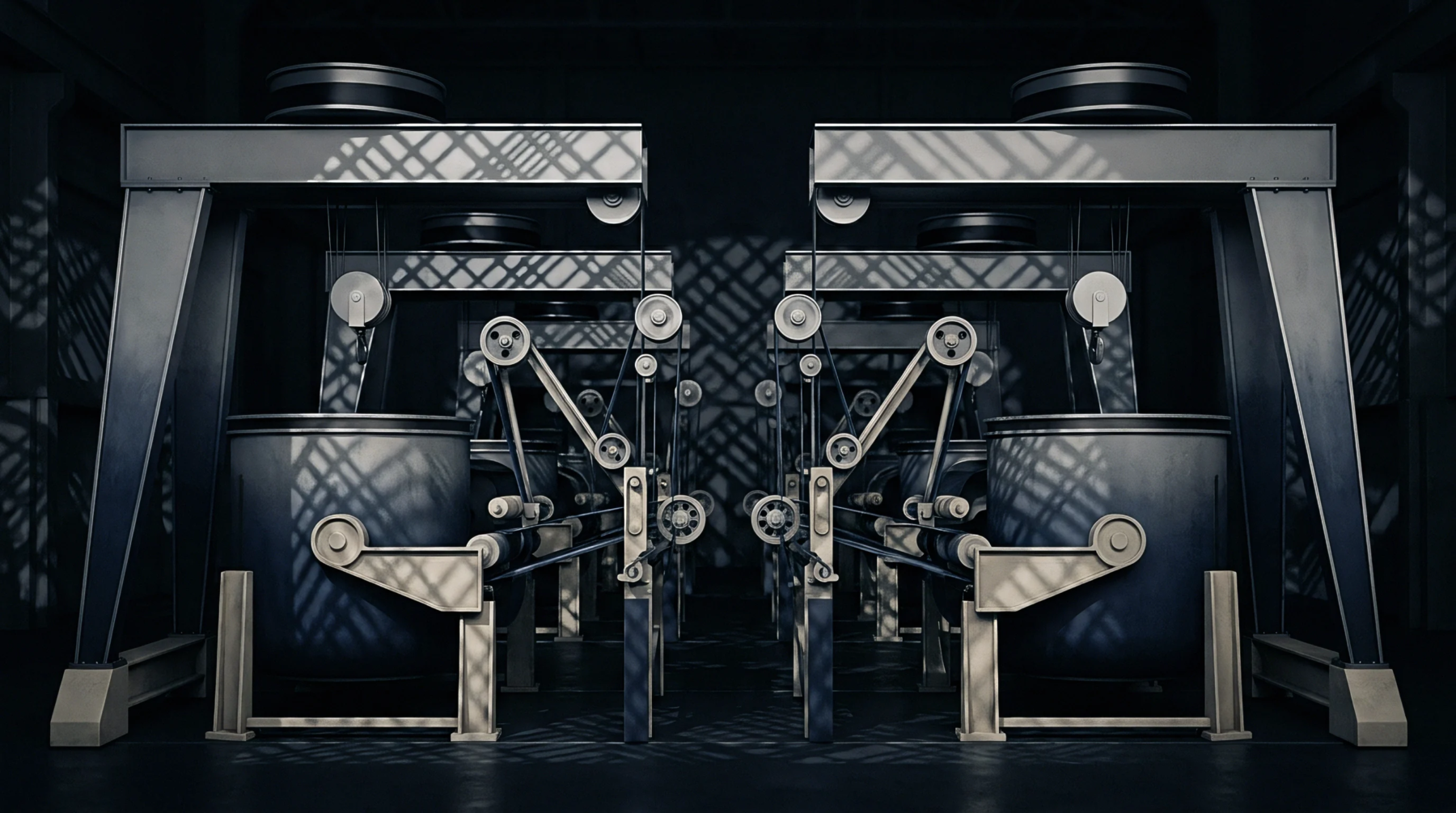
Tensioning systems maintain constant force on moving fabric or film webs between processing stations. Dancer roll control governs this force by using a pivoted assembly with a weighted or pneumatic arm that rises or falls as slack accumulates or pull increases. This mechanism creates a buffer that isolates the downstream wind-up or printing station from upstream feed variations.
Mechanical Feedback
Sensors track the position of the movable arm to signal the drive motor about the required speed adjustment. When the arm drops, it indicates low tension and prompts the motor to accelerate the wind-up spool. A rise in the arm signals high tension, causing the drive to decelerate and prevent web breakage or stretching.
Operational Boundary
Variations in line speed create inertia that the system must overcome through precise calibration of the dancer weight or air pressure. Proper setup avoids oscillation which otherwise ruins print registration or causes uneven dyeing across the roll. Stable operation depends upon the mass of the roller relative to the tensile strength of the substrate.
Production Outcome
Consistency in the web velocity ensures the fabric retains its dimensions through finishing stages like stenter framing or coating. Uniformity throughout the machine direction reduces waste caused by edge curling or snap-offs during high-speed production runs. Stable tensioning remains a primary requirement for defect-free material handling.