Arbitral Allocation of Non Compliance Costs in Multi Tier Subcontracted Textile Dyeing Chains
Arbitral cost allocation in subcontracted dyeing requires roll-level chemical tracing, un-cleaved specimen preservation, and enforceable flow-down indemnities.


Chain
Multi-tier textile manufacturing separates the commercial buyer from the specialized wet processing facility through several intermediary contracts. A brand issuing a garment purchase order typically contracts solely with a Tier 1 converter or cut-and-sew factory. That converter orders greige fabric from a Tier 2 weaving mill, which subsequently subcontracts the dyeing, bleaching, and functional finishing to a Tier 3 wet processing plant.
When finished fabric fails regulatory testing at the port of entry, this legal separation obscures direct accountability.

Privity Gaps across Subcontracted Dyeing Contracts
International brands issue purchase orders directly to Tier 1 apparel converters, with master purchase agreements incorporating strict Restricted Substance Lists tied to destination market regulations like REACH Annex XVII or California Proposition 65. The converter buys un-dyed yardage and sends it to independent commission dyehouses without transferring those main contract terms. The sub-dyehouse typically operates under a local processing agreement that disclaims liability beyond basic labor charges.
If a dye lot contains banned alkylphenol ethoxylates exceeding the 100 milligrams per kilogram limit set by REACH Entry 46a, the buyer cannot sue the dyehouse directly under contract law. Recourse remains strictly against the Tier 1 converter, who must then try to claim against the Tier 2 mill or Tier 3 processor under local tort law or separate supply contracts.
When converters farm out color application to unapproved cottage dyehouses to hit tight delivery windows, tracing the chemical history of individual bolts becomes exceptionally difficult. Arbitral tribunals examine whether the main purchase order prohibited unauthorized subcontracting. An explicit prohibition establishes a clear contractual breach against the Tier 1 converter, simplifying the buyer’s burden of proof.

Flow-Down Clauses and Jurisdictional Transfer
Commercial purchase agreements often mandate adherence to restricted substance lists without specifying arbitral mechanisms for sub-suppliers. Effective risk transfer demands flow-down provisions that incorporate the buyer’s chemical compliance standards and arbitration agreements into every down-chain contract. Without identical arbitration clauses across all tiers, disputes fragment into multiple forums.
The buyer arbitrates against the converter under Singapore International Arbitration Centre rules, while the converter litigates against the dyehouse in a local domestic court, creating conflicting evidentiary rulings and delaying cost recovery.
| Contractual Link | Primary Instrument | Chemical Risk Mechanism | Arbitral Forum Alignment |
|---|---|---|---|
| Brand to Tier 1 Converter | Master Garment Purchase Order | Restricted Substance List warranty and recall indemnity | International arbitration under UNCITRAL or ICC rules |
| Tier 1 Converter to Tier 2 Mill | Fabric Supply Agreement | Greige specification and technical performance standards | Frequently omits flow-down chemical compliance terms |
| Tier 2 Mill to Tier 3 Dyehouse | Commission Dyeing Work Order | Processing fee terms with limited standard liability caps | Local court litigation or domestic arbitration only |
| Tier 3 Dyehouse to Tier 4 Chemical Vendor | Chemical Purchase Invoice | Safety Data Sheet claims without lot-level guarantees | No arbitral agreement; domestic commercial code governs |
Dyehouses frequently defend against non-compliance claims by arguing that raw grey goods supplied by the converter already contained the restricted precursors.


Sump
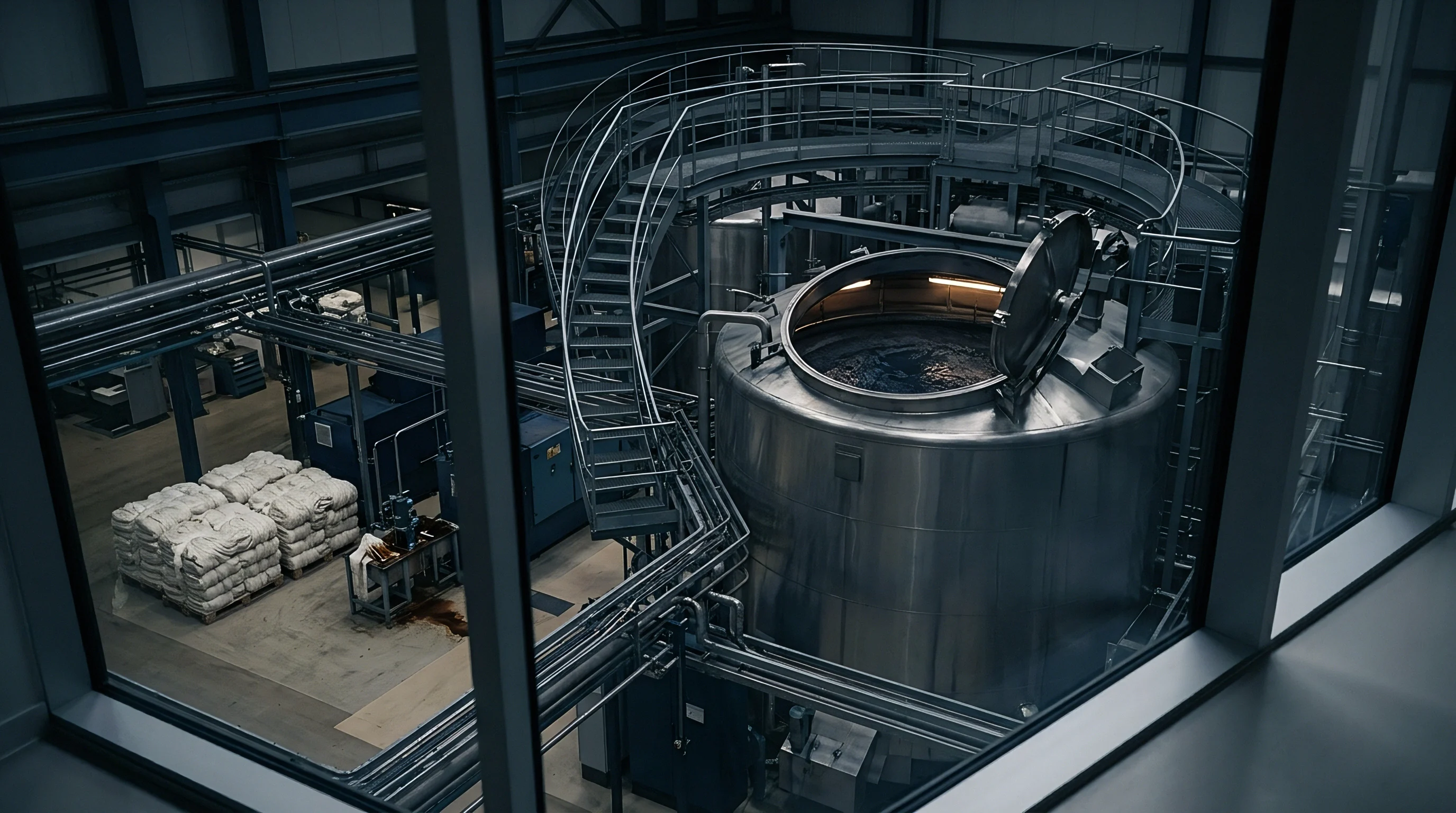
Chemical contamination in finished yardage originates within the aqueous baths used during bleaching, dyeing, and functional finishing. Dyehouses rely on complex chemical auxiliary formulations including leveling agents, dispersants, fixatives, and softeners. When cost pressures push sub-dyehouses to purchase unbranded auxiliaries, unlisted hazardous substances enter the production stream.

Contamination Vectors in Wet Processing Operations
Unregulated dye houses substitute low-cost azo colorants containing cleavable aromatic amines to cut formulation overhead. Under EN ISO 14362-1 analysis, reductive cleavage of these azo dyes releases carcinogenic amines such as 4-aminobiphenyl, benzidine, or 4-chloro-o-toluidine in excess of the statutory 30 milligrams per kilogram threshold. A secondary vector involves nonylphenol ethoxylates used as surfactants in scour baths; because they do not bind to the fiber matrix, they remain as superficial residues that trigger import failures.
Heavy metals in water supplies or pigment pastes form a third common route, where extractable chromium VI ~ regulated under EN ISO 17075 ~ develops as trivalent chromium oxidizes during high-temperature drying in poorly monitored stenter frames.
- Azo Colorant Cleavage generates banned aromatic amines during reductive processing in textile dye liquor, breaching REACH Annex XVII Entry 43 specifications.
- Surfactant Carryover leaves nonylphenol ethoxylate residues on washed yardage, triggering automatic border detentions under EU market surveillance standards.
- Stenter Oxidation transforms benign trivalent chromium into toxic hexavalent chromium during elevated temperature heat-setting phases.
- PFAS Water Repellents introduce restricted perfluoroalkyl and polyfluoroalkyl substances via legacy chemical cross-linkers applied during water-proofing steps.

Chemical Fingerprinting for Source Attribution
Mass spectrometry protocols isolate specific isomer ratios in returned yardage to identify factory-level chemical signatures. Liquid chromatography combined with tandem mass spectrometry detects trace impurities unique to specific chemical manufacturers. If a dyehouse claims that 4-aminobiphenyl detected on a cotton twill originated from airborne contamination in transit, isotopic fingerprinting of the auxiliary residues refutes the defense by establishing whether the banned substance was an intentional color formulation constituent or an environmental trace.
The threshold for 4-aminobiphenyl under EN ISO 14362-1 remains 30 milligrams per kilogram, above which customs authorities issue immediate border rejections.
When secondary finishing plants share common wash troughs across different production lines, cross-contamination risk falls on the party controlling the wash schedule.

Audit
Documentary evidence presented to arbitral tribunals relies on the structural distinction between facility-level scope approvals and lot-level transaction documents. Certificate scope governs whether a facility possesses the operational controls to handle organic or restricted-substance-free processing, but it does not guarantee that every physical bolt leaving the mill complies with purchase order chemical limits.

Evidentiary Value of Batch Transaction Certificates
Scope certificates confirm that a mill maintains systems capable of processing compliant material under standard operating parameters, issued annually by bodies following OEKO-TEX Standard 100 or Global Organic Textile Standard site inspections. Transaction certificates link specific chemical testing reports to defined batch weights and shipping bolt numbers. Tribunals dismiss defenses based solely on valid scope certificates when transaction certificates for the specific contaminated lot are missing or unverified, treating scope certificates as proof of facility capacity rather than batch compliance.
- Cut representative swatches from both head and tail ends of ten percent of random fabric rolls inside the suspect shipping container.
- Seal individual swatches into inert aluminum-lined specimen bags to prevent cross-contamination from volatile organic compounds during transport.
- Apply tamper-evident security tape across bag closures and record unique serialized identifiers on the physical chain of custody log.
- Dispatch sealed specimens via direct courier to an ISO 17025 accredited laboratory authorized for EN ISO 14362-1 and REACH Annex XVII testing protocols.

Chain of Custody and Retest Protocols
Defensible analytical proof demands intact physical samples drawn from both head and tail ends of individual fabric bolts. If a buyer pulls swatches without joint inspection by the supplier, tribunals routinely reject the retest evidence due to compromised chain of custody. Retesting must also preserve un-cleaved specimen controls: under EN ISO 14362-3, analyzing colorants for 4-aminoazobenzene requires specific solvent extraction techniques before reductive cleavage.
Skipping step-by-step extraction alters chemical conversion rates, leading to false positive readings that fail legal scrutiny during arbitral cross-examination.
| Chemical Substance | Standard Test Method | Detection Limit | Arbitral Evidentiary Vulnerability |
|---|---|---|---|
| Cleavable Aromatic Amines | EN ISO 14362-1 / 14362-3 | 5 mg/kg | Thermal degradation of specimen during transport causing false positives |
| Nonylphenol Ethoxylates | EN ISO 18254-1 | 20 mg/kg | Interference from detergent residues added during destination garment washing |
| Hexavalent Chromium | EN ISO 17075-1 / 17075-2 | 0.5 mg/kg | pH changes in sample storage bags inducing chemical reduction back to Cr(III) |
| Extractable Heavy Metals | EN 16711-1 | 0.1 mg/kg | Contamination from metal container closures during sampling handling |
Failure to submit an un-cleaved specimen under EN ISO 14362-3 invalidates the laboratory finding of 4-aminoazobenzene in contested colorant lots.
Improper sample storage that permits thermal degradation of azo dyes transforms a winning contract defense into full liability for container destruction costs.


Fault
Tribunals assign financial responsibility for regulatory non-compliance by evaluating direct breaches of specification against failures to inspect incoming inputs. Liability allocation models weigh whether the converter exercised due diligence by requesting lot-specific test reports before releasing goods for cut-and-sew operations. When all contract parties contribute to a compliance failure, arbitrators split financial awards proportionately.

Legal Theories of Causation in Chemical Breach
Arbitrators distinguish between intentional substitution of banned colorants and accidental cross-contamination within shared dye liquor. Intentional substitution by a sub-dyehouse constitutes a fundamental material breach, voiding standard contractual liability limitations. Accidental contamination due to dirty wash water involves negligence concepts where comparative fault applies; if the converter failed to mandate incoming chemical screening, the tribunal may allocate thirty percent of total damages to the converter while holding the dyehouse responsible for the remainder.

Who Bears Detention Expenses during Retesting?
Port authority fees and container storage costs accumulate rapidly while split samples undergo laboratory analysis. Arbitral tribunals treat port demurrage as direct consequential damages resulting from the supply of non-compliant goods. When a buyer proves the shipment contained REACH Annex XVII prohibited substances, the tribunal awards full reimbursement of storage expenses, laboratory retesting fees, and border clearance line charges against the Tier 1 seller.
- Direct Material Loss covers the full purchase order value of rejected fabric bolts that cannot be legally sold or remediated.
- Testing and Forensics Costs encompasses ISO 17025 laboratory fees, joint sampling expenses, and expert witness retainers needed to establish contamination sources.
- Logistical Detention Expenses includes port storage fees, container demurrage charges, and secondary trucking costs incurred during customs holds.
- Commercial Recall Costs aggregates reverse logistics expenses, brand destruction penalties, and store inventory replacement overhead triggered by market authorities.
| Cost Heading | Responsible Party Allocation | Standard Allocation Percentage | Evidentiary Requirement |
|---|---|---|---|
| Fabric Value Depreciation | Tier 1 Converter / Tier 3 Dyehouse | 100% to Breaching Seller | Official border rejection notice or customs seizure decree |
| Port Demurrage & Detention | Tier 1 Converter | 80% – 100% to Seller | Itemized port terminal invoices linked to detention dates |
| Laboratory Retesting Fees | Losing Party in Arbitration | 100% to Liable Respondent | ISO 17025 accredited test invoices and chain of custody logs |
| Downstream Retail Penalties | Shared Converter / Dyehouse | 50% – 70% based on foreseeability | Executed brand master agreement detailing penalty schedules |
A converter that accepts grey goods without incoming chemical screening assumes the primary risk of downstream finish failure.
Incorporating the ICC Model Subcontract Clause 14 shifts intermediate port storage fees directly to the entity that authorized unauthorized sub-licensing of the finishing process.


Rider
Contracting parties manage multi-tier chemical exposure by inserting back-to-back indemnity schedules into both main garment assembly purchase orders and commission finishing subcontracts. Strategic drafting aligns compliance warranties across all supply chain links, specifying exact testing protocols, accredited laboratory lists, and explicit financial recovery caps to ensure tribunal enforcement.

Back-to-Back Indemnity Mechanisms
Main contracts often compel Tier 1 suppliers to hold buyers harmless against regulatory fines, market withdrawals, and inventory disposal expenses. To render these guarantees effective down the chain, the converter must execute identical back-to-back indemnity riders with Tier 2 weavers and Tier 3 dyehouses. These riders state that any finding of prohibited chemical substances by customs authorities automatically triggers an obligation to defend and indemnify upstream buyers.
Without back-to-back terms, the converter absorbs the entire loss when the sub-dyehouse disclaims liability under local processing terms.

Joinder Provisions in Multi-Tier Arbitrations
Consolidating proceedings across disparate contractual tiers prevents contradictory tribunal rulings regarding the source of banned substances. Multi-party arbitration riders mandate that sub-contractors agree to joinder in any arbitration initiated by the ultimate buyer against the main converter. Under London Court of International Arbitration rules, explicit joinder consent allows a single arbitral panel to hear claims across Brand, Converter, Mill, and Dyehouse simultaneously, establishing single-proceeding financial allocation.
- Explicit Flow-Down Warranties binding sub-dyehouses directly to destination market chemical standards set by REACH, Proposition 65, and CPSC rules.
- Mandatory Joinder Clauses compelling Tier 2 and Tier 3 entities to join main arbitrations upon written notice from the buyer or converter.
- Pre-Agreed Testing Protocols specifying ISO 17025 laboratories, sampling methods, and binding nature of joint expert determinations.
- Secured Financial Guarantees requiring sub-dyehouses to hold product performance insurance or bank letters of credit for chemical liability.
Subcontracted dyehouses rarely carry product liability insurance covering regulatory withdrawal costs.
Whether national courts will enforce consolidated arbitral awards against unconsenting sub-dyehouses in secondary sourcing nations remains subject to evolving local judicial interpretation.


Award
Arbitral tribunals calculate total compensable losses by aggregating direct batch values, testing costs, regulatory penalties, and consequential commercial damages. Enforceability of these monetary determinations relies on accurate financial modeling during the arbitral hearing phase.

Worked Allocation Model for a Contaminated Lot
Consider a hypothetical dispute involving a 40-tonne lot of dyed woven cotton fabric rejected at a European port for containing 85 milligrams per kilogram of 4-aminobiphenyl under REACH Annex XVII Entry 43. The total dispute value equals $450,000, comprising $200,000 in direct yardage cost, $50,000 in port demurrage, $15,000 in laboratory chemical forensics, $85,000 in retail order cancellation penalties, and $100,000 in hazardous waste incineration charges. The buyer arbitrates against the Tier 1 converter, and the converter brings the Tier 3 dyehouse into the proceedings via an executed multi-party joinder rider.
Evidence shows the Tier 1 converter failed to audit the dyehouse’s incoming chemical controls, while the Tier 3 dyehouse intentionally used un-certified low-cost azo pigments. The tribunal allocates sixty-five percent of the total financial award ($292,500) directly to the Tier 3 dyehouse due to bad-faith chemical substitution, and assesses thirty-five percent ($157,500) against the Tier 1 converter for negligence in supply chain oversight.
| Cost Component | Total Incurred Amount | Tier 1 Converter Share | Tier 3 Dyehouse Share |
|---|---|---|---|
| Contaminated Yardage Value | $200,000 | $70,000 (35%) | $130,000 (65%) |
| Port Demurrage Charges | $50,000 | $17,500 (35%) | $32,500 (65%) |
| Laboratory & Expert Fees | $15,000 | $0 (0%) | $15,000 (100% bad faith) |
| Retail Cancellation Penalties | $85,000 | $42,500 (50%) | $42,500 (50%) |
| Hazardous Waste Incineration | $100,000 | $27,500 (27.5%) | $72,500 (72.5%) |
| Assumptions: 40-tonne lot; 85 mg/kg 4-aminobiphenyl detection under EN ISO 14362-1; joinder clause executed under UNCITRAL rules. | |||

Enforcement Realities across Sourcing Jurisdictions
Obtaining a favorable tribunal determination constitutes only the preliminary phase of financial recovery for compliance failures. Winning parties must enforce arbitral awards under the 1958 New York Convention on the Recognition and Enforcement of Foreign Arbitral Awards. In primary textile production nations such as Vietnam, India, Bangladesh, or China, local courts review foreign awards for public policy violations.
If the underlying contract lacked clear authorization for subcontracted dyeing, local courts may delay enforcement against domestic dyehouses. Securing pre-award asset attachments or requiring offshore bank guarantees from converters ensures monetary recovery when cross-border compliance disputes arise.
Enforcement under the New York Convention requires precise alignment between the foreign award, local court procedures in the dyehouse jurisdiction, and identified unencumbered bank assets or manufacturing machinery.