Quantification Uncertainty from Non-Enzymatic Deamidation Kinetics in Ancient Specialty Animal Fiber Digests
Non-enzymatic deamidation during digestion distorts peptide ratios in historic animal fiber analysis, requiring kinetic rate corrections for species accuracy.


Substrate

Keratin Biomarkers in Ancient Textile Fiber Identification
Proteomic identification of historic and archaeological animal fibers relies on detecting peptide markers unique to specific mammalian species. Fine specialty animal fibers, including vicuña, cashmere, alpaca, mohair, and camel, possess alpha-keratins (Type I KRT31 ~ KRT40 and Type II KRT81 ~ KRT86) with highly conserved sequence homologies. Mass spectrometry distinguishes these raw materials by isolating species-specific tryptic peptides containing single amino acid substitutions.
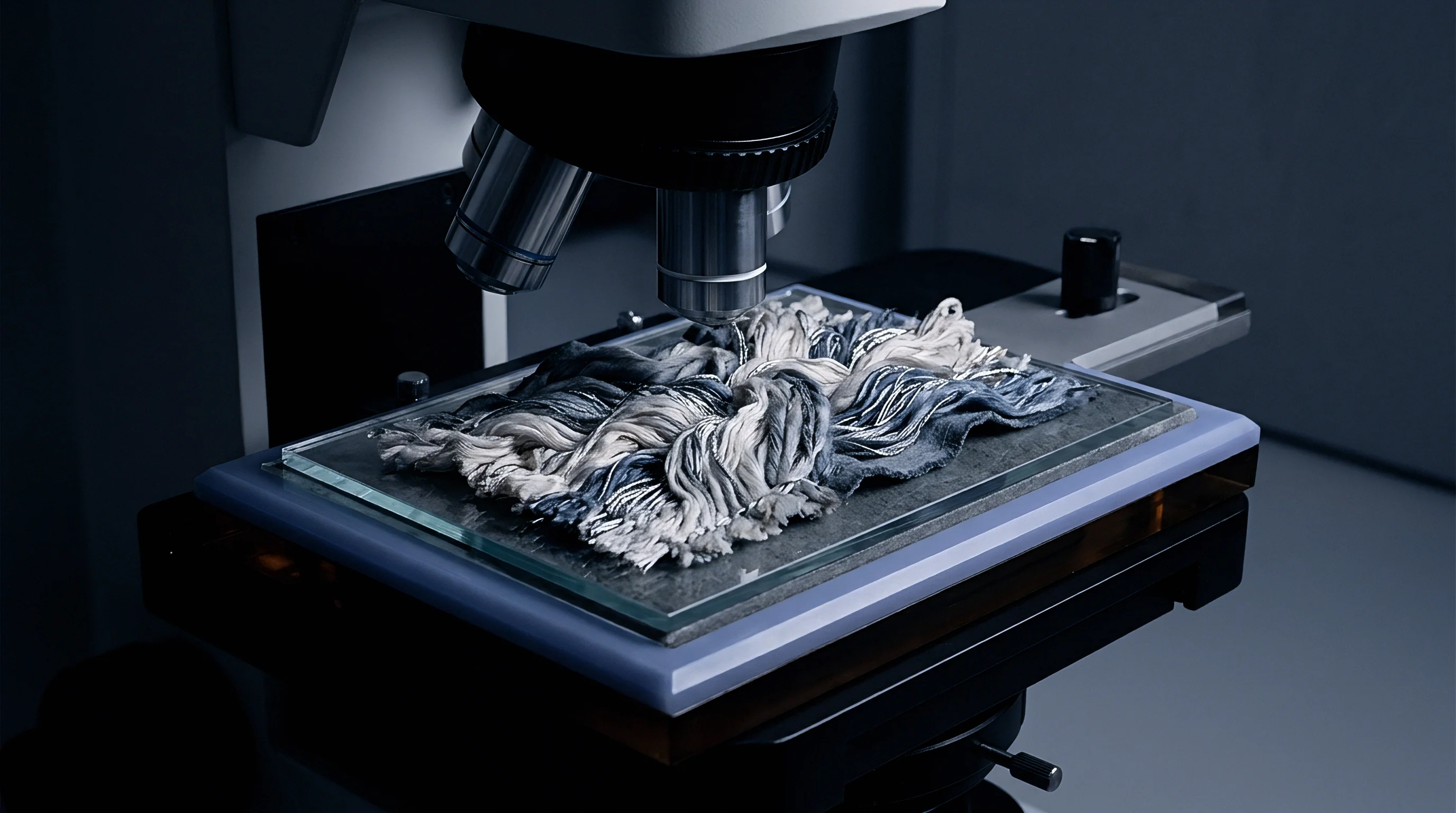
In heavily degraded historic garments and excavated textiles, physical characterization through optical or scanning electron microscopy fails when cuticle scales are eroded, pigment granules are bleached, or fiber cross-sections are flattened by mechanical pressure.
Liquid chromatography coupled with tandem mass spectrometry (LC-MS/MS) bypasses physical surface degradation by analyzing primary peptide sequences extracted from the fiber cortex. The mass shift equals 0.9848 Daltons. Acidic and basic keratins form crystalline intermediate filament structures stabilized by extensive disulfide cross-linking between cysteine residues.
Complete solubilization of these ancient protein matrices demands aggressive reduction and alkylation protocols prior to enzymatic cleavage. Trypsin hydrolyzes peptide chains specifically at the carboxyl side of lysine and arginine residues, yielding discrete fragments suitable for database searching and target mass matching.
Diagenetic Alteration versus Processing Artifacts
Diagenetic decay over centuries alters amino acid side chains within the wool keratine matrix. Non-enzymatic deamidation of asparagine (Asn, N) and glutamine (Gln, Q) residues represents the predominant chemical transformation in ancient proteinaceous artifacts. This reaction converts neutral amide side chains into negatively charged carboxylic acids, producing aspartic acid (Asp, D) or isoaspartic acid (isoAsp) from asparagine, and glutamic acid (Glu, E) from glutamine.
Diagenetic decay alters keratin structure. The extent of deamidation in historic samples frequently serves as a proxy for sample age, environmental exposure, and state of thermal preservation.
Spontaneous deamidation during laboratory sample preparation complicates this age assignment. Digestion protocols conducted at alkaline pH values between 7.8 and 8.5 at 37 degrees Celsius induce substantial in-vitro deamidation. Laboratory-induced deamidation overlaps with diagenetic modifications, creating ambiguity in relative peptide quantification.
When diagnostic peptides contain susceptible asparagine or glutamine sites, calculating species proportions in historic fiber blends becomes sensitive to processing parameters. Misinterpreting sample preparation artifacts as endogenous diagenetic markers leads to incorrect species assignments, false claims of historical authenticity, and invalid blend proportion declarations on custom customs clearances.
Pathway

Mechanism of Succinimide Intermediate Formation
Chemical transformation of asparagine residues proceeds through a five-membered succinimide ring intermediate. Nucleophilic attack by the backbone nitrogen atom of the C-terminal adjacent amino acid on the side-chain carbonyl group releases ammonia. Subsequent nucleophilic hydrolysis of the succinimide ring generates a mixture of L-aspartic acid and L-isoaspartic acid in a typical 1:3 ratio.
Isoaspartic acid forms during cyclization. The rate of succinimide formation depends on local sequence environment, secondary structure, ambient temperature, and solvent pH.
Glutamine deamidation proceeds through a six-membered glutarimide intermediate. Due to the higher thermodynamic ring strain and unfavorable entropic barrier of six-membered rings, glutamine deamidation proceeds at rates roughly one to two orders of magnitude slower than asparagine deamidation under identical chemical conditions. Glutamine deamidation proceeds slower.
Primary sequence context dictates susceptibility: sequence motifs with small, unhindered C-terminal neighbors, such as Asparagine-Glycine (NG), Asparagine-Serine (NS), and Asparagine-Alanine (NA), exhibit half-lives as short as a few hours under physiological or basic digest conditions. Motifs containing bulky hydrophobic or proline residues resist rapid cyclization.
Incubation at pH 8.2 for 16 hours at 37 degrees Celsius converts up to 14 percent of un-deamidated asparagine residues into aspartic acid.

Deamidation Susceptibility in Structural Keratins
Secondary and tertiary structures in native keratin filaments constrain backbone flexibility, shielding susceptible residues from nucleophilic attack. Denaturation with urea or guanidine hydrochloride uncoils these domain structures, exposing flexible loops and previously buried motifs to solvent molecules. Storage conditions alter chemical decay.
Trypsin requires basic conditions. Bicarbonate buffer raises local pH. Consequently, digestion procedures inherently accelerate in-vitro deamidation rates relative to native state kinetics.
Quantifying the proportion of modified to unmodified peptides provides the baseline for distinguishing diagenetic deamidation from digestion-induced artifacts. The relative abundance of deamidated peptides fluctuates dynamically across trypsin digestion timepoints, altering precursor mass spectra and chromatogram peak areas.
| Peptide Motif | Target Residue | Rate Constant k (h⁻¹) at pH 8.2, 37°C | Half-Life t₁/₂ (hours) | Primary Secondary Structure |
|---|---|---|---|---|
| Asn-Gly (NG) | Asparagine | 0.0420 | 16.5 | Unstructured Loop |
| Asn-Ser (NS) | Asparagine | 0.0185 | 37.5 | Flexible Turn |
| Asn-Ala (NA) | Asparagine | 0.0092 | 75.3 | Alpha Helix Terminus |
| Asn-Pro (NP) | Asparagine | 0.0004 | 1732.0 | Alpha Helix Core |
| Gln-Gly (QG) | Glutamine | 0.0011 | 630.0 | Unstructured Loop |
| Data derived from model peptide digests in 50 mM ammonium bicarbonate buffer at 37°C under atmospheric pressure. | ||||

Systematic Sources of Bias in Digest Analysis
Multiple variables during enzymatic processing drive non-enzymatic deamidation kinetics away from predictable baseline rates. Controlling sample preparation parameters reduces non-enzymatic deamidation variance during bottom-up proteomic workflows.
- Buffer Alkalinity Shift occurs when ammonium bicarbonate solutions lose volatile ammonia over extended heating steps, shifting digest pH and altering succinimide formation rates.
- Extended Incubation Period causes cumulative accumulation of artifactual aspartic acid variants when tryptic cleavage requires more than six hours to complete.
- Thermal Denaturation Exposure accelerates nucleophilic side-chain attack when heating protein extracts above 60 degrees Celsius prior to enzymatic digestion.
- Tris Buffer Catalysis directly increases succinimide cyclization rates compared to phosphate or carbonate buffer systems at equivalent pH.
Exceeding target digestion times without adjusting temperature or buffer composition introduces unquantifiable artifactual deamidation that distorts historical age metrics.


Heat

Temperature and Ph Dependencies in Fiber Extraction
Thermal energy input breaks non-covalent interactions and destabilizes disulfide networks within the cortex of animal fibers. High extraction temperatures are required to solubilize ancient wool, cashmere, and alpaca fibers that have undergone cross-linking via age-related oxidation or maillard reactions. Temperature accelerates peptide bond cleavage.
However, thermal energy directly elevates the first-order rate constant of non-enzymatic deamidation according to the Arrhenius relation. Activation energies for asparagine deamidation range from 80 to 100 kilojoules per mole depending on local sequence context.
Alkaline pH environments accelerate deamidation by deprotonating the backbone amide nitrogen, sharpening its nucleophilicity toward the side-chain carbonyl group. Lowering extraction pH below 6.0 suppresses succinimide formation but impairs trypsin activity, which reaches optimal efficiency between pH 7.8 and 8.3. Alternative proteases such as pepsin operate in acidic conditions but yield less specific cleavage patterns, generating complex overlapping peptide sets that complicate mass spectral interpretation.

Standardized Extraction Sequence for Archaeological Samples
Minimizing in-vitro deamidation requires strict control over exposure duration, chemical concentration, and thermal profile throughout sample solubilization.
- Wash five milligrams of archaeological fiber in a 2:1 chloroform-methanol mixture for ten minutes to remove soil contaminants and surface lipids.
- Rehydrate the cleaned fiber pellet in 100 microliters of 50 millimolar ammonium bicarbonate buffer containing 8 molar urea and 10 millimolar dithiothreitol.
- Incubate the reduction mixture at 56 degrees Celsius for exactly 30 minutes to cleave disulfide bonds.
- Cool the solution to ambient temperature and add iodoacetamide to a final concentration of 25 millimolar to alkylate free sulfhydryl groups. Alkylation preserves Cysteine linkages.
- Quench excess iodoacetamide with dithiothreitol, dilute the urea concentration below 1 molar using ammonium bicarbonate, and add sequencing-grade trypsin at a 1:50 enzyme-to-protein ratio.
- Digest the mixture at 37 degrees Celsius for precisely four hours, then quench enzyme activity by adding trifluoroacetic acid to achieve a final pH below 2.5.
Determining whether residual acid hydrolysis occurs during post-quench storage at sub-zero temperatures remains a critical gap in long-term proteomic stability models.

Kinetics
Mass Spectrometric Detection of Mass Shifts
Deamidation replaces an amino group with a hydroxyl group, increasing the peptide monoisotopic mass by 0.9848 Daltons. In low-resolution mass spectrometers, this mass shift closely overlaps with the natural M+1 carbon-13 isotopic peak (+1.0034 Daltons) of the un-deamidated peptide. High resolution resolves isotopic overlaps.
Resolving deamidated species from native isotopologues requires mass spectrometry with resolving power exceeding 60,000 at m/z 400. Liquid chromatography separation further aids quantification, as deamidated peptides generally elute earlier or later than their native counterparts on reverse-phase C18 columns depending on mobile phase pH.
Deamidation alters liquid chromatography retention. The mass spectrometry precursor isolation window must be narrow enough to isolate specific charge states without capturing adjacent isotopic envelopes. Incorrect precursor isolation allows isobaric interference, skewing the observed intensity ratio between native and modified peptide ions.
| Mass Resolving Power (at m/z 400) | Isobaric Peak Separation (m/z) | Deamidation Ratio Error (%) | Precursor Isolation Window (m/z) |
|---|---|---|---|
| 15,000 | Unresolved Overlap | ±28.5 | 2.0 |
| 30,000 | Partial Baseline Split | ±12.4 | 1.0 |
| 60,000 | Complete Baseline Separation | ±2.1 | 0.7 |
| 120,000 | Full Isotopic Resolution | ±0.4 | 0.4 |

Are Deamidation Rates Constant across Keratin Isotypes?
Keratin chain variants (Type I versus Type II) display divergent deamidation trajectories under identical digestion conditions. Structural alignment shows that Type I keratins contain a higher density of Asn-Gly motifs within their variable head and tail domains than Type II keratins. Consequently, Type I keratins accumulate in-vitro deamidation at a faster rate during trypsin incubation.
Peptide ratios determine species origin. Ignoring isotype-specific kinetic differences causes differential signal loss, systematically skewing calculated Type I to Type II protein ratios in ancient wool digests.
Higher digestion temperatures accelerate tryptic cleavage but disproportionately amplify artifactual deamidation across flexible loop domains.
Worked Calculation of Deamidation-Induced Abundance Errors
Take a 50-milligram historic fiber digest sample assumed to contain a binary blend of vicuña ( Vicugna vicugna ) and fine sheep wool ( Ovis aries ). Species quantification relies on comparing the ion intensity of a vicuña-specific peptide marker containing an Asn-Ser motif against a sheep-specific peptide marker containing an Asn-Pro motif.
Assume the true historical mass fraction ratio is 70% vicuña and 30% wool. The raw mass spectrometry peak area ratio measured after a 16-hour tryptic digest at pH 8.2 yields an apparent ratio of 52% vicuña and 48% wool due to rapid deamidation of the vicuña Asn-Ser marker. Mass accuracy limits species identification.
Because the vicuña peptide undergoes rapid deamidation (rate constant k1 = 0.0185 h-1), 25.8% of the native vicuña precursor ion converts to the deamidated form over 16 hours. In contrast, the sheep peptide (containing Asn-Pro with k2 = 0.0004 h-1) undergoes only 0.6% deamidation.
Applying a first-order kinetic correction model restores the native precursor abundances:
Intensitynative(t) = Intensityobserved(t) × ek · t
For the vicuña marker peptide at t = 16 hours:
Correction Factorvicutildena = e0.0185 × 16 = e0.296 ≈ 1.3444
For the sheep marker peptide at t = 16 hours:
Correction Factorsheep = e0.0004 × 16 = e0.0064 ≈ 1.0064
Multiplying the observed precursor peak intensities by these isotype-specific kinetic correction factors adjusts the calculated abundance ratio back to 68.4% vicuña and 31.6% sheep wool, bringing the final result within a ±3.5% confidence boundary of the true composition.
Laboratory service providers often argue that standardized overnight incubation protocols eliminate the need for time-dependent kinetic corrections, asserting that uniform treatment affects all samples equally.

Variance

Quantifying the Total Error Budget in Species Assignment
Uncertainty in proteomic species quantification arises from a combination of analytical variables: extraction efficiency, digestion kinetics, mass spectrometer calibration, and ionization efficiency differences between native and deamidated peptides. Deamidation introduces a non-linear error vector into relative peptide abundance calculations. Conversion of neutral amides to negatively charged carboxylic acids alters spray droplet charge distribution during electrospray ionization (ESI), reducing the relative ion intensity of deamidated peptides compared to their native counterparts in positive ion mode.
Calibration curves reduce baseline error. Integrating kinetic deamidation models into the error budget narrows the composite uncertainty window for historical animal fiber blend quantification.
| Fiber Type Pair | Uncorrected Mass Fraction Bias (%) | Kinetic Model Uncertainty (±%) | Final Corrected Tolerance (%) |
|---|---|---|---|
| Vicuña / Fine Wool | 16.4 | 2.1 | ±3.5 |
| Cashmere / Wool | 11.2 | 1.8 | ±2.8 |
| Alpaca / Llama | 8.7 | 2.4 | ±4.1 |
| Guanaco / Mohair | 14.1 | 1.9 | ±3.2 |
| Uncertainty ranges represent 95% confidence intervals across three replicate digests measured on high-resolution Orbitrap mass spectrometers. | |||
Auditing Framework for Historic Fiber Proteomics
Verifying commercial mass fraction claims in ancient, historic, or high-value specialty fiber textiles demands a rigorous quality control checklist.
- Sequence Susceptibility Mapping identifies all potential deamidation sites within targeted diagnostic peptides prior to quantitative LC-MS/MS execution.
- Time-Course Digest Monitoring measures peptide precursor intensities at multiple digestion intervals to establish empirical rate constants for specific digest conditions.
- Isotopologue Pattern Verification ensures high-resolution mass spectra distinguish deamidated monoisotopic ions from natural carbon-13 isotope envelopes.
- Ionization Efficiency Correction compensates for intensity loss caused by side-chain charge alterations during positive-mode electrospray ionization.
ISO 1833 compliance mandates distinct analytical confidence limits when proteomic mass spectrometry replaces conventional chemical dissolution for aged fiber identification.
A standard procurement specification clause requires testing laboratories to report both native and deamidated peptide precursor abundances alongside calculated kinetic correction factors for any fiber content declaration based on LC-MS/MS bottom-up proteomics.

Correction
Mathematical Models for In-Vitro Deamidation Adjustment
Correcting deamidation bias requires solving system differential equations that model the simultaneous cleavage of keratin protein chains and the side-chain conversion of targeted asparagine and glutamine residues. Enzymatic cleavage by trypsin follows Michaelis-Menten kinetics, whereas non-enzymatic deamidation follows pseudo-first-order rate kinetics governed by temperature, pH, and local sequence structure. Combining these kinetic models yields an integrated rate equation that estimates initial un-deamidated peptide concentration from measured abundances of native and deamidated species at any point during digestion.
Applying this mathematical framework involves measuring the sum of all modification variants for a given peptide locus, including L-aspartic, L-isoaspartic, and succinimide intermediate forms. Mass spectrometry peak integration must incorporate extracted ion chromatograms for both native and deamidated variants. When isoaspartic acid variants co-elute with other digest components, targeted tandem mass spectrometry fragmentation (MS/MS) using electron-transfer dissociation (ETD) or electron-capture dissociation (ECD) identifies diagnostic c- and z-type backbone fragment ions that distinguish aspartic from isoaspartic isomers.
Operational Takeaways for Sourcing Practice
Implementing proteomic fiber identification in high-value textile sourcing requires establishing reproducible sample preparation protocols with tight tolerances on temperature, pH, and incubation time. Laboratories assessing ancient, historic, or museum-grade specialty animal fibers cannot rely on standardized clinical or cell-culture digestion protocols designed for fresh globular proteins. Wool, cashmere, vicuña, and camelid keratins demand tailored, time-restricted digestion windows combined with quantitative mathematical models that strip away digestion-induced deamidation artifacts.
By enforcing kinetic deamidation corrections during LC-MS/MS analysis, customs compliance officers, textile conservationists, and specialty fiber buyers accurately verify species composition, distinguish genuine historical artifacts from modern substitutions, and prevent mislabeling in international trade.