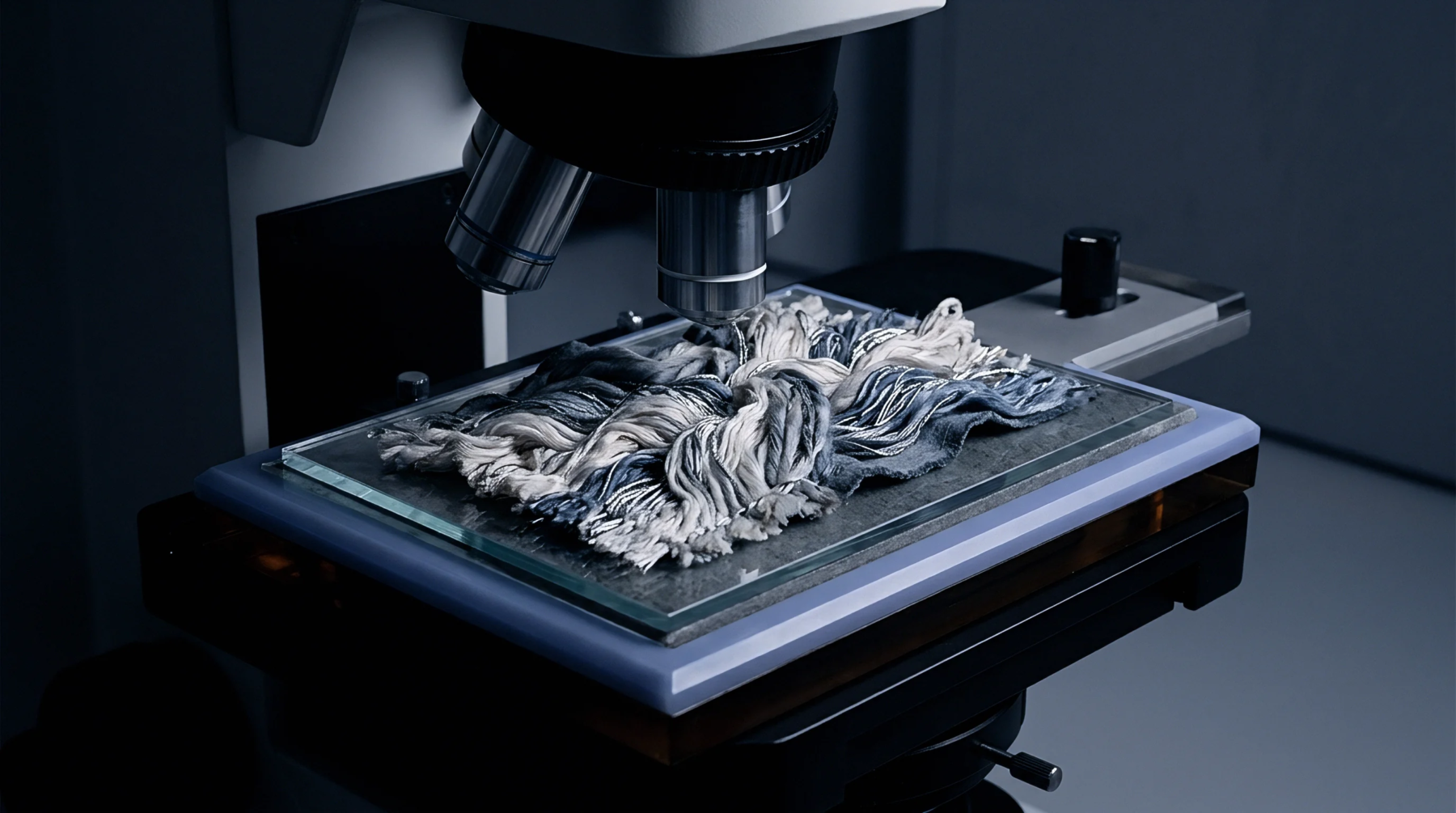
Phase Transition
Physical changes occurring during the high-temperature dyeing of polyester fabrics lead to the migration of short-chain polymers to the surface of the fibre. This phenomenon, known as oligomer crystallization, occurs when low molecular weight polymers dissolve in the hot dye bath and deposit as white crystals upon cooling. These microscopic residues adhere to both the textile machinery and the dyed fabric.
It is a persistent challenge in pressure dyeing operations.
Defect Development
The trouble starts at temperatures above one hundred and thirty degrees Celsius, where polyester molecules expand and allow these short chains to escape the polymer matrix. When oligomer crystallization takes place, the released molecules form insoluble, powdery deposits that coat the fabric surface and the interior of the dyeing machine. These deposits can block the nozzles of jet dyeing machines and cause uneven dye dispersion.
This build-up must be chemically removed to prevent continuous yarn contamination.
Industrial Mitigation
Dye houses combat this issue by using specialized auxiliary chemicals that keep the short-chain polymers suspended in the liquor. Reducing the effects of oligomer crystallization is achieved by draining the dye bath at high temperatures before the crystals can precipitate onto the fibres. Additionally, applying a strong reduction clear wash using sodium hydrosulfite and caustic soda helps dissolve the surface deposits.
This post-treatment ensures a clean, smooth fabric surface.
Quality Consequence
Unchecked oligomer crystallization leads to rough fabric texture and visible white powder on dark garments. This defect results in immediate failure during wet-rubbing and dry-rubbing fastness tests.