Hydrolyzed Reactive Dye Extraction Kinetics during High Cover Factor Fabric Washing
Dense fabric wash-off requires electrolyte removal below 1 g/L before 95°C soaping to extract residual hydrolyzed dye without fastness failures.
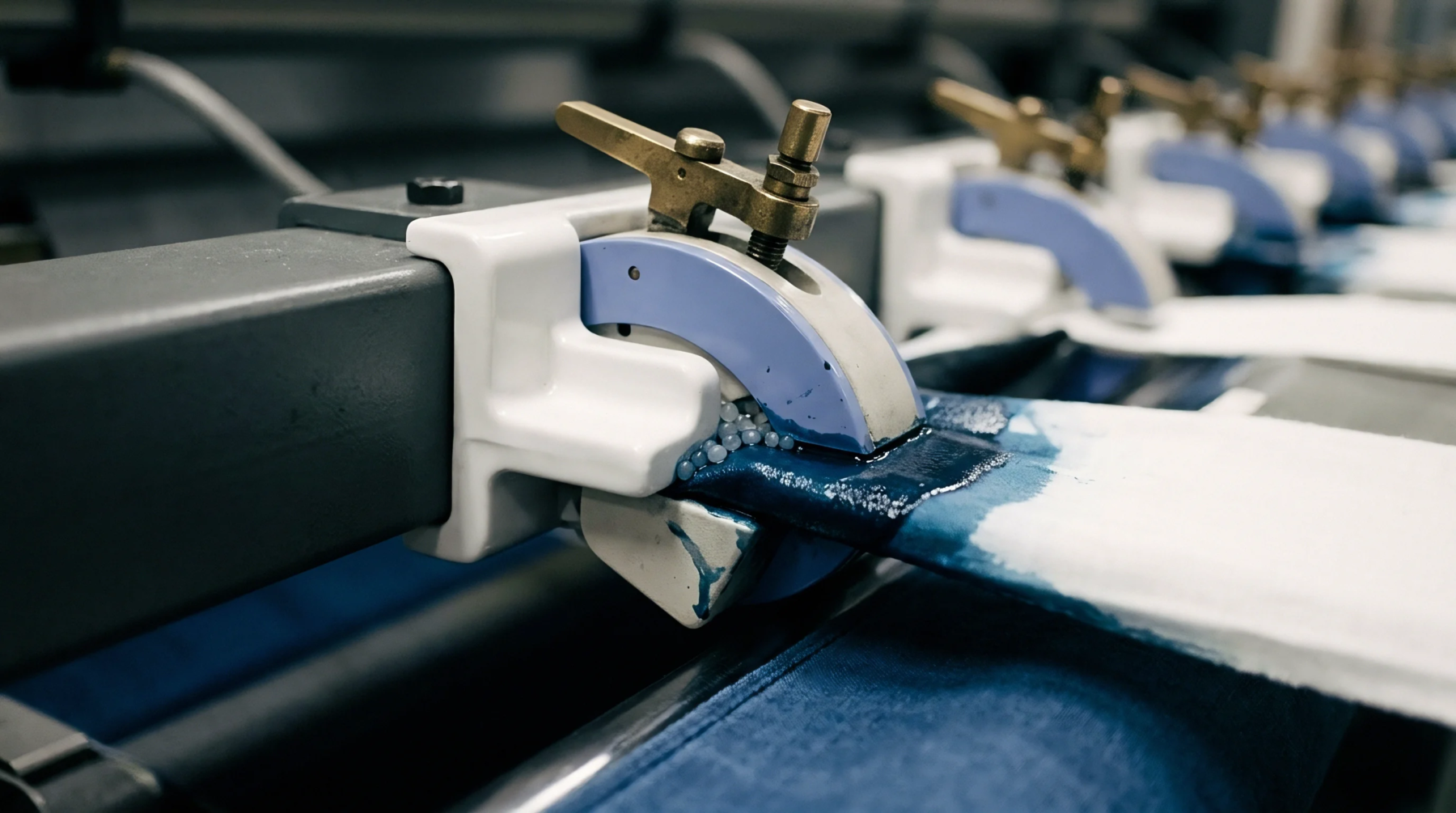
Physical pressure applied by two counter rotating rollers forces the excess liquid out of a moving fabric web during the final stages of wet textile processing. The squeeze nip pressure governs the specific quantity of chemical solution or water remaining on the textile before it enters the drying oven. It defines the operational threshold for energy efficiency by maximizing liquid removal so that the dryers have less work to perform.
The application is limited by the crush resistance of the fiber and the desired hand feel of the finished product, as excessive force can cause permanent damage to delicate yarn structures. Proper setting of the pressure is required to ensure that the chemical dosage stays within the exact range specified for flame retardancy or water repellency.
Adjusting the cylinders with high precision air or hydraulic units allows the operator to maintain an even force across the entire width of the fabric roll. When the textile passes through the point of contact, the squeeze nip pressure reduces the liquid content to a level known as the expression percentage. Modern rollers are often covered in specialized rubber or fiber pads that provide a degree of flexibility while still exerting immense force.
This prevents the fabric from sliding or bunching up in front of the contact zone. Sophisticated sensors on each side of the machine monitor the pressure levels to prevent uneven squeezing, which would lead to a shade change between the left and right edges. Higher pressures lead to lower moisture retention but can also result in thin spots if the fabric is soft.
Lowering the final moisture content directly correlates with reduced fuel costs for the steam or electric dryers located later in the line. A typical range of pressure settings varies based on the fabric weight, where heavy denim needs significantly more force than a lightweight silk voile. The boundary condition is reached when the rollers are squeezed so tightly that they generate excessive heat or begin to vibrate, signaling a mechanical limit.
Mills aim for a target nip where the fabric is damp enough to prevent immediate chemical evaporation but dry enough to hold the finish securely within the fiber. If the pressure is too low, the dryer becomes a bottleneck that slows down the entire factory output. Consistent maintenance of the roller surfaces ensures that the nip remains uniform over millions of meters.
Measuring the weight of a square meter of fabric before and after the squeeze reveals the actual efficiency of the nip in real time. Standard quality reports document the expression percentages for every batch to ensure consistency across separate production dates. A failure is detected if the edges of the roll are noticeably wetter than the center, indicating a bowed roller or incorrect calibration of the pneumatic arms.
Corrective actions involve resurfacing the rollers or adjusting the hydraulic balance. Success is defined by a consistent moisture profile that prepares the goods for perfect heat setting and final inspection. Data from these meters is archived to facilitate future machine audits.
Dense fabric wash-off requires electrolyte removal below 1 g/L before 95°C soaping to extract residual hydrolyzed dye without fastness failures.
Expertise is a utility, not a secret. sentiention™ publishes its working knowledge as open reference: intelligence layer covering the materials it sources, the markets it enters, and the reference that serves both.