Solvent Action
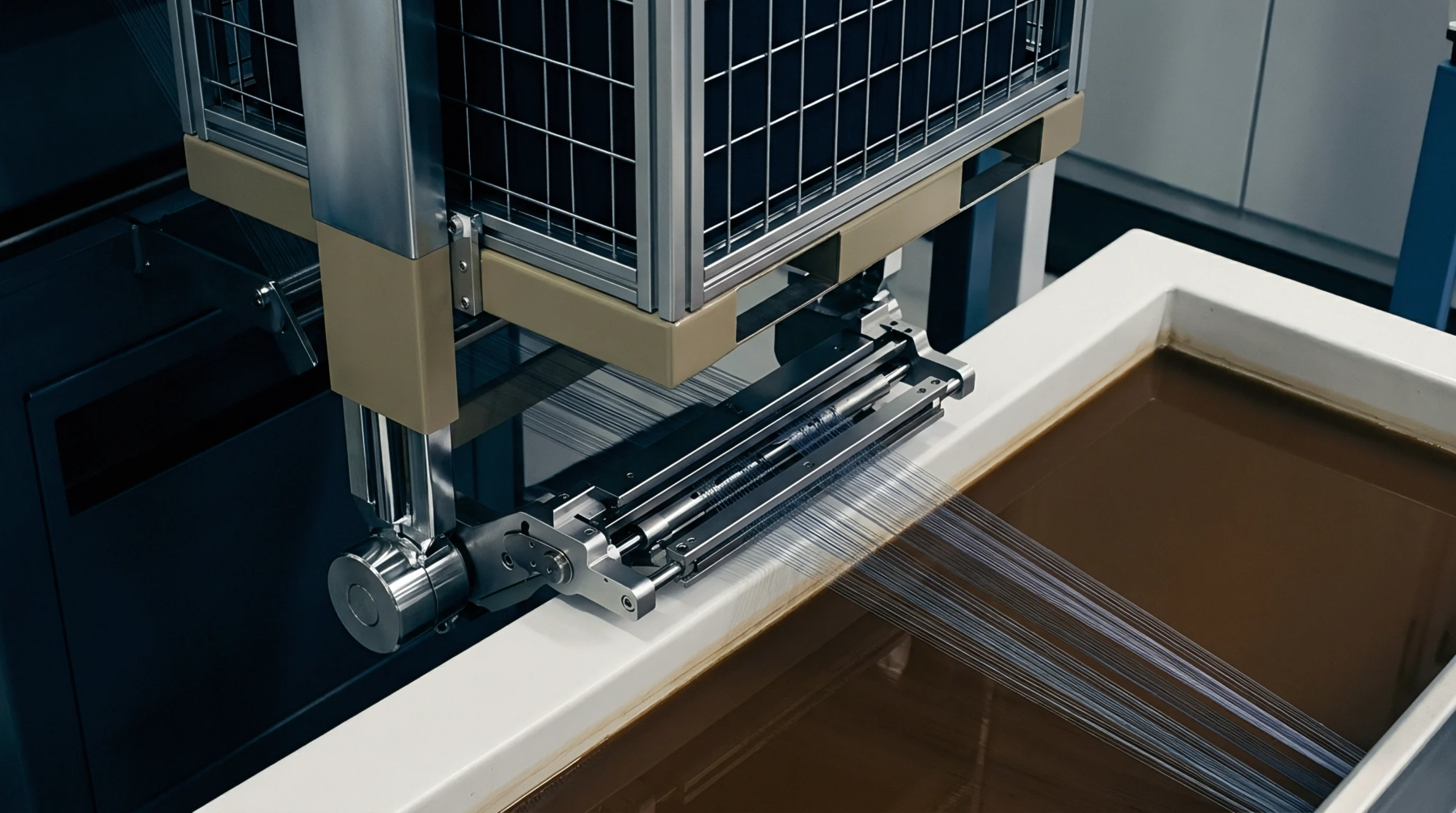
A powerful amide liquid drives the polymer dissolution stage during wet spinning operations for polyacrylonitrile fibres. N,N-dimethylacetamide dissolves stubborn organic compounds and functions within industrial extrusion equipment to maintain continuous dope preparation. Mills rely on this specific chemical agent to keep spinning solutions homogeneous before coagulation baths precipitate the filament streams.
Precise temperature control prevents premature solvent flashing inside heated delivery lines.
Recovery Loop
Distillation columns separate water from organic fractions during closed loop recycling phases. Distillation units boil off volatile impurities while concentrated bottoms return to the main dissolving tanks. Condensers capture overhead vapour streams for reuse across subsequent production shifts.
Thermal energy exchangers minimize total utility consumption throughout continuous reclamation cycles.
Vapour Control
Local exhaust ventilation captures airborne fumes above polymer mixing vessels and washing troughs. Air scrubbers neutralize chemical residues before exhaust discharges meet regional environmental limits. Operators wear specialized protective equipment during routine maintenance tasks involving concentrated liquid lines.
Continuous monitoring sensors detect accidental leaks near high pressure pump seals.
Residue Limit
Laboratory gas chromatography measures trace solvent concentrations trapped inside dried textile filaments. Excessive residual content softens finished fabrics and causes dimensional instability during subsequent heat setting treatments. Quality inspectors reject batches exceeding strict parts per million thresholds established for apparel safety.
Analytical laboratories verify complete extraction after high temperature washing cycles.