Quantifying Inter Laboratory Reproducibility Limits for Chemical Solvent Extraction of Elastane Cellulosic Blends
Inter-laboratory reproducibility limits for elastane extraction in cellulosic blends require a 1.2 percent variance band to resolve lab discrepancies.

Selectivity
Isolating polyurethane elastane gravimetrically from cellulosic substrates depends on differences in solubility across organic solvents. Standard methods ISO 1833-20 and ISO 1833-24 specify N,N-dimethylformamide and N,N-dimethylacetamide to extract synthetic elastomeric yarns from cotton, viscose, modal, and lyocell. The process dissolves both soft polyether or polyester segments and hard polyurethane urea blocks, leaving the crystalline structure of the surrounding cellulosic fibers intact.
Keeping solvent purity, bath temperature, and reflux times under tight control ensures full elastomer extraction without breaking down the residual cellulose mass.
Boiling the solvent degrades the underlying cellulose.
Under ISO 1833-20, N,N-dimethylformamide is run at 90 to 95 degrees Celsius for 45 minutes with continuous mechanical agitation. Pushing the bath to its 153 degrees Celsius boiling point speeds up polyurethane breakdown, but it damages regenerated cellulosic fibers through thermal and chemical action. Viscose and modal are especially prone to acid-catalyzed hydrolytic cleavage if aged solvent forms trace methylamine or formic acid impurities.
Using high-grade anhydrous solvent prevents swelling changes in the cellulosic residue, keeping gravimetric results consistent across runs.
Solvent Medium Performance Parameters
Switching to other organic solvents changes how fast cross-linked elastomeric polymers dissolve. Dimethylacetamide works at 80 degrees Celsius, putting less thermal stress on sensitive regenerated cellulosics, while N-methylpyrrolidone demands higher temperatures that risk charring fine filaments. Cyclohexanone works for certain polyurethane structures, but it leaves behind the highly cross-linked elastane used in heavy-weight stretch knits.
| Solvent System | Operating Temperature (°C) | Extraction Duration (min) | Elastane Dissolution Rate (%) | Cellulosic Mass Change Ratio |
|---|---|---|---|---|
| N,N-Dimethylformamide (DMF) | 90 – 95 | 45 | 99.8 | 1.010 |
| N,N-Dimethylacetamide (DMAC) | 80 – 85 | 45 | 99.6 | 1.008 |
| N-Methylpyrrolidone (NMP) | 105 – 110 | 30 | 99.9 | 1.022 |
| Cyclohexanone | 140 – 145 | 60 | 94.2 | 1.015 |
Unscoured fabrics produce artificially high elastane readings.
Non-fibrous finishes ~ such as silicone elastomers, paraffin yarn lubricants, and synthetic sizing ~ dissolve in organic media along with the elastane yarn. Pre-extracting the specimen with petroleum ether under ISO 1833-1 removes these surface finishes before it enters the main solvent bath. If this step is skipped, lost finishing materials are counted as dissolved elastane, distorting composition results by as much as 1.8 percentage points in finished stretch fabrics.
Dissolution baths running just five degrees above test standards alter cellulosic mass retention figures.
Gravimetric discrepancies over two percent are frequently mistaken for yarn unevenness rather than solvent thermal degradation.

Glass
Separating residual cellulosic fibers from hot organic solutions requires specialized sintered glass filters. Standard lab setups specify borosilicate filtration assemblies fitted with sintered disk crucibles under ISO 4793. Pore size ratings P16 and P40 set the boundary between catching fine cellulosic lint and maintaining flow during vacuum aspiration.
Picking the wrong pore size throws off the balance between fiber retention and drainage speed.
Filter porosity directly affects mass retention.

Filtration Assembly Dynamics
Applying vacuum pressure pulls hot dimethylformamide through the porous disk and into the flask. While strong vacuum speeds up filtration, it can draw broken cellulosic fibrils through coarse P40 frits, undercounting the residual fiber weight. Too little vacuum drags out filtration time, letting the cooling solvent precipitate dissolved polyurethane back onto the filter bed.
Keeping aspirator vacuum steady between 15 and 20 kilopascals maintains smooth filtration without triggering polymer precipitation.
Cellulosic fibers trap organic solvents.
Washing the filtered residue requires repeated rinses with warm solvent, followed by boiling distilled water. Any dimethylformamide trapped in the pores of a P16 disk evaporates slowly in the oven, leaving salt residues that inflate the tare weight. Oven drying at 105 degrees Celsius must continue until consecutive weighings after desiccation differ by less than 0.001 grams.
- Frit Blinding Strong vacuum forces gelatinized cellulosic fibrils into sub-micron pores, clogging solvent flow and throwing off crucible tare weights.
- Fibril Loss Coarse sintered glass disks let short cotton staple fibers pass into the filtrate, artificially raising the calculated elastane content.
- Solvent Trap Inadequate water washing leaves high-boiling solvent locked inside the sintered disk, introducing tare weight errors after drying.
- Thermal Shock Pouring cold wash liquid directly onto hot borosilicate crucibles creates micro-fractures, altering disk weight and porosity over time.
Cooling rates alter humidity within the desiccator.
Cooling hot crucibles in a desiccator demands fresh silica gel and tight ground-glass seals. Air leaking into an unsealed vessel quickly rehydrates dry cotton and viscose, adding up to 0.5 percent moisture weight within five minutes of exposure. Fixing the cooling time to exactly 45 minutes in a climate-controlled room keeps weighings consistent across different labs.
Crucible pore size determines whether fine cellulosic fibrils stay in the gravimetric residue.
Cooling sintered crucibles over exhausted desiccant introduces moisture that inflates the apparent cellulosic mass.

Scatter
Testing variation between facilities sets the practical limit for verifying elastane blend compositions. Standard ISO 5725 procedures measure precision by breaking overall variance into repeatability within a lab and reproducibility between labs. In core-spun cotton-elastane denim, small shifts in elastane percentage alter stretch recovery performance, turning minor testing differences into commercial disputes.
Lab dips reflect variation in the grey yarn.
Round-robin data from twelve accredited textile laboratories shows that reproducibility standard deviation grows along with nominal elastane content. In low-elastane blends with two to five percent elastomeric fiber, the reproducibility margin stays relatively narrow. But as elastane reaches fifteen to twenty-five percent in warp-knit performance fabrics, solvent retention and lint loss broaden that margin considerably.

Do Laboratory Scouring Procedures Shift Interlaboratory Reproducibility Limits?
Raw grey goods carrying spinning oils produce wider test scatter between labs than fully scoured, finished fabrics. These untreated lubricants react unpredictably to solvents depending on storage time and heat exposure. Standardizing pre-scouring steps across participating laboratories narrows the reproducibility range, preventing false non-conformance flags on raw yarn shipments.
| Nominal Elastane Mass Fraction (%) | Mean Repeatability Standard Deviation s_r (%) | Mean Reproducibility Standard Deviation s_R (%) | Repeatability Limit r (%) | Reproducibility Limit R (%) |
|---|---|---|---|---|
| 3.0 | 0.12 | 0.34 | 0.33 | 0.94 |
| 5.0 | 0.18 | 0.45 | 0.50 | 1.25 |
| 12.0 | 0.31 | 0.72 | 0.86 | 1.99 |
| 20.0 | 0.48 | 1.15 | 1.33 | 3.19 |
Crucible tare weights must be allowed to stabilize.
ISO 5725 statistical models set the critical difference threshold used to settle commercial disputes between buyer and mill testing labs. If two accredited facilities test the same lot of core-spun 95 percent cotton and 5 percent elastane fabric, their results align as long as the absolute difference stays under the reproducibility limit R of 1.25 percentage points. A buyer finding 3.9 percent elastane and a mill finding 5.0 percent fall within normal statistical scatter, making financial debit notes groundless under standard trade terms.
- Specimen Conditioning Condition all fabric swatches at 20 degrees Celsius and 65 percent relative humidity for 24 hours before initial weighings.
- Solvent Bath Calibration Ensure organic solvent temperatures remain within plus or minus 1.0 degree Celsius across all extraction vessels.
- Residue Washing Sequence Perform three consecutive 50-milliliter rinses with warm solvent, followed by five 100-milliliter flushes of boiling distilled water to wash away dissolved polymers.
- Desiccation Control Limit desiccator time to exactly 45 minutes over active silica gel before taking dry residual weights.
Testing discrepancies frequently spark commercial claims.
Calculating critical difference limits calls for clear operational figures. Take a 10,000-meter delivery of stretch twill specified at 93 percent modal and 7 percent elastane. A buyer audit samples five random rolls, averaging 5.6 percent elastane under ISO 1833-20.
The mill counter-tests retains from those same rolls, finding an average of 6.7 percent. Applying the critical difference formula ~ where d_crit equals 2.77 times the reproducibility standard deviation s_R of 0.52 percent ~ gives an allowable threshold of 1.44 percentage points. Since the observed gap of 1.1 percentage points between 5.6 percent and 6.7 percent falls within expected scatter, the shipment remains valid for commercial release.
Whether non-polar pre-extraction can isolate polyurethane degradation without dissolving low-molecular-weight elastane oligomers remains an open question among standards committees.


Residue
Measuring elastane mass accurately relies on correction factors that adjust for cellulosic weight loss during solvent dissolution. Solvents like dimethylformamide strip away small amounts of low-molecular-weight hemicellulose and amorphous cellulose along with the elastomer. Standardized d-factors offset this soluble portion, reconstructing the theoretical dry weight of the cellulosic matrix.
Pre-extraction strips away spin finishes.
Unmodified upland cotton resists organic solvents well, carrying a standard d-factor of 1.01 under ISO 1833-20. Regenerated cellulosics undergo greater structural loss because of lower polymerization degrees and higher amorphous content. Viscose uses a d-factor correction of 1.02, modal takes 1.015, and lyocell uses 1.01, tracking differences in cross-sectional structure and crystalline orientation.
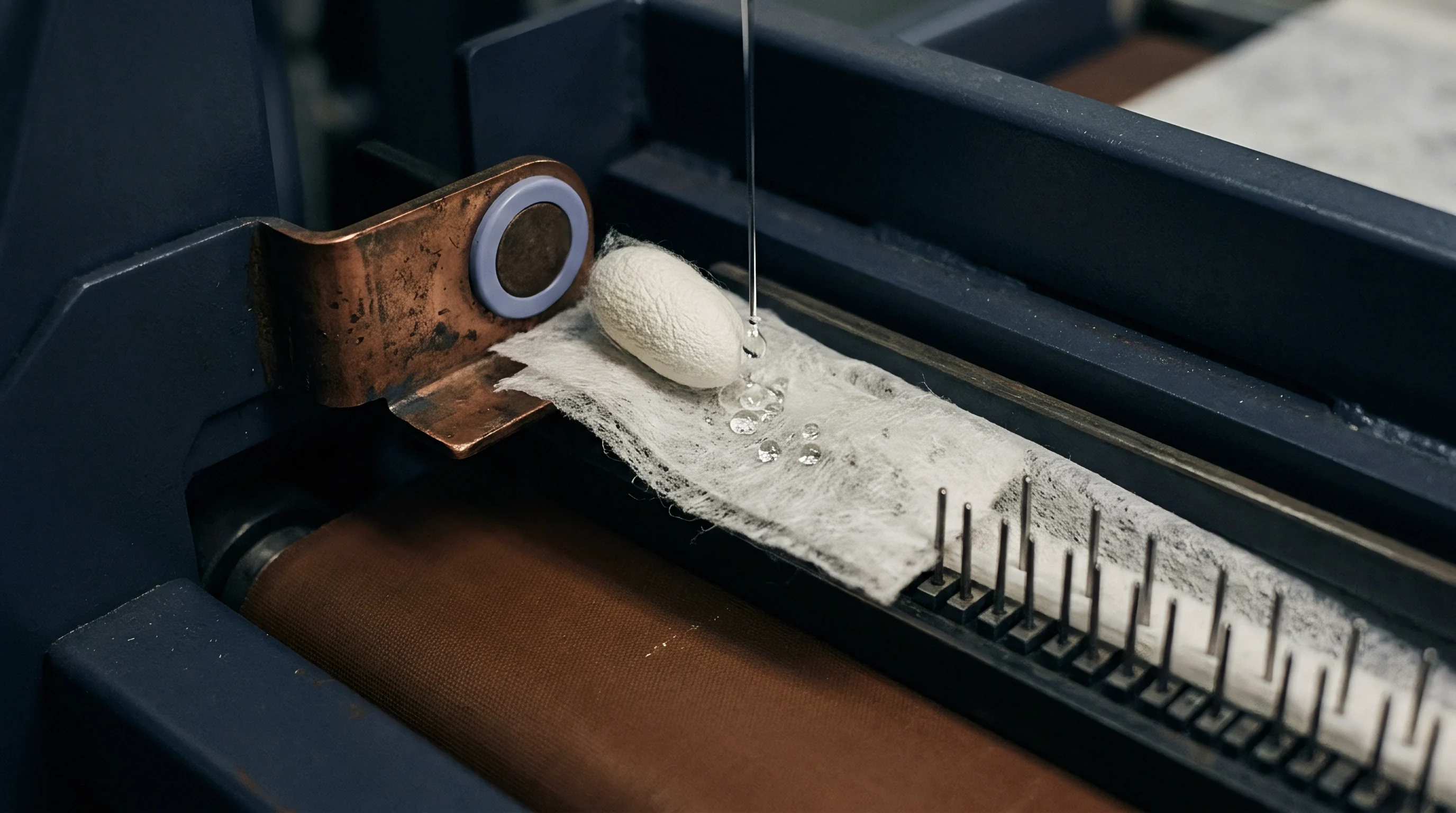
Non-Fibrous Matter Extraction Sequence
Finishing agents added during wet processing alter a specimen’s initial dry mass. Silicones, durable-press resins, and softeners introduce non-polymeric weight that must be cleaned off before main solvent dissolution. Standardized pre-treatments prevent these non-fibrous additives from skewing the calculated d-factor of the cellulosic base.
- Pre-extract 5.0 grams of fabric with petroleum ether in a Soxhlet apparatus for 1 hour to remove non-polar oils and softeners.
- Steep the extracted specimen in warm distilled water at 50 degrees Celsius for 30 minutes to wash out water-soluble sizing agents and residual salts.
- Dry the pre-treated sample in a ventilated oven at 105 degrees Celsius until reaching constant mass.
- Run the clean, dry sample through primary organic solvent extraction in a heated flask under reflux condensation.
Solvent purity directly alters dissolution rates.
Resin-treated fabrics containing dimethyloldihydroxyethyleneurea or formaldehyde-free cross-linkers create added gravimetric challenges. Cross-linking bonds restrict solvent access to core elastane yarns and make parts of the cellulosic matrix resistant to standard scours. Skipping resin removal before solvent extraction inflates the residual weight, understating elastane content by up to 1.4 percentage points.
Using an uncorrected d-factor on regenerated cellulosic blends skews the calculated elastane fraction.
Applying an uncorrected d-factor to a viscose-elastane warp knit shifts declared elastane percentages past regulatory labeling limits, leading to customs holds and relabeling penalties at destination ports.
Threshold
Commercial fabric contracts manage composition limits through fixed tolerance ranges tied to international trade regulations. Regulation EU No 1007/2011 allows a 3.0 percent manufacturing margin between declared fiber content and tested figures on finished textiles. Building inter-laboratory reproducibility margins into purchase contracts prevents routine test scatter from triggering order rejections or claims.
Vacuum pressure directly controls filtration speed.
Resolving testing differences between buyers and mills requires clear arbitration rules set before placing bulk orders. When incoming fabric tests show elastane percentages outside specification, holding sealed joint samples for third-party reference testing gives a clear path to resolution. Third-party lab results override initial findings only if the testing strictly follows ISO 1833-20.
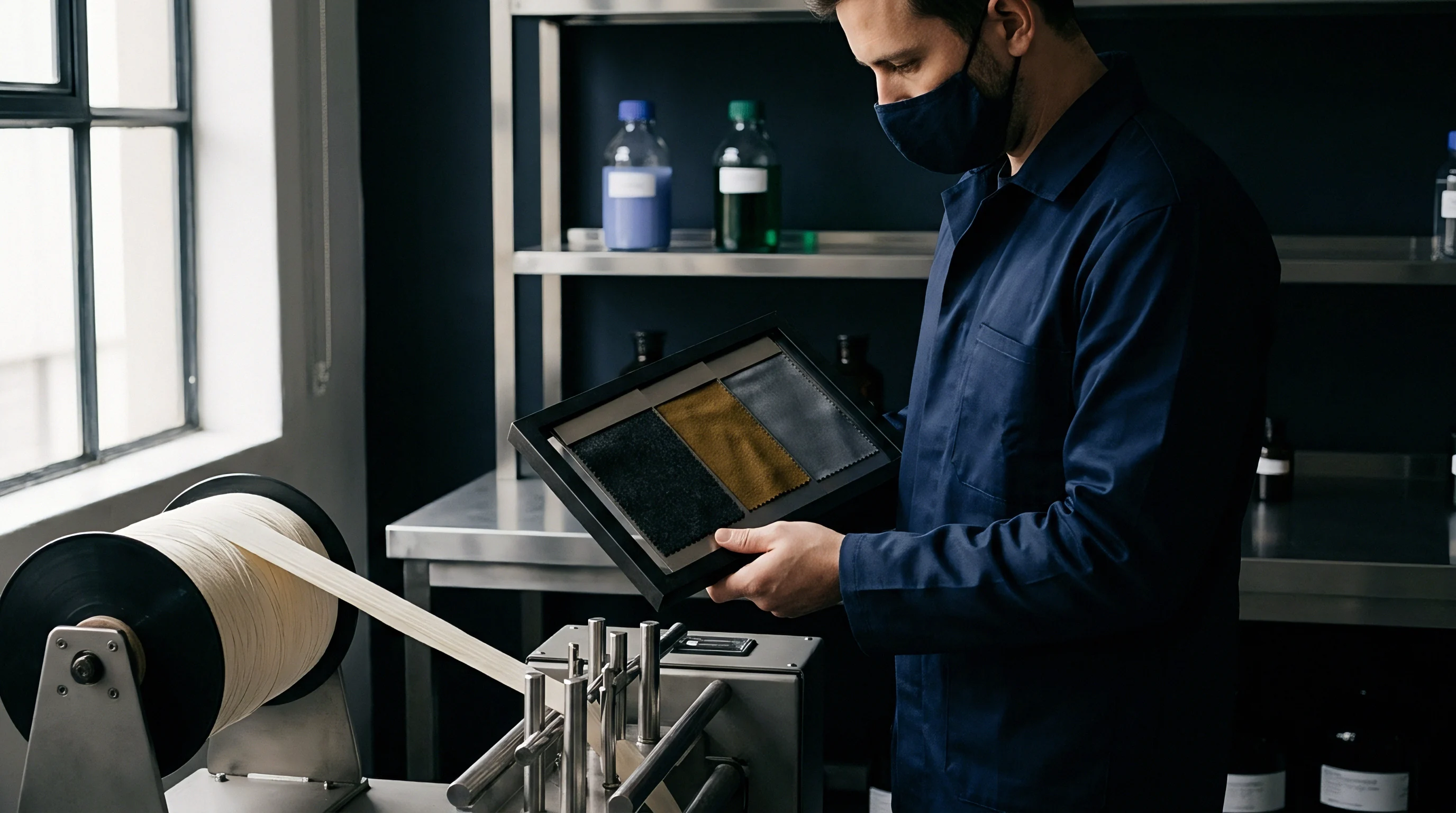
Contractual Tolerance Schedule
Setting financial adjustment tiers based on reproducibility scatter protects both buyers and mills. Small composition shifts within the reproducibility band call for no price adjustments, while shifts beyond statistical boundaries lead to proportional price cuts or replacement requirements.
| Variance Band (Percentage Points) | Statistical Classification | Commercial Action | Financial Settlement Mechanism |
|---|---|---|---|
| 0.00 – 0.94 | Within ISO 5725 Repeatability Limit | Accept Shipment | Full Invoice Payment |
| 0.95 – 1.25 | Within ISO 5725 Reproducibility Limit | Accept Shipment | Full Invoice Payment Without Claim |
| 1.26 – 2.50 | Exceeds Reproducibility Limit | Joint Re-Test | 1.5 Percent Unit Price Discount |
| Above 2.50 | Out of Compliance Boundary | Reject Lot | Full Bulk Replacement or Debit Note |
Thermal drying alters sample mass.
Sourcing agreements that cite ISO 1833-20 reproducibility metrics simplify cross-border supply management. Clear analytical limits eliminate disputes based on subjective hand-feel, grounding shipment approvals on repeatable lab data. Establishing technical thresholds up front protects bulk deliveries from arbitrary rejection while keeping mills accountable to structural specifications.
Under Section 7 of standard purchase agreements, inter-laboratory differences within the published ISO 1833-20 reproducibility limit R do not constitute failure of performance or grounds for order cancellation.