Resolving Non-Equilibrium Chemical Dissolution Kinetics across Highly Crystalline Microfiber Cellulosic Matrices
Resolving non-equilibrium dissolution kinetics in crystalline microfiber cellulosics prevents quantitative mass bias and customs reclassification risk.
Phase
In mass-loss testing, the crystalline structure of cellulosic microfibers dictates how fast chemical solvation occurs. High-tenacity regenerated fibers like lyocell and modal have crystalline indices above 75 percent, while specialized micro-denier cottons reach values above 80 percent. Tight molecular packing in native cellulose I and regenerated cellulose II lattices builds a dense network of intermolecular hydrogen bonds.
Because solvation must break these intra-chain hydrogen bonds, structural density restricts initial reagent ingress largely to amorphous regions.
Crystallite Packing and Solvent Resistance
Micro-denier fibers with a linear density below 1.0 dtex present a high surface-area-to-mass ratio. While that large surface area accelerates initial contact with liquid, deeper dissolution remains limited by the cross-sectional dimensions of internal crystallites. Smaller lateral dimensions slow reagent penetration toward the fiber core.
Standard quantitative separation protocols assume that soluble cellulosic phases dissolve completely within fixed exposure windows, but highly crystalline microfibers break this assumption by retaining structural integrity long past that window.

Polymorphic Variations in Micro-Denier Structures
The cellulose II polymorphs in lyocell feature anti-parallel chain arrangements with greater thermodynamic stability than regenerated viscose. Because crystallinity governs swelling behavior, exposure to concentrated acid or amine oxide reagents causes rapid surface gelation on cellulose II microfibers. This gel layer acts as a viscous transport barrier around unreacted crystalline cores, slowing reagent replenishment at the interface and shifting dissolution kinetics from reaction-controlled to diffusion-controlled non-equilibrium states.
Without swelling pre-treatments, standard exposure times leave regenerated structures with high lateral crystallite order only partially dissolved.
Solvent
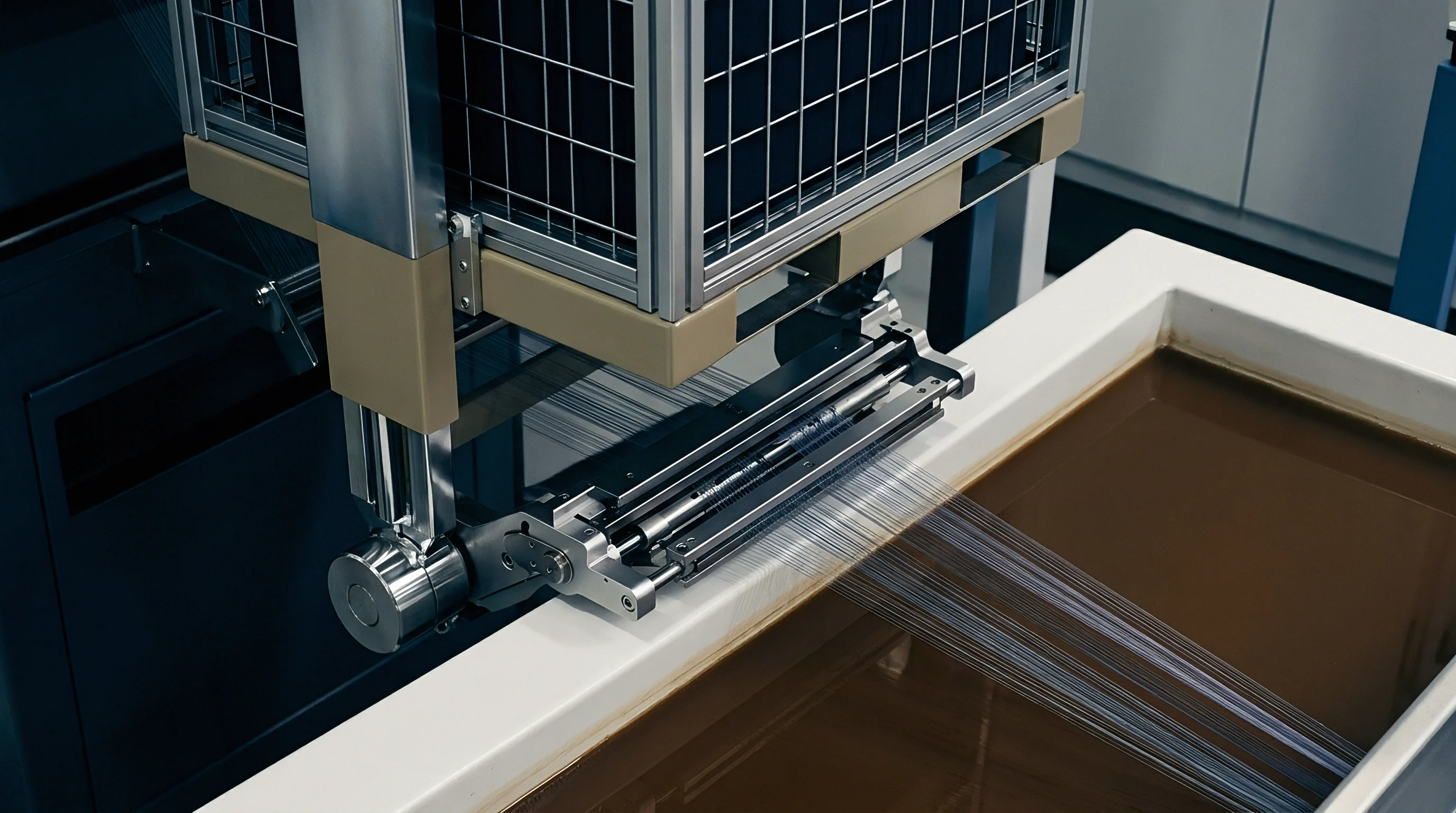
Quantitative mass separation in binary microfiber blends depends entirely on reagent selectivity. Protocols under ISO 1833-3 and ISO 1833-6 specify concentrated sulfuric acid or formic acid with zinc chloride to dissolve cellulosic components while leaving synthetic fibers intact. Standard 1.7 dtex viscose dissolves completely in 75 percent sulfuric acid at 20 degrees Celsius within 15 minutes, but 0.8 dtex lyocell microfibers leave solid particulate residue under identical conditions because solvation proceeds at non-equilibrium rates.
Reagent Interactions across Concentrated Acids and Amine Oxides
Cupriethylenediamine and concentrated sulfuric acid work by disrupting hydroxyl hydrogen-bonding networks, whereas amine oxides like N-methylmorpholine N-oxide enter crystalline domains by intercalating between molecular sheets. As temperature alters reaction kinetics, operating below 40 degrees Celsius causes reagent transport into 0.7 dtex lyocell microfibers to stall after the amorphous matrix dissolves. Heating the reagent speeds chain cleavage, but it also begins degrading insoluble secondary fibers like polyamide or polyester microfibers.

Kinetic Dissolution Rates of Regenerated Microfibers
Although cellulose II reacts quickly, the rate of mass loss over time varies significantly between standard denier fibers and microfibers. Experimental dissolution curves show that micro-denier modal requires longer exposure or higher temperatures to dissolve fully, which creates kinetic overlap with the secondary fiber phase.
| Fiber Type | Linear Density (dtex) | Reagent System | Temperature (°C) | Exposure Time (min) | Dissolution Yield (%) | Correction Factor d |
|---|---|---|---|---|---|---|
| Viscose Standard | 1.70 | 75% Sulfuric Acid | 20 | 15 | 100.0 | 1.00 |
| Lyocell Microfiber | 0.85 | 75% Sulfuric Acid | 20 | 15 | 96.6 | 1.03 |
| Modal Microfiber | 0.90 | Formic Acid / ZnCl2 | 40 | 20 | 97.8 | 1.02 |
| Cotton Micro-Combed | 0.95 | Cupriethylenediamine | 25 | 10 | 98.1 | 1.02 |
| Data compiled across standard laboratory separation conditions under ISO 1833 testing protocols. Correction factor d compensates for unreacted residual mass or secondary fiber dissolution. | ||||||
At 20 degrees Celsius in 75 percent sulfuric acid, lyocell microfibers of 0.8 dtex retain 3.4 percent undissolved crystalline residue after standard 15-minute immersion.
Official test standards are frequently assumed to guarantee complete reagent solubility regardless of yarn linear density or crystallite dimensions.

Diffusion
During chemical separation, mass transport within dense microfiber bundles deviates from Fickian kinetics. In traditional macro-fibers, solvent molecules move into the polymer matrix along a concentration gradient proportional to the square root of time. Microfiber yarns, however, pack thousands of fine filaments tightly together.
Capillary action draws liquid reagents into interstitial voids between filaments within seconds, but stagnant liquid layers then develop between closely packed fibers, causing localized reagent exhaustion.
What Specific Factors Cause Kinetic Boundary Shift?
While standard test methods assume complete dissolution, the shift from Fickian diffusion to anomalous Case II transport occurs when polymer chain relaxation matches the diffusion rate of the reagent. Highly crystalline microfibers resist rapid relaxation. When chemical attack begins on the outer shell, chain detachment lags behind liquid uptake.
The swelling front advances inward at constant velocity, forming a distinct boundary between the solvated outer gel layer and the unpenetrated crystalline core. Agitation speed, reagent concentration, and temperature dictate whether dissolution reaches equilibrium before phase separation analysis.

Mathematical Modeling of Boundary Layer Solvation
Quantifying mass transfer requires evaluating both the fluid-phase mass transport coefficient and the polymer chain dissolution rate constant. In micro-denier systems, shear forces from laboratory shakers often fail to break through the boundary layer surrounding individual filaments in high-twist yarns. As local reagent concentration drops below the threshold needed to sever crystalline hydrogen bonds, unreacted microfiber cores remain suspended in the liquid medium.
- The analyst weighs exactly 1.000 gram of oven-dry microfiber sample into a glass-stoppered conical flask.
- The technician adds 100 milliliters of temperature-equilibrated reagent liquid into the flask while maintaining continuous mechanical shaking at 120 cycles per minute.
- Aliquots of 5 milliliters are extracted at 2-minute intervals to measure dissolved cellulosic mass using UV-Vis spectrophotometry.
- The reaction is quenched with ice-cold distilled water at the kinetic transition point to freeze unreacted crystalline residues.
- The filter crucible is washed with dilute ammonia to neutralize residual reagent before drying the retained mass to constant weight at 105 degrees Celsius.
Across ionic liquid media, the precise crystallite cross-sectional area where solvent penetration shifts from Fickian diffusion to surface chain stripping remains unquantified.


Mesh
Glass crucible porosity dictates residue retention when filtering dissolved microfiber slurries under vacuum. Standard test protocols mandate sintered glass crucibles conforming to ISO 4793, where Grade P40 crucibles specify pore diameters between 16 and 40 micrometers. Following non-equilibrium dissolution steps, the liquid contains suspended fragments of unreacted crystallites.
Because these fine fragments pass directly through P40 pores ~ even as pore clogging slows overall flow ~ the insoluble component is frequently under-reported.
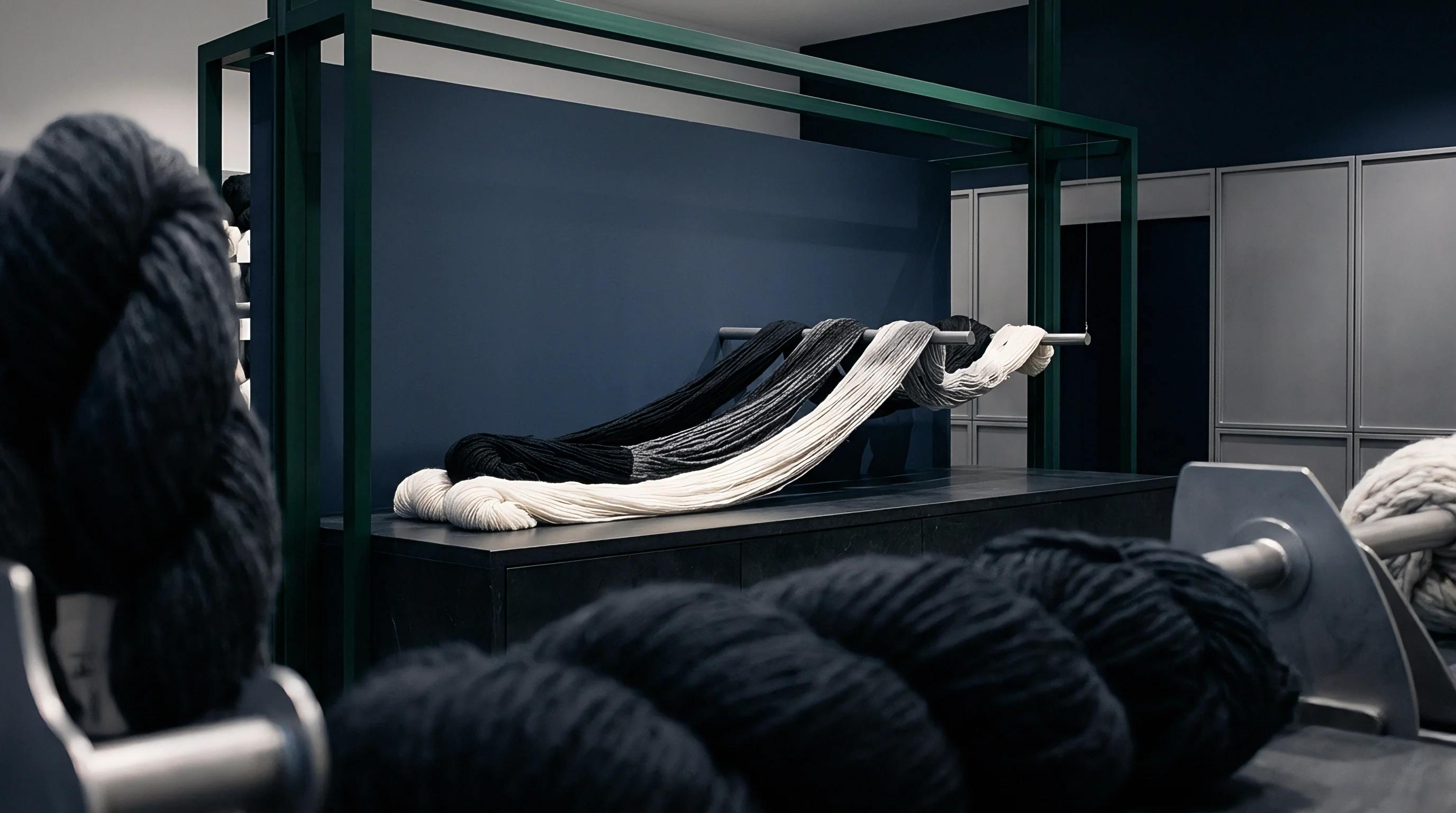
Crucible Porosity and Mass Entrapment Dynamics
Moving to finer ISO 4793 Grade P16 crucibles (10 to 16 micrometers) stops crystallite fragments from escaping, though mass losses can still distort constituent ratios. Fine-porosity filters create substantial hydraulic resistance when filtering viscous acid or cellulose-amine oxide solutions. As microfiber fragments settle, they form a compressible filter cake that reduces effective pore diameter and holds dissolved liquid inside the residue.
If vacuum filtration or washing is incomplete, residual reagent salts stay trapped in the cake, artificially inflating the measured dry mass.
| Crucible Grade | Pore Size Range (µm) | Microfiber Linear Density (dtex) | Filtration Rate (mL/min) | Fragment Pass-Through (%) | Mass Error Margin (%) |
|---|---|---|---|---|---|
| P100 | 40 ~ 100 | 0.75 | 140 | 8.2 | -8.20 |
| P40 | 16 ~ 40 | 0.75 | 85 | 3.1 | -3.10 |
| P16 | 10 ~ 16 | 0.75 | 22 | 0.3 | +1.40 |
| P40 | 16 ~ 40 | 1.30 | 95 | 0.8 | -0.80 |
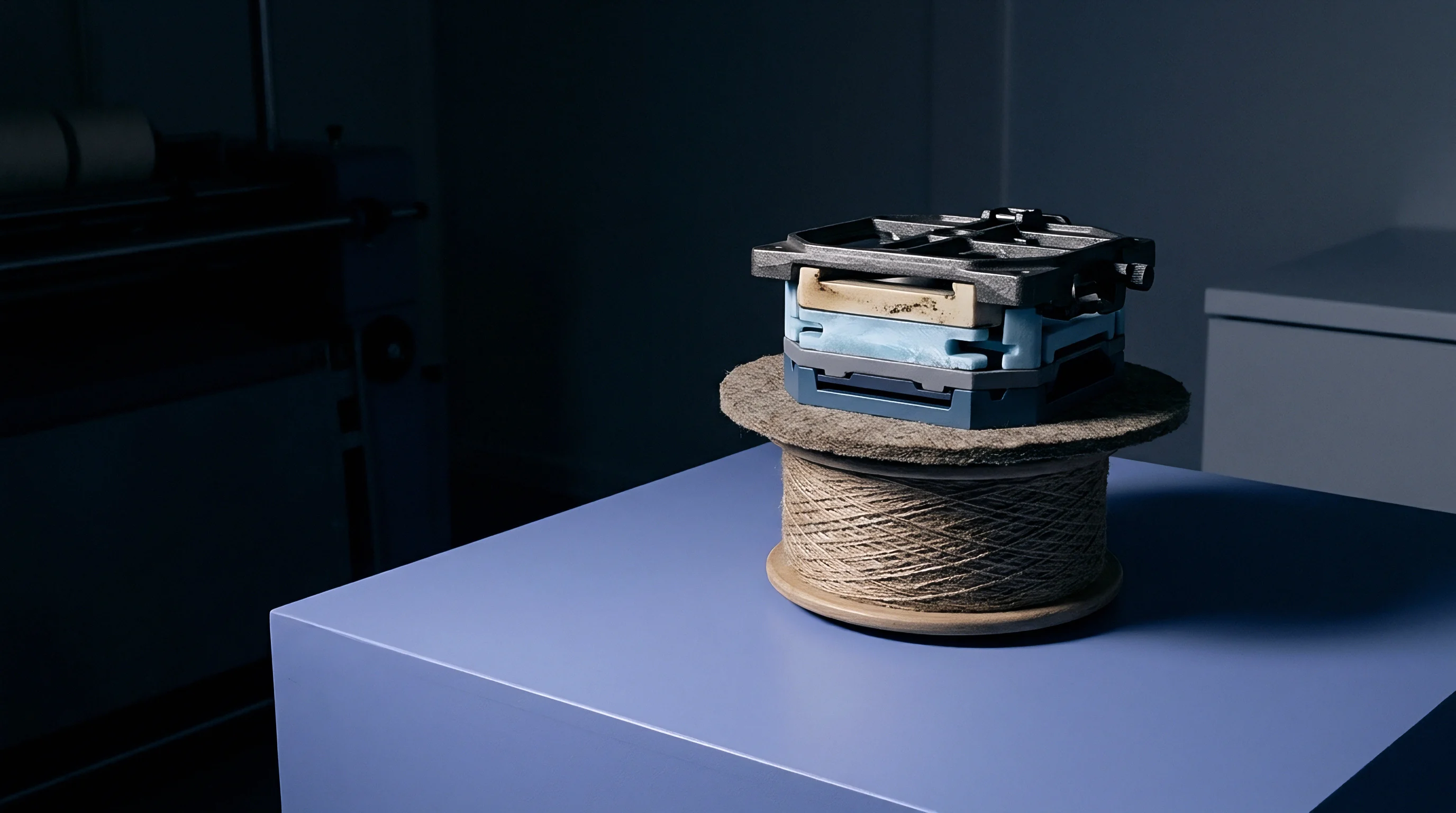
Filtration Velocity and Fibril Entanglement
Washing protocols require thorough displacement of concentrated reagents using neutral solvents or distilled water, particularly since oven temperatures alter residual mass if chemicals remain behind. Micro-denier cellulosic residues form tangled mats inside the crucible that trap liquid by capillary force, demanding extended washing cycles. Standard three-stage washing often leaves trace chemical residues that decompose during oven drying, charring the sample and distorting final mass readings.
- Pre-Conditioning Moisture Stabilization ensures raw microfiber specimens reach equilibrium regain prior to initial mass measurement.
- Reagent Temperature Control holds reaction vessel temperatures within 0.5 degrees Celsius of specification throughout non-equilibrium dissolution steps.
- Agitation Rate Standardization prevents stagnant boundary layers from forming around micro-denier filament bundles inside test flasks.
- Crucible Pore Inspection verifies filter disc pore size distribution using bubble-point testing prior to quantitative filtration runs.
Compliance with ISO 1833-1 section 8 requires constant mass drying at 105 degrees Celsius until consecutive weighings differ by less than 0.1 percent, preventing false retention measurements.
Choosing an improper crucible porosity level introduces systematic mass errors that can invalidate composition test reports and trigger customs rejections.
Disruption
Non-equilibrium kinetic behavior introduces systematic quantitative bias into standard binary fiber separations. A blend of 70 percent lyocell microfiber (0.85 dtex) and 30 percent polyester microfiber demonstrates this risk: applying 75 percent sulfuric acid at 20 degrees Celsius for the standard 15-minute period leaves 2.8 percent of undissolved crystalline lyocell on the filter crucible. Extending immersion to 25 minutes dissolves the lyocell completely, but the prolonged acid exposure degrades the polyester microfiber component by 1.5 percent.

Systematic Degradation of Insoluble Secondary Fibers
This situation presents a dual kinetic error because microfibers alter overall mass transport dynamics. Incomplete dissolution of the cellulosic fraction leaves excess residual mass, overstating polyester content. Conversely, extending exposure to dissolve high-crystallinity fibrils strips mass from the polyester microfibers, understating polyester content.
Standard correction factors (d-values) cannot rectify both errors at once because they were derived using standard 1.7 dtex fibers under equilibrium assumptions.
Correction Factor Derivation under Non-Equilibrium States
Consider a 10.0000 gram dry sample of a nominal 70/30 lyocell/polyester microfiber yarn. Under standard non-equilibrium conditions ~ where 2.8 percent of lyocell remains undissolved and polyester suffers a 1.5 percent mass loss ~ the dried residue weighs 3.1510 grams. Applying the standard ISO 1833 d-value of 1.01 for polyester calculates a corrected residue mass of 3.1825 grams, reporting the blend as 68.17 percent lyocell and 31.83 percent polyester.
Though the actual sample is 70.00 percent lyocell and 30.00 percent polyester, non-equilibrium kinetic bias introduces an absolute error of 1.83 percent on the test certificate, illustrating how uncertainty increases near boundary thresholds.
- Solvent Depletion Kinetics occurs when dense microfiber surface areas consume active reagent faster than diffusion replenishes the boundary layer.
- Crystallite Recrystallization Artifacts emerge when partially dissolved cellulosic chains reprecipitate as amorphous hydrocellulose onto secondary fiber surfaces.
- Secondary Fiber Degradation accelerates when elevated temperatures are applied to overcome crystalline cellulosic resistance.
- Fibril Fragment Loss distorts gravimetric balances when fine unreacted crystallites pass through standard filter crucible pores.
Extending chemical immersion beyond the kinetic transition point degrades the insoluble fiber component faster than it dissolves high-crystallinity residual fibrils.
Including ASTM D629 section 10 modification clauses in commercial purchase specifications obligates contract laboratories to verify mass stability before issuing quantitative separation certificates.
Customs
In international trade, tariff classification boundaries depend strictly on constituent mass ratios, as Harmonized System codes set duty rates by chief weight thresholds. A woven fabric containing 52 percent lyocell microfiber and 48 percent polyester microfiber classifies under HS code 5408.22 as a woven fabric of artificial filament yarn. If non-equilibrium dissolution errors cause a laboratory test to report 49.5 percent lyocell and 50.5 percent polyester, customs authorities will reclassify the shipment under HS code 5515.11 as a woven fabric of synthetic staple fibers.

Chief Weight Distortions and Tariff Line Shifts
When customs audits retest raw swatches, a chief weight reclassification can shift duty rates from 5 percent up to 12 percent ad valorem depending on the importing country. Because calculated ratios dictate these tariff lines, reclassification triggers retroactive duties, interest penalties, and delivery delays ~ leaving the commercial importer fully liable for misdeclaration penalties resulting from kinetic laboratory errors.
| Declared Ratio | Tested Ratio (Kinetic Bias) | HS Heading Declared | HS Heading Reclassified | Standard Duty Rate (%) | Reclassified Duty Rate (%) | Landed Cost Variance ($/m) |
|---|---|---|---|---|---|---|
| 52% Lyocell / 48% PET | 49.5% Lyocell / 50.5% PET | 5408.22 | 5515.11 | 5.0 | 12.0 | +0.56 |
| 55% Modal / 45% Cotton | 51.0% Modal / 49.0% Cotton | 5516.12 | 5208.32 | 6.5 | 8.4 | +0.17 |
| 85% Lyocell / 15% Nylon | 82.1% Lyocell / 17.9% Nylon | 5408.22 | 5408.22 | 5.0 | 5.0 | 0.00 |
Landed Cost Exposure from Kinetic Measurement Errors
Unextracted residual fiber directly elevates duty liability: in high-volume apparel sourcing, a landed cost shift of 0.56 dollars per meter on a 100,000-meter fabric order adds 56,000 dollars in unbudgeted tariff expenses. Establishing validated chemical dissolution kinetic profiles for micro-denier cellulosic yarns eliminates analytical bias. Where precision governs commercial compliance, accredited testing houses using corrected swelling protocols deliver verifiable constituent ratios that protect trade contracts and prevent customs tariff disputes.
Customs authorities reject laboratory certificates that lack documented correction factor derivations for micro-denier fiber mixtures.
Importers who integrate specific test temperature and time modifications into their standardized lab request dossiers maintain legal protection during post-clearance customs audits. Documenting kinetic correction factors across all micro-denier cellulosic purchases establishes complete verification data trails across international customs borders.