Quantifying Microstructural Crystalline Lattice Scission Limits in High Temperature Regenerated Cellulosic Exhaust Processing
High-temperature exhaust processing of regenerated cellulosics requires limiting viscosity drop to under 15 percent to prevent catastrophic fabric strength loss.


Hydrolysis
Exposing cellulosic polymers to liquid media above one hundred degrees Celsius causes direct breakdown along the polymer backbone. In high-temperature exhaust processing of regenerated cellulosics ~ such as solvent-spun lyocell, modal, cupro, and viscose ~ thermal and chemical forces combine inside pressure vessels operating between one hundred ten and one hundred thirty degrees Celsius. The elevated kinetic energy drives water molecules straight into the substrate’s amorphous zones, accelerating scission across vulnerable intermolecular linkages.

Glycosidic Bond Cleavage Mechanics at High Temperatures
Inside aqueous bath environments, heat destabilizes the oxygen bridges connecting adjacent anhydroglucose units. Proton-catalyzed cleavage of the beta-1,4-glycosidic linkage proceeds through an oxonium ion intermediate, breaking long polymer chains into shorter fragments ~ a protonation rate that speeds up under acidic or neutral exhaust processing conditions.
Under alkaline conditions above pH ten point five, degradation shifts mechanism. Alkali-induced peeling reactions start at the reducing end-groups of the cellulose chain and sequentially cleave monomer units until a stopping reaction converts the terminal unit into a stable isosaccharinic acid group. For regenerated cellulosics with a lower initial degree of polymerization, like standard viscose, this peeling causes substantial yield loss along with reduced polymer mass.
Compared to standard exhaust dyeing temperatures of sixty to eighty degrees Celsius, high-temperature processing sharply accelerates both acid hydrolysis rates and alkaline peeling kinetics.
Crystalline Region Resistance and Amorphous Vulnerability
The spinning process dictates the balance between crystalline and amorphous domains in regenerated cellulosics. Densely packed parallel molecular chains in Cellulose II structures naturally resist liquid penetration. Lyocell, for instance, reaches sixty-five percent crystallinity with tightly aligned monoclinic Cellulose II lattices, whereas standard viscose sits closer to forty percent crystallinity alongside a disorganized amorphous matrix.
Hydrothermal swelling during high-temperature processing opens amorphous boundaries, letting water and dissolved reagents penetrate into the fiber core. While the crystalline core holds up to critical temperature thresholds, peripheral crystallites undergo surface etching. If exposure at high temperature extends past forty-five minutes, scission spreads from amorphous regions into the crystalline lattice fringes, shortening crystallite length and widening lattice spacing.
Solvent-spun lyocell retains eighty-two percent of initial intrinsic viscosity after ninety minutes at one hundred ten degrees Celsius at pH six point five.
The exact temperature and pH boundary where crystalline lattice degradation accelerates relative to amorphous domain scission remains active ground for mill-scale research, largely because monitoring lattice parameters in real time under live jet pressure presents severe technical challenges.
Jet
Closed pressure vessels subject textiles to constant hydraulic agitation. High-temperature dyeing machinery uses centrifugal pumps to drive high-speed liquor circulation that moves the fabric rope through nozzle systems, where rope velocity dictates mechanical friction. This environment subjects the material to intensive hydrodynamic shear alongside elevated bath temperatures, creating mechanical stress along the fiber axis right as chemical scission occurs.

Hydrodynamic Shear and Mechanical Stress Propagation
Fluid accelerating through venturi tubes generates velocity differentials across the moving textile rope. Nozzle pressures from one point eight to two point five bar impose longitudinal tension and mechanical strain on swollen cellulosic yarns, which already suffer from reduced lateral cohesion between micro-fibrils in a hydrothermal state.
Mechanical stress physically pulls apart polymer chains already weakened by chemical scission. In lyocell, with its highly oriented micro-fibrillar structure, high heat and shear trigger micro-fibrillation; small fibrils detach from the main fiber body, causing surface haze and lower bursting strength. Modal and viscose lack that rigid fibrillar alignment, so under identical nozzle dynamics they undergo lateral micro-cracking and surface erosion rather than clean fibril splitting.
Exhaust Bath Chemistry and Temperature Profiles
Thermal processing cycles above one hundred degrees Celsius alter the ionic behavior of bath additives. Dyeing assistants, leveling agents, and pH buffers degrade or shift in activity over extended hold times, while a liquor ratio like one to eight establishes specific chemical concentration balances that directly affect lattice scission rates.
| Fiber Type | Processing Temperature (°C) | Bath pH Range | Nozzle Pressure (bar) | Liquor Ratio | Scission Rate Index |
|---|---|---|---|---|---|
| Viscose (Staple) | 110 | 10.5 – 11.0 | 1.2 – 1.5 | 1:10 | High |
| Modal (High Wet Modulus) | 120 | 9.5 – 10.5 | 1.5 – 1.8 | 1:8 | Moderate |
| Lyocell (Solvent-Spun) | 130 | 5.5 – 6.5 | 2.0 – 2.5 | 1:6 | Low to Moderate |
| Cupro (Continuous Filament) | 105 | 7.0 – 8.0 | 1.2 – 1.4 | 1:12 | Moderate to High |
Controlling the thermal ramp rate prevents uneven mechanical strain while fibers swell. Heating faster than two degrees Celsius per minute creates sharp thermal gradients between the outer and inner layers of the textile rope, causing localized variations in scission rate that show up as unlevel dyeing and physical weak spots.
Surface abrasion marks and physical strength loss are frequently attributed to pre-existing structural defects in raw yarn lots rather than high-temperature processing dynamics.
Fluidity
Accurately measuring molecular mass reduction requires standardized solution testing. Indirect physical tests cannot distinguish between mechanical yarn damage and chemical chain scission, whereas dissolving the cellulose polymer in a solvent complex isolates the average degree of polymerization from textile construction.
Viscosimetric Determination of Polymer Chain Length
Dissolving cellulosic samples in solvent complexes reveals direct changes in molecular weight. Standard test methods under ISO 5351 specify cupriethylenediamine (CED) or cuprammonium hydroxide (CUAM) solvents, with choice of solvent directly influencing the measured viscosity values.
Sample preparation isolates clean cellulose by stripping out dyes, finishes, and non-cellulosic impurities through a fixed sequence:
- Substrate Extraction removes surface waxes, silicone softeners, and synthetic size residues using hot ethanol followed by deionized water rinses.
- Precision Drying brings the purified sample to constant weight in a vacuum oven at sixty degrees Celsius, avoiding thermal degradation during moisture checks.
- Solvent Dissolution incorporates measured quantities of standard cupriethylenediamine solution under a nitrogen atmosphere to prevent atmospheric oxidation during mixing.
- Capillary Viscosimetry records efflux time in a calibrated Ubbelohde viscometer submerged in a water bath maintained at twenty-five degrees Celsius.
Calculating intrinsic viscosity from efflux time yields specific viscosity, which converts to average degree of polymerization via the Mark-Houwink equation.

What Threshold Governs Chain Scission in Exhaust Dyeing?
Degradation becomes critical once the average degree of polymerization drops below key functional thresholds. Raw lyocell typically starts at an initial degree of polymerization between five hundred fifty and six hundred, whereas standard viscose sits much lower, between two hundred fifty and three hundred ~ values that high-temperature exhaust processing systematically reduces.
Exceeding a twenty percent decrease in cupriethylenediamine fluidity invalidates compliance under ISO 13934 tensile performance thresholds.
If lyocell falls below a degree of polymerization of three hundred eighty, it loses structural integrity under wet friction. Viscose dropping below a degree of polymerization of one hundred eighty suffers severe strength loss during commercial laundering. Quantifying this scission limit establishes clear boundaries for process optimization.
A higher initial degree of polymerization gives the fiber a wider safety margin against mechanical failure during high-temperature processing.
Rupture
Loss of macromolecular integrity translates directly into degraded physical performance under stress. As polymer chains break within both crystalline and amorphous domains, yarn tenacity drops, manifesting as lower strip tensile strength, reduced pneumatic bursting resistance, and faster pilling under Martindale abrasion tests.
A practical comparison illustrates this between two regenerated cellulosic knits processed at one hundred twenty degrees Celsius for sixty minutes in a jet vessel. Substrate A is a two-hundred-gram-per-square-metre single jersey knit from one-hundred-percent lyocell spun yarn (initial DP 540). Substrate B is an identical weight and construction made from standard viscose staple yarn (initial DP 280).
Assumptions for the comparison:
- Processing liquor ratio maintained at one to eight at neutral pH six point zero.
- Rope speed set to three hundred metres per minute with a venturi nozzle pressure of two point zero bar.
- Tensile strength measured per ISO 13934-1 strip method; bursting strength per ISO 13938-2 pneumatic method.
- Intrinsic viscosity evaluated per ISO 5351 using cupriethylenediamine solvent.
Substrate A (Lyocell) loses eighty units of DP, falling from five hundred forty to four hundred sixty (a fourteen point eight percent chain scission ratio), while intrinsic viscosity declines from four hundred twenty to three hundred fifty-eight millilitres per gram. Course-direction tensile strength drops from four hundred fifty Newtons to three hundred ninety Newtons (down thirteen point three percent), and pneumatic bursting strength moves from three hundred eighty kilopascals down to three hundred thirty-five kilopascals. High orientation within the remaining crystalline domains helps preserve fabric integrity despite chain breakdown.
Under identical thermal stress, Substrate B (Viscose) loses seventy-five units of DP, dropping from two hundred eighty down to two hundred five ~ a twenty-six point eight percent chain scission ratio. Intrinsic viscosity drops from two hundred twenty to one hundred fifty-five millilitres per gram. Tensile strength falls from two hundred twenty Newtons down to one hundred thirty-five Newtons (a thirty-eight point six percent loss), while pneumatic bursting strength drops from two hundred forty kilopascals to one hundred thirty kilopascals, falling below retail quality thresholds.
Although both fibers experience a similar number of absolute scission events, viscose’s lower initial DP brings it far closer to the critical threshold where yarn structural collapse occurs.
Tensile and Bursting Strength Loss Quantification
Standardized breaking force evaluations isolate structural degradation caused by thermal wet processing. Tensile strength measurements under ISO 13934-1 record maximum force and elongation at rupture for strip samples conditioned at twenty degrees Celsius and sixty-five percent relative humidity.
| Substrate Code | Initial Intrinsic Viscosity (mL/g) | Post-Process Viscosity (mL/g) | Tensile Retained (%) | Bursting Retained (%) | Martindale Pilling Grade (ISO 12945-2) |
|---|---|---|---|---|---|
| Lyocell Filament | 450 | 395 | 91.2 | 93.5 | 4 – 5 |
| Lyocell Staple | 420 | 358 | 86.7 | 88.1 | 3 – 4 |
| Modal Staple | 310 | 240 | 78.4 | 80.2 | 3 |
| Viscose Staple | 220 | 155 | 61.4 | 54.2 | 2 |
Pneumatic bursting tests conducted according to ISO 13938-2 measure multidirectional stress resistance, making them suited for knitted structures. A bursting strength loss over twenty percent signals that cumulative chain scission has weakened yarn crossover points beyond acceptable garment service limits.

Structural Resistance across Regenerated Cellulosic Variants
Manufacturing methods dictate how different regenerated fibers behave in high-temperature liquor environments. Direct solvent spinning gives lyocell long crystalline domains that distribute mechanical loads effectively even after partial chain scission. By contrast, the xanthate saponification process used for viscose yields shorter chains and weaker inter-chain attraction.
Continuous mechanical tension inside dyeing vessels converts micro-scale polymer scission into visible surface pilling.
Standardized verification protocols validate fabric performance across five testing stages:
- Sampling representative rolls from the start, middle, and end of the high-temperature exhaust batch run.
- Conditioning specimens in a standard atmosphere for twenty-four hours per ISO 139 prior to testing.
- Performing cupriethylenediamine intrinsic viscosity testing according to ISO 5351 to calculate chain scission numbers.
- Executing strip tensile tests per ISO 13934-1 and pneumatic bursting tests per ISO 13938-2 on both un-dyed greige and finished goods.
- Correlating intrinsic viscosity loss percentages against mechanical loss percentages to verify compliance.
Standard methods isolate hydrolytic damage. Failing to track intrinsic viscosity drops alongside physical strength testing risks passing garments at initial inspection that end up tearing prematurely during routine customer laundering.

Contract
Technical specifications dictate financial responsibility when physical strength degrades. Sourcing agreements for high-temperature exhaust-processed cellulosics establish strict boundaries for permissible polymer scission, shade continuity, and strength retention, setting quantitative limits to prevent disputes between converters, dyehouses, and procurement teams.
Specification Limits for High Temperature Qualification
Procurement documents cap the acceptable drop in intrinsic viscosity, with standard technical clauses specifying both processing parameters and the minimum performance floors needed for lot acceptance.
Higher crystalline orientation reduces the rate of enzymatic and thermal attack during wet exhaust operations.
Supply agreements use specific metrics to control degradation risk:
- Viscosity Degradation Limit caps the allowable reduction in cupriethylenediamine intrinsic viscosity at fifteen percent relative to the raw greige baseline.
- Bursting Retention Minimum mandates that knitted goods retain at least eighty-five percent of their greige bursting strength after full high-temperature exhaust processing.
- Martindale Surface Rating requires a minimum grade three-four pilling rating under ISO 12945-2 after two thousand abrasion cycles.
- Dimensional Stability Baseline limits maximum dimensional change to plus or minus three percent under ISO 5077 domestic wash testing at sixty degrees Celsius.
Audit clauses protect incoming lots. Establishing baseline values on greige yarn prevents dyehouses from absorbing liability for pre-existing polymer degradation created during spinning or texturizing.
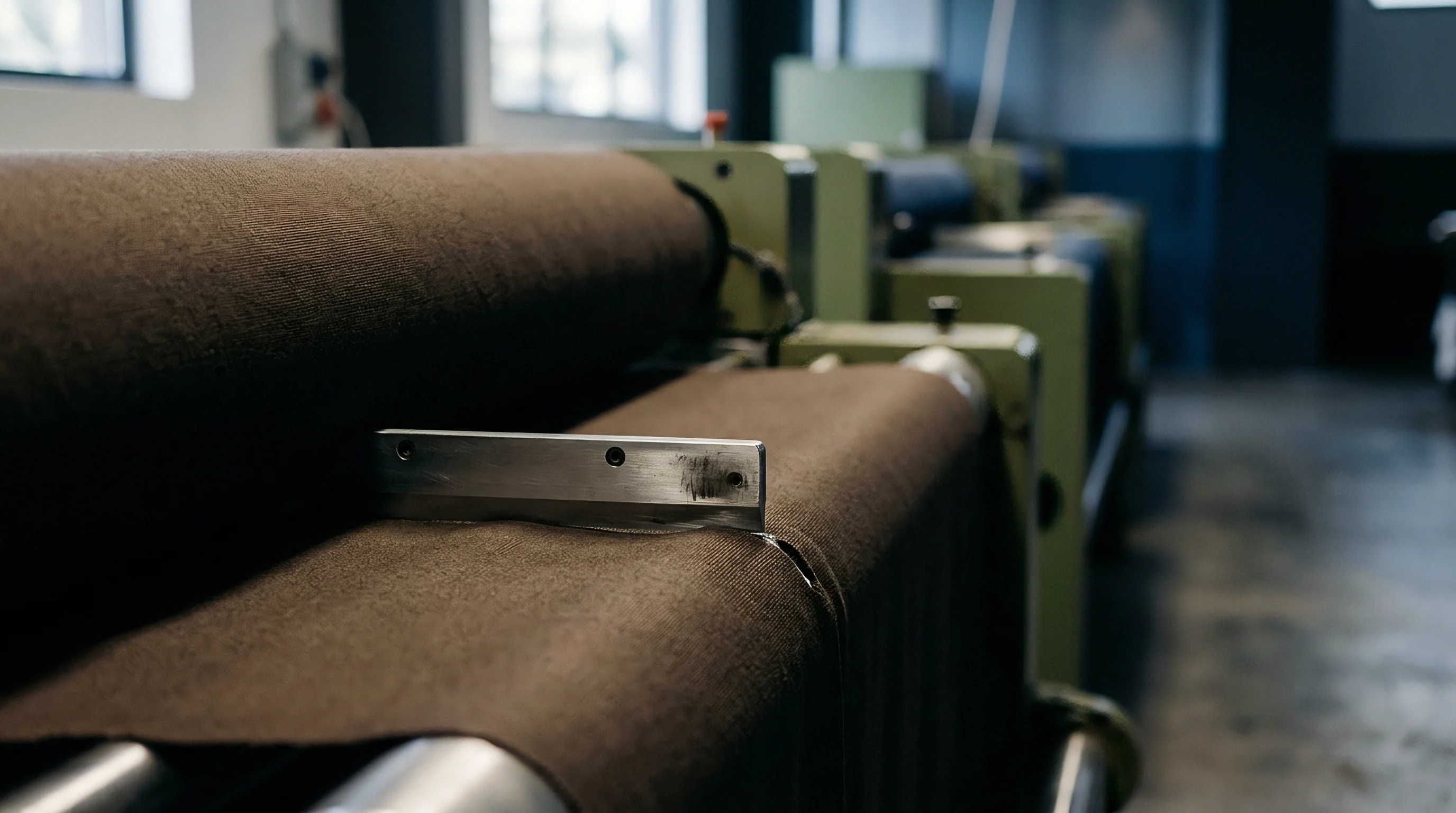
Commercial Audit Standards and Reject Thresholds
Incoming quality verification relies on clear sampling protocols across bulk dyeing lots. While standard four-point inspection systems under ASTM D5430 quantify visual surface defects, physical strength and chain length metrics dictate actual functional performance.
If bulk testing shows an intrinsic viscosity drop exceeding twenty percent, the buyer retains the right under standard conversion contracts to reject the dye lot or demand a price adjustment to reflect shortened wear life.
Under standard purchase contract clause 14.2, if high-temperature exhaust processing drops cupriethylenediamine intrinsic viscosity below three hundred millilitres per gram for lyocell or below one hundred seventy millilitres per gram for viscose, the mill must replace the raw material and re-process the lot at its own expense.