Dynamic Micropore Collapse Rate Equations for High Temperature Industrial Textile Stenter Operations
Dynamic micropore collapse during stenter heat setting follows temperature-dependent viscous flow equations, requiring precise overfeed and thermal control.

Heat
Thermal Energy Transfer Mechanisms in Processing Chambers
Convective hot air jets striking floating textile webs transfer thermal energy at rates governed by boundary layer dynamics and nozzle orientation. High-speed impingement nozzles delivering velocity profiles between 25 meters per second and 42 meters per second create local heat transfer coefficients ranging from 80 to 140 Watts per square meter Kelvin. Fabric temperature rises from ambient wet bulb values to target thermofixation thresholds within four to six seconds of entering the initial heating zone.
Infrared pyrometers mounted across width positions reveal transverse temperature gradients exceeding 8 degrees Celsius when air distribution plenums suffer from non-uniform static pressure differentials.
Sustained thermal exposure initiates structural changes within crystalline and amorphous polymer domains. Semicrystalline membranes subjected to temperatures approaching their primary melting transitions undergo chain segment mobilization. Amorphous regions absorb thermal energy rapidly, lowering mechanical resistance against localized mechanical forces.
Microscopic void structures dispersed throughout the polymer matrix experience localized thermodynamic instability as molecular motion increases rapidly.
Air jet velocity balance across top and bottom nozzle arrays governs web float stability and prevents local thermal spikes.
Polymer matrix temperature field evolution follows the transient unsteady-state conduction equation across web thickness z:
d T / d t = alpha (d2 T / d z2) + Q_chem / (rho C_p)
where alpha represents thermal diffusivity in square meters per second, rho density in kilograms per cubic meter, C_p specific heat capacity in Joules per kilogram Kelvin, and Q_chem internal exothermic or endothermic reactions from residual chemical crosslinking. Non-porous films exhibit uniform thermal diffusivity, whereas microporous structures possess effective thermal conductivity values that drop non-linearly as void fraction increases, trapping air pockets that act as insulating barriers until structural collapse begins.

Surface Tension Forces at Elevated Temperatures
Interfacial energy differences between the solid polymer surface and surrounding air-vapor mixtures drive spontaneous capillary forces inside submicron channels. As fabric temperature climbs toward 180 degrees Celsius, polymer surface tension declines while melt mobility increases by orders of magnitude. Smaller pore geometries experience disproportionately high driving pressures that tend to draw channel walls inward to minimize overall surface free energy.
Capillary pressure P_c acting on a cylindrical micropore wall of radius r is expressed directly by the Young-Laplace relationship:
P_c = (2 gamma_s cos theta) / r
where gamma_s is temperature-dependent solid-gas surface energy in Newtons per meter and theta is contact angle. At room temperature, high polymer yield strength easily counteracts capillary pressure values that exceed 3 Megapascals in pores narrower than 100 nanometers. When thermal exposure reduces polymer yield stress below P_c, surface-tension-driven viscous flow begins, closing void channels irreversibly unless counteracting mechanical tension is maintained across web boundaries.
Equipment suppliers frequently claim that high air volume exchange rates compensate fully for minor setpoint calibration drifts across heating zones.
Rheology
Viscoelastic Deformation Mechanics of Polymer Membranes
Polymer flow behavior under simultaneous thermal and mechanical stress defines the rate at which void structures degrade during drying and heat setting operations. Semicrystalline polymers like expanded polytetrafluoroethylene and amorphous polymers like polyurethanes display distinct viscoelastic relaxation spectra. Above glass transition thresholds, amorphous chain segments slip past one another under lower force thresholds, initiating viscous sintering of porous geometries.
Viscosity reduction as a function of absolute temperature T obeys an Arrhenius formulation across narrow operating windows above glass transition thresholds:
eta(T) = eta_0 exp( E_a / (R T) )
where eta_0 represents pre-exponential viscosity factor in Pascal seconds, E_a activation energy for viscous flow in Joules per mole, and R universal gas constant. Fluoropolymer membranes exhibit elevated activation energy values requiring temperatures above 200 degrees Celsius to induce flow, whereas polyether-urethane membranes show flow initiation at temperatures as low as 145 degrees Celsius.
Dynamic void closure rates under combined surface tension and web tension field conditions derive from modified Frenkel-Eshelby viscous sintering kinetics:
d r / d t = – ( gamma_s / ( 2 eta(T) ) ) ( 1 – epsilon ) – ( sigma_net r ) / ( 4 eta(T) )
where r is instantaneous pore radius in meters, epsilon is volumetric porosity fraction, and sigma_net represents biaxial web stress transferred into individual pore boundaries. High volumetric porosity offers diminished resistance against closure forces, accelerating radius reduction rates exponentially during early dwell stages.
Viscoelastic relaxation behavior following sudden mechanical strain matches the Maxwell constitutive response model:
sigma(t) = sigma_0 exp( – t / tau_r )
where relaxation time constant tau_r equals ratio eta(T) divided by instantaneous shear modulus G_0. When process dwell time in high-temperature zones exceeds tau_r, stress dissipation allows surface tension to dominate, leading to uncontrolled structural closure.
| Polymer Chemistry | Glass Transition (°C) | Flow Activation Energy (kJ/mol) | Initial Porosity (%) | Critical Viscosity Threshold (Pa·s) | Onset Temperature of Pore Collapse (°C) |
|---|---|---|---|---|---|
| Expanded Polytetrafluoroethylene (ePTFE) | -120 | 185.0 | 82.0 | 1.2e6 | 210.0 |
| Microporous Aliphatic Polyurethane (mPU) | -45 | 88.5 | 68.0 | 4.5e3 | 155.0 |
| Hydrophilic Monolithic Polyether-Ester | -30 | 72.0 | 0.0 | 1.8e3 | 140.0 |
| Electrospun Polyamide 6,6 (PA66) | 50 | 112.0 | 75.0 | 8.2e4 | 185.0 |
Failure Modes Driven by Thermal Stress
Structural damage occurring inside heat-setting chambers presents distinct physical fingerprints upon microscopic examination. Understanding these degradation pathways enables targeted machine adjustment before total batch failure occurs.
- Capillary Sintering Collapse occurs when surface energy forces draw adjacent fiber junctions together, obliterating sub-100-nanometer void channels without changing overall fabric width.
- Biaxial Tension Shear Tearing develops when mechanical clip tension exceeds degraded polymer yield stress at elevated temperatures, causing micro-voids to merge into macro-punctures.
- Skin-Layer Melt Filming arises when direct air nozzle impingement overheats the surface boundary prior to bulk core heating, creating an impermeable barrier coat over open pore networks.
- Thermal Creep Distortion manifests as non-uniform pore orientation caused by differential pin-chain speed variations between left and right stenter rails.
Operational stability requires balancing web tension against thermal exposure time to ensure that polymer relaxation times remain longer than process dwell times.
Vector
Mechanical Tension Mapping across Biaxial Pin Chains
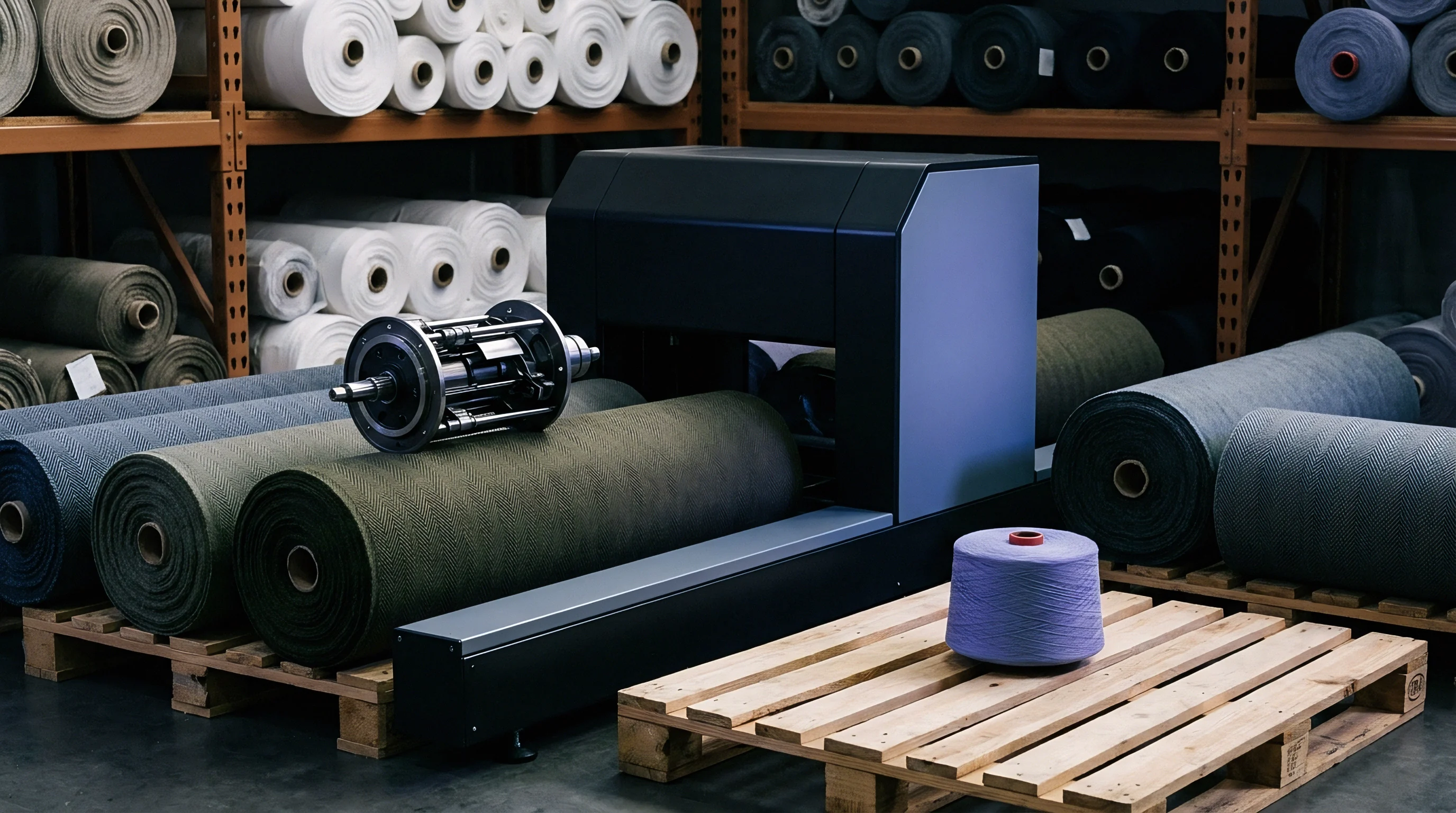
Chain-driven stenter frames impart directional stress vectors through edge-clamping clips or pin plates. Longitudinal tension controlled by drive speed differential between feed rolls and exit rolls combines with lateral tension established by diverging rail tracks. This biaxial force vector field distorts circular micropore profiles into elliptical geometries, altering void aspect ratios and hydraulic diameter parameters.
Lateral tension stress sigma_x and longitudinal tension stress sigma_y modify effective pore radius calculations. Tensor analysis of pore deformation defines effective elliptical pore radius r_eff along principal axis angle phi:
r_eff(phi) = r_0
where r_0 represents initial undeformed pore radius, nu Poisson ratio of porous membrane, and E(T) temperature-dependent elastic modulus. As thermal energy reduces modulus E(T), identical mechanical web tensions induce higher localized strains, stretching pores along tension vectors while narrowing perpendicular cross-sections.

How Does Biaxial Pin Chain Overfeed Prevent Structural Collapse?
Positive overfeed adjustments introduce excess fabric length relative to rail chain speed, relaxing longitudinal thread tension prior to thermal pin insertion. Overfeeding by 1.5 to 4.0 percent allows natural thermal shrinkage without transferring aggressive tensile forces into void channel walls. Balanced overfeed settings maintain pore cross-sectional sphericity, preventing lateral pore flattening that leads to water vapor permeability loss.
- Verify feed-roll tachometer calibration against physical wheel counters to eliminate speed reading errors before starting production runs.
- Adjust overfeed control drives to achieve precisely 2.5 percent positive speed bias relative to main entry chain sprockets.
- Set entry width rails to match incoming wet fabric width minus 1.0 centimeter to prevent edge stress concentrations during initial pin engagement.
- Engage edge-uncurling blowers and mechanical selvage guiders to guarantee pin penetration depth remains within 3.0 millimeters of fabric boundary lines.
- Monitor rail divergence angles through zone one, maintaining widening slopes below 1.5 degrees per meter of chamber length.
- Lock main width rail positions across thermofixation zones to ensure zero net lateral mechanical strain during primary heat transfer.
Sub-optimal pin alignment transfers localized shear stress vectors directly into edge zones, ripping weakened pore walls and generating yield loss across full batch lengths.

Flux

Mass Transfer Kinetics and Permeability Degradation
Gas phase species transport through microporous membranes operates within Knudsen diffusion or Poiseuille flow regimes depending on the ratio of mean free path length to channel diameter. Mean free path lambda for air molecules at 20 degrees Celsius and standard atmospheric pressure equals approximately 68 nanometers. Pore channels with diameters between 50 and 200 nanometers exhibit Knudsen Knudsen-number conditions where molecule-wall collisions dominate mass transfer resistance.
Total volumetric vapor flux J through a porous structure with porosity fraction epsilon, tortuosity factor tau, thickness d, and average pore radius r is modeled by combined flow kinetics:
J = sqrt( R T / ( 2 pi M ) ) Delta P + ( P_avg / ( R T ) ) Delta P
where M is molecular weight of water vapor, Delta P pressure drop across membrane thickness, eta_gas gas viscosity, and P_avg average system pressure. Dynamic micropore collapse during stenter processing directly reduces radius r and porosity epsilon while increasing tortuosity tau as interconnecting channels pinch off.
Dynamic shrinkage of mean pore radius from 120 nanometers down to 45 nanometers drops Knudsen diffusion rates by 62 percent while increasing liquid entry pressure beyond threshold targets.
Evaluating mass flux transport before and after stenter thermal processing requires precise measurement under standard test environments. ISO 11092 sweating guarded-hotplate testing measures water vapor resistance Ret in square meters Pascals per Watt. ASTM E96 inverted cup methods record water vapor transmission rates in grams per square meter per 24 hours under liquid contact boundary conditions.
Hydrostatic head resistance measured according to ISO 811 establishes the minimum pressure in kilopascals required to force liquid water through collapsed void structures.
| Zone Setpoint (°C) | Dwell Time (s) | Mean Pore Radius (nm) | ISO 11092 Ret (m²·Pa/W) | ASTM E96 WVP (g/m²·24h) | ISO 811 Hydrostatic Head (kPa) |
|---|---|---|---|---|---|
| Unprocessed Control | 0.0 | 145.0 | 3.8 | 22,500 | 180.0 |
| 165.0 | 15.0 | 138.0 | 4.1 | 21,200 | 195.0 |
| 180.0 | 25.0 | 112.0 | 4.9 | 18,400 | 240.0 |
| 195.0 | 35.0 | 62.0 | 8.5 | 11,100 | 380.0 |
| 210.0 | 45.0 | 18.0 | 24.0 | 2,800 | 500.0 |
Compliance Protocols for Technical Textile Certificates
Technical performance claims require batch-level verification backed by accredited laboratory scope declarations. General corporate qualification certificates do not guarantee that specific production lots satisfy contractual breathability limits.
- Scope Matching Verification confirms that test reports list exact fabric style numbers, weight specifications, and membrane layer compositions identical to shipment invoice details.
- Testing Expiry Discipline requires that accredited lab reports carry test execution dates within twelve months prior to batch manufacturing dates.
- Method-Specific Mapping verifies that performance metrics reference complete test parameters, including cup orientation, water temperature, air velocity, and chamber relative humidity.
- Batch Sample Retention mandates storing physical swatches cut across left, center, and right web positions from every tenth production roll for minimum three-year audit periods.
Purchase orders referencing EN 343 Class 4 performance criteria mandate water vapor resistance Ret values below 15 square meters Pascals per Watt measured on finished three-layer fabric assemblies.


Disparity
Mathematical Modeling versus Mill-Floor Realities
Theoretical pore collapse rate equations rely on assumptions of ideal cylinder pore geometries, isotropic material properties, and isothermal temperature distributions across web cross-sections. Commercial stenter operations continuously violate these basic assumptions. Industrial fabric webs carry variable moisture loads, dynamic tension fluctuations from off-center roll tracking, and turbulent convective air flow regimes across chamber widths.
Non-isothermal conditions inside actual stenter chambers modify the basic collapse rate equation to include temporal-spatial temperature gradients T(x,y,z,t):
d r(x,y,t) / d t = – ( gamma_s(T) / ( 2 eta( T(x,y,z,t) ) ) ) ( 1 – epsilon(x,y,t) ) – ( sigma_net(x,y,t) r(x,y,t) ) / ( 4 eta( T(x,y,z,t) ) )
Local temperature variations of 5 degrees Celsius alter melt viscosity eta by up to 35 percent depending on polymer activation energy values. Consequently, micropore collapse occurs unevenly across fabric widths, generating wide performance bands within single production rolls.
Center-to-edge breathability variation routinely reaches 25 percent on wide-format 3.2-meter stenter lines operating near upper thermal limits. Edge zones lose porosity faster than central regions due to thermal conduction from heavy metal pin chains holding fabric boundaries. Process engineers must balance dwell time targets against clip temperature cooling strategies to minimize transverse performance gradients.
Real-world stenter operations display significant local viscosity swings caused by non-uniform moisture evaporation cooling across moving fabric webs.
Mathematical calculations project precise critical threshold times for structural pore collapse, yet minor variations in raw membrane void distributions create unpredictable local failure zones. Sourcing practices must require lot conformity testing rather than relying on initial laboratory prototype validations.
Determining whether real-time non-contact infrared thermography integrated with automated chain tension modulation can completely eliminate edge-to-center pore collapse variations remains a subject of ongoing field investigation.